Most people eventually graduate from a tourist into a traveler, and when they do, they realize that all they want to do is get under the skin of a city. At least, that’s what I want to do.
Getting under is no easy feat. When I first started traveling, I wanted to see everything. Every few days, I longed to see what the sky looked like from a different landscape, another city. Would it still look the same? Would it still feel the same? I loved the fast pace and the feeling of freedom, the idea that I never had to remain stuck in one place, that the very next day, I could be across fields and fences, through woods and over mountains, several lakes away, oceans even.
That’s all fine and dandy, but you get through to the city’s secrets as much as an elephant might be able to squeeze through a hobbit’s door. Upon reflection, I’ve come to see cities by their multi-layered personalities and identities. As I break through the layers and get to know each city like a person, I find that each new place has the epic possibility of becoming another home.
1. The Stranger
A city is a stranger when you’ve only seen it from above or through the airport windows. You’re so close, nearly touching, almost bumping into each other, but the only sorry you’ll mutter in its direction is an apology for not being able to see it, rather than for stepping on its toes (in fact, it’s utterly brilliant if you can manage to step on a city’s toes). It’s a city you haven’t been to yet, or have constantly missed, perhaps only ever experiencing through a book or a fellow traveler’s tales.
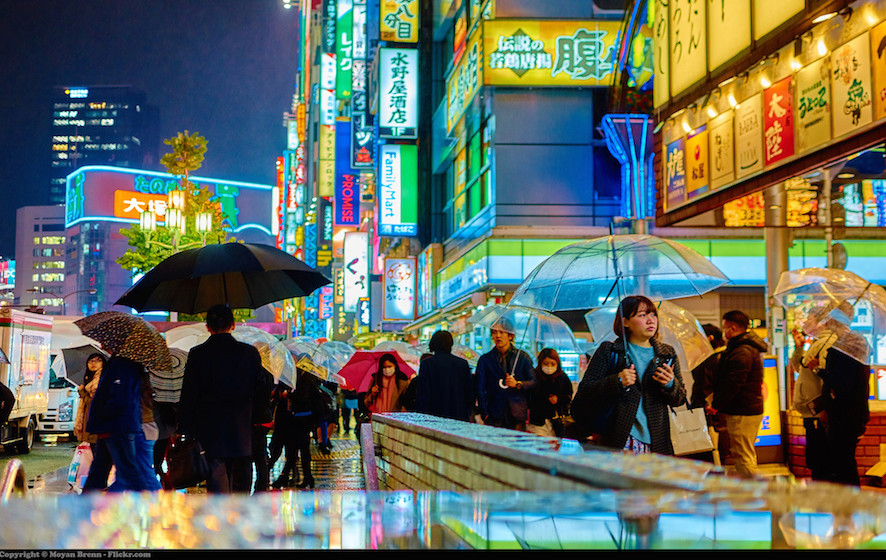
I wish I could say I’ve been to Tokyo, but I can’t, not with any sincerity. I’ve flown into Tokyo six or seven times - and then flown out on the same day, never leaving the airport. Maybe you get a flavor of Japan from browsing the airport’s duty-free shops. Even then, I’ve only seen Tokyo as much as I’ve seen a silhouette out of the corner of my eye: a stranger I’ve let pass by.
2. The Coffee Server
This is a city you only interact with long enough to fulfill some orders, a list of things you wanted to see and do. You stay only long enough to see what the city wants you to see - its tall skyscrapers, its famous monuments, maybe a glimpse of its transportation system, a cafe or two, the main square. You see what’s staring at you straight. You stay long enough to not really form a concrete opinion, and know only enough to say, “Well, it was fantastic!” or “It was nice.”
I spent only an afternoon in Warsaw during the spare time I had between traveling from Krakow to Vilnius. Warsaw - and other cities I’ve spent too short a time in - is like a person that serves you coffee. Although indubitably rich in history, I only remember walking along the river, seeing the oldest apothecary, sending postcards from the post office in the main square, and wandering the cobblestone streets. You know they had a life’s worth of history before the moment you briefly crossed paths, but all you know of them is their name tag (your server today was Mary), their handwriting on your cup, and perhaps their smile (if they smiled).
3. The Acquaintance
You might consider a city an acquaintance when you’ve been there enough times to recognize its cityscape in magazines and posters, even when not identified. You might remember your way around parts of the downtown core, maybe one or two suburban neighbourhoods. You can take their metro system with complete ease. You know a couple of cool places off the radar of most tourists; maybe you’ve made some local friends.
Seattle is a neighbour to Vancouver (the one in British Columbia), a city I’ve been lucky to live in for the last four years. Just three hours south on the highway, I’ve made it the destination of an obligatory annual trip, just because.
Seattle - or any city you’ve been to repeatedly or spent a little more time getting to know - is like the guy in your college that you keep seeing in different classes because he’s completing the same major. I’ve been to Seattle enough times to remember my way around parts of the downtown core, to know about the cool (or gross) Bubblegum wall in Post Alley, the epic Pinball Museum in Chinatown, and the Fremont Troll permanently living under Aurora Bridge. Similarly, I’ve spent enough time around this guy-also-majoring-in-English (his name is Bob, for simplicity) to know that he only writes with blue ballpoint pens, speaks up frequently in class, occasionally replaces his glasses with contacts, and walks with a four-count rhythm.
But you’ve only said a few words to him, if any at all, and you’re not even sure he knows your name. I don’t know if Seattle knows me. Do you know I’ve walked your streets, Seattle?
(Doesn’t that sound like an Owl City song?)
4. That Friend from Third Grade
At this point, the city has started to drill a layer into you, leaving little dents and impressions. You might have been staying in the city for a couple of weeks, walking the same streets at least a hundred times, and finding several new streets every day. You have a favorite cafe that you always find yourself headed to when you can’t sleep. The city has started to become much more familiar to you now.
A city like this for me was Prague, Czech Republic. I lived in a dorm on Tržište on the west side of the Vltava river for seven weeks, reading Kafka and Kundera, studying Czech and other good things at Charles University. My friends and I crossed Charles Bridge (or Karlův Most) on a near-daily basis to get to class. I regularly got a chicken panini from this one cafe behind the school. Because I studied in Prague, I learned about the history that had happened right on its streets, about Prague Spring and the self-immolation of Jan Palach right in the middle of Wenceslas Square.
With that extra behind-the-scenes knowledge, a city feels more intimate somehow. You can look at a building and feel sorrow at the previous fires that tore it down, imagine the different hands that laid on it to put up new skeletons and new faces. You can sit inside the Elephant House and let your eyes roam over the dedicated Harry Potter quotes scribbled all over the walls, even those of the toilet stall, feeling the same inspiration J. K. Rowling got from just being in the glowing city of Edinburgh.
Cities like these, that you met like a friend in the third grade (her name was Maris, if you’re curious), start to let you in. Maris told me the major events in her past (like how her parents divorced when she was five), and the random moments too (like the time she hollered at the universe when she got to the top of a Douglas Fir, or the time she practically cackled as she drew a moustache on her sister’s face). So did Prague - she seemed unbothered when talking about the long drawn-out separation, and finally divorce, of Czechoslovakia; she said it had been rather peaceful and mutual. Prague giggled when we saw the magnificent albino peacock in the palace gardens, like a little kid gleeful at revealing its star prize, and positively skipped whenever we indulged in one of her black light theatre shows (Faust: Between God and the Devil, thankfully with a student discount ‘cause we’re such cheapos).
You may have eventually moved to California and lost contact with Maris, or left Prague to see what else Europe had to offer, but the memory lives on, two, five, eight years later, and if you ever went back, you’d recollect and reconnect in a heartbeat. Until then, if there is a then, what you’ll remember most about the city and that friend from the third grade are their smiles and how they made you feel.
5. The Best Friend
If this city is your best friend, you’ve been past the ‘restricted access’ sign, gone where few have ever been, would ever dare to go. You’ve gone completely underground, where no natural light exists, and found yourself crawling through the sewage system. You can hear the subway roaring past somewhere above you.
At this point, you’ve seen the deeper problems entrenched within the city. You’ve seen the buggers that start the acne on the city’s face, the viruses that make the city sweat and shiver. You’ve spent enough time not only living in the city but studying the city, reading in the parks, people-watching in cafes, movie theatres, shops, and ice rinks. You’ve been able to put a magnifying glass to the culture, scrutinize it, and not only understand it but also praise or criticize it. You’re deeply enfolded by the city, you walk the streets with greater purpose and focus. Because you have the luxury of more time here, you’re trying to unlock the doors in the endless labyrinth, seeking routes towards the Minotaur, and you’ve been retracing your steps so often there are parts of the labyrinth you know by heart.
Vancouver is my base, one of the few places in the world I can run back to, to rest my head. Whenever I return from trips, I’m instantly comforted just knowing I’m now in a place where I can find my way without getting lost. When I get tired of running away, this is the place I run to.
It’s like the best friend, the person you know inside out, the one you go to when you have news to tell or need a shoulder to cry on. Vancouver and I have made memories; like two girls staying up all night, laughing, gossiping, listening to music, we’ve grown to recognize each other’s poker face (Vancouver grinds its teeth when people tell her she’s boring), live with each other’s flaws (she’s seen me at my worst and I’ve never seen her capable of going below zero degrees Celsius - or is that actually a compliment?), celebrate each other’s high notes (I heard Vancouver clap the loudest when I walked on stage to get my university degree). Vancouver and I have private jokes. We whisper secrets in each other’s ears. What are those secrets, you may ask. Well, they’re our secrets for a reason; you shall have to make your own.
Vancouver and I have routines: the Richmond Night Market in the summer (no matter the stupid new entrance fees and the increasing prices every year), reading books on Kitsilano beach when it’s sunny, and Japadog or Sushi California when I need a pick-me-up. Like with best friends, I feel inspired by Vancouver’s unique skyline, the twinkling lights of Science World and Rogers Arena at night, the elegant dame that is Canada Place. I feel proud of Vancouver’s accepting nature (Vancouver is so LGBTQ-friendly, it even has its own gay nightclub scene dominating Davie Street).
Like a best friend, I know that no matter where I am in the world, I can always come back to Vancouver and trust that it will be there for me, maybe slightly changed, but more or less the same. Vancouver is a city I choose, over and over again, to come back to.
6. The Family Member
At this ultimate level, you’re completely aware of the city’s limits, how it ticks and what makes it pulse. You’re acutely aware of its residents and how they make the city the city it is. Maybe you’ve joined several groups within the community, volunteering at the retro cinema, the animal shelter, the crisis call centre. Maybe you’re part of the work culture or the student culture or both.
You’ve snatched bits of reality from a multitude of people living within the city, making it breathe and heave and sigh. You’ve got your hand on its heart and when the city sneezes, it shakes you like a hungry hurricane. You’ve tapped even further into the city’s secrets, and you walk the city’s streets not like a labyrinth but like the blood vessels under your own skin, all directed towards your heart.
Cities you’ve gotten to know at this level are like family: annoying, infuriating at times, but in the end, home. The city has seen you through your teenage phase where you hated the world and felt like the world hated you, where you tested your parents’ patience, trying your hardest to push them away (this only made them pull harder to get you back).
Singapore is this city for me. When I was living there, I didn’t really appreciate it. I’d been spoiled by my years in the States and all I wanted was to return to North America. What an impatient, arrogant child I was (still am at times), but Singapore was patient with me. It taught me, shaped me, disciplined me. Even though I’d never go back to live there, I’d rarely turn down a chance to visit it again. Hah, what do you know, it’s exactly like family.
I couldn’t live according to the fast pace of Singapore. As a small country, the greatest investment is in its people and that’s why there’s such an emphasis on a stellar education. From a young age, students are told studies are the most important focus; there’s an almost military-like system to the education. I’m not sure I’d ever study in Singapore again if I could get a do-over of my life, but I’m still proud to hail from this tiny island nation.
Singapore will always live within me. Even though I am not Singaporean (I’m Malaysian), when people ask me where I’m from, I instinctively say, “Singapore,” hesitate, and then correct myself, “Uh, actually, I’m not really sure.”
But I think that says it all. I was born in Singapore and lived there for ten years of my life (that’s half my life!); that kind of time leaves a mark on you. When people stare at me and follow up, “Singapore… That’s in China, right?” I can’t help but get defensive.
“No, it’s a highly-developed country blazing the path in Southeast Asia. It may be small, but it’s made up of some of the most patriotic citizens and is on the technological and financial forefronts of the world.” When Lee Kuan Yew died earlier this year, the whole country was crying, millions lining the streets to pay their respectful farewells. The whole country was in mourning for months.
I am proud to be from Singapore. And simultaneously, I have a love-hate relationship with Singapore. It was my disciplinary yet loving parent. It was my annoying little brother that constantly asked too much attention of me when all I wanted was independence. Singapore is my birthplace, a city and country I have an irrevocable bond with, which, for better or worse, through rain or shine, whether I hate it or love it, has chosen me. It’s my family.
The more I travel and think about how to put cities and new places into words, the more I personify them, thinking of them less and less as the settings for great stories and more as full-blown characters that have their own epic stories. They have identities and, like people, they get sleepy and hazy in the hot midday sun, and romantic in the midnight air. They have moments of shyness and there are times when they’re bold. And eventually, when you’ve gotten under the skin of a city, you realize that the city has gotten under your skin too.
Image: Image