grand
Travel

With the wind whipping, snow slipping under my feet, and a view of the plunging cliff to my left, I had a full-blown panic attack on the side of the Grand Canyon.

But before I get into that, let’s rewind a little bit. During my sophomore year, I decided to detour from the beachy college spring break that I initially wanted to one that would be a complete adventure. I had never been to the American southwest and was looking forward to experiencing the open skies I had heard about and seeing the Grand Canyon in its entire splendor. Anyone who knows me can tell you that nature, hiking, and the outdoors is way out of my comfort zone, but I figured, why not try something new?

After a few days of exploring the sites around Phoenix, such as the Heard Museum and the Superstition Mountains, the plan was to drive toward the canyon and tackle its Bright Angel Trail, which the brochures listed as a difficult trail. From our entry point into the canyon to our destination point called Indian Garden and back would be a 9-mile journey. Why we chose this trail as novices, I will never know. But, that was the plan.

Waking up the morning of, I was uneasy knowing what I was about to do. A girl who had never even camped in her backyard before was about to hike one of the Seven Natural Wonders of the World. Before I had time to talk myself out of it, gear was on my back and spikes were on my shoes. Yes, spikes. Did I mention the Grand Canyon’s high elevation created snow and ice on the trails?

grand canyon

Now, we’re back at the beginning of the story. The first mile down the canyon was simply treacherous. I was slipping across the icy, narrow trails and trying, but failing, to not look over the 4,380-foot cliff immediately to my left. The deafening gusts of cold wind were clouding the encouraging voices of the people I was with and intensifying my fear. I couldn’t master using the snow spikes and I was convinced this adventurous spring break was surely going to be my last. It was then I felt my face go hot and all I stopped dead in my tracks. I sat down right where I was and just cried.

Okay, I did a bit more than cry. There was some hyperventilating and uncontrollable shaking, too. I finally understood what an “anxiety attack” was. There were hikers piling up behind me, but I didn’t care. I had no plans to move out of my fetal position and didn’t let anybody touch me. With the help of my then boyfriend, I realized there were only two choices: hike back up and let my fear get the best of me or keep going because we didn’t fly all the way to Arizona for nothing. Truth be told, I wanted to turn around, but something in me (likely, just my ego) told me I would regret it.

After about 20 minutes of calming and pep talk, I slowly got back up and continued on. Everything from this point was nearly smooth. At about two miles down, there was no more snow and, in fact, it was dessert-like and scorching. We made it to our picnic spot and turn around point, and headed back up on the same trail. Hiking back up had its own issues, but that story is for another time. What I will say, however, is once we reached the top of the canyon; we literally kissed the flat ground.

Hiking the Grand Canyon is surely the most terrifying, but rewarding, thing I have ever done. Its power is breathtaking, in all senses of the word, and humbling. You never realize how strong you are until you’re put into a challenging situation. Regardless of the temporary strife it caused me, the canyon was absolutely beautiful. What is beauty without a little bit of pain?

Images by Aysia Woods
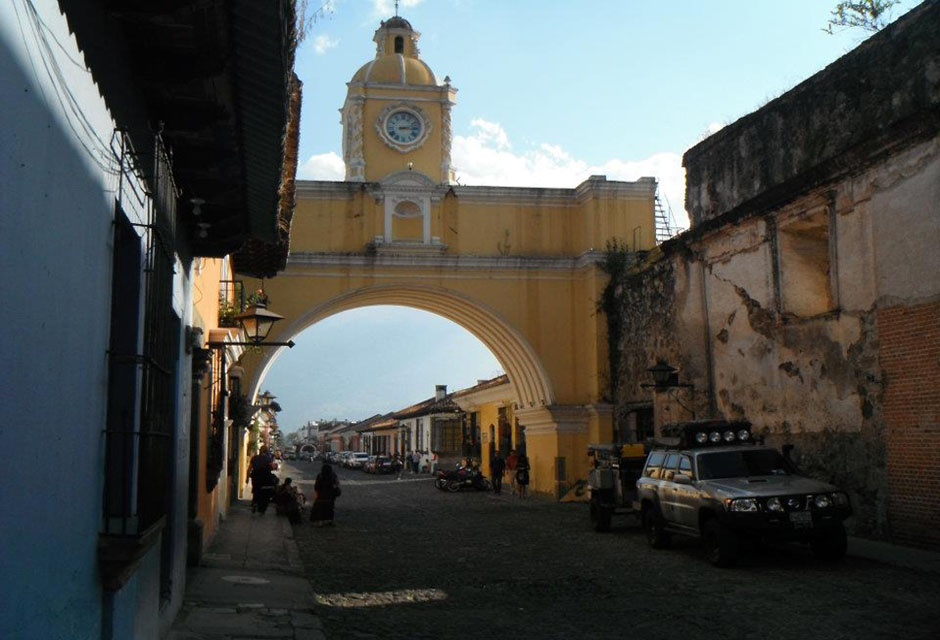
Antigua
CultureTravel

I am sitting in a crowded waiting area in the Houston airport when the sheer immensity of what I am doing truly hits. I try to do something – anything – to distract myself. I chew my nails. I stare at the smog and the airplanes out of a window covered in tiny handprints along the lower half. Finally, I take the tiny antique compass my boyfriend presented to me as a parting gift out of my backpack and flip it over and over in my hand as I mentally review my plans.

I’m going to Guatemala. Alone.

My brain immediately abandons its momentary calm to take up its current emotion of choice: wild, unbridled terror and self-doubt.

But why? What do you really expect to gain? What if you get hurt or lost or—

The flight attendant calls my row. I get up.

University is almost synonymous with travel. Almost everyone lucky enough to have funds to spare during college leaves town at some point. Whether through a school exchange, a volunteer opportunity, or even just a newfound proclivity toward North America’s vast abundance of music festivals, college students are constantly in transit. A desire for new experiences coupled with low standards for accommodations and food open student travel up to many opportunities that the average traveller might find rather unattainable. But the one type of travel that a college student might be wary of approaching is solo travel. Just the thought of solo travel is daunting to all but a few herculean souls, and I will be the first to admit that I still think of it that way, even after over two months spent in rural parts of Guatemala.

My first few days in the country are thoroughly overwhelming. Though I have some knowledge of Spanish from previous travels in Latin America, I had never realized how much I relied upon the collective knowledge of my fellow travellers. No one is here to fill in the blanks for me, or to tell me that the butchered sentence I’m constructing is incomprehensible. My destination is very specific – a shelter for stray dogs (an epidemic in Guatemala) in a small town about an hour outside of Antigua – but the directions I have are frustratingly vague. They involve steps such as looking for a specific pedestrian overpass and hiking up dirt roads while keeping an eye out for a set of green metal gates.

When I arrived at Animal AWARE, I was shown to a “casita” (literally, “small house”) where I would live for most of the next two months. The casita consisted of a tiny, narrow, drafty room with two beds, and a bathroom where I took the coldest showers of my life, often standing outside of the water and washing one limb at a time. There were 300 dogs and 80 cats at the shelter at that point, so every open space was taken up with animal enclosures. This meant that the casita itself was bordered by two dog enclosures. The dogs would wake us at quarter to six every morning without fail. Sometimes, during the night, strays from town would sneak onto the property, eliciting an eerie crescendo of howls as they ran past each enclosure. I often felt sorry for the cats trying to lead their quiet lives amid the chaos.

As the weeks went on, I began to get used to my surroundings. Slowly, I came to appreciate the true beauty of solo travel: you’re almost never really alone. Everywhere I looked, people were surprisingly happy to help. The owners of the shelter, Xenii and Martin, often came by the casita to offer me leftover food, bottles of waters, and a constant supply of books. My success in acquiring a cheap cellphone that I could use to call North America was the result of effort on the part of several staff members at AWARE. One particularly impressive 17 year-old girl (also travelling alone) showed me how the convoluted Guatemalan bus system worked. And of course, my family provided immense support along the way, responding to my sporadic communication with tips, advice, and encouragement. Eventually, I came to realize that there are no secrets to travelling alone, just guidelines. Certainly be safe – I was constantly aware that I was travelling in a very dangerous country. But also, importantly, be open – for every person who would do you harm, there are many who are willing to take you into their homes, feed you, give you a bed, and try to help you make the most of your time away from home.

Returning was surreal. I had gotten used to cold showers, abysmal plumbing, and the constant noise of 300 hungry dogs. My little brother seemed to have grown at least a foot in my absence. My bed seemed a hundred times more comfortable than usual, and I was able to finally, finally, have some of Vancouver’s excellent sushi. I was able to look at the rest of my university career with some much-needed clarity, and I finally decided on my major. But most important to me was the confidence my travels inspired – most challenges, when compared to travelling alone, don’t seem quite as impossible.

SF 4 -1
CultureTravel

Pride parades happen all over the world these days. However, same sex marriage is not legal in all states which is why these parades are so important. It is not just the LGBT community who go to these things. There are families there. Elderly people and babies are all in attendance with admittedly some of the most flamboyant and fabulous people you ever did meet. It’s a gathering for a lot of people to come together and it has a lot to offer.
Here is a look at my San Francisco Pride Parade travel diary:
8:30: I had to leave early. The parade started at 10:30 a.m. We decided to get off the road and take the BART because the city is hard to drive through in the best of times, let alone during a big event like Pride.
SF 2
11:30: At this time we finally made it to San Francisco. The parade watchers were five people deep. We could see a little from over their heads.
12:00: By noon, with the parade forgotten from our vantage point, we went looking around. There is a lot of shopping to do. There aren’t just novelty items but clothes, jewelry, and more substantial things like insurance or cable.
12:24: The Shake It! Booty Band played. They were one of many bands who performed that day to the crowds walking around or eating lunch in front of the Civic Center building.
1:00: Eventually we had to eat. There was food from all over the world served.One of the last little known facts about parades is the free giveaways. There are always some every year. Some of what I came away with include this Orange Is The New Black poster, a Burger King crown, and sunblock.
SF 1
Along with the glitz, I think it is about the people. Companies have booths promoting their wears to all kinds. Politics and funding for charity causes are available alongside them. There are several areas where people just dance. With all the gimmicks and all the craziness, people from all demographics gather to this event that is all inclusive to everyone. In a way, it is not the pride parade but a parade and fun for the whole family. Everyone belongs somewhere.