comfort zone
Skills

I didn’t think cliques existed until I went to a different high school in 12th grade. It was there that I learned that schools like the ones in Mean Girls really did exist. Okay, maybe my high school wasn’t completely identical, but students in the cafeteria did separate themselves. There was a table for the popular kids and a table for the kids who played with Pokemon cards. Not only that, but people also put themselves into groups based on social class, religion, ethnicity, etc. My high school was very diverse, only that diversity wasn’t well-represented at the tables in the cafeteria.

But everyone seemed to be okay with that. No one was uncomfortable sitting at a table filled with people that were ‘just like them.’ I’m not saying that people should be uncomfortable doing that because it’s completely okay to seek out people you have things in common with. However, people who constantly do that become unaware that they’re doing it and it soon becomes their comfort zone. A comfort zone is a place that people tend not to step outside of because of how familiar it is and how relaxed that familiarity makes them feel.

For example, if I’ve only ever been friends with people who played on the girl’s basketball team, then I’m more likely to sit with them at lunch and choose them as partners for group projects if we have classes together. I don’t do this intentionally. I’ve just known these people a lot longer than I’ve known anyone else and I feel comfortable around them, so why change that?

Why is it important to branch out and make connections with people outside of my normal circle?

The answer to that is simple: it’s a part of life.

Not everyone in the world is the same. The sooner we learn to accept that, the sooner we can truly embrace it. For some people, going to college might be a huge step for them because they’re leaving behind their small town for a college town a few hours away in a different city or state. I’m not going to speak for every university, but the chances of you attending a school that is diverse in more ways than you’re used to is very high. Moreso if you’re going to a large university.

Once you are there, you might seek out people you assume you have a lot of things in common with because that’s what will make you feel comfortable. If you end up going to the same school as a couple of your friends, you might choose to only socialize with them.

Starting college (or high school) can be very overwhelming and intimidating so it’s good to have a familiar face or at least someone who you can relate to because you have a lot of similarities. But if you want to make the most out of your collegiate (or high school) experience, don’t clique up; don’t separate yourselves from others because they’re not familiar or because you’re afraid to leave your comfort zone. College is all about learning; not just inside of the classroom but out of it as well. You can learn so much from people that come from other parts of your country and from people who come from around the world. Everyone has a story to tell and everyone you meet in college has the potential to be a lifelong friend.

Oftentimes we might not think that we have much in common with someone whose first language is different than ours or someone who subscribes to a different religion. We get so used to gravitating towards people who share obvious commonalities that we forget that the people we see as ‘different than us’ can also have some (or many) similarities. You just have to find the courage to move outside of your comfort zone and talk to people you think you wouldn’t have anything in common with. Don’t spend your entire time at college with the same people because there are so many people to socialize with; so many opportunities to learn about a different culture or religion or to even just get a different perspective on life.

College is one of the best ways to get people from all over the world to come together under one roof, metaphorically speaking. It is truly a beautiful thing so use this time to your advantage because, thankfully, college is not high school. So, step out of your comfort zone. Better yet, try your best to knock it down. I know it’s not easy to get rid of it all at once, but the world would be a much better place if we worked at breaking down the barriers that exist between each other a little each day.

Image: morguefile

c
Professional SpotlightSpotlightTravel

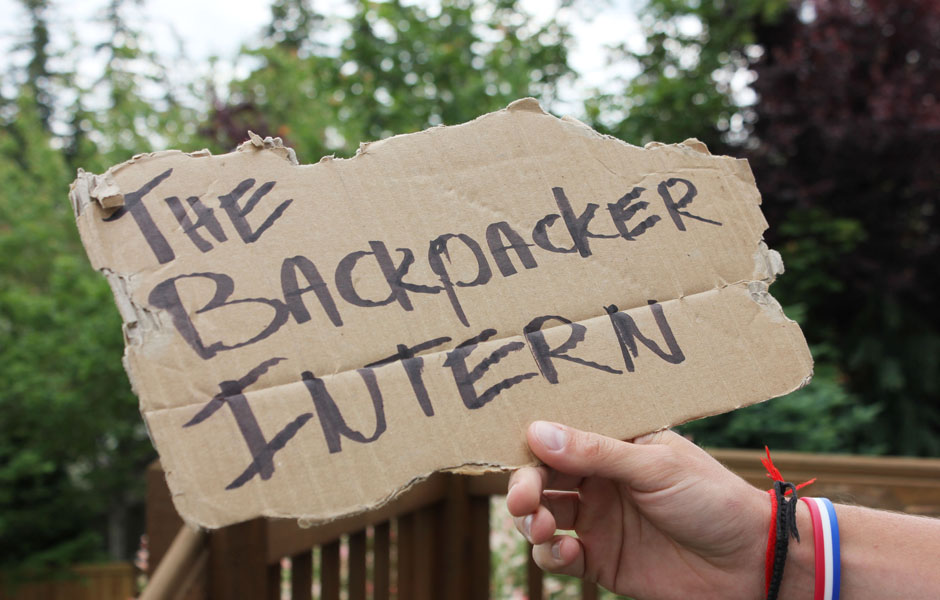
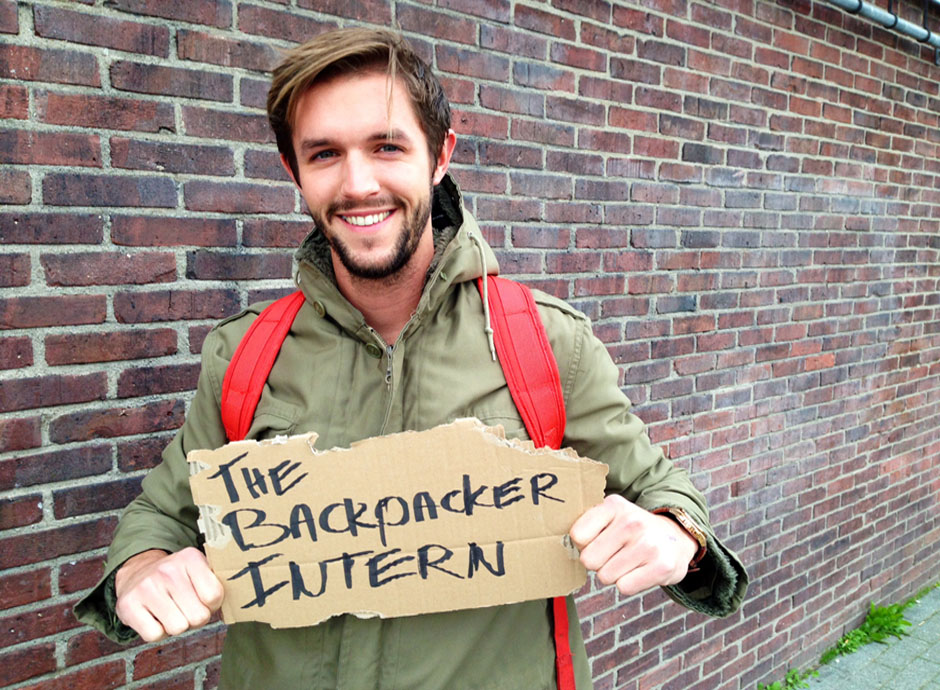
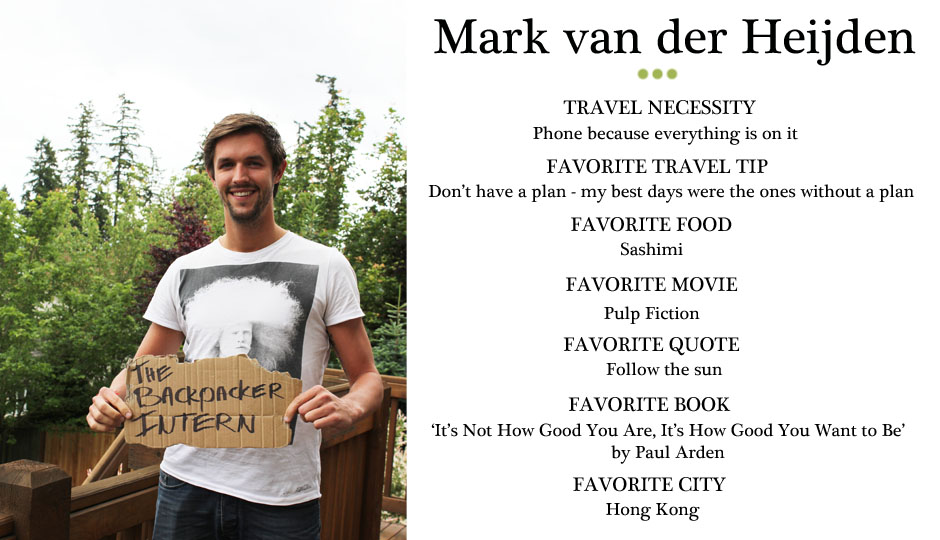
A guy who travels the world interning at cool companies in exchange for a place to sleep and something to eat? His name is Mark van der Heijden and he’s The Backpacker Intern. After spending years as a creative copywriter, Mark had an urge to do something different with his life and see the world. He had worked since graduation from school, and he felt that there was something missing. Instead of just quitting his job to travel the world simply as a tourist, he came up with a creative solution. He would intern at companies for a couple of days in exchange for food and shelter.

The result? Companies such as Red Bull, the Adventure Film School, and Nile Rodgers Productions, just to name a few on a long list, have exchanged survival basics for Mark’s skills. Mark blogs, tweets, and posts on Facebook about all of his cool experiences, and it’s as if we were traveling right alongside him. It takes courage and an acceptance of the unknown to travel the world and leave the comforts of home.

During some stops along his journey, Mark didn’t know where he would be the following week, where he would be working, or if he would have a place to sleep. By utilizing friends, contacts, and social media, Mark has been able to accomplish something unique and inspiring. Mark paid attention to the voice in his head craving something more out of life, came up with a solution and plan, and has been creating his own path every single day. If that isn’t seizing your youth, we don’t know what is.

Name: Mark van der Heijden
Age: 28
Education: Bachelor, Creative Communication (Copy, Concept & Strategy) at Fontys Hogeschool Communicatie
Follow: Twitter / The Backpacker Intern

How do you define ‘seizing your youth’?

Never put yourself in a situation where you are following the common track. Create your own path. Don’t listen to what people think you should do. Do what’s best for you.

What did you study at Fontys Hogeschool Communicatie and how did you determine what to study?

I studied Communications. I specialized in copy concept and strategy. After two years you could choose a direction, and I chose that because you could make a TV commercial. I wasn’t thinking too much about the future, but that major felt good. During my studies I did an internship and sold my first creative idea. It gave me goosebumps, and it was cool to be able to use my talents.

How did your journey as The Backpacker Intern begin?

I used to work in advertising in Amsterdam for six years as a creative copywriter. I had a good job, great friends, lived in a great apartment, and Amsterdam was amazing. I couldn’t complain, but still I had the urge of some kind of feeling. I wanted to see more of the world and do more. Right after school I had a job, so I never had a big break to see the world like other people sometimes do. I had a feeling that I was missing that, and thought that I needed to do it. I wanted to do it all the way and see where I would end up, so I quit my job and started The Backpacker Intern.

I booked seven tickets for six months. That was the original plan. I realized I didn’t have enough money to do all the things I wanted to do. I thought I could come up with an idea or two to make some money along the way. Then I discovered that it wasn’t about the money, but it was about the experience instead. The only things I actually need on a trip are food and a bed. I came up with the idea to exchange my skills for those things. Not money, but the things I need to survive.
b

How long was the process from when you had the idea to actually leaving?

I had the idea six months before and worked towards the departure date. In that time I crafted my idea and made it better. I procrastinated along the way, but the idea was too cool to pass up. I came up with a lot of names, but The Backpacker Intern stuck. I talked to a lot of people in creative industries and they helped me through my ideas and look at them with a different perspective. I bought the URL, and that made it official. The best feeling was when I had the logo. It was something. It wasn’t there yet, but it was alive.

As the departure date got closer, it became more real. One of my best friends and I brainstormed about making a video, and then we came up with the idea to use my cardboard sign in a film. We told the message in one take. I spread the video through my social media channels. I didn’t expect the project to get this big.

How did you determine your route?

I wanted to go to Asia, so I booked a ticket from Amsterdam to Bangkok. Then I wanted to go to San Francisco and Hawaii because I have friends there. From Asia I could go to Hawaii and San Francisco. I saw that I could go to Iceland from New York, and then from Iceland I’d go back to Amsterdam. The route is based on things I haven’t seen yet, the rates for the travel season, and where my friends live. It’s like an endless summer. I only have one sweater with me.

What have been the greatest challenges in your journey so far?

Planning everything is a challenge. I can now imagine why people who do a lot of things have an assistant. Usually in the daytime I’m working somewhere, but I also get a lot of emails throughout the day. I also want to stay in touch with my friends and family. I need to keep people updated with blog posts. If I don’t have a new internship, I have to decide what to do. I don’t sleep a lot, maybe three hours a day. I enjoy every minute, but it’s also work.

What would you do differently if you could start the journey over?

Nothing because then it would be a totally different journey. I believe that everything happens for a reason and that you learn from your mistakes.

A lot of companies have reached out to you. How do you choose which companies to work with?

I try to do a mix of work. I work at agencies, brands, and charities. Big companies and small companies. If I’m almost to a new city, I’ll coordinate with companies that have emailed me and arrange the internship. I Googled charity organizations in San Francisco because I wanted to work with dogs. I worked with Mutville Senior Dog Rescue, which was so cool. I emailed them and the owner replied. I worked there for two days and stayed at the owner’s house. It was so different.

What kinds of things do you do at your internships?

It’s like I’m a human pocketknife. I can do a lot of things. My profession is creative and advertising. I’m best at making concepts, ideas, and solutions for brands, companies, and people. I can originate concepts, write copy, and create strategies. I make films, but I also clean dog poop.

I worked at a soup kitchen in Malaysia and I was making food for homeless people and drug addicts. That was the internship and nothing else. I’ve enjoyed many different experiences. The whole goal is to help people and to learn from them at the same time. I’ve enjoyed working with people from different professions and cultures.

Leaving your comfort zone in Holland must not have been easy. What did you do to prepare yourself for this adventure?

I am not scared about stepping out of my comfort zone. I’m used to eating crazy foods and jumping out of airplanes. I’m not a rebel but I enjoy trying new things. I enjoy traveling so much that I don’t get homesick. My longest trip was four weeks, but I still wanted to do more. Of course I miss my friends and family, but with Skype I can still stay in contact. The best friends will always stay with you even if you don’t talk for a while. You can pick back up where you left off.

Have you experienced any major culture shocks after traveling the world?

I was pretty shocked by the amount of homeless people in the U.S. Especially in Oakland, San Francisco, Portland, and Seattle. I wasn’t aware of how big of a problem it is.
Mark photo backpacker intern

What advice do you have for youth who are interested in advertising?

Just start and make a lot of ideas. It’s all about your portfolio, so show how creative you are. There are a lot of creative competitions you can attend. It’ll help to win a competition and have people notice you.

It’s good if you try to find a mentor, someone you find inspiring. Just reach out to him or her and ask for 30 minutes of time to talk. If he or she says no, then move on to the next one. Sometimes you need advice from people who are way more up the ladder. If you don’t ask, you’ll never know.

Don’t be scared that your ideas are not good enough. I failed a lot and made a lot of campaigns that weren’t approved. I’ve worked for six months on a project and then the week before have it pulled. Just keep on going and keep on trying.

What are the top three traits that make a great intern?

Be open-minded. Don’t judge. Be crazy.

What motivates you?

I read a lot of books about creativity, watch great films and check out new and interesting products. It inspires me to make great things like that. It’s a really great feeling to make something.

The best feeling is if you create something that didn’t exist before and you can improve people’s lives. It’s so cool to make a change in people’s lives just by a thought you came up with.

What advice would you give your 15-year-old self?

Do as many internships as possible without getting paid. Besides school and a part-time job, learn as much as you can from inspiring and successful people. Offer your help for free. Work at places for free to learn new skills. Knock on the doors of Apple, Nike, Red Bull and ask to work for free because you want to learn. Learn how to help people without doing it for money.
Mark van der Qs

Skills

Starting April 1, the Carpe Juvenis team is going to take on a 30 day challenge. There are 30 days in April, hence why it is called the ’30 Day Challenge.’ There can be challenges every month, but we are starting this April and we’ll see how well it goes before committing even more time. Before the 30 Day Challenge even begins, though, we are faced with our first challenge: what to challenge ourselves with! How does one go about deciding what to improve and how to make something challenging? We came up with a list, and if you have any other suggestions, please send them our way!

It is tough to choose just one from this list, but we think that focusing on one challenging thing first will help us stick with it and actually achieve our goals. There is only one rule of this Challenge: do the thing you say you are going to do each day for the entire 30 days. That’s it! It might be hard, it might be the push you need to start something you’ve been delaying, and it might even be life changing. We can’t wait to find out.

30 Day Challenge Ideas (things you will do every day):

1. Don’t hit the snooze button.

2. Read the newspaper every morning.

3. Journal every day.

4. Read one play every night.

5. Exercise.

6. Take one picture a day.

7. Blog.

8. Cook a new recipe.

9. Go to bed early.

10. Send a handwritten letter.

11. Tell someone you love them.

12. Watch a movie.

13. Write a page of your novel.

14. Apply to internships.

15. Study another language for one hour.

Good luck, keep us posted on how it goes, and remember: good things take time.

prof risks
Skills

Often times we are inclined to view professional questions and inquires as risky, when in truth they might be exactly what you need to solidify your position within a company or stand out among the rest of your peers.

It is important to distinguish between calculated risks and frivolous risks. In general, calculated risks often yield a higher payoff, and that certainly hold true in a professional setting. While you should be willing to take risks to stand out and further integrate yourself with a team, you also want to make sure you have committed enough hours and effort to make sure the risk has a higher chance of success. For instance, you may be enthusiastic the first day of a new job, but think long-term: is a first-day risk better than a thought-out one that can be executed further down the line?

However, if you have a strong feeling it is time to take a risk, go for it.

For example, volunteering to take on an important role for a big project might seem risky, but if you are confident in your ability to successfully to complete the task at hand, then you should put yourself out there and make your abilities known. Showcasing your enthusiasm and hard work are vital parts of pioneering a young career, so step up and show them what you’ve got!

Another well-known and easily recognized situation in which we often do not take risks but should is in the money-department. As a young professional (whether you are an intern or full-time employee) you may feel as though inadequate work benefits and minimum wage pay are normal. While this might be the case for the first few months, it is essential for your future success that you start to consider yourself as an important player and integral member of whatever team you have joined. If you are working hard and proving yourself, you should never feel embarrassed or greedy to ask for better pay or benefit. While you may assume that your work speaks for itself, never assume that people are listening; you must become your own advocate. Speaking up for yourself can be risky, but it is a risk that might be worth taking so you can earn what you deserve to achieve your personal and professional goals.

Sometimes you need to go with your gut. Be confident and be thoughtfully risky.

What is a professional risk that you have taken?

Risk
Skills

Being a leader - at school, work, or in your own life - involves varying degrees of risk. If you are making a huge life decision, debating whether to put yourself out there to run for student government, or deciding to transfer schools, certain choices you make require risk-taking. Risk-taking is often much easier said than done and it might not come naturally to you. That’s okay. It takes time to become a risk-taker.

Risk is the possibility that something unpleasant will occur. When you take risks, there is the chance that the outcome you want might not happen, but there is also the chance that it could happen and be everything you wanted and more.

***

If uncertainty frightens or challenges you, keep these 12 tips in mind if you want to be a better risk-taker…

1. Step outside of your comfort zone. Taking risks means doing something that could make you uncomfortable, scared, and stressed. However, know that this is completely normal when you are about to do something that you might not normally do or if you have important things you are giving up to take this risk. Stepping outside of the bounds that you are naturally comfortable with will give you the courage to try new things.

2. Have faith in yourself. Trust yourself. You want to take a backpacking trip across Europe? Go for it! You are thinking about organizing a trash pick-up group over the weekend? You can do it! You have the ability to do anything, especially when you have faith in yourself.

3. Determine why you want to take a risk. What is driving or compelling you to do this thing you really want to do? What are you passionate about? Why now? Figure out why exactly you want to take a risk so that you can use it as fuel to get you started and to keep you moving.

4. Baby steps. Nothing happens overnight. Deciding to take a risk is the leap you make, but take baby steps to build your dreams and achieve your goals.

5. Be comfortable making decisions. Don’t think that making one decision will be “right” or “wrong.” This is not a test. Make a decision based on facts, your gut, and experience, and then deal with the consequences from there - good or bad. You won’t know until you make the first move.

6. Have confidence. You know why you want to take the leap and do something awesome and potentially off the beaten path. Tell others with confidence and let your dreams come to life through your words and actions.

7. Take strategic risks. Don’t just do something to do something. Think through what you want to do and how you plan to accomplish it. If you take a risk without thinking about the consequences or your safety, perhaps you are taking a risk that may in fact be too risky and just plain ol’ dangerous.

8. Identify your fears. What scares you and why? When you can pinpoint what makes you scared, you can then start to overcome those fears.

9. Build a support system. Your friends and family can be a fantastic support system, and on days when you question your abilities, talk to your support system to give you the boost you need to keep going.

10. It’s OK to ‘fail.’ It might be helpful to figure out your definition of failure. Many failures can actually be great when you learn from your mistakes to make you stronger.

11. Stay positive. There will be days you doubt yourself. Totally normal. Maintain a positive attitude so that when you slip out of your funk, you won’t have abandoned your goals due to a low moment that everyone has periodically. Think about what compelled you to take a risk in the first place and use that as positive energy.

12. Stop making excuses. Just stop! It’s too easy and it will prevent you from ever doing what you want to do. Leap, make baby steps, and take it from there. Less talking, more action.

What risks have you taken or want to take?