Carly - main
Professional SpotlightSpotlight

Being part of the online world means searching tirelessly and endlessly for other people who can provide us with fresh perspectives and new inspiration. Someone who continues to inspire us post after post is Carly Heitlinger of The College Prepster. We’ve been long time fans and were excited to meet Carly in person when we moved to New York City last winter. One of our favorite things about The College Prepster is how authentic her writing is and how much she shares with her online family (and we can’t forget Teddy!). When we sat down with her at a coffee shop on the Upper East Side, she was engaging, relatable, and outgoing.

From starting a blog in her college dorm room at Georgetown University to building it into a self-established brand and career, we are so impressed with everything Carly has done and can’t wait to see what she does next!

Name: Carly Heitlinger
Education: B.S. in Marketing from Georgetown University
Follow: TheCollegePrepster.com / Instagram / Twitter / Facebook

Carpe Juvenis: How do you define ‘Seizing Your Youth’?

Carly Heitlinger: I definitely think that the idea that there will always be a tomorrow and there’s only one today is great. We are so young and we have everything to gain and nothing to lose – so I’m so glad I started my company when I was 19 because for one I was a little bit naïve and I didn’t know what I was doing, and there was no fear because I literally had nothing to lose. I didn’t have to make money right away, I didn’t have to be financially independent, and I didn’t have to worry about a mortgage or a family. I think that the more you figure out now, the better off you’re going to be later. Make a lot of mistakes now.

CJ: You are the blogger behind The College Prepster, which you started when you were a freshman at Georgetown as a creative outlet. What are three most important skills that you use on a daily basis?

CH: I would say some sort of public speaking element is useful. I’m very introverted – I think that’s why I started a blog so that I could be behind the computer rather than in front of people – the fact is that I do have to go out and speak to people even though that’s not my natural inclination. But I’ve practiced so much that meeting strangers five years ago would have been horrifying, but now it’s normal and I don’t get as nervous. So being able to effectively communicate with people you don’t know is a huge thing.

Another skill is being hyper-organized. I think a big issue that a lot of people face is letting things slip through the cracks because they’re not organized. I think it’s the easiest thing you can do to set yourself up for success. Making sure you have a calendar, transferring things from your computer to your phone with iCalendar. Staying on top of your email. Making sure you’re paying bills on time. It’s boring being an adult, but at the very least you save yourself from a few headaches and embarrassment down the line. You don’t want financial mistakes you made when you were 18 or 20 to haunt you. Organization is a habit.

I also think that effectively managing stress is a big skill. It’s not as tangible of as skill as staying organized, but I think that a lot of people our age are prone to letting stress either freeze them or stop them from doing things that they want to do. There will always be stressful situations that come up from now until the day we die. If you come up with good strategies and mechanisms to deal with those now and get in the habit now, that will really help. Problems that seem big now and would become huge later won’t be nearly as big. For me, knowing that I need to wake up every morning and walk my dog, talk to my mom, go to yoga, eat healthy, and cut back on caffeine – doing little things that help minimize stress – you just work so much more effectively if you’re not going a mile a minute with your internal thoughts.

CJ: You have gotten really into yoga. How do you stay healthy and do you have a fitness routine?

CH: I don’t really have one, but I was on the crew team for seven and a half years. The first year I was actually a rower and ran – I was never actually boated because I was terrible – but I would run all day. And then I fell out of the habit and I was an athlete in the mental sense but not physically. I do think that keeping your mind active is a huge skill. But I’ve been really bad in the past about being healthy.

Part of it is a quarter life crisis and realizing that this is the one body I have. I need to be thankful for having my health. I think making the choice and decision and really committing to being healthy has been the biggest thing – before I wasn’t committed but now for some reason I feel like I really care. I try to only eat bad things in moderation. Yoga has been a great way to get back into it, and now I try to walk for 45 minutes or more, which I think is pretty easy in New York. And taking the stairs versus the elevator – little changes like that all add up. One big thing is that I’ve been trying to drink more water.

Carly - by Bekka Palmer 2

CJ: How do you do about setting and tracking goals?

CH: I’m a very visual person. I learn visually – I use big number lines to track things that I want to achieve. I’ll set goals in my calendar. I’m very number driven. Getting other people involved helps too. I also break things down into quarters. I think you can set goals for the week, goals for the day. Those are really tangible goals that can add up. I also set quarter goals for my business and it percolates down into my personal life, too. For example, a year seems like such a long time to me, but 90 days seems manageable. Three months – that’s totally doable. With the quarter system you can track things more easily.

CJ: What is a memorable Spring Break trip you’ve had?

CH: I’ve actually only ever had one Spring Break ever. I was always on a crew team so our Spring Breaks were training trips, which were actually a lot of fun. They were two-a-days, but when you’re with your friends it’s so much fun. Then my senior year I wasn’t on the crew team anymore and my family went on a trip together. That was my best spring break because it was my only real spring break.

Carly - CH Insta

CJ: What are some travel tips that you would recommend?

CH: The biggest tip I would have is traveling with people who are like-minded with what is important to you. If you don’t want to get wasted and drink a lot, don’t go with people who are going to drink a lot. You’ll be in an environment where you’re not having a good time for making that decision not to drink, or you’ll feel like you have to play along even if that’s not what you want to do. Maybe you find two girl friends who want to plan a crazy quick week-long turnaround trip to Paris and you don’t want to drink at all. Make sure that you’re surrounding yourself with people who make decisions that you want to make.

I would also say spend Spring Break with your family because you don’t see your family as much when you’re an adult. If you don’t want to spend it with your immediate family, spend time with people you love and who you want to spend time with.

CJ: How do you combat really hard days? What do you do to keep yourself positive?

CH: Sometimes I need to surround myself with great friends or call my mom to vent. And other times I need to just spend time alone. Going for a long walk or spending a night curled up in bed reading can do wonders for my mental health! I also repeat to myself, “this too shall pass.”

Carly - by Bekka Palmer 3

CJ: Is there a cause or issue that you care greatly about? If so, why?

CH: Mental health on college campuses! I contribute in small ways to specific organizations, but I know there’s more that I want to do. I personally had such a hard time adjusting to college life and really struggled. There were some very dark days, especially in the beginning. Luckily, I found help on campus that helped me get back on track.

CJ: What advice would you give your 19-year-old self?

CH: I would remind her that things work out. I spent too much time convinced that my world was going to end, or that one little problem was going to throw off everything. Everything resets, or you find a new course that was better than one you would’ve taken otherwise. Everything happens for a reason. You’ll figure it out as you go. It doesn’t matter if you don’t know where you’re going as long as you’re going.
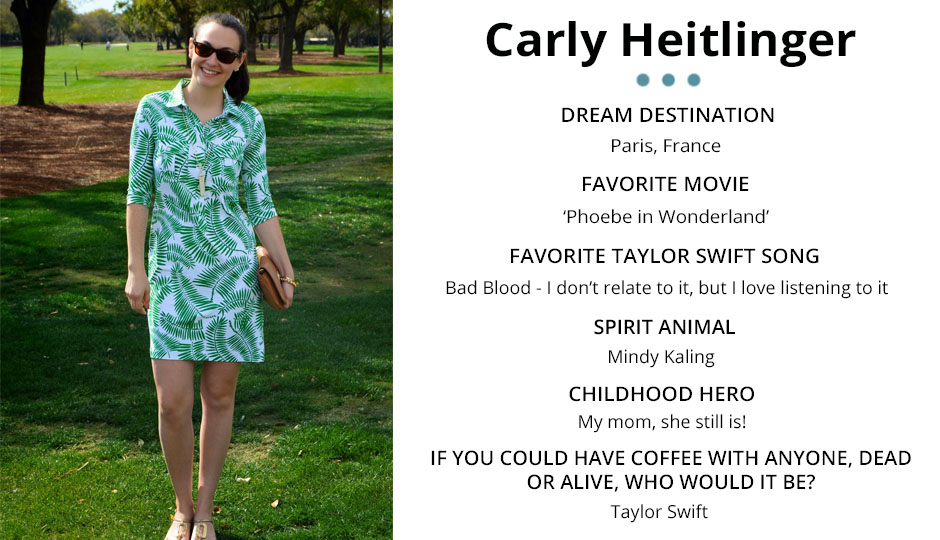
Carly Heitlinger Qs

Images by Bekka Palmer and Carly Heitlinger

JG 1
Professional SpotlightSpotlight

It’s not every day that we have the opportunity to interview someone who’s life ambitions are matched so closely to our own. Jessica N. Grounds, the co-founder of Running Start and also Director of Women for Ready for Hillary, is a champion for youth and specifically for women. While her professional career takes place in the field of politics, her mission and core purpose for the work she does is to empower young adults across the United States to engage with their communities, have their voices be heard, and make a real impact and change.

Jessica was gracious enough to answer some of our burning questions about what it’s like to be an advisor and leader in such a competitive world, and how she handles it all with grace and perseverance. We are thrilled to introduce to you Jessica N. Grounds.

Name: Jessica N. Grounds
Education: B.A. in Political Science from Pepperdine University; Graduate Certificate in Women, Policy & Political Leadership from American University; Executive Masters in Leadership from Georgetown University – The McDonough School of Business
Follow: Ready For Hillary | Running Start Online | WUFPAC | @Jessica_Grounds

Carpe Juvenis: How do you define “Seizing Your Youth?”

Jessica Grounds: Seizing your youth means taking risks and not letting what you think you “should do” get in your way. It’s so important to experience life and not hold back. I think it means to not let expectations get in the way of you stepping out and doing things. And especially for women, it’s very important for us to challenge ourselves and step out of their comfort zones.

CJ: What sparked your passion for politics and women’s issues?

JG: When I was in college, one of my classes required me to work on a political campaign. I decided to work for the re-election campaign of a local California Assemblywoman, Fran Pavley. Through that experience, I got to see what it was like to work on a campaign and how much responsibility you can have as a young person. But more importantly, I saw politics as a very public way to show people that women make decisive and strong public leaders. Later in my career I learned there are too few women in these important decision-making roles.

JG 4

CJ: You work with students who are not yet at the eligible age to vote. What makes young people so important and why has their empowerment become a primary focus in your career and life?

JG: My particular focus is to inspire young women to run for political office. What we find is that women don’t approach politics the same way men do. Girls don’t see politics as an avenue to pursue a career. We know that we need to talk to girls before they reach voting age to get them to consider political leadership. It is planting the seed early that is really instrumental in changing people’s perceptions, particularly for girls in leadership roles.

CJ: You’ve advised hundreds of female candidates throughout the country in their political ventures – what advice would you give to a young person hoping to set themselves up for success in the world of politics or non-profit?

JG: Build your network. Develop a robust network of people you know in different industries and communities. They will be vital to a potential political run because they will vote for you, volunteer, and donate. They’re also your ears and eyes to the people of the district. Build your people network and make sure it’s diverse in all facets of the word.

Think about where you want to be a political leader. Where do you want to build your network? Be strategic. Where you represent should fit who you are. For example, if you’re a conservative in San Francisco, you may not do so well.

Talk to people who have run for office before and get their advice about what they did to be successful. Also talk to those who have ran for your position to see what they did to win.

Lastly, don’t take no for an answer. Always ask, never assume.

JG 5

CJ: What has been one of the most unexpectedly interesting parts of your career to date?

JG: So, I’m now marrying a Republican who also works in politics. I’ve built this bipartisan network in both my professional and personal life, which has helped me with street cred and helps refine what I stand for as a Democrat. I feel like it also helped me hone how I talk about the issues I care about.

CJ: Every day in your life must be different depending on your projects and the time of year, but what does a Monday look like for you?

JG: I never plan anything after work on Monday’s. I am big on work-life balance. By creating these boundaries, it has helped me to better balance my work because I make sure to take care of myself. I always go to the gym on Monday nights. During the day, I don’t schedule a lot of meetings, if I can help it. Monday’s help me set the tone for the week and help me ease into things with control. I’m also on the phone a lot – building support for Hillary!

JG 3

CJ: You recently joined the ONE Campaign for a political delegation to Rwanda. What has that experience been like?

JG: That was a life-changing trip! Going to Rwanda was the most powerful experiences I’ve had to date. I was exposed to a lot of work that ONE champions to fund the combat against HIV/AIDS, malaria, and tuberculosis in sub-Saharan Africa. I also learned more about the economic empowerment space and how NGOs and government organizations are working together. I was particularly excited about the potential for women’s political and economic empowerment. I actually met with the Kate Spade team and they are producing product in Rwanda. Not only is it an effective business strategy to train women in the country, they are doing it in a way that was economically viable for the company. The line produced in Rwanda is called: “On Purpose.”

CJ: Leadership skills training for organizations and academic institutions is an area you thrive in – what are some ways young people can become better leaders?

JG: I always recommend learning how to talk about an issue you care about. Most people aren’t born with the ability to speak effectively, so learning how to be clear and concise in communication is really a powerful tool. Practice talking about what you care about, debates are effective. Also, work on your writing skills, that’s another tool you can use to talk about issues you care about. Push yourself to do public speaking exercises. Run for student government or sit on a board for an organization or volunteer for a local non-profit where you can be an advocate and speak about these issues.

Identifying mentors in your life will also help steer you in your career. Not everyone wants to lead and those that do sometimes feel lonely in their quest but finding mentors can encourage and nurture you to stay on the right track for inspiration. “Leadership is a lonely enterprise.”

JG 2

CJ: What is an area, either personal or professional, that you are working to improve in and how?

JG: I’m working on “being in the moment” more. I think as a professional type-A person, it’s very easy to think about what you did or didn’t do in the past, and what’s happening in the future. It’s difficult to be in the “here and now” and enjoy it for what it is. One thing that helps me do that is yoga (which I also need to work on doing more) because it helps you to think about your breadth and what you need to do in the moment. It’s a great thing to practice and cultivate.

CJ: Having a loaded schedule can sometimes be overwhelming. What do you do when you’re having a bad day and need to unwind or reset?

JG: If I feel like being healthy and unwind, I will go to the gym and work out hard and then hit the steam room because it makes me sweat. If I don’t feel like working out, I drink a very nice glass of Cabernet Sauvignon or Super Tuscan.

CJ: What is your favorite book?

JG: Old school favorite: Catcher in the Rye; New school favorite: Lean In.

CJ: What advice would you give your 20-year-old self?

JG: I would tell myself to chill out and that things work out the way they’re supposed to. Don’t be so worried about making the right steps all the time. I do feel lucky, though, because I found my passion very early in life and this helped me make decisions when there was a fork in the road. Over the years I have really learned to listen to myself.

Jessica Grounds Qs

Image: Jessica Grounds

CS 3
Professional SpotlightSpotlight

Here at Carpe Juvenis we live and breath Seizing Your Youth, and for that reason our community is filled with people who both chase their dreams and pursue other passions. Co-founder Catherine is currently a senior at the George Washington University where she focuses on Women’s Studies and Political Science. Last Spring she had the opportunity to take a Graduate class called “Gender & Violence” from Professor Chai Shenoy. An Attorney Advisor for Peace Corps, the Co-founder of Collective Action for Safe Spaces (CASS) in Washington, D.C., and an adjunct professor at GWU and WCL (WHEW!) this is one incredibly driven woman. As a creative activist, Professor Shenoy has worked for over ten years on national and local anti-violence initiatives through multiple platforms. She has represented survivors of gender-based violence and fought for their rights through policy creation and training of professionals and specialists in every field. As a professor she instills a sense of confidence in her students that they, too, can make a positive impact on their communities and help to end gender-based violence. It is a privilege to introduce to you Chai Shenoy.

Name: Chai Shenoy
Education: JD, American University, Washington School of Law; BA, UCLA
Follow: Twitter | LinkedIn | Collective Action for Safe Spaces

Carpe Juvenis: How do you define “Seizing Your Youth”?

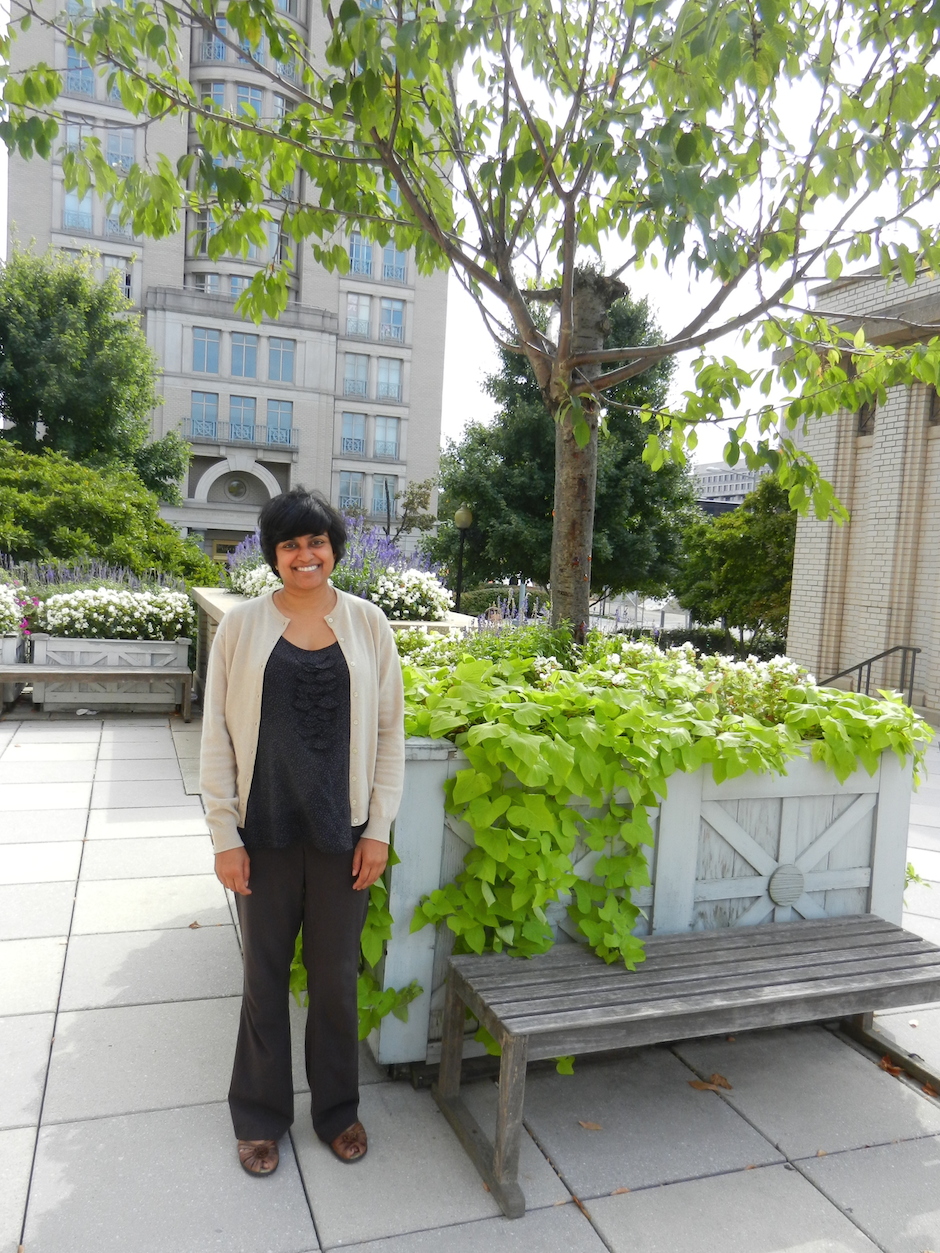
Chai Shenoy: I think that there are different definitions. For a lot of us, seizing your youth is about taking what is available to you and making use of all the tools that you’ve been brought up with, and that the community has given you. Then it’s about really going beyond your potential – seeing how you can go and actually address some of the issues that are coming up in the community. I think that young people are who can solve many of these issues that we are facing today. Without them we won’t be able to solve so many things that we hear about like dating violence, sexual assault, issues around power and privilege, issues around environmental concerns that are now causing so many wars and famines. I think that for me seizing your youth really means taking all of those resources and diving into what you’re here for.

CJ: What initially sparked your interest around women’s rights and activist work?

CS: I grew up in a family where my mother had a major role in my life and became my role model. She came from a culture where women aren’t necessarily given equal footing as men, and when she immigrated to the United States she continued with her passions, which are the sciences. She told me that you really have to fight for what you think is right in this world.

CJ: When and where did you discover your passion?

CS: It wasn’t until college that I figured out what I love doing. There are a lot of different things in this world happening to equalize women and children, but on my college campus I wasn’t really seeing that. There was so much unspoken violence; people weren’t talking about dating violence and sexual assault. Soon I became really vested in that work and in working with youth. While I considered myself at that time to also be a young person, I knew that I wanted to continue working with the population that tends to have the best ideas but who also have the worst advocates. You could definitely see that when it came to gender-based violence on campuses, and it was brushed off as an issue that was just part of youth culture and was accepted as the truth. Let’s say, for the sake of those critics, that gender-based violence is the truth – do we really want that to be part of our culture? That critical thinking came from how I was raised. I was told that I should be questioning right and wrong, and to have a strong moral ethic. Equality is important and we need to have it.

CJ: As the co-founder of Collective Action for Safe Spaces (CASS), how did you and your team transform CASS from a blog to a dynamic organization?

CS: To be quite frank, it happened very organically. It was really the community that utilized social media in a way that allowed voices and experiences to be heard. Sharing an experience of public sexual harassment by a stranger can happen once you’re at home, or in a safe environment. So our community in D.C. asked for us to start to do trainings on this, and it morphed into a lot of offline activism with an online presence, because that’s where community is.

CJ: You attended the Washington School of Law. In retrospect would you have made the same commitment now? What would you have done differently?

CS: Yes, absolutely. I would have been wiser about financial aid, looking for scholarships, and being more prepared about the fiscal responsibility that comes with any higher education. It wasn’t until my mid-twenties that I started to acknowledge that I have a fear of money and then needed to do something about it. I got a financial adviser and started to ask questions like “What are my fiscal goals in life?” That’s really the only thing I would be wiser about now – the fiscal impact. But with that said, law school for me opened up a variety of things. First it opened up my mind to critical thinking in a very focused way. I was critical thinking about applying legal structure to where I wanted the law to go, or making policy recommendations for youth rights, gender-based violence issues for teens, and education. All of those things were and are very important to me. Law school also opened up my eyes to the variety of jobs for people who have the skills of critical thinking. I would never replace going to law school. I think it was a magnificent choice, especially coming to the nation’s capital. It’s a beautiful place to be for people who are willing to push themselves and be challenged.

CJ: As an adjunct professor at the George Washington University and WCL, what do you hope your students take away from learning about gender-based violence?

CS: That they can be change makers. That you yourself can help stop the culture of violence. You don’t have to dedicate your entire life to it by becoming a lawyer or an advocate or a social worker, you - just as an average person - can stop somebody or question someone when they’re making a joke that is sexist or has an undertone of gender violence. Or when you raise your own family consider talking about the dynamic of how to raise a male, female, or transgendered child. How do you make sure that we continue to have conversations about ending gender-based violence? I hope that my students can walk away feeling empowered that they can do something. You yourself can make a difference.

CJ: Could you please tell me a bit more about your work with the Peace Corps?

CS: I should give the disclaimer that anything I talk about related to Peace Corps is from my own personal capacity and I’m not a Peace Corps representative. What attracts me about working at Peace Corps is the fact that it’s a federal agency organization that has a social justice mission to help people understand the United State’s culture, and for us to understand other countries’ cultures as well. One of the things I love about it – and this is going to sound odd – is that gender-based violence happens everywhere. It’s not unique to one region of this world. Sadly it’s a common thread amongst all of our cultures, and being at Peace Corps to work on sexual assault and gender-based violence issues has been such a privilege and an honor. Seeing how a federal agency can help a victim of sexual assault, and empower her or him to seek out services and make sure that they complete their goal of being a Peace Corps volunteer - that’s really our mission. We’ve spoken about gender-based violence as being an impediment, for example, to finishing college, it’s a reason why people leave their jobs, or potentially become isolated from their families. We don’t want the sexual assault or gender-based violence incident to be why anyone walks away from Peace Corps with. We don’t want that to be the defining moment, so it’s an honor to work on policies that hope create an empowering atmosphere for a victim of gender-based violence.

CS 2

CJ: How do you maintain – or seek to maintain – a work-life balance?

CS: It’s an everyday struggle, but I also think that there’s a false narrative we build when talking about work-life balance. I don’t think I’ve ever met anyone who has said that they’ve achieved that balance, male or female, with or without children. I think what you can do is acknowledge your limitations. Something that I’m learning about myself is that you don’t have to do everything all at once. You’ll be able to do everything that you want to do, it just won’t happen all at once. I think that in this fast passed social media world we see people doing things that we want to be doing, and we judge ourselves. I’m coming to realize that it’s us breeding our own notion of thinking we need to be doing things that we don’t need to be. You’re all right as long as you can live, and have a life, and be living out your passion or passions. So I don’t really think there is such a thing as work-life balance.

CJ: Do you think that the career advice to “Follow your passion” is good or bad?

CS: It’s very dependent on the person and what they need to be doing in his or her life. For someone who can follow his or her passion and have a day job that helps cultivate that passion, that’s great. But at the same time not everyone has the privilege to follow that passion and get paid or be reimbursed for it. But I think you have to do something that will make you feel vested in yourself. When you vest in yourself you vest in the community. That’s where so much local change and the ripple effects of change happen.

CJ: What advice would you give your 22-year-old self?

CS: I think I would say have faith in yourself more than anyone else in this world. I think we always question ourselves, especially in our twenties. And all of it is part of the normal developmental process, but you’re asking yourself a lot of deep questions. What am I doing with my life? Why am I here? How do I get to where I want to go? Those are all really deep and meaningful questions. Get to know yourself. You are your own best advocate.