Chris Morgan outside
SpotlightYouth Spotlight

It’s always great meeting ambitious youth because it makes us motivated to do more. One of these go-getters is Chris Morgan, a student at the University of Washington and the director and founder of HuskyCreative. Chris is a writer, a musician, and a constant learner. He not only runs HuskyCreative, but he’s involved with the Pearson Student Advisory Board, works as a programmatic media specialist at Drake Cooper, and he somehow manages to find time to complete his homework. Oh, and did we mention that he is also writing a novel? We were fortunate to pick up some time management tips from Chris (note to selves: stock up on legal pads!), discover how he balances college with his jobs and activities, and hear more about what his post-graduation plans are. Chris seizes his youth, and he does it with a can-do, positive attitude. Now, get ready to take some notes…

Name: Christopher Morgan
Age: 21
Education: B.A. in Business Administration: Marketing from the University of Washington
Follow: HuskyCreative | Twitter

Carpe Juvenis: How do you define ‘Seizing Your Youth’?

Chris Morgan: Seizing your youth is about action. It’s about doing something. I know a lot of people who have great ideas, but the difference between the people who are hailed as seizing their youth and people who don’t is just the fact that they went and did something. Millennials are the generation to not get a job, so we made our own. I think that’s really cool – not the part about us not getting jobs – but we have the most entrepreneurs of any generation and we get out there and do things with our own ideas. Seizing your youth is doing something now.

CJ: You are majoring in Business Administration: Marketing at the University of Washington. What does this major involve and how did you determine what to study?

CM: I was originally a Music composition and Creative Writing double major. I wrote music a lot and it was going to be my career for the longest time, but as soon as I tried to make money off of it, I started getting really stressed out. It was hard for me to do creative work and have that be the way to put food on the table. I looked for other occupations that had that creative influence but wasn’t personal or my work really, and that’s how I found marketing. I can be creative but I still have time to do my personal creative work on the side. I made the major switch in the middle of my freshman year. It was a natural shift for me and it felt right. I was writing better as soon as I took that stress off.

CJ: What has been your favorite college class?

CM: I have two, for very different reasons. One is a branding class that I took this past year with a professor who really understood branding and how to talk to undergraduates. It was originally a graduate course, but he wanted to teach it to undergrads. He showed a lot of faith in young people. He said that there’s no difference between graduate students and undergraduates students, we just know less. Graduate students are earning their MBAs and have worked in the field, so they think that they know a lot. The cool thing about the class is that he knew we didn’t have that preemptive knowledge. We didn’t start class thinking we knew everything. We had an open mind and it was a really fun class.

The other class was one I took in Singapore. It was hard and awful. I learned so much from failing. I was in a foreign country and didn’t know anybody, and I did horribly in the class. But I know so much about that topic now – it was about Game Theory in terms of marketing and using strategic negotiation tactics. It was way above my head. But now we talk about it in classes, and I know more about it.

CJ: You studied abroad at the National University of Singapore. Why did you choose Singapore and how was that experience?

CM: I was between two options – I could go to Singapore or Sydney. I thought that Sydney was too close to the culture I had grown up in, and the culture I had never experienced before was Eastern culture. It was really the only opportunity where I could dive in and experience it. I chose Singapore, and I think it was completely the right decision. You learn so much about your own country and culture by visiting another. I understand education a lot better, actually. I got to see how Eastern culture education differs from Western culture education. That was one of the coolest things that came out of my experience, learning how two people can learn so differently.
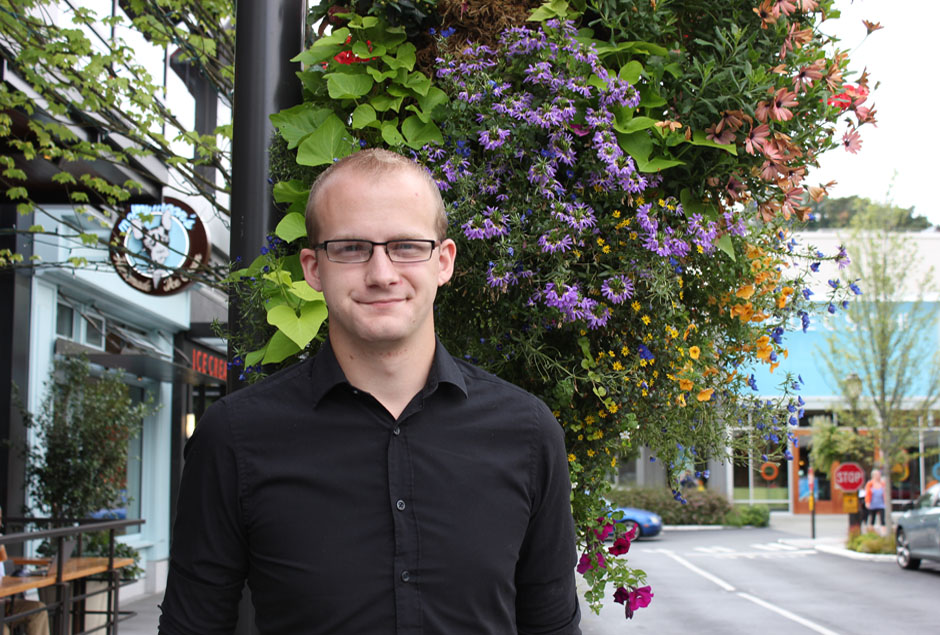
Chris Morgan

CJ: You can speak Spanish fluently. What language-learning tips do you have for those who are interested in learning how to speak another language? Are there any other languages you want to learn?

CM: Yes, definitely! I want to learn Italian. When it comes to speaking a language, the only way to succeed is to speak the language. It’s about not being afraid to speak in front of other people. When you’re more confident in yourself and practicing a language, you will speak the language better. I think classes are better than a book and a tape because in classes you can talk to other people. If you do use a book or tape, talk to a friend or to yourself alone a lot.

CJ: You mentioned you work with Pearson. What is your involvement with them?

CM: I work for the Pearson Student Advisory Board, which is a board of students from around North America who have been selected to advise on education. Pearson recognizes that education will be changing with the new generation and technology. They are bringing in students to advise their development and business. I’ve really enjoyed it.

CJ: You were a programmatic media specialist at Drake Cooper, a marketing services company. What is a programmatic media specialist?

CM: Programmatic media is new form of media buying that is more personalized and digitally enhanced so we can learn about impressions. When you click on an ad, I can tell where you’re from, how much money you make, whether you have kids or a family, what kind of products you buy, etc. It allows companies to save money because they can pick who they send ads to. It’s more efficient for the companies, and in my opinion, better for the consumers because you’re not being spammed ads for things you don’t care about.

CJ: You have had multiple marketing internships. What experiences have been your favorite, and what were the biggest takeaways from those experiences?

CM: One of the more defining internships was the one I had at the Pacific Science Center in Seattle. It was one of my first internships, and the best thing that they ever did was let me have autonomy. They let me own something. They let me dictate the success or failure of a project. It teaches you a lot about taking ownership and being creative with your ideas. A lot of first internships entail getting coffee and managing a calendar. Having autonomy was important for me because it helped me understand how to be successful.

I worked on organizing events. I worked on live event marketing, and I got to take on projects by myself and have a real impact.

CJ: You are the Director and Founder of HuskyCreative, a not-for-profit advertising agency at the University of Washington AMA chapter. What responsibilities do you have as the Founder and Director?

CM: When I started HuskyCreative, I had worked in marketing but not advertising. I didn’t know anything when I started. I was the finance guy, the HR guy, and the Creative Director. It was such a growing experience. I was a totally different person then. It was such a ride. Our first client was Shell Oil, which was awesome and scary. We had no idea what we were doing, but we used that to our advantage because we created a campaign that nobody else had done.

We exclusively hire college students because their opinions aren’t tainted by past experiences. They have a fresh look, and that’s how we succeeded at first. Hiring the first people was new, managing finances, writing contracts, this was all new to me.

For what I do now, it’s pretty similar but it feels like less because I know what I’m doing. Instead of writing the first contract, I’m taking the contract I’ve already written. A lot of my work is managerial, and I don’t do a lot of ad work. But I love it, and it’s been really incredible. This next year we’re trying to build a collegiate network of creative agencies. We’ll be a support group for people who want to do what I do or who want a creative agency at their university. It’ll be a really exciting year for us.
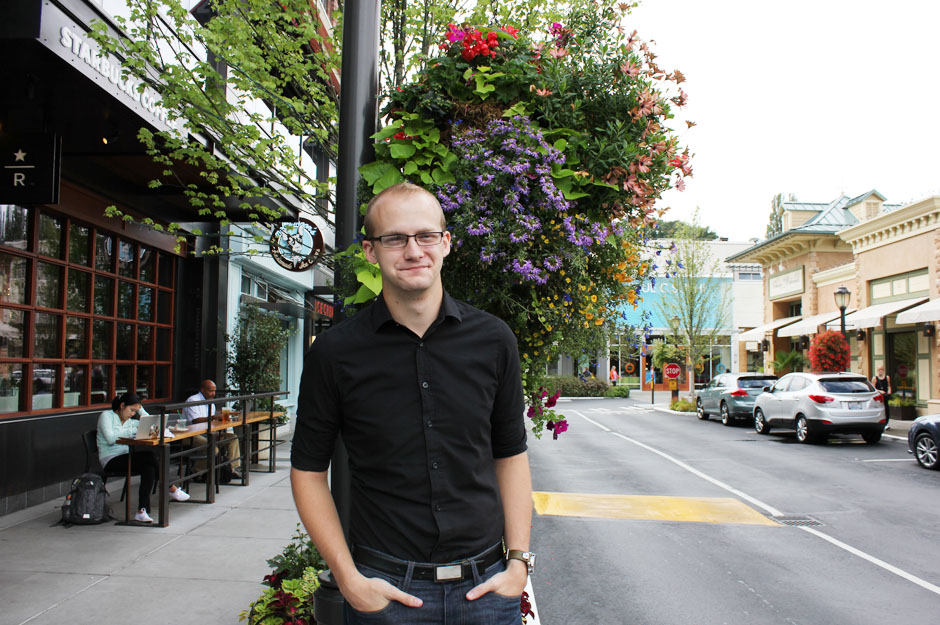
Chris Morgan 2

CJ: You have one more year until you graduate. Is HuskyCreative something you want to do after you graduate?

CM: The goal of HuskyCreative is to be an experience for the students. The reason we started the agency is because of the first job paradox: “This is an entry level position, but we’d like you to have two years of experience.” When people graduate from school, they might not have that job experience and they might not have been taught the correct things about the ad world, so we wanted to create a place where students could get this experience.

I want somebody else to take my job because this experience shouldn’t just be my own. I hope that it continues on for many years. We built it to be sustainable over the years. We want to help people gain experience so that they can get a job.

CJ: Music is one of your passions. How does music play a role in your life?

CM: I started playing the piano when I was four, and when I was eleven I started playing the improv jazz saxophone. I write a lot of piano music, and I have written a symphony. I’m working on my second one now. A lot of my writing isn’t jazz, but it’s my favorite thing to play.

CJ: You’re a writer. Tell us about the novel you are working on.

CM: I am working on a science fiction novel. I’ve been working on it for too long now. With running the company, I haven’t had the chance to really sit down and write. I’m awful at just sitting down to write. I’ve heard many times that you can write a story as an architect or a gardener. As an architect, you write an outline and construct the character story arcs. Or you’re a gardener and you have an initial idea and just start writing. It’s hard for me to let things just happen, so I spent a lot of time building the story before actually writing it.

CJ: What is your favorite book?

CM: The Wise Man’s Fear by Patrick Rothfuss.

CJ: What is your favorite magazine?

CM: Ad Age.

CJ: How do you balance being a college student with all of your jobs and activities?

CM: School comes first. You’re at school to learn. Passion helps with balancing. You’ll find that you’re more stressed out when you have obligations that you’re not passionate about. I wouldn’t try to fit in writing music or my novel if I didn’t love doing those things. Time management is awful, it’s hard, and there’s no one trick that I have. I just keep doing things because I love them.

CJ: How do you plan out your days?

CM: I plan things out on a week-by-week basis. I am notorious for making lists. I love legal pads. I carry mine around with me everywhere. I structure my calendar around my weekly goals. I like the structure and pre-planning for what I have to get done.

CJ: What does a day in your life look like?

CM: I work a 9-5, so I go to work. I have a separate to-do list for work, where I set up what I need to get done hour to hour. As soon as I get off work, I shoot off emails for HuskyCreative, sometimes I have meetings. I’ll have dinner, take some time to relax, and then I’ll usually do more work for HuskyCreative, and then write. I try to end my day with writing, it’s relaxing and is something I enjoy.

When school is in session, it’s a little more hectic because I’ll be running from classes to meetings. I’m usually working or in class all day. I try to finish as much as I can before dinner. It’s important to have an hour or two to just do whatever you want, whether that is writing or watching movies with friends. Whatever it is, you need that time.

CJ: What advice would you give your 15-year-old self?

CM: Have action. In high school I had a lot of time. I had the original idea for my book in high school, and that would’ve been a great time to get started writing it. I had a lot of hesitancy, and I thought the idea was enough. It’s hard to have that motivation all the time, but if you have an idea and are passionate about it, do something about it. Everybody has ideas, but not everybody does something about it.

Screen Shot 2014-08-18 at 8.01.29 AM
EducationHealth

Have you ever wondered how specific magazines, spam letters, or specific ads find you in the large nebulous that is the internet? Well, Twitter’s recent refurbishment of their ad-revenue model, which now closely resembles the model used by Facebook, gives insight into just how media executives use your electronic history to sell products.

Currently the social media site receives payment for every ad selected by a user. However, in the coming month, Twitter will offer companies the ability to control how they repay Twitter for advertisements. For example, a clothing website could pay Twitter only when a user is steered towards looking at the upcoming collection. Other options include payments after seeing a growth in followers for that specific company, number of app downloads, or the company could even pay for social media user’s email addresses in order to bombard them with advertisements. Before, one had to go out of the way to follow companies or click on ads, make it a personal mission to find media which would direct away from normal social media interactions, whereas now something as simple as retweeting can lead to pop ups and filtration of what content is received.

Like Facebook, Twitter users will have to consciously think about the choices they make on the site. By choosing to download the app, you are giving the company the ability to see your search history and make ads that cater to your previously visited websites. By clicking on an ad, you are telling Twitter exactly what it is you are interested in and allowing them to alter the type of media you are exposed to while its website.

This means that social media has further filtered what people are able to access online. Yes, one could still search for other things in media, but what will be received more frequently because of this new model is very watered-down form of media; diluted media that only exposes the viewer to small portions of what the planet is going through. And although Twitter and Facebook might find this to be an attractive idea for ad companies, they are putting their viewer’s content and the amount of cash earned from ads at risk- now it actually takes more effort to see more ads and earn money.

Either way, this situation limits what can be seen and done online. Someone who finds the ads for polls on celebrities will never see world news pop up on their feed, just as people who follow CNN will never escape the newsroom’s melodrama. This circumstance forces users of social media to be more scrupulous of what they search for online, because using these outlets of communication forfeit privacy and choice over what they consume.

Image: Flickr

c
Professional SpotlightSpotlightTravel

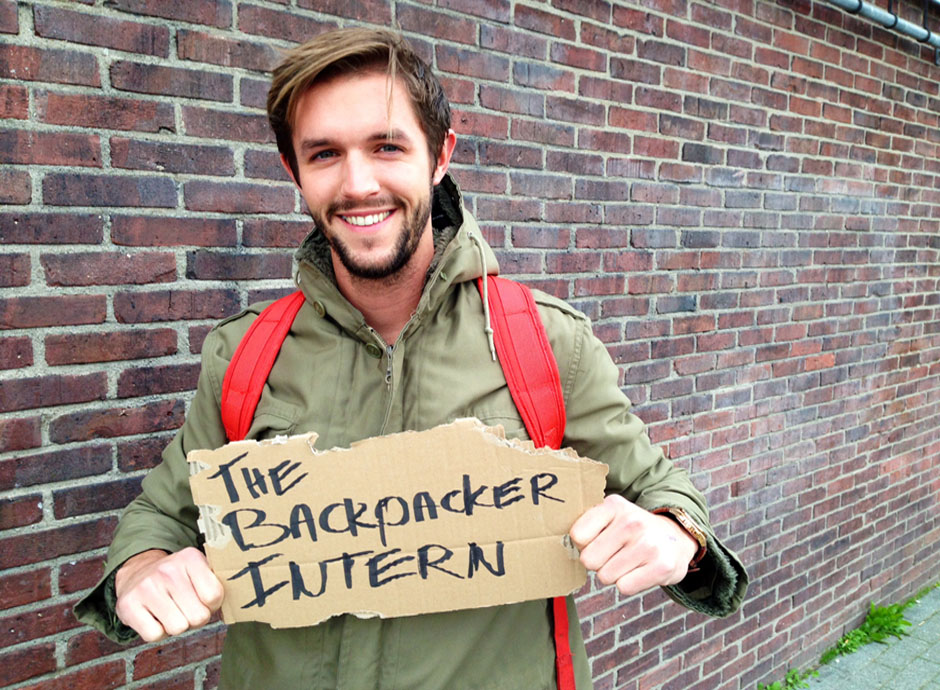
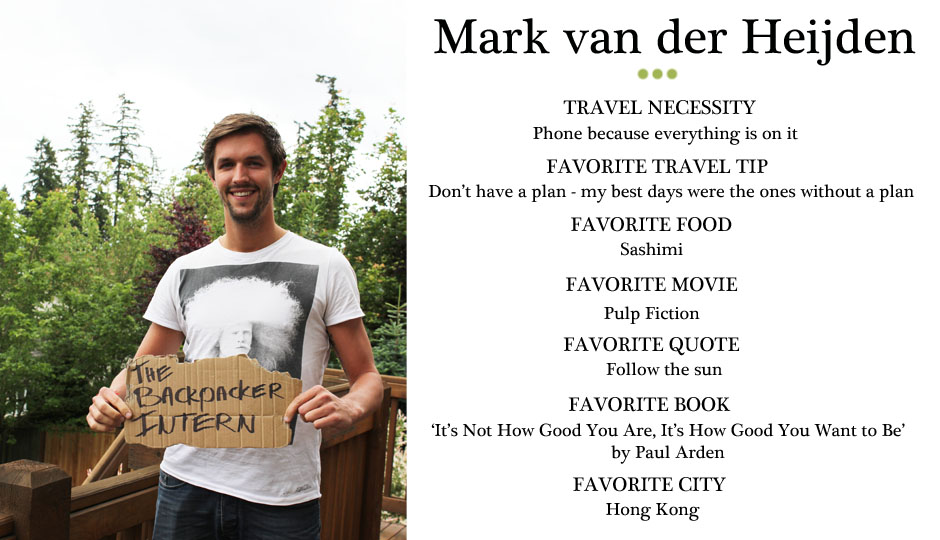
A guy who travels the world interning at cool companies in exchange for a place to sleep and something to eat? His name is Mark van der Heijden and he’s The Backpacker Intern. After spending years as a creative copywriter, Mark had an urge to do something different with his life and see the world. He had worked since graduation from school, and he felt that there was something missing. Instead of just quitting his job to travel the world simply as a tourist, he came up with a creative solution. He would intern at companies for a couple of days in exchange for food and shelter.

The result? Companies such as Red Bull, the Adventure Film School, and Nile Rodgers Productions, just to name a few on a long list, have exchanged survival basics for Mark’s skills. Mark blogs, tweets, and posts on Facebook about all of his cool experiences, and it’s as if we were traveling right alongside him. It takes courage and an acceptance of the unknown to travel the world and leave the comforts of home.

During some stops along his journey, Mark didn’t know where he would be the following week, where he would be working, or if he would have a place to sleep. By utilizing friends, contacts, and social media, Mark has been able to accomplish something unique and inspiring. Mark paid attention to the voice in his head craving something more out of life, came up with a solution and plan, and has been creating his own path every single day. If that isn’t seizing your youth, we don’t know what is.

Name: Mark van der Heijden
Age: 28
Education: Bachelor, Creative Communication (Copy, Concept & Strategy) at Fontys Hogeschool Communicatie
Follow: Twitter / The Backpacker Intern

How do you define ‘seizing your youth’?

Never put yourself in a situation where you are following the common track. Create your own path. Don’t listen to what people think you should do. Do what’s best for you.

What did you study at Fontys Hogeschool Communicatie and how did you determine what to study?

I studied Communications. I specialized in copy concept and strategy. After two years you could choose a direction, and I chose that because you could make a TV commercial. I wasn’t thinking too much about the future, but that major felt good. During my studies I did an internship and sold my first creative idea. It gave me goosebumps, and it was cool to be able to use my talents.

How did your journey as The Backpacker Intern begin?

I used to work in advertising in Amsterdam for six years as a creative copywriter. I had a good job, great friends, lived in a great apartment, and Amsterdam was amazing. I couldn’t complain, but still I had the urge of some kind of feeling. I wanted to see more of the world and do more. Right after school I had a job, so I never had a big break to see the world like other people sometimes do. I had a feeling that I was missing that, and thought that I needed to do it. I wanted to do it all the way and see where I would end up, so I quit my job and started The Backpacker Intern.

I booked seven tickets for six months. That was the original plan. I realized I didn’t have enough money to do all the things I wanted to do. I thought I could come up with an idea or two to make some money along the way. Then I discovered that it wasn’t about the money, but it was about the experience instead. The only things I actually need on a trip are food and a bed. I came up with the idea to exchange my skills for those things. Not money, but the things I need to survive.

b

How long was the process from when you had the idea to actually leaving?

I had the idea six months before and worked towards the departure date. In that time I crafted my idea and made it better. I procrastinated along the way, but the idea was too cool to pass up. I came up with a lot of names, but The Backpacker Intern stuck. I talked to a lot of people in creative industries and they helped me through my ideas and look at them with a different perspective. I bought the URL, and that made it official. The best feeling was when I had the logo. It was something. It wasn’t there yet, but it was alive.

As the departure date got closer, it became more real. One of my best friends and I brainstormed about making a video, and then we came up with the idea to use my cardboard sign in a film. We told the message in one take. I spread the video through my social media channels. I didn’t expect the project to get this big.

How did you determine your route?

I wanted to go to Asia, so I booked a ticket from Amsterdam to Bangkok. Then I wanted to go to San Francisco and Hawaii because I have friends there. From Asia I could go to Hawaii and San Francisco. I saw that I could go to Iceland from New York, and then from Iceland I’d go back to Amsterdam. The route is based on things I haven’t seen yet, the rates for the travel season, and where my friends live. It’s like an endless summer. I only have one sweater with me.

What have been the greatest challenges in your journey so far?

Planning everything is a challenge. I can now imagine why people who do a lot of things have an assistant. Usually in the daytime I’m working somewhere, but I also get a lot of emails throughout the day. I also want to stay in touch with my friends and family. I need to keep people updated with blog posts. If I don’t have a new internship, I have to decide what to do. I don’t sleep a lot, maybe three hours a day. I enjoy every minute, but it’s also work.

What would you do differently if you could start the journey over?

Nothing because then it would be a totally different journey. I believe that everything happens for a reason and that you learn from your mistakes.

A lot of companies have reached out to you. How do you choose which companies to work with?

I try to do a mix of work. I work at agencies, brands, and charities. Big companies and small companies. If I’m almost to a new city, I’ll coordinate with companies that have emailed me and arrange the internship. I Googled charity organizations in San Francisco because I wanted to work with dogs. I worked with Mutville Senior Dog Rescue, which was so cool. I emailed them and the owner replied. I worked there for two days and stayed at the owner’s house. It was so different.

What kinds of things do you do at your internships?

It’s like I’m a human pocketknife. I can do a lot of things. My profession is creative and advertising. I’m best at making concepts, ideas, and solutions for brands, companies, and people. I can originate concepts, write copy, and create strategies. I make films, but I also clean dog poop.

I worked at a soup kitchen in Malaysia and I was making food for homeless people and drug addicts. That was the internship and nothing else. I’ve enjoyed many different experiences. The whole goal is to help people and to learn from them at the same time. I’ve enjoyed working with people from different professions and cultures.

Leaving your comfort zone in Holland must not have been easy. What did you do to prepare yourself for this adventure?

I am not scared about stepping out of my comfort zone. I’m used to eating crazy foods and jumping out of airplanes. I’m not a rebel but I enjoy trying new things. I enjoy traveling so much that I don’t get homesick. My longest trip was four weeks, but I still wanted to do more. Of course I miss my friends and family, but with Skype I can still stay in contact. The best friends will always stay with you even if you don’t talk for a while. You can pick back up where you left off.

Have you experienced any major culture shocks after traveling the world?

I was pretty shocked by the amount of homeless people in the U.S. Especially in Oakland, San Francisco, Portland, and Seattle. I wasn’t aware of how big of a problem it is.

Mark photo backpacker intern

What advice do you have for youth who are interested in advertising?

Just start and make a lot of ideas. It’s all about your portfolio, so show how creative you are. There are a lot of creative competitions you can attend. It’ll help to win a competition and have people notice you.

It’s good if you try to find a mentor, someone you find inspiring. Just reach out to him or her and ask for 30 minutes of time to talk. If he or she says no, then move on to the next one. Sometimes you need advice from people who are way more up the ladder. If you don’t ask, you’ll never know.

Don’t be scared that your ideas are not good enough. I failed a lot and made a lot of campaigns that weren’t approved. I’ve worked for six months on a project and then the week before have it pulled. Just keep on going and keep on trying.

What are the top three traits that make a great intern?

Be open-minded. Don’t judge. Be crazy.

What motivates you?

I read a lot of books about creativity, watch great films and check out new and interesting products. It inspires me to make great things like that. It’s a really great feeling to make something.

The best feeling is if you create something that didn’t exist before and you can improve people’s lives. It’s so cool to make a change in people’s lives just by a thought you came up with.

What advice would you give your 15-year-old self?

Do as many internships as possible without getting paid. Besides school and a part-time job, learn as much as you can from inspiring and successful people. Offer your help for free. Work at places for free to learn new skills. Knock on the doors of Apple, Nike, Red Bull and ask to work for free because you want to learn. Learn how to help people without doing it for money.

Mark van der Qs