catherinegoals
EducationSkills

It may seem strange to consider that as adults we need to set goals. Aren’t paying bills, going to work, washing laundry, trying to exercise, and eat healthy all goals we already set for ourselves? Technically yes, but they are also the things we have to do to keep the gears of our life turning. Ever since graduating from college this past winter I’ve been searching for a system that will help me organize, prioritize, and improve myself in ways that extend beyond these necessities. This hasn’t been easy, and what I’ve come to realize very recently is that I don’t have to reinvent a brand new plan. What I am going to do is re-use the program I followed as a teenager and student and apply it to my life as an adult.

When I was 15 I registered for the Congressional Award program. This meant that for many years I was involved in four different program areas: physical fitness, personal development, volunteerism, and exploration or an expedition. I would create goals in each program area with my mentor, and together we would develop challenging goals and ways to work towards achieving them. For a long time I had a very specific reason to improve myself (earning a Gold Medal from Congress while simultaneously building my self-worth by doing things I loved). But once I graduated from college and earned that medal I realized that I haven’t been as ambitious or excited about improving myself as I used to be.

I’ve decided that I’m going to adopt the Congressional Award program model again and apply to this new chapter in my life. Instead of playing for my high school tennis team or training for a half marathon like I did as a student, I am going to set a goal to go to the gym at least four times a week and limit my eating out to two times a week for physical fitness. For personal development I am going to use Rosetta Stone to learn a new language and maintain my speaking skills from what I used to study. For volunteerism I am going to reconnect with an animal shelter I worked for in high school and get retrained as a volunteer. Every time I go somewhere new my goal is to read a book and do research on that location before I get on the plane.

What I learned about setting goals from when I was still a student is that they need to be realistic but challenging. I am not going to challenge myself to go to the gym seven days a week for two hours a day, because I know that given my work schedule that simply will not work. I also know my body and understand that burning out and being exhausted only leads to injuries and frustration. When setting new goals after being rusty for a while, it’s crucial that you be kind to yourself. Set goals, map out how you can achieve them, but don’t burden yourself with self-hate if you don’t achieve them perfectly every single day. Forgive yourself for not being perfect, and move on. Take baby steps and eventually you’ll have walked more miles than you realize.

Image: Life of Pix

image
InspirationLeadership

You know that feeling you get right after accomplishing something amazing? You feel like you’re on top of the world and that nothing can bring you down. All of your efforts have paid off and that goal you set for yourself has been completed. In certain ways you feel like you have come to a stopping point. WAIT. Hold on. Take two steps back. In those critical moments of feeling successful it’s too easy to fall into the trap of also feeling like you are done. You aren’t. There is always higher to climb, more to achieve, larger goals to set. Never limit yourself to thinking that you’ve achieved all you can - your wonderful story is not over. Next time you hit that mark embrace the moment, let it sink in, and then think “what next?” You have the power to make your life great. Never mistake a comma for a period.

homepage slider
CultureEducationHealthSkillsTravel

*Background information: The Congressional Award is an award for young Americans (the only award given to youth by Congress), and was established in 1979 by the United States Congress. As a participant in the program, you set and meet goals in four program areas: Voluntary Public Service, Personal Development, Physical Fitness, and Expedition/Exploration. Based on time commitments, you earn Bronze, Silver, and Gold Congressional Award Certificates and Congressional Award Medals.

I first learned about the Congressional Award in 2007. As a junior in high school, I thought that I was already over occupied with activities and volunteering. However, while I was involved in academic and extracurricular activities, I was not setting goals or measuring my achievements in ways that would help me grow and learn more about myself or my community. After learning more about the Congressional Award and realizing what new opportunities and growth I could experience from the program, I recognized that it was never too late to set goals and try new experiences.

The Congressional Award positively impacted my life from day one. From the moment I knew I could be a part of this program, I had no doubt that my life was going to change in a great way. While I have learned many lessons, there are three in particular that stand out the most. The first way the Congressional Award has played a positive role in my life is by allowing me to experience things I never would have otherwise.

For example, for my Gold Medal Exploration, I planned a road trip following the Mormon Trail and the destinations that my great-great-great-great grandfather documented in his journal as he led a wagon train to Salt Lake City, Utah. Through this journey, I learned a great deal about my family history, the difficulties my ancestors faced, and saw parts of the United States I may never have seen without the Congressional Award giving me the motivation and reason to do so.

The second way the Congressional Award has positively influenced my life is that it presented me with the chance to learn more about myself through the process of evaluating my strengths and weaknesses, setting goals, determining steps to make my goals a reality, and to improve upon my previous achievements. As I earned my medals and set new goals for each new level, I had to push myself further than I did before, and being able to self-analyze and learn what I was capable of achieving was eye-opening and critical in my self-growth.

The Congressional Award is an organized journey with the freedom to choose your own paths. It is because of the structure of the program married with the individual choice to decide what activities to be involved in that brings me to the third way my life has been positively influenced. Although participants earn Bronze, Silver, and Gold Medals as an amazing honor for accomplishing goals and hours, for me the program was never about the material achievements, but the personal non-tangible rewards I attained along the way, such as perseverance, dedication, self-motivation, and confidence. There is no question that the Congressional Award has positively influenced me, and it is an experience that has provided endless lessons and will remain a positive force in my life.

Next week, I will be accepting the Congressional Award Gold Medal from members of Congress. I have no idea what is in store, but I’m excited to find out. I will be tweeting updates about the journey via @carpejuvenis, so be sure to follow along! It is an honor to be awarded the Congressional Award Gold Medal, and it will be a very humbling and eye-opening experience.

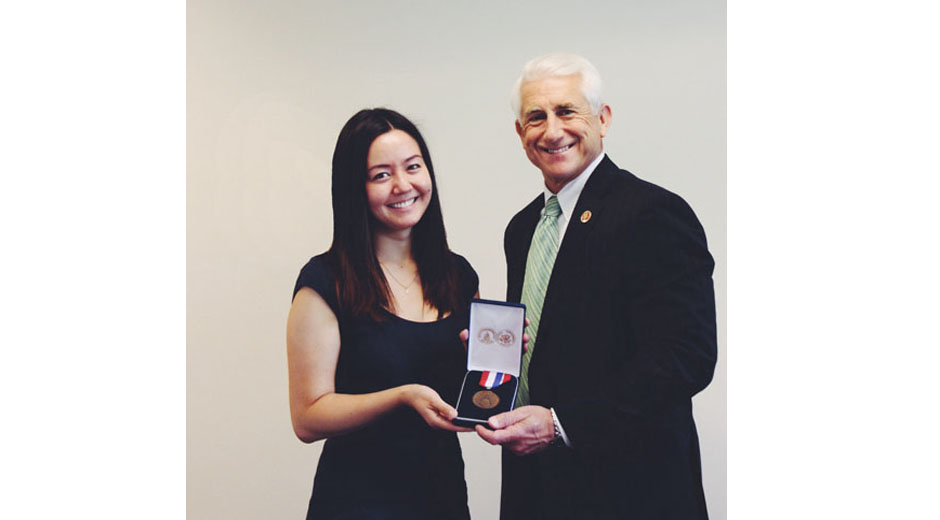
[The photo above is me receiving the Bronze Congressional Award Medal from Congressman Reichert.]