Professional SpotlightSpotlight

We met up with Ian Manheimer on one of the coldest days New York has seen in a long time. A leader in youth empowerment and an entrepreneur, we were extremely excited to get the opportunity to meet Ian in person. Ian is currently the Vice President of Product Management at Charitybuzz where he improves user experience and exercises his leadership skills by managing a team.

Ian is also the founder and president of RFK Young Leaders, a program of the Robert F. Kennedy Center for Justice & Human Rights. When he’s not busy creating new relationships at Charitybuzz, helping young human rights defenders take action for social justice and human rights, or generously helping those he’s met reach higher goals, he can be found working on some seriously cool projects like a book about pizza in NYC. Carpe Juvenis is excited to share the Spotlight of the inspirational and talented Ian Manheimer!

Name: Ian Manheimer
Education: BA in Communications and English from Tulane University
Follow: rfkcenter.org / @ianmanheimer

Carpe Juvenis: How do you define “Seizing Your Youth”?

Ian Manheimer: There’s a famous speech Robert F. Kennedy gave called “Day of Affirmation” that was given to a student group in South Africa during apartheid. It goes:

“This world demands the qualities of youth; not a time of life but a state of mind, a temper of the will, a quality of the imagination, a predominance of courage over timidity, of the appetite for adventure over the life of ease.”

He’s talking about a quality of youth where you’re willing to take risks and live in a much more open world of possibilities. Something happens when you get older where those possibilities become less, so he’s talking about trying to spread that spirit around the world to all people. Robert F. Kennedy is a huge part of the work I do and his shadow looms large over it.

CJ: You studied Communications and English for your undergraduate degree at Tulane University. How did you determine what to study?

IM: I love to read. I was always educating myself and reading books, even if they weren’t in the syllabus. They were the books I wanted to read. My major came from a passion of reading, writing, spreading around ideas, and having the boldness to think that I had an idea or two worth sharing at the time.

Communications and English are about expression. I love journalism, and the intersection of media and democracy. A functioning press in critical to democracy. In 2005, I graduated and a couple big, old newspapers were starting to shudder. I was writing in New Orleans for a couple of papers, but I didn’t think it was the right time to stake a career in that industry so I sat on the sidelines for a bit. I fuse those journalistic practices that I learned into my career.

CJ: You co-founded Glassbooth.org, a nonprofit site to help people decide who to vote for in public elections, when you were 24-years-old. The success of Glassbooth.org inspired you to pursue another online model, Measy.com, that could help people make decisions. How did you know when the right time to take the risk of starting your own company was?

IM: That was a really intuitive jump where I wasn’t the most informed or most capable, but there was an earnest feeling that if I made something I wanted to make and use, there would be others who also wanted to use it. I thought it could be a real thing of value, and then I went for it really hard. I had nothing to lose, and I still try and live as if I have nothing to lose. “Why not?” is always a great question, and a great way to overcome fears. I just grabbed some of the talented people around me and asked, Why not? For me, going from nothing to something for the first time just let me know that I was capable. You just have to jump in.

CJ: You are the founder and president of RFK Young Leaders (RFKYL), which is dedicated to empowering young human rights defenders and motivating a diverse community of young people to take action for social justice and human rights. What has it meant to you to be someone who is inspiring youth and helping people put into action what they want to do?

IM: It’s been humbling and amazing to be able to carry the torch for the work Robert Kennedy started. When he was killed, rather than build a huge monument to his person, his work lives on through his foundation and it allows his vision and dream to extend past his early expiration. Being able to carry that mission out to new generations has been amazing. It means a lot to me.

For me, what means the most is to bring young people into their first experience with social justice and civics, and for them to have a positive experience, and realize their power. This experience leads to a lifelong practice of civics and social justice. When I see those things happening, and those light bulbs going off, that’s what gets me excited.

We’re an all-volunteer program so I also have a day job. My role at RFKYL includes extending campaigns, like our main campaign, which is organizing New York farmworkers. Working with farmworkers, meeting with farmworkers, meeting with advocates of farmworkers. We’re growing the organization and opening new chapters across the country. We meet with young leaders across the country and connect young people with human rights defenders out there to spread inspiration and get young people excited about social justice issues. We’re trying to capture an entrepreneurial spirit of our generation within the confines of foundation’s work.

CJ: You are the VP of Product Management at Charitybuzz. What does your role entail?

IM: I’m responsible for internal products and the products you see on desktop and mobile. I extend business goals via our digital assets and try to create a better experience for our users. We work on making their lives easier and help them find the awesome things we have to offer. I lead a team of developers and designers. It’s a lot of interdisciplinary work bringing a whole company together around our main business goals as they manifest in digital.

CJ: In many of your roles it sounds like you take on a leadership position. What are two of the biggest lessons about being an effective leader?

IM: One thing I’ve learned about being a leader is that you have to let people create their own boundaries and then let them excel or fail within those. I never give someone a deadline, ever. I always ask when they think they’ll be able to get a task done and then hold them to their own expressions of what they’re capable of. It’s always better to give people the autonomy to succeed.

For me a leader is really an administrator and has a certain role, but he or she doesn’t have more votes than anyone else. It’s my role to inspire and to help people become their best selves. I love to invest in people and help them grow. It’s always a team. You’re a leader, but it’s no different a position than a designer or developer.

CJ: How did you go about learning the logistics of starting your companies (logo design, website/e-commerce platform, marketing, finance/budgeting, etc.)?

IM: I’ve never done anything that’s just me. I don’t think you can ever be successful when it’s not in a team. Everything you do will be the success of the team. For me it’s always been sourcing and aggregating talented people. I’m a bit of a generalist and I don’t have too many technical skills, but I can get a team together, chef it and whip it up, and it comes out great.

I have deep respect for technically talented people and always want to respect their craft and learn as much as I can. While I’m not a developer, I’m constantly learning everything my layman’s mind can take on. With anyone I work with, I try to understand what they do, out of respect.

CJ: What has been one of the most unexpectedly interesting parts of your career to date?

IM: I worked for this very ambitious organization called Dropping Knowledge and it was a combination of a team at MIT and artists in Berlin and they were trying to create this global knowledge platform. It was weird and wild and wonderful. I spent a month in Berlin with people who had open lifestyles, and it completely opened my horizons. For me that was an opportunity to do this wild thing, and that alone was enough for me to want to take that on.

CJ: What are your time management tips? How do you stay organized and efficient?

IM: I love products and tools to help you make your life more efficient. I surround myself with an ecosystem of products that will do the work for me. There’s a hubris people have about their own sense of time and concentration that leads to failure. For example, if you have a thought and you tell yourself you’ll remember it later, how many times do you go to conjure that thought and it’s gone? Having those things around you to manage your life is helpful.

For my daily management I use a tool called OmniFocus, which takes the Getting Things Done methodology and puts it into software form. It’s about getting the thoughts out of your head immediately and then sorting them later. There is one tool that I love called Boomerang, and what it does is ping me if I haven’t heard from you after sending an email. I then don’t have to remember our conversation and stress about it because the email will come back to me so I can keep the conversation moving.

CJ: What is an area, either personal or professional, that you are working to improve in and how?

IM: If I’m looking to make a hire at my organization, their interest in becoming better at the thing they do, is the number one quality I look for. I believe that you don’t have a mind that’s in a fixed state. I’m interested in growing my mind and being with other people who have that same appetite for self-improvement.

I’m interested in self-improvement in the form of expanding my mind through meditation or just trying to grapple with new concepts that are foreign and difficult. If I read an article about mathematics I won’t grasp too much of it, but it will challenge me in a way that will create new neural pathways. I’m constantly trying to immerse myself in some challenging things. Right now I’m learning how to code, which is challenging, but the challenge alone is the value.

CJ: Having a loaded schedule can sometimes be overwhelming. What do you do when you’re having a bad day and need to unwind or reset?

IM: My approach to mood is psychosomatic – there’s a mind body bridge. I try to be aware of that. I love to play basketball, do yoga, and these types of things to treat my body well and get as many chemicals firing in my brain. At the end of the day, gratitude is the most grounding concept that you go back to. If you’re having a bad day, think of someone having a worse day. It always works.

CJ: What book influenced you when you were younger?

IM: Fast Food Nation by Eric Schlosser.

CJ: What advice would you give your 20-year-old self?

IM: Nothing I’ve done has ever been just me. At a young age, I would be mindful about people around you who are great at the thing that they do. Be good to those people and do things for them and stay in touch with those people. Grow your network. After years of that practice, you can activate on anything.

I would also put a couple of dollars away. A couple of dollars when you’re 20 is a lot of dollars when you’re older. Think about your future self. I have a character who is Future Ian and I’m also thinking about this guy.

Ian Manheimer Qs

Image: Ian Manheimer; unsplash

grace main 2
Professional SpotlightSpotlight

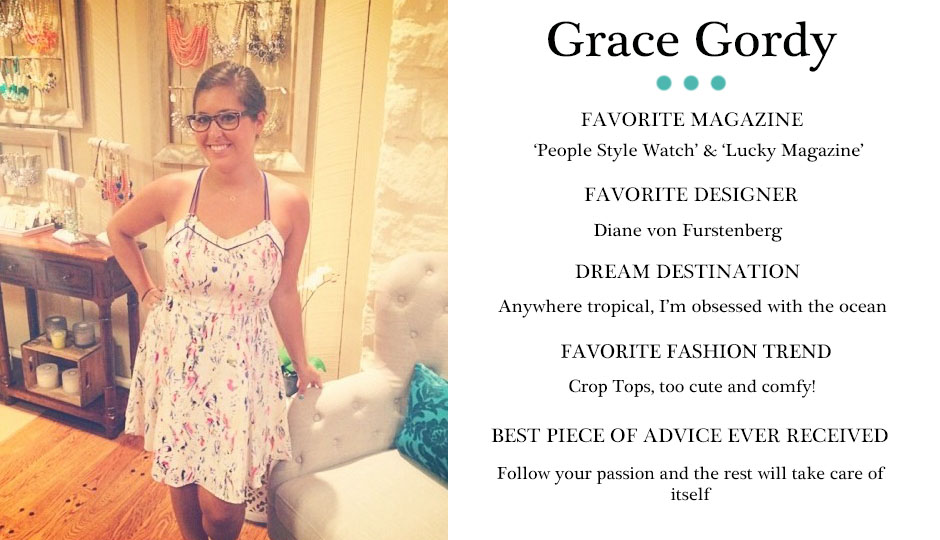
We met Grace Gordy at a Seventeen Magazine internship in college. We worked together in the fashion closet, and it was clear that this girl had an eye for style. Flash forward years later, and Grace is running her own clothing store, Honey and Hazel Boutique, in Georgia. A surprise? Hardly. Grace has serious determination and a passion for creative endeavors. It’s not every day you hear about a young twenty-something opening up shop with trendy (and affordable!) contemporary clothing.

Grace opened Honey and Hazel Boutique with her mother, and this power duo is impressing us with their positivity and desire to learn more through their experiences. From an early age Grace knew that she wanted to be involved with fashion, and daily she makes her dreams come true. After spending time interning in the fashion industry and working for other clothing stores, Grace learned many skills along her journey and implements them on a daily basis. We’re excited to introduce you to our friend, style inspiration, and total #girlboss, Grace Gordy.

Name: Grace Gordy
Education: BFA in Fashion Marketing and Management from Savannah College of Art & Design
Follow: Facebook / Instagram

Carpe Juvenis: How do you define ‘Seizing Your Youth’?

Grace Gordy: To me, seizing your youth is all about creating your own path in life (or “march to the beat of your own drum”) and not worrying about what others are doing. I used to get so caught up in what I thought I should be doing at a particular age and always felt behind in my “career path,” but now I realize how thankful I am for all of my experiences because it led me to my ultimate dream come true.

Also I think seizing your youth means taking advantage of all of the opportunities that come your way. Your youth really is the best time to explore, be creative, meet people, make memories and experience as much as you can. Just live life with no regrets.

Grace 3

CJ: You majored in Fashion Marketing and Management from Savannah College of Art and Design. How did you determine what to study?

GG: From a very young age I knew I wanted to be involved in fashion. I used to study fashion magazines from front to back and was determined to work for one so choosing a major was never any question; it was going to be fashion! I grew up in a small town where no one understood how you could make a career in the fashion industry and was actually told by teachers to go into a more “realistic” field, but I never let them sway me. My parents have always been so supportive of my choices and me and have always told me to follow my passion no matter what. I couldn’t be more thankful for them! For anyone interested in majoring in fashion I would certainly recommend that you look into SCAD (Savannah College of Art & Design). It was the most challenging four years of my life, but it paid off in a huge way. They have wonderful professors and a very well-rounded curriculum!

CJ: That’s incredible. You definitely put that education and the skills you learned to good use. Together you and your mother opened Honey & Hazel Boutique, a trendy contemporary clothing shop. We love that! What does your role entail and how do you and your mother divide up responsibilities?

GG: We are both co-owners so our roles basically entail everything! We both have total input into everything we do and are both always in the shop whether that means being on the floor helping our customers or in the office doing paperwork. She’s better at keeping up with the books and I handle most of the social media and marketing. We are very fortunate to have the kind of relationship we do; we are best friends, business partners, and mother/daughter. Opening this boutique together is such a great way for us to spend quality time together and do what we do best, which is being creative!

Grace 5

Grace 4

CJ: You’ve done many interesting things throughout your career such as interning at Seventeen Magazine, working as a stylist, working in marketing, and being a logistics and operations coordinator. What have you learned from these experiences and how have they influenced you with opening your own shop?

GG: Having numerous jobs and internships since college really helped me to determine exactly what I wanted to do. It has always been a dream of mine to open a boutique. However, I thought it would happen MUCH further down the road. There have always been so many facets in the fashion industry that I was interested in and thankfully I was able to work and dabble in different areas to know what I did and didn’t like. Earlier I said that working for a fashion magazine was my goal and I was so blessed to get an internship in New York City at Seventeen Magazine. It was the most amazing experience of my life thus far, but it definitely taught me that that is NOT the place for me.

As much as I loved New York and loved the idea of having a fashion job in “the big city,” I knew I wasn’t cut out for it. I like the south too much, what can I say? After graduating I ended up moving to Charleston, South Carolina where I absolutely fell in love with the town and its charm. I had a few different jobs there, but my favorite and the one that ultimately led me to where I am now was being an Assistant Manager at a little boutique there. I loved the team of girls I had the pleasure to work with and loved the smaller feel of a boutique atmosphere. I’m definitely a people person and it gave me the opportunity to get to know our customers, as well as do the fun stuff, such as merchandising and being creative. That job definitely made me realize I was ready to have my own store!

CJ: That’s really inspiring. As great it is to figure out what you do love to do, realizing what you don’t want to do is just as important. What are the greatest lessons you have learned from running your boutique?

GG: Always work hard, be kind, and have patience! Also I’ve learned when you’re feeling overwhelmed, just stop and take a breath. Everything will be okay! Running your own business is a TON of work, but it’s extremely rewarding!

Honey 3

CJ: What do you wish you had known before opening Honey & Hazel Boutique?

GG: Oh gosh, I wish I knew more about the accounting side and obviously that’s a HUGE part of having a business. Numbers and analytics have never been my thing. I’m a visual, creative person, but I’m certainly learning more every day.

CJ: What can a young person who is interested in owning a boutique do now to set themselves up for success?

GG: Get as much experience as possible! I interned at many different places to figure out what was best for me and what I wanted to do.

CJ: What would you say to people who are uncertain about starting a business? What motivated you to take the leap?

GG: Starting a business is scary and I honestly have learned so much over the last year that I never knew about before. My mom and I took the leap based heavily on faith. We were and are extremely passionate about what we wanted to do and believed in our idea. We just figured there’s no time like the present so let’s just work our hardest and see what happens! So far it’s going extremely well and I couldn’t be happier!

Honey 4

honey 9

CJ: Every day in your life must be different depending on what’s happening in the shop and the time of year, but what does a Monday look like for you?

GG: Typically Monday isn’t a super busy shopping day so it’s a good time to re-merchandise the store, order inventory, clean, and meet with my Mom about what’s going on that week or what we need to get accomplished. We normally have a gazillion emails to respond to and plenty of bills to pay! I’m always Instagramming our new merchandise and coming up with new ways to showcase our products. Trust me, there’s ALWAYS something to do!

CJ: What are your time management tips? How do you stay organized and efficient?

GG: I’m a big proponent of making lists, writing things down, and having a planner with me everywhere I go. I have the worst memory in the world so if I don’t set reminders on my phone and or write it down I will be sure to forget! Plus, it’s a good excuse to get cute organization supplies!

Honey 6

Honey 1

CJ: We agree! What is an area, either personal or professional, that you are working to improve in and how?

GG: I definitely struggle with trying to do everything myself and it can be really stressful and overwhelming. I am trying to work on how to better delegate tasks and jobs to different people. Especially as our business grows and we build a bigger team through employees, I need to learn how to not try to take on everything and let others help me. That is something I’ve always struggled with. It’s even harder now because my boutique is like my baby!

CJ: What advice would you give your 15-year-old self?

GG: I would tell my 15-year-old self to not stress and worry so much. Everything works out the way it’s supposed to and you just have to have faith and follow your dreams!

Grace Gordy Qs

Honey 2

Image: Grace Gordy

Katie b
Professional SpotlightSpotlight

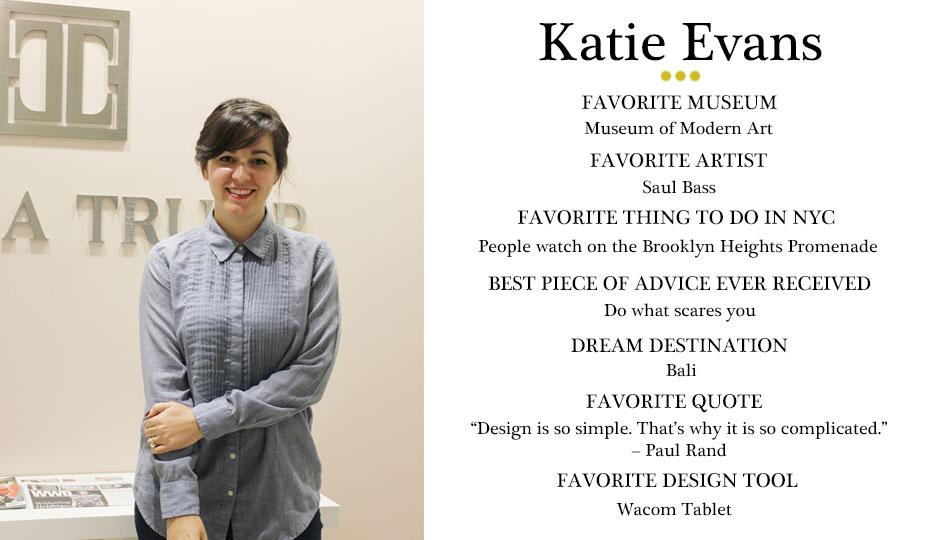
We fell in love with Katie Evans’ designs when we first laid eyes on them. It’s not hard to adore her bright and colorful designs. Having freelanced, worked at kate spade, West Elm, and Gap, Katie is no stranger to hard work and late nights. Now working as the Art Director at Ivanka Trump, Katie is involved with social media, editorial stories, and marketing. We were very excited to meet with Katie at the Ivanka Trump office in New York City, which is powdery pink and filled with inspirational images and quotes. We are motivated by Katie’s creativity and hard work, and we know you’ll be just as inspired.

Name: Katie Evans
Education: B.F.A. in Graphic Design from the Maryland Institute College of Art
Follow: @heykatieevans / katie-evans.com / ivankatrump.com

Carpe Juvenis: How do you define ‘Seizing Your Youth’?

Katie Evans: Taking chances and not being afraid to make mistakes. You’re young and now is the time to experiment with what makes you happy and what doesn’t.

CJ: You received your BFA in Graphic Design from the Maryland Institute College of Art. What sparked your love of design?

KE: I attended an arts magnet middle school and high school where I was a visual arts major concentrating in drawing, painting, and sculpture. In high school I continued those studies and did a crossover into the Communications department to take a graphic design class. CD album covers and booklets were what originally sparked my interest in design. I remember pinning them on my bedroom walls. I also designed a couple of covers for my friends’ bands.

When I was a junior in college, I still didn’t know exactly where I wanted to take my career. A professor gave me an assignment to spend a weekend collecting anything that I was attracted to. The next week I brought back a bunch of Martha Stewart’s Blueprint Magazines, editorial shoots from Lucky Magazine, and a bunch of fashion ad campaigns. My professor was like, “Duh, you should be in fashion.” I questioned her about how I could play a role in fashion as a graphic designer. She told me that fashion companies need graphic designers – they do the windows, the packaging, and the hangtags, etc.

Katie c

CJ: You are the Art Director at Ivanka Trump. What does your role entail?

KE: Ivanka started her licensee businesses a while ago, and she recently hired a small team to revamp and bring new life to the brand. We recently launched our new site, ivankatrump.com, that includes articles on work, style, travel, home and play.

I concept all of our editorial content on the site and our social media channels. Everyone does a bit of everything here because we are so small, which is great because you can be involved with different aspects of the brand. Our team makes all of our ideas come to life. I still do graphic design which I think a lot of Art Directors don’t do anymore. It keeps me on my toes.

CJ: You freelanced as an Art Director, Graphic Designer, Illustrator, and Consultant for years while also maintaining jobs. How did you go about securing freelance work, and what advice do you have for those interested in freelancing?

KE: I originally started freelancing because I needed the extra money. I always had a steady job and paycheck to fall back on, and freelancing let me experiment and find out what worked and what didn’t. For my first freelance job, I was paid $500 to design 10 different stationery cards for a new company. Looking back on that now is crazy to me. I want to smack my 22-year-old self and ask what I was thinking! I spent so much time on those cards. It should’ve been $500/per design. When I figured out what I wanted my freelance projects to be, I was able to pick the ones I liked the most. Most of my jobs came from word of mouth with a mix of referrals from social media and LinkedIn. I did freelance as a career for a little bit, and then Ivanka Trump lured me back into the corporate world.

If you’re thinking about going strictly freelance, you have to be passionate about what you’re doing. You have to be a go getter or you will go nowhere. You also have to be organized because now you are a bookkeeper, assistant, answering emails all day, and you still have to pump out the creative. It took time, but I was able to figure out how long projects would take me and account for client feedback to get it all done in time to start my next project. It was tricky to find that right calculation, so being flexible was important.

When I first went full-time freelance, I had nine clients. It was a disaster on my side, but I put on a good face for my clients. I had no social life, I was overworked, and I will never make that mistake again. I think the happy medium was 3-4 clients, with 2 recurring clients and 2 rotating projects. I had to be very strict with my clients about deadlines so that it didn’t interfere with other jobs.

women who work

CJ: How did you stay organized and efficient while balancing freelancing with your corporate jobs as a Graphic Designer?

KE: Google. Google has helped me do everything. I used spreadsheets for my bookkeeping and the calendar for meetings and deadlines. I would have each client assigned a different color so I could visually see the different projects I had. It worked because I could access those files from wherever I was – whether it was on my computer or phone.

CJ: You’ve worked as a graphic and web designer at some amazing places such as kate spade, West Elm, and Gap. What are your biggest takeaways from these experiences?

KE: The biggest thing I learned was that if I’m not passionate about the brand and what I’m marketing, I can’t do my job 100%. At kate spade, I lived and breathed that brand. The projects were so much fun. The kate spade team was very small so I was able to get my hands on everything, from window installations to stationery collections to working on photo shoots. I loved that so, so much. Every day was different and I was building a great portfolio.

The other companies I’ve worked for were much larger and at those jobs I was hired to do one thing and that thing only. They had huge teams to do everything and I realized through those experiences that I thrive better in smaller environments where I can play a part in all aspects of a project. I like to see things from start to finish.

CJ: What is the best part about being a designer? The most challenging part?

KE: The best part is telling stories. Just being able to tell a story about what a girl is doing and what she’s wearing and what she’s thinking and feeling. Finding a way to bring that story to life is the best part.

The most challenging part is finding the balance between making something beautiful but also selling that product. It’s tough to be conscious of both.

Katie a


CJ: Every day in your life must be different depending on your projects and the time of year, but what does a Monday look like for you?

KE: 7am: Rise and shine! Go for a run! #TeamIvanka is training for a half-marathon in April. Most of us are new runners and can’t imagine running 13 miles. So far 4.5 has been my most.

9am: Take the F train uptown. Read theSkimm on my ride up.

10am: Write out my to-do’s for the day. Respond to emails.

10:30am – 2pm: Plan our next editorial shoot, pull inspiration, select models, snap a photo of Ivanka for Instagram, and edit videos.

2:00pm: Lunch! If I eat too early the day goes by much slower.

2:30 – 5:30pm: Work with our Editorial Director to plan the next month of stories. Call people and brands that we want to collaborate with, design creative for our social media channels, a little bit of pinning to Pinterest.

5:30 – 6:00pm: Regroup with my creative team to make sure we’re meeting deadlines.

6:00pm: Out the door!

Trump Tower

CJ: What should a teenager or young adult who wants to be an Art Director or Graphic Designer do now to set themselves up for success?

KE: Be multifaceted in your line of work. If you’re a graphic designer, take a variety of art classes and learn as much as you can. You’ll be more valuable to your employer. As a designer, explore print, packaging, publication, digital, and visual. It will set you up later in your career to think about a project holistically.

Also, be nice. It still blows my mind how small this world is.

CJ: What is your favorite book?

KE: I just finished reading You Before Me by JoJo Moyes. I laughed and cried.

CJ: Having a loaded schedule can sometimes be overwhelming. What do you do when you’re having a bad day and need to unwind or reset?

KE: I like to take deep breaths, go to the gym, and shop.

CJ: What advice would you give your 15-year-old self?

KE: Your career path is going to be hard work, but it’s going to be worth it. And pay attention in your foundation art classes! Find a way to enjoy it and embrace your art style. You may think they’re boring, but they’re teaching you the basics of art that will come up in every aspect of your job.

Katie Evans Qs

Image: Carpe Juvenis

Professional SpotlightSpotlight

Erik Fabian has always enjoyed performing. As an artist working in performance, installation, and conceptual art, Erik is interested in the interaction between people and how “space and circumstances around that interaction shape your experience.” Erik is a graduate of the Master of FIne Arts program at the School of the Art Institute of Chicago and his experience at grad school greatly changed his work.

While working as an artist, Erik is also the Director of Brand & PR at Moleskine America. Erik tells stories about the Moleskine brand’s values while also inspiring people to create more. We’re definitely inspired - as huge fans of putting pen to paper, we are guilty of carrying our Moleskine notebooks around with us everywhere we go to note down ideas and to-dos.

Though busy, Erik has great tips for managing his time. How does he do it exactly? By identifying two or three big goals for the day, as well as smaller tasks to accomplish. Keep reading to learn more about Erik’s successful career, his creative process, and the simple yet effect things he does when he needs to unwind or reset.

Name: Erik Fabian
Age: 38
Education:
The Evergreen State College and the School of the Art Institute of Chicago
Follow: @ErikFabian / Instagram / ErikAndTheAnimals.com

Carpe Juvenis: How do you define “Seizing Your Youth?”

Erik Fabian: Take responsibility for your own happiness, impact, growth, and future. The sooner you take responsibility for yourself the more you can enjoy your youth and make choices that will help you enjoy your adulthood. I would define “responsibility” as being able to explain your choices and being willing to stand behind your actions whatever the outcome.

CJ: You are an artist working in performance, installation, and conceptual art. What sparked your interest in art, and why specifically performance art and installation?

EF: I have always enjoyed performing. I think of it as this very big, philosophical playground and lab. It is a kind of play that gets lost as you get older. During a performance rules of interaction can be rewritten and questions about the world can be explored. I also like that performance can be so physical.

I became particularly interested in how people interact and how the space and circumstances around that interaction shape your experience. That led me to create more installations and events. I currently express this interest mostly through my role at Moleskine in creating events and partnerships with artists/cultural organizations.

Erik F

CJ: You are a graduate of the Master of Fine Arts program at the School of the Art Institute of Chicago (SAIC). What was that experience like and how did you determine where to study?

EF: At the time I wanted to explore performance in a broad sense…that included both the history of theater and the history of visual arts. That choice narrowed my options. You can do more tradition theater work in several places or be the conceptual/performance person in a more visual arts focused program but a mix is rare. When I met the faculty at SAIC I felt it was a pretty good fit and it was a well-regarded school and I was fortunate to get accepted.

I loved being a grad student and having the time and resources to think alongside very talented people. I enjoyed getting a stronger sense of visual art history and how visual artists work. It also gave me a vocabulary to talk about my work and other people’s work. The experience did change my work a great deal. For one thing, I wanting to experience how to make solo work after working collaboratively for a long time and had time to do that. The funny thing is that most visual artists I met had worked solo for so long and were looking for collaboration.

In the end your network is a key professional asset you take from any graduate school experience. I unfortunately didn’t want to live in Chicago permanently and left much of that network behind after the program. If you can, go to school where you want to live.

CJ: Your work explores notions of value and how we value art and the experience of performance. How do you come up with ideas and topics for your work, and what is your creative process?

EF: If I am working alone, I just follow my interests. My interests are usually are obvious based on the kind of reading and media I am consuming. I read a lot. I consume a lot of media. When working with others, it starts with conversations about interests and using formal idea development sessions. I am the kind of person who has way more ideas than time and resources to execute them.

To develop an idea into something for sharing, I set some kind of restraints around a project based on my interests, current resources and go from there. The process helps refine/reduce all my ideas and to fill in the blanks where needed. My process is a combo of doing structured, practical things and just noodling on ideas. For instance on the practical side, I start with making a calendar and working backwards, setting goals that lead to the result I want. On the looser side, I tend to draw lots of simple representation of ideas for aspects of the work.

Often I find I have clear ideas about the space and sequence of events first. I also tend to summarize the project as a kind of poster at some point. Getting on your feet and doing things rather than talking is a powerful way to move things forward when making a performance. When doing other kinds of projects, rapid-prototyping is the same kind of idea with a similar contribution to the process.

Erik F 3

CJ: What advice would you give to a young person who wants to be an artist and creatively branch out on their own?

EF: First on the creative side, don’t ever be shy about pursuing your creative life. Everyone has a creative spark - nurture it, practice daily if you can, find what thrills you, hang out with other creative people, consume art that excites you, and enjoy yourself. With that said, I think your question is asking more how to become an “artist” as in not someone who doesn’t just makes stuff but has an audience and ultimately might be a professional.

I say don’t become an “artist.” There are too many vague “artists” in the world and the opportunities to express yourself isn’t limited to just traditional mediums like painting or poetry. You need to become something much more specific and powerful than an “artist.” “Artists” rarely have a sufficient audience to sustain a professional career. I know a ton of talented people who are doing odd jobs so they can paint or whatever and maybe get a lucky break. I have heard that most MFA graduates stop making work in six or seven years after graduation which I find sad and it should scare you. Find a niche where your interests, talents, refined craft, and the story you tell about yourself makes you very different than everyone else.

Andy Warhol isn’t an artist – he is a clever guy who took the notion of the commodification of visual goods and made his life into a metaphor for the industrial system. In doing so he created a ton of work that was easy to sell and still sells while also hanging out with kooky folks and living a life where he got to express ideas to an audience who cares.

You can write a similar blurb about any successful “artist” as well as people who express via entrepreneurship, social work, politics, or whatever. What is the blurb you want people to write about you? Write it without using the word “artist.”

On your way to living your blurb here are a couple other things I have noticed. Take your creative impulses and refine them into a craft – people with good technical skills in any traditional medium always have it easier. Identify a creative process that helps you consistently produce work – people who create a lot of work have it easier. Learn to talk about your work with non-“artists” – people will constantly ask you what you do and need a concrete response and these folks are your potential audience. Think about your work as a business and learn how the business of your relevant art market works – the people who are good at business and marketing have longer and bigger careers. Get really good, be really interesting, get good advice, handle your personal finances responsibly, and don’t let the pursuit of this professional stuff squash your creative self.

CJ: You are also the Director of Brand & PR at Moleskine America. What drew you to Moleskine and what does your job entail?

EF: I basically tell stories about the values that underlie the Moleskine brand. These values are the bedrock that supports the kinds of objects and experiences Moleskine designs and shares in the world. I also have a mandate to expand and protect the brand both as it is understood both among Moleskine America staff and in the public. If you take the time to look at Moleskine.com for instance you will see that the company has a ton of stuff going on. I help spread the word about these activities to our fans and try to inspire folks to create more.

I was attracted to the values of Moleskine and liked the design of the notebooks. The role they offered fit my experience as someone who has a background in the arts and expertise in creating events.

CJ: What has been one of the most unexpectedly interesting parts of your career to date?

EF: I have sat in a privileged seat as the head of the brand at Moleskine America. Moleskine is one of the most passionately loved brands in the world and I am constantly impressed by the creative outpouring Moleskine fans put into their notebooks. I have certainly learned a great deal about building a successful brand and how the power of arts/culture contributes to building a brand like Moleskine.

CJ: Every day in your life must be different depending on your projects and the time of year, but what does a Monday look like for you?

EF: There are different periods that focus on planning, budgeting, and execution of projects over the year. Most days I start by setting my to-dos and reviewing my calendar. I then jump into emails unless I have a pressing document to write. My days are dotted with meetings both with staff and external folks. Most of the work at an organization of any size is focused on alignment and focusing of everyone’s effort.

CJ: What are your time management tips? How do you stay organized and efficient?

EF: I identify two or three big goals for the day and maybe two to four small tasks I want to get done. This helps me focus. I try to keep my unread email basically at zero. I keep a digital calendar up to date for meetings and create dedicated project calendars for anything important. I take notes in a Moleskine notebook of course and find being able to write/draw ideas and notes helps me be efficient because it roots the information in my brain more powerfully than typing.

CJ: What is an area, either personal or professional, that you are working to improve in and how?

EF: Finding time to be as physically active is always a challenge. I am always experimenting with how to be efficient at getting some movement into my week.

CJ: Having a loaded schedule can sometimes be overwhelming. What do you do when you’re having a bad day and need to unwind or reset?

EF: Walking when the weather is warm is great. I like to get out of the city and camp when I have time. I like to cook and go to restaurants. I also read a lot and consume a lot of media. I have been a long time meditator and have found a rigorous seated practice hard to maintain in NYC, but I takes aspects of that practice that I apply throughout my day.

CJ: What advice would you give your 20-year-old self?

EF: Don’t wait for anyone else to take action. Go forward and people who are interested in your path will show up alongside you.

Erik Fabian Qs

Image: Erik Fabian, Emilie Baltz, Rachel Scroggins

Marla Beck 3
Professional SpotlightSpotlight

We met Marla Beck on a rainy day in downtown Seattle. As Founder and President of Andelcare, one of the Seattle region’s most recognized and award-winning home care agencies, Marla is one busy woman. However, when we sat down to chat with her about why she started Andelcare, how she learned the ins and outs of business, and advice she has for youth, she was generous with her time and wisdom. Marla is passionate about helping others, caring for loved ones, and traveling the world. Read on to learn about how Marla seizes her youth, the greatest lessons she’s learned from running her own business, and the greatest moment of her career so far…

Name: Marla Beck
Age: 56
Education: Business and Accounting degree from the University of Washington
Follow: Andelcare / Twitter

Carpe Juvenis: How do you define ‘Seizing Your Youth’?

Marla Beck: Doing things that bring me passion and that I enjoy. I’m pretty spontaneous. Even if it’s just watching a bug crawl across the patio – just because you’re an adult doesn’t mean you can’t do things you enjoyed doing as a kid. I try to enjoy the moment.

CJ: What school did you attend for undergrad and how did you determine what to study?

MB: I went to the University of Washington (UW) because I almost go into the Naval Academy and wanted to major in International Relations, but the economy was really bad. I didn’t get an eyesight waiver, so I couldn’t go. I went to the UW because it was close. I didn’t know what I wanted to do but I was highly motivated not to live at home. I noticed that people getting jobs were the business and accounting majors, so I became an accounting major. Accounting is a great skill to have and it’s very practical.

Marla Beck 5

CJ: You started your career as a Certified Public Accountant (CPA). What was your first job out of undergrad?

MB: Auditing for Arthur Anderson. At the time it was a big accounting firm. It was not very exciting and you look at spreadsheets all day. I made sure that things added up on the spreadsheets. I only did that for a year, and then I moved onto tax.

CJ: You are the Founder and President of Andelcare, a premium home care agency providing companionship, homemaking, personal care, nursing services, hospice care, nurse advocacy, and care management. What motivated you to start Andelcare?

MB: I started Andelcare because I was at a point in my life where I wanted to try something different. My business acquaintance also wanted to start a company so we looked into senior care, which was just starting out. I think I got to where I’m at now because I learned to delegate things that I’m not good at. I couldn’t have grown without my team. Starting my company was a gamble and a little out of character, but I just needed to do something different.

CJ: How did you learn the business skills you needed to run your company?

MB: I went to classes. I joined an organization where you pay to get trained. I learned more about business framework, business plans, and procedures manuals, and I went to every seminar and webinar. I basically learned as I went. I had the business side down with the accounting background, but there was still a lot to learn.

I also belong to the Women’s President’s Organization, and I asked a lot of questions. I was working seven days a week with no time off. The main thing was that if I provided the best possible care for senior citizens, that’s the goal. Remember that and work backwards.

Marla Beck 2

CJ: What does your role as President entail?

MB: I delegate as much as possible because I don’t want it to be all about me. In case something happens to me the company can keep going. I still deal with the high level finances, and other smaller tasks, such as renewing the liability insurance. A job for a leader is to be more of the visionary and the cheerleader. I make sure my staff knows that I appreciate them, and I also want them to grow in their jobs. I do marketing and finance, but a lot of it is making sure the ship is on a path.

CJ: What are the greatest lessons you have learned from running your own company?

MB: Ask a lot of questions and don’t be afraid to admit when you don’t know something. When you run your own company, you have to do some soul searching and realize your strengths and weaknesses. I have more perspective about things and try not to take things so personally.

It was also really important for me to find a support group. Find your posse that you can exchange ideas with. I found that with the Women’s President’s Organization.

I’ve also learned to be grateful for what I have. If I’m having a bad day, then I try to remember that in an hour it’ll be better. Focus on the positive.

CJ: What are some ways young people can become better leaders?

MB: Watching who the leaders are in your life and deciding what’s working and what makes you feel good and bad about them being the leader – those are important things to note. Read leadership books and attend seminars. Leadership is also human nature. People like to work for people that they like and trust.

As a leader, you still have to get your job done, but if you let your people know that you trust them and are letting them make their own decisions, that’s great. Set clear goals and provide the freedom for people to find the best way to do their job. Let people know that if they need help, they will have support.

Marla Beck 1

CJ: How do you stay organized?

MB: I multitask a lot. I wish I could say I wrote everything down, but a lot of it is in my mind. I’m better organized because I delegate everything. To guard your time, you have to be laser focused and determine what’s important and what isn’t. My Outlook calendar keeps me the most organized, and it syncs to my phone which is convenient.

CJ: You are also the former President of the Fred Hutch Magnolia Guild, which benefits Fred Hutch’s mission to eliminate cancer and related diseases as causes of human suffering and death. Can you tell us more about that?

MB: We help raise money for Fred Hutch cancer research. We bring treats to the cancer patients and help with the Chef’s Dinner event that is put on every year. We’ve raised almost a million dollars for research.

CJ: What should a teenager or young adult who wants to run their own company do now to set themselves up for success?

MB: Work for as many companies as you can. You’ll learn a lot working for someone else. Try to do everything in the company and ask a lot of questions. Work in the industry that you’re interested in.

CJ: What does a day in your life look like?

MB: The first thing I start my day with is coffee. Some days I’ll workout in the morning. Then I’m in front of my computer checking my emails and calendar. Sometimes I’ll have speaking engagements, meetings, or office work. It really varies and my days are a lot freer than they used to be.

Marla Beck Quick Qs

CJ: What is the best moment of your career so far?

MB: Getting recognized for being a woman business owner and having my mom there. I was named the U.S. Small Business Administration’s Washington State Business Person of the Year in 2012. My mom is supportive and the hard work paid off. As a woman business owner, I can still do it my way and still be successful and be recognized for it. Having my mom, friends, and staff there was so exciting.

CJ: What advice would you give your 20-year-old self?

MB: Try to enjoy the ride a little more and don’t be so self-critical. A lot of stuff that seems important in your twenties really isn’t. I also would’ve started asking more questions at a younger age. It would’ve been nice to have an older person or mentor to show me the ropes.

Image: Carpe Juvenis

Emily c
Professional SpotlightSpotlight

Meet Emily Armstrong. She’s sweet, thoughtful, and insanely talented. At just 23 years old, she is a graphic designer at Barneys New York and is tasked with projects such as creating woodland creature masks for children, designing posters for brand invitations, and collaborating on exclusive cosmetic bags that are incredibly chic.

Passionate about art and illustrating, Emily raves about modern art, her love of design, and how she one day hopes to live in Paris. She is a big-time reader and loves to spend her free time at The Strand. We’re big fans of Emily and her work, and we love the best advice she’s ever received: ‘Make yourself proud every day’ and ‘Focus on your cool.’ It’s pretty obvious that she’s got the cool part down pat.

Name: Emily Armstrong
Age: 23
Education: B.F.A. in Graphic Design and Drawing from the University of Missouri-Columbia
Follow: Blog / Portfolio / Instagram

Carpe Juvenis: How do you define ‘Seizing Your Youth’?

Emily Armstrong: I realized that when I was in school, I had such an advantage. People were more likely to reach out to me because I was a student and young. They were willing to share advice because they didn’t see me as competition yet. Seizing my youth meant realizing that I was at such an advantageous place and not letting that hinder me but taking advantage of it.

CJ: You received your BFA in Graphic Design and Drawing from the University of Missouri-Columbia. What sparked your love of design?

EA: My love of art came before my love of design. Art started for me when I was very young. In second grade I was drawing caricatures of my classmates. I realized that I liked to draw clothes and people, but design came later. In college I decided to study art, and my parents were a little hesitant. They introduced graphic design to me as a more marketable skill. I ended up loving it after I took a few classes. Those classes sparked my love for design.

Design is everywhere. The visual language is more personal when you’re so close to design.

Emily A 1

CJ: What was your favorite class in college?

EA: I loved multicultural literature. We read a book about a different culture every few weeks and discussed it and gave presentations. I love reading, and I think it’s a romantic skill and related to art from a storytelling aspect.

I liked my beginning physics class a lot.

My favorite class was my portfolio class. Our first assignment was to create 20 images in any medium, and we only had a couple of weeks. The professor just wanted us to start hashing out our ideas that we had built up and to not overthink the images we were making. I ended up with a lot of cool images that I’m still proud of even though it was my junior year in college. I’m inspired to continue adding on to that body of work.

CJ: You are a Graphic Designer at Barneys New York. What does your role entail?

EA: I’m a print graphic designer, so I make our print collateral - things from signage in the stores to books and catalogs in the mail and invitations for events. I can be really creative with these projects. For example, if a designer uses a print in their collection a lot, we might pull that image and make it a liner in the envelope. I love seeing the finished product and having it in your hands.

Right now I’m working on a special project that is in collaboration with Baz Luhrmann, and I get to do some fun drawings. I drew masks of woodland animals for children who come visit the stores. Barneys gives me the freedom to use my skills and have freedom with my work. I’m so excited to be a part of the Baz campaign – he’s a hero of mine.

Emily A 5

Emily A 4

CJ: You’ve interned at some amazing places such as Donna Karan and Barneys New York. What are your biggest takeaways from these experiences?

EA: A lot of my experience with Donna Karan was really about New York. It was about getting acclimated to New York as well as the internship. No one thought it was lame that I was from Missouri – I thought I was going to stick out like a sore thumb.

I felt really empowered by the city and having this internship. I had never learned about fabric before, and my internship was in the fabric department. They would give me a swatch of fabric and I had to source it in the city. I had to find a similar weight and content of that fabric swatch with a specific price point. I was set free to do the project, and while that might seem overwhelming, to be able to complete a task like that and do it well was the most empowering thing. Donna Karan was about me feeling confident with myself and in the city.

My Barneys internship was instrumental in getting my job now. Because I had the New York experience before, I learned a lot of skills and how to be detail-oriented. I was learning from the best, and this internship was helpful with my aesthetic sensibility.

Emily A 2

CJ: You were a Student Ambassador for Stylitics, the largest digital closet platform on the web. What were your duties as a Student Ambassador?

EA: That was such a crazy chapter in my life because during my first summer here there was a Parsons program put on that I attended. At the networking brunch, I met the founders of Stylitics and they asked me to be a part of this program. My duties were to spread the word about Stylitics, so I did street style photography on-campus, I talked to student reporters, and generated buzz for this company.

The founders wanted to start a high school program, and my sister was in high school at the time, and I offered to help make a promotional poster. A reporter from the Wall Street Journal saw my poster and she reached out. The conversation was about Stylitics and the ambassador program, but I formed that bond with her and ended up being in that huge newspaper.

CJ: What is the best part about being a designer? The most challenging part?

EA: I love arranging elements, making beautiful compositions, and making textures with text.

The most challenging part is my tendency to always want to illustrate everything. I can’t help it. Restraining myself from illustrating, creating something graphic, and working with type.

CJ: Every day in your life must be different depending on your projects and the time of year, but what does a Monday look like for you?

EA: I like to wake up a little early at 8am so I can make my French press coffee and bagel, and then take some time to read. I get ready, take the train to Rockefeller Center. Recently I’ve been working on a brand’s invitation and poster. After work I love going to yoga. I encourage everyone to do yoga – you get strong, healthy, and energized. Then I go home and eat leftovers.

Emily A 6

CJ: Having a loaded schedule can sometimes be overwhelming. What do you do when you’re having a bad day and need to unwind or reset?

EA: I try not to let it show in the office ever. After work it’s nice to do some cardio so your brain can be free. Taking that energy from the stress and replacing it in a better way is so important.

CJ: What is your favorite book?

EA: Just Kids by Patti Smith or 100 Years of Solitude by Gabriel Garcia Marquez.

CJ: What advice would you give your 15-year-old self?

EA: If you don’t like volleyball, that’s okay. Focus your attention somewhere else. You don’t have to be the best at everything. You should not feel lame about wanting to do art, embrace the music you like, and don’t be overwhelmed with social situations. There’s a huge reset button when you graduate high school. Do the best you can and not be wrapped up. I’m so happy for all the reset buttons in my life!

Emily Armstrong Qs

Images: Emily Armstrong; Lauren Jessen

SM 1
Professional SpotlightSpotlight

We met up with Shavanna Miller, the Co-Founder and CEO of Bloompop, earlier this fall in a coffee shop in the middle of bustling downtown Washington, D.C. Having grown up in the area, Shavanna knew the in’s and out’s of the metropolitan streets and kindly helped point lost passerbys in the right direction. It’s no wonder that she now runs an online marketplace that connects consumers with the best local florists across the country (think ‘Etsy for flowers’) - she is a natural community builder. Apart from providing beautiful flowers and an incredibly easy and enjoyable browsing and purchasing experience, Bloompop’s true success is in helping small businesses and consumers build a stronger community network.

Shavanna graciously shares her career trajectory, how she stays organized, and why she ultimately decided to come back to D.C. after having lived in so many great cities. This entrepreneur is making the world a better place one bouquet at a time, and we’re so excited to share her interview and introduce the face behind the flowers.

Name: Shavanna Miller
Occupation: Co-Founder/CEO, Bloompop
Age: 29
Education: The German School of Washington D.C.,B.S. in Environmental Science and Film Studies from Columbia University, London School of Economics and Political Science
Follow Shavanna: Facebook | Twitter |LinkedIn
Follow Bloompop: Bloompop | Instagram | Facebook | Twitter

Carpe Juvenis: How do you define ‘Seizing Your Youth’?

Shavanna Miller: One thing I’ve tried to do is always say yes to opportunities. Whenever I’ve had to make a decision on something that could be important – whether its deciding to take a new job, making a leap into entrepreneurship, taking on additional work for a committee, or even helping someone else out – I’ve never regretted taking those opportunities - even if not everything pans out. There are a few times I’ve regretted not taking them for some reason or another, and that kind of regret is much worse. So my definition of Seizing Your Youth would be to act rationally about the opportunities you might take, but to ultimately take those opportunities, especially early on.

CJ: You studied film and environmental science at Columbia University – How did you decide what to study?

SM: Those were two topics I really loved on a personal level. For a while I thought that I was going to be working in film so a lot of my internships in school were related to that. I worked at a production company and an agency for actors. Those experiences were very fun and I still have many friends working in that industry. But somewhere along the lines I realized it wasn’t exactly what I wanted to do. The environmental side of things was a personal interest that I’ve always had. When I was growing up I raised and bred aquarium fish. My parent’s basement was filled with aquariums; I think I had 30 aquariums or so when I left for college. That was a lot of fun and it was how I learned about basic genetics, water quality, etc. I probably started that in the fifth grade and it’s something I hope to get back to when I have the space again.

bloompop

CJ: What did you do after you finished studying at the London School of Economics and Political science?

SM: When I finished graduate school I went back to New York. I started my career at Meetup, which was a great introduction to both the startup and tech worlds. It was smaller then than it is now, so I really had a chance to interact with every department. Eventually I left Meetup to go to Rosetta Stone in Washington, D.C., which was a fantastic experience as well and is also a great company. I was promoted there to ultimately be the head of web sales for the US consumer side of the business. I was responsible for a huge part of the company’s global annual sales – definitely a big, exciting thing to have on your shoulders. I had an amazing team there and we did everything from social marketing, to managing email and paid search platforms, to working with affiliates, you name it – basically anything related to digital sales. I managed a team of seven people who each had their own specializations. We were a very young, fun team and I loved the company.

CJ: What tools do you use daily to keep yourself organized?

SM: My sister is also an entrepreneur - she’s the CEO and co-founder of Kabinet based in New York – and the two of us have an ongoing debate about how we manage our time, and what tools we use. There are so many tools out there you can use, and I feel like you can have as many apps as there are people since everyone manages things differently. I’ve tried a million of them, but honestly I always end up coming back to a notepad and pen. I keep trying to figure out how to modernize this classic method with technology. I heard about a partnership between Moleskin and Livescribe recently which sounds like it could be exactly right for me. And of course I also use google calendar for meetings so it can sync to my phone, but for actual tasks I always come back to paper and pen To-Do lists. Old school.

CJ: What made you decide to come back to D.C. where you grew up after living in a couple of different cities?

SM: I actually came back to D.C. because of the Rosetta Stone opportunity. I wasn’t necessarily looking for a job here, but it came up and it was an exciting opportunity. So it was almost a coincidence that I grew up here, but it’s great being around my parents again and being back in this city.

bloompop2

CJ: Where did you get the inspiration for Bloompop?

SM: I’m someone who has always personally loved flowers, and what I discovered as I looked into this space was that it’s a really outdated industry in more aspects than I’d initially realized. I knew that the experience for consumers was really terrible, but it was shocking to discover how detrimental it is to the florists themselves. Local florists will often work with a mega-network like 1800flowers etc, but they don’t get to create any of their own designs, have no creativity in the process, and to add insult to injury often barely make money off of those orders. I’ve actually spoken with many who literally lose money on filling orders for the big flower behemoths. It was an industry ripe for disruption. I decided to take my experience in digital sales and tech, combine it with my love for flowers, and tackle this outdated industry with better quality products, better tools for both florists and consumers, and modern tech and marketing experiences.

CJ: What has been the greatest success since having started Bloompop?

SM: Definitely putting my team together. Matt, my co-founder and CTO, for example, is brilliant and also somebody who is such a perfect cultural fit with the company. The two of us get along amazingly and I’m finding that that’s incredibly important. We all spend so much time together, so being able to find the right people – on both a personal and professional level – has been one of my biggest successes. It was a very deliberate thing in finding them and building our team; it wasn’t something I took lightly.

CJ: Can you please tell me a bit about your past experience with The Craft Factory?

SM: I’ve always been into DIY projects. Craft factory was something I started when I was back at Meetup. It was a group that came together every month and worked on a project together. I think that DIY is a stress reliever for me because at Bloompop so much of my day-to-day is digital – from web sales and marketing to product work – it’s very much sitting front of a laptop. DIY is a nice way to do something with your hands.

CJ: You also have an Etsy shop called HudsonScout – can you please tell us more about that?

SM: I’ve been an Etsy seller for several years now – it’s great because it has really helped in my understanding of the supply side of an online marketplace. Which obviously comes in handy now with Bloompop. My shop on etsy sells first birthday candles. I actually started HudsonScout by selling candles in every number, but what I eventually saw was that nearly 95% of orders were for First Birthday candles. So now that’s really what the whole focus is.

CJ: Although you’re a young company, has Bloompop hired interns before?

SM: We had two interns last summer but none currently. I feel like hiring interns at such a small company can have a huge impact - it’s a combination of figuring out what they can be doing that really has an impact and also providing them with a valuable experience. We want interns who will be excited about Bloompop and become serious contributing members of the team.

CJ: What advice would you give to your 20-year-old self?

SM: Become friends with professors at CU’s business school.

Image: Courtesy of Bloompop

Matt a
Professional SpotlightSpotlight

We love discovering people who are just as passionate about reading as we are, and Matthew Richardson is one of these people. We learned about Matthew Richardson through his company, Gramr Gratidue Co., which helps people make gratitude a habit through the form of thank you notes. Amazing, right? Matthew’s campaign to start a cultural movement for gratitude involves encouraging others to send thank-you notes, articles on The Huffington Post educating people on how to incorporate gratitude into their lives, and by sending thank-you notes himself. This is exactly the type of campaign we can get behind 100%.

Matthew is passionate about his pursuits, and when he finds something that moves him, he explores it further. Case in point: Matthew took a year off during his studies at Claremont McKenna College to hitchhike across 14 countries after reading the works of Henry David Thoreau. Inspired yet? Even now as a busy entrepreneur, Matthew makes time to read, write, remain curious about the world around him, and express gratitude daily. And we couldn’t agree more with the advice Matthew would tell his 15-year-old self: “Read.”

Name: Matthew Richardson
Age: 25
Education: B.A. in Literature from Claremont McKenna College
Follow: Gramr Gratitude Co. / Twitter / MattRyanRich.com

Carpe Juvenis: How do you define ‘Seizing Your Youth’?

Matthew Richardson: I think that it means very nearly the same thing as “Seize the Day” — that is, for as long as you’re able to see the importance of taking ownership of your own life and circumstances, then you have that spark of youth in you… you have as much energy and passion as it takes to create something of value for the world.

Also, I may be biased but as an entrepreneur with an academic background in Literature, I can’t help but equate siezing one’s youth or life or day, with creating something artistic, something that wouldn’t otherwise exist if you didn’t step up and pull resources together to make it happen.

CJ: You majored in Literature at Claremont McKenna College. How did you determine what to study?

MR: Like most every undergraduate I changed my major a few times before hitting my stride. I started out as an economics major with a focus on finance… but really couldn’t get passionate about anything that I was learning. It seemed both overly practical and totally impractical. I saw the value of economics in everyday decisions, but that very fact seemed soul-less to me.

I took a course in Russian Literature, read Tolstoy; which allowed me to see the infinitely reaching application of classic literature and philosophy. This led to Thoreau, which caused me to leave CMC for a year and hitchhike/camp across 14 countries, and read everything I could get my hands on. I returned to school with a passion for literature, and I felt as if I had made up for some lost time by reading dozens and dozens of classic works during that year off. Without going into it deeply here, I feel as though Literature is the best liberal arts discipline if your interest is ultimately in becoming an entrepreneur.

Gramr 1

CJ: You are the Co-Founder of Gramr Gratitude Co., a company that helps people make gratitude a habit through the form of thank you notes. What inspired the idea for Gramr Gratitude Co.?

MR: In the beginning we wanted to shake up the greeting card game and create an alternative to Hallmark that was so cool and trendy that they wouldn’t be able to help but acquire it. Very quickly, Brett (my co-founder) and I found that we were trying to run before we could walk and that we also didn’t care much about greeting cards in general. One niche that was particularly compelling, however, was the thank-you note. It didn’t depend on a holiday or an obligation — it had the potential to suggest a lifestyle. Gratitude seemed very important to us, and often overlooked as a virtue because it had no tangible commodity to represent it.

Meanwhile every business under the sun was developing programs for social benefit — following the lead of TOMS shoes which gives one pair of shoes to underprivileged children for every pair of shoes they sell. Generosity, then, was booming, because you could wear it on your feet, or chest, or wrist. But gratitude didn’t have anything like that, and we decided to make a concerted effort at becoming the face of the virtue. It was a word and a concept that was up for grabs, and we were the first to market — now we are continuing to try to think of ways to cement our concept into the contemporary context that is consumed by technology and efficiency. It is challenging but infinitely rewarding.

CJ: What responsibilities do you have as the Co-Founder?

MR: I lead creative projects, design, and partnerships.

CJ: How do you and your Co-Founder balance the workload?

MR: My Co-Founder is in charge of operations and business processes. But there is huge overlap — we are both frequently consulting each other and helping carry different loads that fall outside of the bounds of our broad responsibilities.

CJ: What are the greatest lessons you have learned from running your own company?

MR: It’s very hard and there are many hundreds of things you don’t think about or plan on when idealizing a company from the outside looking in.

CJ: What do you wish you had known before starting Gramr Gratitude Co.?

MR: That your website should be a minimum viable product because building something before you know how people will interact with it is a guessing game. We guessed wrong on several things, including our web host, and e-commerce platform. Both mistakes that are costly and time consuming to redevelop.

Gramr 3

CJ: What advice do you have on how to finance and budget when running your own business?

MR: In the beginning, ask people you know, who you trust, and who can give you more than just capital. We happen to have a very strong core of advisors, and that is more important than capital. We also raised 63k on Kickstarter. Crowdfunding is a good option for bootstrappers, but it also has scores of drawbacks that you can’t know until you’ve been hosed by them.

CJ: What can a teenager or young adult who wants to start their own company do now to set themselves up for success?

MR: Read.

CJ: What would you say to people who are uncertain about starting a business? What motivated you to take the leap?

MR: Surround yourself with people who fit more into a day than you fit into a week.

CJ: You write articles for The Huffington Post about gratitude. What are your favorite ways to show gratitude?

MR: Writing thank-you notes, or Gramrs. Especially to people who wouldn’t expect it. One of my favorite thank-you notes I ever wrote was to the server at Dr. Grubbs, a year after I last went there, for being such a joyful and wonderful person over the few years that I patronized that incredible restaurant.

CJ: You are an avid reader. How do you fit reading into your day, and which book has had the greatest impact on you?

MR: When I am in a good rhythm I am getting up at 5am and reading for an hour before I start my day. This allows you to get through about a book a week. This is my favorite time of the day.

I recommend East of Eden by John Steinbeck to everyone I meet. Sometimes before I introduce myself. It is enormously valuable.

CJ: Describe a day in your life.

MR: Wake up at 5. Make coffee. Read for an hour. Write for an hour. Sometimes workout for an hour. Start trying to get through the three biggest priorities I’ve set for the day — try and finish this before 12. Meetings, calls, work from 12 to 6-ish. Wind down in a variety of ways. Drink wine and Yerba Mate. Try and read some more. Write down the three things I must get done the following day before noon. Go to sleep ~11pm.

CJ: How do you balance your career roles and goals? How do you stay organized and efficient?

MR: This is something I constantly try and optimize — but OmniFocus is good, and Mailbox App keeps emails organized and out of the way. The best thing I’ve found is that figuring out what the three things you need to get done before noon are is the best way to get stuff done.

CJ: How do you like to enjoy your free time?

MR: I read, eat tacos, spend up to 10 minutes creating cups of single origin coffee, and tinker around with a handful of side projects.

CJ: What advice would you give your 15-year-old self?

MR: Read.

Matt Rich Qs

Kelly a
Professional SpotlightSpotlight

Kelly a

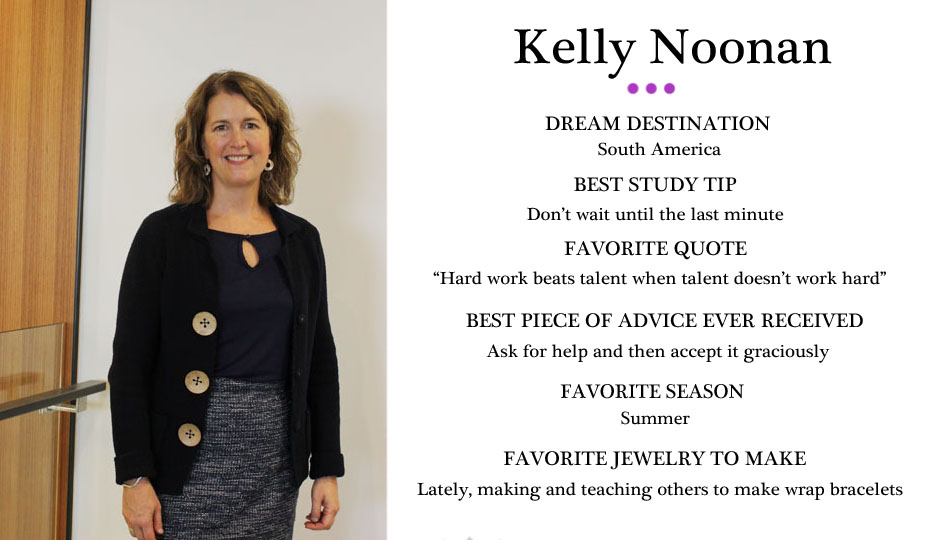
When we find ourselves in rooms with powerful, smart, and accomplished women, we take notes. Lots of notes. That’s why when we met Kelly Noonan, Attorney and Managing Partner at Seattle law firm Stokes Lawrence, we had our pens and notebooks in hand and were ready to learn. Kelly blew us away with her thoughtfulness, generosity, and keen observations. From sharing the greatest lessons she’s learned being an attorney to describing her involvement with a neighborhood legal clinic, Kelly is extremely knowledgeable in her line of work and engaged with her community. For anyone interested in a career in law, definitely take what Kelly says into consideration (if you’re starting your law school applications you’ll be especially grateful!). Her piece of advice that we still carry with us to this day: “Try to keep your eyes open and learn as much as you can from every experience.” Now, get ready to take some notes!

Name: Kelly Noonan
Age: 51
Education: BA in English from University of Notre Dame; Doctor of Law (JD) from University of Washington School of Law; Executive Development Program at University of Washington Foster School of Business

Carpe Juvenis: How do you define ‘Seizing Your Youth’?

Kelly Noonan: There are opportunities throughout your life, and I don’t think they necessarily go away when you get older. But certainly, some opportunities are much easier to seize when you are young than when you are older. When you have more long-term financial obligations, when you have a family, when you have commitments and responsibilities that are deeper and more long-term to your community, career, and your family, it becomes harder to pivot. It’s a bit easier to explore and take chances when you are younger.

CJ: Prior to going to law school, you received your undergrad degree in English at the University of Notre Dame. Was law school part of your plans during college?

KN: No. I changed my major a number of times while I was in college. I settled on English, which was a very good choice for me. I was pretty sure I would go to graduate school, but I hadn’t settled on what I would pursue. I considered a number of possibilities. I worked for a year between undergrad and law school, and gave a lot of thought to what I wanted to do long-term.

I thought about what I really like to do and what kind of environment I wanted. I decided that I like studying, learning, and the academic process. Being a lawyer involves a lot of that. You don’t learn “the law” and then go out and apply it. Law is constantly evolving and changing, and almost every case requires that you learn some nuance of law and how it applies to your client’s circumstances.

I also like being surrounded by other people who are intellectually curious and who are interested in growing and developing. I also wanted a career where I could help people, maybe change lives because I had a skill that is desperately needed. I hoped to have some autonomy in creating the career I wanted. I feel fortunate because over time all of these qualities I wanted in a career have proven to be true.

CJ: Studying for the LSAT is not an easy process. What was your experience with the test prep? What tips do you have for those interested in signing up for the LSAT? (How long in advance did you begin studying? Did you take a course? How did you balance studying for the LSAT with your college coursework?)

KN: I did not take the LSAT during college. I took the GRE and the GMAT while I was in college. I took the LSAT in the fall after I graduated from college. I didn’t take a course because I couldn’t afford it and I didn’t have a lot of time with my full-time job. I bought a book and worked through it. I was pretty disciplined. When I knew my test date, I broke the book down into sections and studied a bit every day.

While it’s not how I did it, I would advise taking a course, especially if you’re someone who finds standardized tests challenging. The LSAT is like the SAT on steroids. The process of preparing for and applying to law school is not all that different than the process of applying to college.

CJ: Besides working hard to get a good score on the LSAT, what did you do to prepare for the law school application? Is there anything you wish you had known or that you would have done differently?

KN: The more you can learn about what lawyers do, the better. Talk to as many lawyers as you can – criminal lawyers, commercial lawyers, transactional lawyers, people who work in companies, etc. – because it will help inform your thinking.

It’s not uncommon for people who are interested in going to law school to get an entry level job in a law firm. A lot of people have come through my firm who have been thinking about law school. Some of them have gone on to law school and some have changed their minds and taken a different path. Law school is competitive and expensive, and the job market is highly competitive. The financial commitment to go to law school today is far greater than when I went.

If you are considering law school, be very clear about why you want to be a lawyer. Law school is a trade school. I would not advise going to law school because it is a good foundation for something other than being a lawyer. It’s true that law school provides a strong foundation in logic, research, analysis and clear communications, all skills that have application beyond law, but the mission of law schools is to train future lawyers. Unless you have unlimited funds and time, go to law school only because you want to be a lawyer.

When applying to law schools, be as clear as you can about what you want. You don’t have to know what kind of law you want to practice, but knowing why you want to go and communicating that clearly in writing is valuable. If you can’t do that, then think twice about why you’re doing this. Tell the people you are asking for recommendations why you want to go to law school, what you hope to gain, and what you hope to contribute to the community. It will make it easier for them to provide personalized, positive references.

Kelly c

CJ: What do you think are the advantages and/or disadvantages of going to law school right after undergrad versus getting work experience?

KN: I think either approach can be okay. I have a bias in favor of working for a while before you go to graduate school, and not just law school. Having some non-academic experiences is helpful in a number of different ways. It can help you figure out what you want

In the second and third year of law school you get more practical experiences, but if your experiences before law school were only academic, your frame of reference is more limited, and understanding how the theory works in the real world can be a bit mysterious. When you have had a chance to step away from the academic, you may bring more to your classwork, get more out of your experience, and your motivations are clearer. As far as what to do in between undergrad and law school, I don’t think you need to work in a law firm or in some other law-oriented job, although that has the advantage of giving you some insight into what lawyers do day-to-day. Serving in the Peace Corp, working for a company or nonprofit or working in the public sector are all valuable, as well. The point is to step away from academic life for a time.

With all that said, there are many fantastic lawyers who have gone straight through from undergrad to law school.

CJ: You are the Managing Shareholder at Stokes Lawrence. What does your role as Managing Shareholder entail?

KN: A law firm is a business, and somebody needs to be focused primarily on running the business. That person is me. My focus is on managing the business of the law firm, similar to the CEO of a company.

I started phasing out of the active practice of law about six or seven years ago. I spend my time focused on our strategies, the competitive environment, how to provide our services so that we are helping our clients to make decisions and succeed, how to train, mentor and develop our people, what we can do to make sure we remain successful and viable, how to maintain a positive and productive firm culture, and what we need to do to satisfy our obligations in the community. I work closely with our administrative managers including Finance and Accounting, IT, Human Resources, Marketing and the administrative practice teams. I love it.

CJ: You’re phasing out of the active practice of law, but when you did practice law, you focused on business advising and commercial litigation with an emphasis on consumer class action defense and advertising and consumer law. How did you choose these topics to practice?

KN: I had a preference for trial work, litigation and working with clients to resolve disputes rather than a transactional business practice. When I started practice, I knew those were my preferences, but there’s a lot of training and learning that occurs once you get out of law school, almost like an apprenticeship. I was trained and mentored by more senior attorneys and they really taught me how to do my job. I became a commercial litigator in part because that’s what I wanted to do, but the emphasis on class actions and advertising and consumer law were driven in large part by our client base and the help they needed. I liked balancing the advisory work with litigation. I am still a lawyer and I still do some advisory work, but all of my litigation matters have phased out.

CJ: What are the greatest lessons you have learned from being an attorney?

KN: Recognizing that a lot of situations are gray. Very rarely are situations black or white. If it is, frankly, then people don’t need the services of a lawyer. The world we work in as lawyers is many of shades of gray. The law doesn’t exist in a vacuum, it exists in relation to the facts and the circumstances of real life people, real life companies, and real world situations that don’t organize themselves neatly. It’s something I continue to learn as a lawyer.

One of the real privileges as a lawyer is to be able to take a client’s situation and help craft the right approach so they can achieve their goals. There’s not always one path, and it’s not necessarily the most obvious path. It’s critically important to keep your eyes and ears wide open to recognize the opportunities, the potentials, and the pitfalls that maybe aren’t obvious. You need to have a broad perspective but always have your eye on the goal.

Kelly b

CJ: You are a member of the peer mentoring organization, Women Presidents’ Organization, a non-profit formed to improve business conditions for women entrepreneurs. How did you get involved with this organization and what is your role?

KN: Women President’s Organization is a peer mentoring group, and I got involved with it five or six years ago. It’s a terrific organization with chapters around the world. Each chapter is composed of about 20 women who are the owner, CEO or president of their mid-size company. We are in a variety of industries. We meet monthly and have confidential discussions about the business and leadership issues we face. Being part of this organization has really helped me to hone my leadership skills.

I also belong to a WPO Platinum chapter for larger businesses, and this group involves women from throughout North America. I get something different out of each group, and both are valuable in helping me to increase my skills and effectiveness in managing the firm. No matter what you’re doing or what your stage in life, having a peer group is so helpful. A study group in college or grad school can help you learn from others’ experiences and create connections with others in a similar situation.

CJ: You also volunteer regularly at the King County Bar Association Downtown Neighborhood Legal Clinic. How did you choose to get involved with this?

KN: I’ve done a variety of pro-bono work over the years, but I was finding it more difficult to take on pro-bono cases with my other case loads and responsibilities. The Neighborhood Legal Clinic is a great opportunity to volunteer your time and skills to people who really need your help, and the time commitment is fixed. I work at the clinic about once a month for two hours at the King County Courthouse. King County residents can make an appointment to meet with a lawyer for 30 minutes.

Clinic clients are generally very prepared, and an extremely concentrated 30 minutes of helping people with a variety of issues.

CJ: What should a teenager or young adult who wants to be a lawyer do now to set themselves up for success?

KN: Being a good communicator – both verbally and in writing – is a critical skill. The ability to organize your thoughts, combine logic with emotion, and put these thoughts into writing is necessary. If you can do that in writing, you have a good foundation for verbal communications. It’s not about being the loudest debater. Great lawyers are clear thinkers who enjoy the analytical process and who can take different sides of the same issue and make a compelling argument.

If you think you might want to be a lawyer, develop these skills. Take classes where you will be challenged and where you will work on critical reasoning and analytical skills, and where you will communicate and defend your ideas in writing and verbally. Hone these skills. Read with an eye towards understanding the logic involved in an editorial or opinion piece. Be an active learner and enjoy the academic process.

CJ: What was the last book that you read?

KN: The Boys in the Boat: Nine Americans and Their Epic Quest for Gold at the 1936 Berlin Olympics by Daniel James Brown.

CJ: What advice would you give your 20-year-old self?

KN: I remember thinking I had to have a plan when I graduated college. Nobody told me that, but I felt I had to get going right away in my “real” life. I would tell my younger self: don’t be in such a hurry to figure out what you’re going to become. The true is, we don’t someday arrive at our adult selves. That’s not the way it works. It’s a journey. There are a lot of steps on the journey. Pay attention to the steps along the way.

After college I got a job as a bill collector, and I remember at the time almost being embarrassed. I felt like I wasn’t taking advantage of my education. When I look back on that job, though, I realize I learned a lot, and some of the skills and lessons I learned carry over today.

It’s amazing what happens when you do your best and try to contribute as much as you can. Try to keep your eyes open and learn as much as you can from every experience. It’s amazing what doors open that you never even knew existed. Be alert enough to recognize opportunities when they come along and to learn from all of your experiences, even if they’re short term or difficult.

Don’t be in a hurry, but don’t be afraid to get your hands dirty. Sometimes you just have to jump in and see what happens.

Kelly N Qs

CS 3
Professional SpotlightSpotlight

Here at Carpe Juvenis we live and breath Seizing Your Youth, and for that reason our community is filled with people who both chase their dreams and pursue other passions. Co-founder Catherine is currently a senior at the George Washington University where she focuses on Women’s Studies and Political Science. Last Spring she had the opportunity to take a Graduate class called “Gender & Violence” from Professor Chai Shenoy. An Attorney Advisor for Peace Corps, the Co-founder of Collective Action for Safe Spaces (CASS) in Washington, D.C., and an adjunct professor at GWU and WCL (WHEW!) this is one incredibly driven woman. As a creative activist, Professor Shenoy has worked for over ten years on national and local anti-violence initiatives through multiple platforms. She has represented survivors of gender-based violence and fought for their rights through policy creation and training of professionals and specialists in every field. As a professor she instills a sense of confidence in her students that they, too, can make a positive impact on their communities and help to end gender-based violence. It is a privilege to introduce to you Chai Shenoy.

Name: Chai Shenoy
Education: JD, American University, Washington School of Law; BA, UCLA
Follow: Twitter | LinkedIn | Collective Action for Safe Spaces

Carpe Juvenis: How do you define “Seizing Your Youth”?

Chai Shenoy: I think that there are different definitions. For a lot of us, seizing your youth is about taking what is available to you and making use of all the tools that you’ve been brought up with, and that the community has given you. Then it’s about really going beyond your potential – seeing how you can go and actually address some of the issues that are coming up in the community. I think that young people are who can solve many of these issues that we are facing today. Without them we won’t be able to solve so many things that we hear about like dating violence, sexual assault, issues around power and privilege, issues around environmental concerns that are now causing so many wars and famines. I think that for me seizing your youth really means taking all of those resources and diving into what you’re here for.

CJ: What initially sparked your interest around women’s rights and activist work?

CS: I grew up in a family where my mother had a major role in my life and became my role model. She came from a culture where women aren’t necessarily given equal footing as men, and when she immigrated to the United States she continued with her passions, which are the sciences. She told me that you really have to fight for what you think is right in this world.

CJ: When and where did you discover your passion?

CS: It wasn’t until college that I figured out what I love doing. There are a lot of different things in this world happening to equalize women and children, but on my college campus I wasn’t really seeing that. There was so much unspoken violence; people weren’t talking about dating violence and sexual assault. Soon I became really vested in that work and in working with youth. While I considered myself at that time to also be a young person, I knew that I wanted to continue working with the population that tends to have the best ideas but who also have the worst advocates. You could definitely see that when it came to gender-based violence on campuses, and it was brushed off as an issue that was just part of youth culture and was accepted as the truth. Let’s say, for the sake of those critics, that gender-based violence is the truth – do we really want that to be part of our culture? That critical thinking came from how I was raised. I was told that I should be questioning right and wrong, and to have a strong moral ethic. Equality is important and we need to have it.

CJ: As the co-founder of Collective Action for Safe Spaces (CASS), how did you and your team transform CASS from a blog to a dynamic organization?

CS: To be quite frank, it happened very organically. It was really the community that utilized social media in a way that allowed voices and experiences to be heard. Sharing an experience of public sexual harassment by a stranger can happen once you’re at home, or in a safe environment. So our community in D.C. asked for us to start to do trainings on this, and it morphed into a lot of offline activism with an online presence, because that’s where community is.

CJ: You attended the Washington School of Law. In retrospect would you have made the same commitment now? What would you have done differently?

CS: Yes, absolutely. I would have been wiser about financial aid, looking for scholarships, and being more prepared about the fiscal responsibility that comes with any higher education. It wasn’t until my mid-twenties that I started to acknowledge that I have a fear of money and then needed to do something about it. I got a financial adviser and started to ask questions like “What are my fiscal goals in life?” That’s really the only thing I would be wiser about now – the fiscal impact. But with that said, law school for me opened up a variety of things. First it opened up my mind to critical thinking in a very focused way. I was critical thinking about applying legal structure to where I wanted the law to go, or making policy recommendations for youth rights, gender-based violence issues for teens, and education. All of those things were and are very important to me. Law school also opened up my eyes to the variety of jobs for people who have the skills of critical thinking. I would never replace going to law school. I think it was a magnificent choice, especially coming to the nation’s capital. It’s a beautiful place to be for people who are willing to push themselves and be challenged.

CJ: As an adjunct professor at the George Washington University and WCL, what do you hope your students take away from learning about gender-based violence?

CS: That they can be change makers. That you yourself can help stop the culture of violence. You don’t have to dedicate your entire life to it by becoming a lawyer or an advocate or a social worker, you - just as an average person - can stop somebody or question someone when they’re making a joke that is sexist or has an undertone of gender violence. Or when you raise your own family consider talking about the dynamic of how to raise a male, female, or transgendered child. How do you make sure that we continue to have conversations about ending gender-based violence? I hope that my students can walk away feeling empowered that they can do something. You yourself can make a difference.

CJ: Could you please tell me a bit more about your work with the Peace Corps?

CS: I should give the disclaimer that anything I talk about related to Peace Corps is from my own personal capacity and I’m not a Peace Corps representative. What attracts me about working at Peace Corps is the fact that it’s a federal agency organization that has a social justice mission to help people understand the United State’s culture, and for us to understand other countries’ cultures as well. One of the things I love about it – and this is going to sound odd – is that gender-based violence happens everywhere. It’s not unique to one region of this world. Sadly it’s a common thread amongst all of our cultures, and being at Peace Corps to work on sexual assault and gender-based violence issues has been such a privilege and an honor. Seeing how a federal agency can help a victim of sexual assault, and empower her or him to seek out services and make sure that they complete their goal of being a Peace Corps volunteer - that’s really our mission. We’ve spoken about gender-based violence as being an impediment, for example, to finishing college, it’s a reason why people leave their jobs, or potentially become isolated from their families. We don’t want the sexual assault or gender-based violence incident to be why anyone walks away from Peace Corps with. We don’t want that to be the defining moment, so it’s an honor to work on policies that hope create an empowering atmosphere for a victim of gender-based violence.

CS 2

CJ: How do you maintain – or seek to maintain – a work-life balance?

CS: It’s an everyday struggle, but I also think that there’s a false narrative we build when talking about work-life balance. I don’t think I’ve ever met anyone who has said that they’ve achieved that balance, male or female, with or without children. I think what you can do is acknowledge your limitations. Something that I’m learning about myself is that you don’t have to do everything all at once. You’ll be able to do everything that you want to do, it just won’t happen all at once. I think that in this fast passed social media world we see people doing things that we want to be doing, and we judge ourselves. I’m coming to realize that it’s us breeding our own notion of thinking we need to be doing things that we don’t need to be. You’re all right as long as you can live, and have a life, and be living out your passion or passions. So I don’t really think there is such a thing as work-life balance.

CJ: Do you think that the career advice to “Follow your passion” is good or bad?

CS: It’s very dependent on the person and what they need to be doing in his or her life. For someone who can follow his or her passion and have a day job that helps cultivate that passion, that’s great. But at the same time not everyone has the privilege to follow that passion and get paid or be reimbursed for it. But I think you have to do something that will make you feel vested in yourself. When you vest in yourself you vest in the community. That’s where so much local change and the ripple effects of change happen.

CJ: What advice would you give your 22-year-old self?

CS: I think I would say have faith in yourself more than anyone else in this world. I think we always question ourselves, especially in our twenties. And all of it is part of the normal developmental process, but you’re asking yourself a lot of deep questions. What am I doing with my life? Why am I here? How do I get to where I want to go? Those are all really deep and meaningful questions. Get to know yourself. You are your own best advocate.

Professional SpotlightSpotlight

The world of non-profit is an incredible place with some of the most generous and selfless people we have ever had the chance to meet. One of these inspiring people is Jake Weber, the Executive Director of FamilyWorks, a Seattle based family resource center and food bank. Since before 1995 FamilyWorks has been serving its community through learning initiatives and volunteerism opportunities. As the leader of this organization Jake Weber is entirely hands-on, from working with food bank vendors to attending fund raising events. As a leader in her community Jake knows how to inspire the organization staff and get nearly 300 volunteers excited about their work! (Plus she’s not afraid to get onstage and sing her heart out!). We are so thrilled to introduce Jake Weber!

Name: Jake Weber
Age: 56
Education: B.S. in Music Therapy and Master’s degree in Social Work from University of Washington
Follow: Facebook
Explore: FamilyWorks Seattle / United Way / Seattle Works / VolunteerMatch / Idealist

Carpe Juvenis: How would you define ‘Seizing Your Youth’?

Jake Weber: I would say it’s about exploring as much as possible. Some things you fall into but for the most part you just can’t be afraid of doing different things. Some things will be more interesting and exciting, but just say yes. Just go for it. Follow your passions.

CJ: You majored in Music Therapy. How did you discover that passion and decide to pursue it for your undergraduate degree?

JW: Music has always been a very strong passion of mine, along with helping people. I always knew I wanted to help people and then I realized, “Wow you can combine music with therapy,” and that rang so true. And there was part of me that wondered if I was good enough at music or good enough with helping people. But I did it, and I did enjoy it. And although I discovered that it wasn’t exactly what I was supposed to be doing forever, the process of doing it brought me many different places and I don’t regret a minute of it.

CJ: How would you suggest discovering passions if you don’t know what those are yet?

JW: Don’t be afraid of failure. Kids might think “I’m not good at this so I’m not going to try.” The fear of failure prevents a lot of people from doing things. So if you even have the slightest interest in something go for it, and look to work with someone who has experience. They can share their skills in a way that makes sense to you. They can share their passion, which can help your fire get lit by someone else’s enthusiasm for something—even shadowing somebody for a short period of time. If we’re talking about the non-profit world, there are a lot of volunteering opportunities. It’s about getting out there, and there are a million opportunities for that.

CJ: Can you elaborate on your experience with earning your Master’s degree in Social Work from the UW? Would you do it again if you had the choice?

JW: In the non-profit world, experience and training matters a great deal What I discovered in doing music therapy was that I liked training staff in the nursing homes to be able to use music on a much broader level than just me using it on an individual basis. In following social work, and wanting to learn more about social justice and all the systems at play, I wanted to use that body of knowledge and philosophy in my work. So I really enjoyed studying social work—with a focus on community development, and getting a chance to work in different organizations, it really helps to work with various people and various jobs.

CJ: You did your Master’s at UW, did that influence your decision to stay in the area?

JW: Well I grew up on the east coast and spent many years there and did a back and forth from coast to coast, in term of my studies. But once I did my Master’s here I knew I was re- planted.

CJ: What sparked your love of community outreach and how did you get involved with Family Works?

JW: When I was at my former job we started a family support center. And what I learned about family resource centers was that the model was very appealing to me. It was very empowering, and it was based on partnerships in the community – everyone coming together so we could help all families and all participants thrive. I helped start that there, and then was asked to be on the board of this emerging family center. At the time food banks were pretty new to me, but it made a lot of sense to combine programs that provide nutrition for you physically, and combined with other programs that provide sustenance for you in other social, emotional, economic and strengthening ways.

CJ: In your experience what factors and traits allow you to love your job?

JW: I love the range of connections with people working together to strengthen the community – the Board, the community members, participants of the center, staff, volunteers, the City, Churches, Schools other organizations. It’s a powerful thing when all of these forces act together for the greater good. Perhaps it is my love of people and people power and mobilizing those forces that make my job so rewarding.

CJ: What does a day in your life look like at Family Works?

JW: As the executive director in a small organization I engage in a very broad range of things you have to do to run an organization. Such as program and partnership development, fundraising, managing staff, writing grants, , getting customer input, collecting food at the farmers market, (the list could go on) and did I mention fundraising?

CJ: What can people do now to set themselves up for success in the non-profit world?

JW: What we really need now from young people are for them to bring new and interesting ideas to the table and engage their circle of contacts in causes that they believe in. All organizations need resources to further their mission. In terms of getting into the field, talk to people doing work that you find interesting, ask to shadow them, read about best practices, current trends and then get your hands dirty!

Jake Weber

CJ: If kids want to get involved with their community but aren’t sure how, what would be the easiest way to do so?

JW: There are so many local organizations to get involved with and volunteer programs at each organization. Find a service area that appeals to you and their website should guide you to volunteer opportunities. Don’t get discouraged, sometimes it takes time to nail down a position.

CJ: How do you handle the difficult days at your job?

JW: Some days you just do what you can and feel like you haven’t made a dent. There’s a book written called Trauma Stewardship, and describes this classic feeling across the board with people in this helping field—they never feel like they’re doing enough. This sets you up for not only dissatisfaction and stress. I like to talk to people who use the program and remind myself of the impact we actually do have on people.

CJ: How do you like to spend your fee time?

JW: I really like being outside, riding my bike and hiking, especially with friends and family members I play in a band and that brings me incredible joy and actually relieves a lot of stress. I sing, play guitar in a swing/country/bluegrass group called The Wiretappers. . It’s important to have something outside of your work that’s pure happiness. Even though I love my job but there’s also a lot of responsibility and stress that’s a part of that, so having something else that’s a passion combined with creative self expression is important to me. Exercise in general is really important and keeps me full of energy.

CJ: How do you ever combat stage fright or self-doubt?

JW: If there’s something that you really enjoy, not everyone is going to like you or love what you’re doing. And I wasn’t like that when I was younger, and was a bit more afraid of what people thought, but if you feel strongly about what you’re doing and enjoy doing it, and you will find the people who also appreciate it. Just enjoy it as much as you can!

CJ: What is your favorite book?

JW: The Impossible Will Take a Little While by Paul Rogat Loeb.

CJ: What advice would you give your 22-year-old self?

JW: I would probably say travel, get out there and experience the world in that way and be fearless. Just follow anything that even vaguely resembles interest. If you don’t know what the passion thing is, you’ve got to follow your interests. Find people you admire, talk to them about what they like about their work and that could trigger some other ideas for what you could be interested in. Don’t let anybody else tell you or guide what you think might should be your path. Just go for it.

b
Professional SpotlightSpotlight

Jane Park - the founder and CEO of one of the fastest growing beauty brands, Julep - is no stranger to seizing her youth. After studying Public Policy and International Affairs at Princeton and then heading off to law school at Yale, Jane has always been a hard worker. After working as a consultant and at Starbucks, she then took a leap of faith to start Julep, a beauty company that tests new products on a community of monthly subscribers before it is mass-produced. Not only is this a smart strategy, but the products are quality. From nail polish to skin care products to makeup tools to hair care, Julep has your beauty necessities covered.

After having worked in both corporate and start-up settings, Jane is a pro when it comes to running her own business and getting things done. We are seriously inspired by her ability to multi-task, her passion for learning, and her advice to not be so hard on ourselves. She’s also generous with her time and advice. Jane is a true business and beauty rockstar, and we’re thrilled to share her story with you!

Name: Jane Park
Age: 43
Education: Public Policy and International Affairs at Princeton University; Doctor of Law (JD) at Yale University
Follow: Twitter / Julep

Carpe Juvenis: How do you define ‘Seizing Your Youth’?

Jane Park: Seizing your youth is about finding the joy in things and having enthusiasm for the daily parts of your life.

CJ: You majored in Public Policy and International Affairs at Princeton. How did you determine what to study?

JP: Public Policy and International Affairs was the major that enabled me to take courses in the broadest number of areas. I could take politics, economics, East Asian studies, and anthropology. It was an awesome non-major in a way.

CJ: After college you went to law school at Yale University. How did you decide to go to law school right after graduating from college and what was your experience like?

JP: I actually didn’t plan to go to law school right away. I applied as a backup idea. I wanted to go to India to work for an organization called Seva Mandir. When I told my parents my plans, they freaked out. I ended up applying to law school and planned on saying that I was going to defer as a way to get around actually having to go. In the end, my parents guilted me into going to law school. I had never seen them cry before!

CJ: What did you learn from law school that helps you as an entrepreneur?

JP: I learned the value of thinking through things and looking at situations from different angles. When you are creating legal documents, you have to think about what the future might hold and look at things from different perspectives. That’s probably the most valuable thing.

CJ: If you could make the decision about whether to go to law school again, would you still go?

JP: If you are thinking about a career like law, you should spend a day with a lawyer and see if you like what he or she is doing with the day. A lot of legal work is actually not with people. It’s just paperwork and it’s not interactive with people, so it is a different kind of environment. Law school was super fun, intellectually rigorous, and we dealt with interesting problems and constitutional issues, but when you graduate, you aren’t on the Supreme Court right away. You are locked away in a room with boxes and boxes of paper.

CJ: After law school, you worked as a consultant and then at Starbucks. Please tell us about your experience working at Starbucks and your major learning experiences.

JP: It was great to learn about how brands are executed at Starbucks. We got to understand how you take a brand and make thousands of people who are trying to bring that to life meaningful to people. Seeing how that operated at scale was really interesting. It was all about people, as well.

One of the best weeks of that job was when I got to work in the stores. I realized how hard it is to be a barista. You think you can mark a cup, but it’s really hard to have a line of people and to remember how to put all of the ingredients in the right order. I finally ended up just cleaning the bathroom because it was something I couldn’t screw up.

CJ: You left your job at Starbucks to start Julep. Were there any skills you wish you had known before starting your own company?

JP: The thing about being an entrepreneur is that every situation is different so the most important thing is to have versatility and flexibility. The best thing to do to prepare is to really work with a lot of different people and figure out how they see the world and how you can influence them. At the end of the day, all an entrepreneur is doing is influencing your investors to believe in your dream and you’re influencing your team to come join you. In order to make that happen, it’s really an intellectual and emotional decision. You have to know how you view the world and understand how others view the world so you can communicate compellingly.

CJ: How do you set goals?

JP: A lot of the times there are a lot of complex big picture dreams. We want to be a multi-billion dollar global beauty company. Life is just a series of days put together. I can do anything for a day and then do that one day at a time.

CJ: Starting and running a company is no easy feat and you are challenged on a daily basis. What do you do when you are unsure of something and experience self-doubt?

JP: I’m pretty transparent with people about things that I am unsure of so they know what I am grappling with and I try to ask for help. In almost every circumstance that I’ve used the words, “I need your help,” I’ve gotten the help. The thing to remember is that you’re not alone. If you start thinking about who you can ask for help, you can come up with a list or find people who will help you with the list. If you’re sitting alone curled up on your bathroom floor, there’s no one who can help you or no one who knows that you need their help.

CJ: You’ve worked in both corporate and startup settings. What advice do you have for a young person to thrive in those two cultures?

JP: Forget about the fact that it’s about you and how you are graded. It was true of me, too. For my first job, I wanted to do a great job. At the consulting firm I worked at, we were graded every three months on our projects so you really wanted to get the good grade. At the end of the day I realized that even in that context, the most important thing to focus on is how we are helping the clients and how you have impact. If you focus on making a real difference, everything else will follow. If you focus on how you are viewed and how your boss thinks of you or your promotion, nothing good comes out of that situation.

Figure out what the company’s goals are, and if you can’t see that far ahead, then figure out what your boss’s goals are. When you’re a junior in a company, you want to make a difference and have a voice, but that’s all “I” “I” “I.” Think about how you can be helpful and most useful. To get a promotion, it’s not about influencing your boss. It’s about influencing your boss’s boss.

CJ: Why did you decide to start Julep in Seattle?

JP: I decided to live in Seattle because of the city itself. I have two kids and Seattle is a great city to live in with kids. What’s great about Seattle is that there is quite an entrepreneurial network and there is also a strong venture capital community. Seattle is the perfect city because you’re close enough to venture capital to get financed but far enough away from the competitive environment every day.

CJ: What is your typical day like at Julep?

JP: There really isn’t a typical day. Today I had a couple of phone calls with prospective investors that were back-to-back. I made my kids chocolate chip pancakes for Valentine’s Day. I saw my kids off to school and made more calls from home. I came into the office and had a team meeting to address inventory questions.

julep nail polishes

CJ: What has been the best moment of your career?

JP: One of them was when we did our pop-up store in New York. Meeting the maven customers face-to-face was amazing. There were women in tears who expressed their love for their monthly boxes. The level of emotional engagement has been amazing.

CJ: What advice would you give teenagers or young adults who are interested in being entrepreneurs?

JP: The number one question you have to ask yourself is “how do you deal with failure?” There are moments of failure every day and month. If you are somebody who always strives for perfection, this is not a good life for you because it’s really hard to achieve and hard to get there. Whether it is sports or doing something you are uncomfortable with, see how you handle those situations and how you progress. Being mentally strong is an important characteristic to have.

CJ: What motivates you in your everyday life?

JP: For me it’s all about learning. I want to always be learning about people and how to do better. If you want to be better tomorrow than you are today, quantify things in your life. Count and write things down. Whether it is exercise or in a business, if you can count it and measure it, you can make a difference. Instead of having a loose goal, measure it in some way. If you want to write a business plan, how many pages a day are you going to write? How many phone calls a day are you going to make? Break it down into something that’s measurable and you can have success.

CJ: What is the best advice you have every received?

JP: In every context you have to find your own voice and find yourself. When I started working, I had never worked in an office before and I thought there was a certain way I had to be. I was playing the role of a lawyer and wasn’t really being me. There’s no way you can be successful if you’re not being yourself in that context.

CJ: What advice would you give your 20-year-old self?

JP: My overall mantra is to be forgiving when you make a mistake. Learn the lesson and move on. There is no benefit of raking yourself over the coals or rethinking again and again about how you could have done things differently. Of course there is always a better way to do things. If you’re frustrated and banging your head against the wall, it’s because you have an unrealistic expectation of what you should have been able to do. There is a lot of wasted energy on being too hard on ourselves.

OLYMPUS DIGITAL CAMERA
Professional SpotlightSpotlight

As huge jazz fans, we are so impressed with Jazz musician and trumpet player Alex Owen. After graduating from Connecticut College, Alex moved to New Orleans to work with a non-profit geared toward ending housing discrimination in Louisiana. He eventually started a band called the Messy Cookers - aptly named after his own sloppy cooking technique - and they’ve been playing together ever since. Although he now loves music and plays jazz for a living, Alex shares his advice on why never closing doors on opportunities, even at a young age, can lead you to your passion down the line. We are excited to introduce Alex Owen!

Name: Alex Owen
Age: 24
Education: BA in International Relations and Hispanic Studies from Connecticut College, High School Columbia Prep.
Follow: Facebook

How do you define ‘seizing your youth’?

I would define it as going out and doing what you love. I don’t think there is an age limit, or minimum, to trying to make your dream happen. When I hear the term “seizing your youth,” I think of having the opportunity to try things out and see what happens. Sometimes it’s a risk, but if you don’t take those risks now, then when will you?

What did you major in at Connecticut College and how did you determine what to study?

At Connecticut College I majored in International Relations and Hispanic Studies, and I minored in Music. I also was part of the CISLA program. I picked my majors just based on what classes I wanted to take. I had studied Spanish in high school and I wanted to continue to learn the language and become proficient, and I really liked the interdisciplinary focus of the IR major. It just seemed that the majors seemed to fit what I wanted to study. Of course, I wanted to play music as well, so the minor just seemed to fit what I was interested in.

What or who inspired you to become a jazz musician?

I think what inspired me was really just to follow my passion. I don’t think I ever sat down and thought, “I want to be a jazz musician.” I loved playing traditional jazz music at Connecticut College where I first discovered this music, and I also loved being in the jazz ensemble. I wanted to move to New Orleans because I knew they had a great scene for traditional jazz, but I wasn’t sure in what capacity I was going to play.

When I moved to New Orleans, I actually was part of a fellowship program called AVODAH, where I spent a year working full-time at the Greater New Orleans Fair Housing Action Center, a non-profit working to end housing discrimination in Louisiana. It wasn’t until about mid-way through my first year that I started the Messy Cookers Jazz band and started to find gigs and get a little bit of work. I realized that I really loved the music, and while I also loved the work I was doing at the Fair Housing center, I really wanted to focus on getting better. It became apparent that if I wanted to gig more and get more work, it wouldn’t be feasible to work full time and try to focus on both things. After I started to get work, I decided that I could really be a jazz musician, and that’s when I decided to focus on it and teach music part time.

Tell me about your college bands The Endpiece and Funk the Police. How have those experiences shaped your current music?

Those were some really great bands to be a part of. When I look back at my college experience, some of the fondest memories I had were from those two bands. I think those experiences were incredibly helpful because they taught me so much about being in a band and what the dynamics are like. One thing I learned from being a musician is that it takes so much work to make the music great. You have to practice, you have to find different roles, and you have to learn how to create chemistry with your other band mates in order to make great music. I’ve found that in any style or genre of music, this is true.

You also have to be able to find common ground among different personalities. While I don’t play the style of music that those two bands played anymore, I still take what I learned from those bands about working together with other musicians to make great music, and it’s something I use every time I play with people today.

How do you stay motivated on-stage night after night of performing?

It’s definitely tough to do this. It’s certainly easier when you are playing a crowded venue. The hard thing to do is really be on your game when it’s the third or fourth set and it’s a slow night. I think what makes some musicians truly great is that they play the same way whether there are 100 people in the place, or two people. I really try to focus on just making great music at all times and I try not to worry about the crowd. Obviously, I’m always paying attention to the crowd, especially when I’m the bandleader. But once we pick a song and we get into it, I try to block it out and just try to make great music. Ultimately, that’s the most gratifying thing, and it’s something that I could do every day for the rest of my life.

Where does your band name, Messy Cookers Jazz Band, come from?

Ha-ha, this is a pretty funny question. I was making a comment to myself the first year down here that when I was cooking, I made a pretty big mess. I lived on campus all four years of college, so I never really learned how to cook before I moved down to New Orleans. All of a sudden, I realized that I had to cook for myself, so I learned the basics and was able to get by. I guess my technique was still a little sloppy. I was cooking for my housemates one night and I made the comment about how I was a messy cooker. My roommate Jeremy was walking by, and he went “I think I just found your band name.” The name was just too good to pass up.

How does living in New Orleans inspire your music?

I think living here is great because to play the music I want to play, which is traditional New Orleans jazz, I’m able to learn from the best. There are great musicians still working all the time today, who themselves came up playing with and learning from some of the all-time greats. It’s really a privilege to be able to hear them play on almost any given day or night, and to occasionally have opportunities to play with them. I think hearing what they have to say, and listening to the way they approach the music, is key for me to also try and play this music. I try to utilize their advice in every gig I play.

What is one of the greatest lessons you have learned from being a musician?

There are a lot of good lessons I’ve learned. One is definitely how to take criticism and how to take rejection. Every musician is going to have self-doubt, get yelled at on a bandstand for making a mistake or not knowing a song, get fired from a gig, or get turned down for a gig. It’s very discouraging, but the best thing to do is trust in yourself and trust in your ability. I’ve found that during the tough times, trusting myself has allowed me to stay positive, remain focused, and continue to make great music.

What is the biggest challenge with being a musician? The best part?

There are a few challenges with being a musician. I’d say one challenge being unsure know when your next paycheck will be coming in. Especially as someone that is new to town, I’ve gotten a lot of gigs last minute. Since I’m still trying to establish myself, I’m in a position where if I can make a gig, I take it. It’s definitely hard to adjust your schedule last minute. The schedule can also be grueling. Working nights can be really hard, especially since I teach during the day. You really have to alter your life schedule to fit your work. Sometimes this means trying to eat a big meal to last you the 4-5 hours you will be out since you don’t have access to food. Other times, this means trying to hang out with friends during the day because when they are free night, this is when I’m working.

On the flip side, the best part of being a musician is that it’s greatest job in the world! I get to make awesome music, something I would do anyway in my free time, and then I get paid for it. I’ve been fortunate to get work with some world-class musicians, which is an awesome experience. There are many nights when I can’t believe I’m sharing a bandstand with some of these people. It’s also gratifying when you can tell that you’ve touched people with your music. When I’ve just spent a night making music that you know was great music, and people come up to me and tell me how much they enjoyed it, that really makes it gratifying.

Any tips for learning how to play an instrument?

The biggest tip I can give is to be patient. Something I tell my beginning band students all the time is that Louis Armstrong didn’t sound like Louis Armstrong when he first started playing. Music is like a totally new language; nobody just wakes up a genius. Everyone works at it and tries to make new strides. When you are learning a new instrument, take pride in whatever progress you make, however small, and focus on achieving each milestone. Eventually, before you even realize it, you will start sounding better and playing an instrument will become more fun.

How do you overcome self-doubt (or stage fright?)

Like learning an instrument, this comes with practice. The more gigs I play, the more confident I become in myself, and the easier it is to overcome stage fright. Stage fright, and self-doubt, is a part of being a performer, and is something that becomes easier with practice. Whenever I get nervous, I also try to remember that there is a reason I’m on the bandstand. If I’m a sideman, I try to focus on the fact that someone called me to play the gig with him or her, so I must be doing something right. As a bandleader, I try to remember that the venue likes us enough to hire us, and the people I’ve hired like playing with me enough to want to play with me, otherwise they would’ve said no.

What advice do you have for youth who want to be professional musicians?

My advice is to go for it. If you feel it’s what you want to do, and it’s what you are most passionate about, then absolutely go for it and don’t hold back. People are definitely going to tell you that you can’t do it, or that it’s not stable, etc. These are things that almost all professional artists face at one point. If you are driven enough and determined enough, you can sustain the bumps in the road and make it happen. It’s also ok to take a part-time job or do something on the side to make ends meet, even if it’s not exactly the work you want to be doing. I’ve been lucky enough to find work teaching music, which is something I love and plan to pursue, but I know other musicians and other artists who’ve had all types of weird jobs not related to their art. As long as it doesn’t directly interfere with your art, I say there’s nothing wrong with getting a job to pay the bills.

What do you do when you’re not making music?

I really enjoy spending time outdoors. I’m fortunate that New Orleans has a temperate climate (other than the summer), which allows me to go running, spend time in parks, and generally do activities outside. I also spend time with my girlfriend, watch TV shows, and spend time with friends.

What does a day in your life look like?

Ha-ha, depends on the day! Usually my weekdays consist of teaching during the day. I have a little break in the afternoon, where I usually exercise and get other work done (the work never stops for musicians). If I have a gig that night I’ll eat an early dinner, warm up a little, prep for the gig, and head down early to set up. If not, I’ll either go to hear other bands and sit in, or just hang out and rest. The weekends are mostly about gigs. If I don’t have a daytime gig, I can run errands, hang out with friends, and then go to my gig later. However, some weekends I just spend it running from gig to gig. The great thing about being a musician is that no two days are the same!

What motivates you in your everyday life?

I always just try to be the best person I can be. Whether I’m playing music or not, I always try to be nice to others, to spend quality time with other people, and to be true to my craft.

What advice would you give your 15-year-old self?

I would definitely tell myself that music isn’t dorky, that I should be pursuing it. I think at 15, I really was into sports, and not so much into music. Playing trumpet was more of a chore my parents made me do (and I’m glad they made me do it), and I wish I had treated it differently. I think a lot of this was that I didn’t realize how much fun playing was, and I didn’t think it was that cool.

Image: Hot Steamed Jazz Festival; all others from Alex Owen

a
Professional SpotlightSpotlight

It’s not every day that we see an illustration, design, or logo that makes us feel something. However, when we see Kate Harmer’s illustrations and designs, we are immediately inspired and moved. Kate drew constantly when she was a little girl and she hasn’t stopped since. After following her passion and enrolling in Cornish College of the Arts, doing internships, getting job experience in design and illustration, and completing graduate school at Rhode Island School of Design, Kate launched her own design studio, Hum Creative, that focuses on creating and developing brands. More recently, Kate illustrated a fun book based on the popular Twitter feed @tweenhobo.

Kate is not only amazingly talented, but she is smart, kind, and thoughtful. We are encouraged by her self-starter attitude, work ethic, and of course, her creativity. Kate not only has the ability to draw and design, but she also knows how to build an incredible team of people with serious creative skills. Through determination, hard work, and learning how to grow a thicker skin, Kate has excelled in her field, and she generously shares the lessons she has learned during her journey. Read on to learn more about Kate Harmer, a true inspiration!

Name: Kate Harmer
Age: 32
Education: BFA in Illustration from Cornish College of the Arts; MFA in Design from Rhode Island School of Design
Follow: Twitter / Hum Creative / Instagram

Carpe Juvenis: How do you define ‘Seizing Your Youth’?

Kate Harmer: It’s common to hear successful people look back and say, “We were so young, we were so crazy, we were so brave!” They’re talking about times that were challenging, but they are able to look back and laugh. I try to remember that I’m in that time right now for my future self. Knowing that all of these things won’t seem as hard or scary once they’re done encourages me to take big risks.

Yes, I’m 32, but that’s super young! Someday I’ll hopefully laugh at my failures and be proud of having challenged myself. Both are positive outcomes. To me, seizing your youth is embracing that now is the time to be free and brave.

CJ: You received your BFA in Illustration from Cornish College of the Arts. How did you determine what to study?

KH: My career has been a process of elimination. When I was in high school I didn’t know what graphic design was. I just knew that I liked to draw and wanted to do something creative. I went to school for Illustration and worked as an Illustrator for a while. I tried to follow my passion in a broad sense, then tried lots of things to see what I enjoyed and to get more focused.

CJ: What sparked your love of illustration and design?

KH: As a kid I would sit in my bedroom for hours and draw fake advertisements for the commercials I heard on the radio. I didn’t realize it at the time, but I was thinking like a graphic designer. I wasn’t super social, so drawing was a natural way for me to process the world and express myself.

Because I drew constantly, I had good foundation of skills by the time I was looking at colleges. I definitely think most things can be learned, but you have to put in the time.

d

CJ: You also received your MFA in Design from Rhode Island School of Design. Why did you decide to go to graduate school, and would you recommend it?

KH: I went to graduate school to learn new skills and jump start the next phase of my career, which was more about design than illustration.

I would recommend graduate school, but only for people who are really ready for change and have fully explored on their own first. I don’t think graduate school is required to be successful, and some life experience first is key. You can create a condensed learning experience on your own, but some people need help. I needed grad school to push me.

Graduate school was both awful and great. The workload was almost unbearable at times, making it one of the toughest experiences of my life so far. It was a critically intensive, so I graduated with a much thicker skin. I also made amazing friends, learned a ton, and I felt empowered to do what I do now. It was a full, amazing experience.

CJ: You are the Principal and Creative Director at Hum Creative. What do your roles as Principal and Creative Director entail?

KH: When I first started the company I was doing a bit of everything – designing, sweeping floors, and writing invoices. Now my role is to think about this entire company as a design project. I am responsible for our overall strategy and goals, getting the best team of people together, and directing the creative process. I also play on our kickball team.

CJ: Before Hum Creative, you were a designer at Starbucks Creative Group. What kinds of projects did you work on at Starbucks?

KH: I got to illustrate coffee bags, draw lots of little croissants and coffee mugs, and help design seasonal merchandise and packaging. I was fresh out of school and supported senior designers and creative directors with illustrative tasks that were needed to fulfill their vision.

I think about that job every day while building Hum Creative. When I was at Starbucks, it really felt like everyone was happy with their jobs and coworkers. A lot of what I learned there has stayed with me.

e

CJ: You illustrated the book Tween Hobo, which is based on the popular Twitter feed @tweenhobo. What was that illustration process like?

KH: Alena Smith knows the Tween Hobo character so well. I flew down to LA to brainstorm initial ideas for the book with her, then worked remotely for the next few months. Alena sent me in-progress chapters every couple of weeks. I would read them and keep a running list of possible visuals. We would Skype to discuss and narrow them it down. Most of the process was brainstorming with Alena. I would sketch the illustrations in pencil first, and then once they looked good I drew over them in Sharpie.

CJ: What are the greatest lessons you have learned from being an illustrator and designer?

KH: Professional creatives need to be open to criticism and flexible to change, but they also must stand up for what they believe in - when it really matters. Grad school and client work has helped me grow a thicker skin and to understand that everyone’s input is valid. You can’t be too precious about your work – sometimes people won’t like it. That’s okay. Not all battles are worth fighting… when you do push back, it should mean something.

CJ: What is the best part about being a designer?

KH: The best part of designing for me was seeing my work out in the world, successfully doing its job. As a creative director, it is so fun to see this whole group make work that they’re proud of. Knowing they worked hard, made beautiful work, and enjoyed the process is hands down the best part about what I do.

CJ: What does a day in your life look like?

KH: My day involves a lot of time reading emails and meeting with our internal design teams to check in on projects moving through the studio. I also meet with clients often to present work and discuss feedback. Some days are spent on the set of photo shoots or visiting the printer for press-checks.

c

CJ: What should a teenager or young adult who wants to be an illustrator and designer do to set themselves up for success?

KH: Make a lot of work. We look at a lot of portfolios here, and the people who really stand out have been making up their own projects and designing things on the side. Drew Hamlet, a Lead Designer at Hum, started an online radio station in high school and he designed the branding, website, and collateral for it. I’m very impressed by self-motivation. You learn so much by just being active in your field, even if it’s just practicing. Don’t wait for people to ask you to do something, just do it yourself.

It is also important to have a sense of the design community and what has come before you. Look at blogs, read design books, and absorb a design education as much as possible.

CJ: How do you like to spend your free time?

KH: I work long hours and am a homebody when they day is over. My husband and I love to cook and enjoy big dinners outside, then take our two French bulldogs on long walks.

CJ: What motivates you in your everyday life?

KH: Professionally, this team motivates me. The responsibility of having people who come to work in an environment that I make is both very intimidating and very inspiring.

My husband is very motivating and inspiring outside of work. He is a creative that has worked really hard since he was a teenager and he’s done well. He’s always wanting more and imagining fun things he can do. He’s constantly learning and dreaming. He’s a really good reminder to keep your mind open and active.

CJ: What advice would you give your 15-year-old self?

KH: I’d tell myself to be braver sooner. It took me a little while to start realizing that taking risks almost always pay off in some way. It might not always be in the way you planned, but taking on challenges is the fastest way to grow.

Kate Harmer Qs

b
Professional SpotlightSpotlight

When you walk into one of Molly Moon’s Homemade Ice Cream shops, the smell of waffle cone overwhelms you in the best kind of way. The stores are a light turquoise color with the cutest logo of Molly’s pup Parker Posey licking an ice cream cone. People of all ages, from young children to their grandparents, gather at Molly Moon’s and wait in the long lines that form down the block. Molly Moon’s is more than just an ice cream shop; it is a community gathering spot where locals and visitors from afar travel to get a taste of Molly’s delicious ice cream. With flavors such as Honey Lavender, Earl Grey, Salted Caramel, Maple Walnut, and Melted Chocolate, to name a few, it’s no wonder why Molly Moon’s is so beloved.

As big fans of Molly Moon’s ice cream, we were thrilled to talk to the woman behind the cone, Molly Moon Neitzel. In six years, Molly Moon’s has grown to six shops around the Seattle area. You can even get her ice cream at Hello Robin Cookies for some seriously good ice cream cookie sandwiches. Not only is Molly a savvy businesswoman, but having worked at an ice cream shop all through college in Montana, she is also a skilled ice cream maker. While she originally wanted to be a political reporter and journalist, Molly’s career path changed when she moved to Seattle and noticed a lack of ice cream shops and community gathering spots. She is proof that you never know where life will take you.

If you want to run your own ice cream shop, business, or just love ice cream, Molly has great advice and tips that she has learned over the years. We’re definitely inspired by her and all that she has accomplished.

Name: Molly Moon Neitzel
Age: 35
Education: B.S. in Journalism from the University of Montana - Missoula
Follow: Twitter / Website

How do you define ‘seizing your youth’?

A unique quality about youth is that you have far less to lose. That was a really big driving factor for me to start a business young and just go for it. I wasn’t married, I didn’t have kids, I didn’t own a house, I had nothing to lose. I had an $800 dollar a month apartment and a puppy, and I wasn’t going to lose her if I lose a business. That has been pretty defining for me.

You majored in Journalism at the University of Montana – Missoula. How did you determine what to study?

Since I was in 3rd grade, I thought I wanted to be a journalist. I wanted to be a political reporter for television or radio, so that’s what I went to school for. I wanted to be Gwen Ifill.

What was your first job out of college?

Out of college, I was a fundraising event coordinator at University of Washington Medicine. We raised money for all the medical research and the Medical School, and UW Neighborhood Clinic, Harborview Medical Center, and the Fred Hutchinson Cancer Research Center. I planned fundraising events for Harborview’s uncompensated care program, breast cancer research, and some Alzheimer’s research.

You spent time as a Founding Executive Director at Music for America. What did your role there entail?

I helped to start the organization with a bunch of other people in their early- to mid- twenties. I managed the people in the programs, partnered with bands to register their fans to vote, and then educated those people on political issues that might mobilize them to vote, and then we did a lot of voter turnout work. We brainstormed ideas about how to execute the mission and accomplish the programs and manage the people. 50% of my job was fundraising to pay to keep the organization going.

You went from music and politics to ice cream. In 2008, you opened Molly Moon’s Homemade Ice Cream. What inspired you to start an artisan ice cream company?

I really went from ice cream to music and politics back to ice cream. My job all through college was at an ice cream shop. I worked at the Big Dipper in Missoula. I worked there for three and a half years. I was a scooper at first, then I was an ice cream maker, and I helped manage the shop a bit. I had seen all of the ways to run an ice cream shop, and I knew how to make ice cream.

When I wanted to leave Music for America because fundraising is hard and I was burnt out, I decided to come back to Seattle. I was talking to my mom on the phone wondering what to do with my life, and she said, “Why don’t you just open an ice cream shop? Then you can be your own boss and do it the way you want to do it.” That sounded good to me and I ran with that idea. I wrote my business plan, found investors, and took those steps.

What have been the greatest challenges in running your company?

Well - knock on wood! – I don’t feel like I’ve had a lot of crazy challenges. We’ve had the normal challenges that a lot of small business have. You grow a lot and then you have to work with having more employees and make them feel taken care of. The people part can be tough. The biggest challenge for me personally has been juggling the business when it competes with personal life. That has been challenging for me as a business owner, and it’s something that people who want to own their own business should really think about. A business is like a child and it’s going to suck all of your energy and compete with everything else in your life.

Your experience at Big Dipper Ice Cream gave you experience running an ice cream shop, but what have you learned from Molly Moon’s about how to run an ice cream company?

I have a lot of small business owners in my family. My dad is a General Contractor and I watched him run his small business. My grandparents owned a saloon that was the central gathering place for politicians, lawyers, and professionals in our small town in Idaho.

One thing that I’ve learned from Molly Moon’s is that instead of cutting costs, it’s wiser to increase sales. Figure out how to make more money rather than skimping on things. That feels better for your customer, feels way better for your employees, and it keeps you in a positive and optimistic mentality. When you get focused on cutting costs, you can get really negative.

What is the greatest lesson you have learned from being an entrepreneur?

I think that risk is really good. I’ve followed my gut and have taken risks. Know that you can fix mistakes and everything works out, but not taking risks is boring and stagnant and as likely to make you fail.

What does a day in your life look like?

I wake up with my one-year-old sometime between 5:30am and 7:30am. We hang out as a family for 30 minutes, then we get ready and start our days. Many days I’ll stop by our new shop on 19th and Mercer, which is inside a cookie shop called Hello Robin that is owned by a dear girlfriend of mine. I’ll check in on Robin, get a coffee or a scone, chat with her about the day, and get to work around 10:00am. Most days I have about six or seven meetings, and I am here until 5:00pm. My days are packed with talking and thinking, and I hardly have time to get to email. I’m often in bed at 8:30pm.

What should a teenager or young adult who wants to have their own ice cream shop and run their own business do now to set themselves up for success?

Work in an ice cream shop. Get practical experience and ask to do different jobs within the same company to get perspective. I was a scooper, but I also made ice cream and learned how to write the schedule for the employee shifts. If you’ve only been a scooper or in the kitchen or in the IT department, you won’t know the full picture. Learn how to look at things from different angles.

What motivates you?

Now what motivates me is being the breadwinner for my family. When I started, what motivated me was not having a boss, being able to do something where I could have my own politics. I paid for health insurance right away for people who worked for me and everything is compostable. That was very motivating for me, to be in charge of our role in the community at large.

Another big motivation for starting Molly Moon’s was what I experienced when I moved to Seattle in 2001. There were no ice cream shops and I never saw people under 21 or over 40 years old. I went months without seeing people from another generation. It was shocking to me. I thought, if Seattle had a cool ice cream shop, maybe there would be a place where multiple generations would gather at once. That was a big thing for me, and I think that we’ve accomplished that. I think all of our six shops are multi-generational.

What are your ice cream making tips?

Don’t let anything thaw and then refreeze – that makes it icy. Pair flavors together that you think are good in savory dishes. If you’re using an ice cream machine that has a frozen bowl, make sure to freeze it more than eight hours. Make sure it’s super cold. The best texture you’re going to get is from that freezing element being the coldest is can possibly be.

If you could enjoy an afternoon eating ice cream with anyone in the world, dead or alive, who would it be and what kind of ice cream would you make?

Madeleine Albright and I feel like she would like Maple Walnut because people from her generation usually like Maple Walnut, but maybe she would be a Salted Caramel and Hot Fudge girl.

What advice would you give your 15-year-old self?

My 15-year-old self was pretty cool. I was such a hippie, but I don’t regret that. It was good to express myself that way. I am still pretty true to who I was at that age. I would say keep being true to yourself and your ideas. Keep being willing to speak your mind. As a kid you can feel tampered down or that you should fit in and be quiet, and I didn’t really feel that way as a teenager. I was okay with standing out and speaking my mind. I’m still that way, and I’m proud of that.

kate 3
Professional SpotlightSkillsSpotlight

When it comes to creating awesome books for kids, Kate Olesin, Editor at National Geographic Kids Books, knows exactly what she’s doing. Incredibly talented and creative, Kate started her career with National Geographic as an intern in college. When Kate graduated from University of Massachusetts Amherst in 2009, she secured a position as an Editorial Assistant. Over the years, Kate has quickly worked her way up to Editor (and she’s only 27!). Kate’s passion for her work is obvious when she talks about the various types of books she works on, her day-to-day duties, and her love for reading and inspiring kids.

Outside of the NG office, Kate loves to stay active by running, hiking, and gardening. Work life balance is important to Kate, and seeing how she juggles managing a team and 10 projects at a time, having some downtime is very necessary. For all you writers and editors, Kate has invaluable advice to share about how she time manages, seeks mentors, how to set yourself up for success, and what traits make a rockstar intern.

Name: Kate Olesin
Age: 27
Education: B.A. in English and History from University of Massachusetts Amherst
Follow: Twitter / LinkedIn

Carpe Juvenis: How do you define ‘Seizing Your Youth’?

Kate Olesin: Young people are in a really good spot, especially right now, where many companies and professionals are looking for young, cheap, and really smart people. Our youth today are the whole package. They are really taking the time to go after their dream jobs and doing more than they’ve ever done before. Seizing your youth means taking advantage of the skills you already have. You are young, you are smart, and you have a larger breadth of knowledge of this changing world than a lot of other people who are already established in their careers. Young people today are so ambitious and smart and so many of them are just good go-getters.

CJ: You majored in English and History at the University of Massachusetts Amherst. How did you determine what to study?

KO: I was the first one of my siblings to go to college, and it was funny because when I applied to school, I went to my high school guidance counselor’s office because I wasn’t sure what I wanted to do. So, I picked up the biggest book in the office and it was the UMass Amherst book. Then when I got to Amherst, I ended up being placed in an English talent advancement program, and I really loved my classes and all of the people and students I was living with — all English majors. I decided to pursue book publishing pretty early on because of my lifelong love of reading. English really prepared me with the critical thinking skills that I use every day in my job.

kate 2

CJ: What was your first job out of college?

KO: Getting my first job was a mix of good timing and luck. I actually interned in the children’s books division of National Geographic right after my freshman year of college. I graduated in 2009 in the worst economy ever and I was terrified. Hiring in the book industry was stagnant and I didn’t know what I was going to do. I had applied to publishing companies all over the country as well as some think tanks with zero response. But after completing my NG internship, I knew Washington D.C. was really the city I wanted to be in. So, I looked on National Geographic’s website and knew that they had a hiring freeze going on, but an entry-level position was open in my old division. It was perfect, and everybody I worked with as an intern was still there!

So, I started as an Editorial Assistant at National Geographic after college. I worked on book projects, did the administrative filing and copying, and really threw myself into it. After two years, I became an Assistant Editor. After about 10 months, I was then promoted to Associate Editor, and as of this past February, I am now an Editor. What’s nice about my group is that there is a clear career path and lots of extremely helpful mentorship along the way.

CJ: What sparked your interest in publishing?

KO: I’ve always loved books and I’ve always been a big reader. Ever since I was a kid I tore through children’s books. I grew up within walking distance of my local library, so I was constantly checking out books. But, children’s books are still what I love to read today. I love reading young adult novels. I do like reading adult books, as well.

For a time, I focused on journalism and reporting at my college newspaper and through internships. I did really like being a reporter. It’s demanding and rigorous, but I found that I really wanted to work with books and with children somehow. The nice thing about working at National Geographic, which is such a mission-driven organization, is that the books are non-fiction. We are telling true stories to kids who want to hear them and just maybe they’ll learn something from it. It’s really inspiring.

I wanted to work for a company that would uphold strong educational values, and I think I found one.

CJ: You are currently an Editor at National Geographic Kids. What are your roles as Editor?

KO: A lot of people assume that editors just focus on nitpicky copy editing things. Though I do a little of that, it’s not so much like my time is spent identifying what a past participle is. I do a lot more project management work. My job involves top of the line thinking and wrangling the entire team to make sure all of the pieces come together to form a complete product.

Each editor also acquires titles, and to do that we really look broadly at what the rest of the market is doing. We see what’s doing well, what’s not doing well, and what might fit into our publishing plan. Then we come up with ideas. For instance, I’ve done a couple of books relating to online games, another about George Washington, and another about dog communication. We take popular or core curriculum topics and their characters and tie in real-world information. So, something like taking an exciting game and pairing it with non-fiction information is a way to get kids hooked and inspire a love of reading and the real world.

There’s a lot of development that we do. We have three types of books: gift books, kid-driven books, and library review driven books. Our core age range is 8-12 years old. We also do preschool books and tween books for kids who are 10-years-old and up. So we try and come up with titles that fit into those molds or on topics that they care about.

When it all comes together, I hire authors, we work with our designers and our team of photo editors. Then it just goes from there. I do the text editing and reading through to make sure the narrative and big picture makes sense.

National Geographic Society

CJ: What is the process for creating a children’s book?

KO: It’s a long process. It usually takes about a year. Printing and shipping the books takes a long time. In the publishing industry your books have to be ready months before they go on sale so all of the major reviewers can review your book. That’s at least six months of time right there.

In our division we’re pretty unique in that we do a lot of in-house development. At National Geographic Kids, we have honed in on what kids want to read and what nonfiction content they are interested in. We take our market research and talk to our panel of about 4,000 kids about what they want to see. We call them our “kid bosses” and they’re very honest with us. When we find a topic that clicks, we get to work.

CJ: What are the greatest lessons you have learned from being an editor?

KO: The importance of relationship building and how to maintain those relationships is one of the big lessons I’ve learned. Having connections and positive relationships with everyone I encounter at my job is really important, whether it’s a big-time author or someone I work with only once.

It’s also been interesting looking at the bigger picture instead of just having tunnel vision and focusing on your own work. Seeing how your book might fit into the broader picture of a marketing plan or a digital plan or anything else is helpful. I’ve learned to see how I can contribute in other ways with great ideas.

CJ: What is the best part about being an editor? The most challenging part?

KO: The best part is physically holding that book you worked so hard on in your hand when it comes off press. All of the photos are high-resolution and the paper is beautiful. Most of our books have a masthead in the back, and seeing your name printed is really nice.

I’m the head of my team for every book I work on. Being in charge of creating a product for children and making sure that it’s wonderful and inspiring is so thrilling. It’s something I never would have imagined that I’d get to do at 27.

The most challenging part is the deadlines. We have a lot of work to do here. Making sure the project keeps moving forward is sometimes a puzzle. It’s sometimes easy to leave projects on the back-burner. I am working on approximately 10 different books right now that are all in different stages. Juggling all of the different pieces can be challenging.

CJ: How do you time manage?

KO: I do a lot of things electronically and I use a lot of to-do lists. We have a couple of project management programs here. And over the past five years, I’ve learned to plan ahead as much as I possibly can and I’ve become a little more firm. It’s easy for a young person to be a little more lenient, but sometimes you have to crack the whip. Not all of the time, and certainly people get busy, but that’s just the nature of working in a time sensitive environment.

CJ: What does a day in your life look like?

KO: When I’m at the office, I read, read, read. Our CEO has a saying that “every day matters” which I think I’ve taken to heart at work and outside of the office. I’ve been trying to focus on a lot of work life balance, which I think is very important. It’s hard to do when you’re a young person just starting out in your career. So, I really try to get my work done for the day, go home, go for a run, make my dinner, and relax. If I have to finish things up at home, I will.

CJ: What should a teenager or young adult who wants to be an editor do to set themselves up for success?

KO: Do as many writing projects as you can. I’ve hired interns and young people to work for me, and the first thing I look for is a well-written cover letter and involvement in writing somehow. It can be for your school newspaper or your own blog or a review site. Good writing skills are a valuable asset. I also like to see young people who are willing to do anything and just throw themselves into any task with a positive attitude.

When I first started working at National Geographic, I did a bunch of filing and copying. Even though that sounds boring, I made it a fun learning experience by reading through every piece of paperwork I had to file and copy so I understood what was happening. If I had questions, I’d ask. I learned our entire filing system and reorganized it for efficiency in two weeks. All of this, which sounds like grunt work, gave me a serious advantage in the end and I was able to understand our administrative process very quickly. Anything that you do can be a learning experience, no matter how menial you feel the task is.

nat geo books

CJ: When you were an Editorial Assistant and as an Assistant Editor, you hired, supervised, and evaluated editorial interns. What traits make a rockstar intern?

KO: An outgoing personality. A lot of times our interns will have to make calls or talk to experts to verify information. They need to not be afraid to pick up the phone to make a call or ask questions to find the answer.

It’s so hard when people don’t know what they’re doing but won’t ask questions. When someone sits there and doesn’t know what to do, the work doesn’t get done. Questions are never dumb. I think a lot of students feel silly when they ask questions, but they really shouldn’t. Questions are a really important part of the learning experience.

CJ: When you aren’t editing children’s books, how do you like to spend your time?

KO: I’ve started running. I’ve been doing that for about six months. It’s important for people to know that when you start working at a demanding job, it is hard to get active. I think it’s important to stay active because it gives me extra energy. I like to hike, garden and generally be outside. I love to go to the Shenandoah Mountains, which are only a couple of hours away. In D.C. there are free museums so there are always awesome things to do.

CJ: What motivates you in your everyday life?

KO: I’ve always enjoyed being a mentor and helping people see the best parts of themselves. I like to inspire ambition in people. Especially working at this organization where our mission is to “inspire people to care about the planet,” that’s something that really drives me. I like knowing that every day when I come into work, I’m helping make a product that can inspire a kid to get outside, or to save lions, or to just love reading.

CJ: How do you go about finding a mentor?

KO: In college I was a peer mentor and resident assistant. Here I try to develop relationships with the people I work with. To be able to go up to them and ask for their opinion about a sentence’s structure, how I might respond to a delicate situation, or for help with a project, is so helpful.

I am a person who loves having people as sounding boards for ideas and questions. Part of it is to feel validated in my own decision-making, but the other part is just to work out the problem. Developing those relationships has been really important. Whether it’s with people here or with authors I work with, it’s a learning experience and I do love to learn. You learn from teaching and you learn from the people you teach.

CJ: What advice would you give your 20-year-old self?

KO: When I was 20, I had about four jobs in school. Part of it was to make money, and part of it was to inspire my love of learning. I worked at my university press, babysat, in an office, and worked on the weekends at a hotel. I would have told myself to take a slight step back once in a while. Take a hike in the woods or go to the beach. Unplug for an afternoon. Everything doesn’t have to be go-go-go all the time. Today when I take a breath, I appreciate where I am and what I have going for me.

Kate Olesin Qs