SONY DSC
HealthSkills

  1. Start thinking positive
  2. Try out a new hobby
  3. Write a book
  4. Make a promise or follow through with a promise
  5. Start eating healthier
  6. Create a bucket list
  7. Go after your soulmate
  8. Quit smoking
  9. Forgive somebody
  10. Start a business
  11. Learn a new language
  12. Start exercising
  13. Engage in adrenaline-pumping activities
  14. Learn about other cultures/religions/traditions
  15. Embrace your flaws
  16. Read that neglected book
  17. Earn a degree
  18. Do something spontaneously
  19. Find and pursue your passion
  20. Start a family
  21. Listen to or read a different genre
  22. Learn to cook
  23. Make new friends
  24. Accept foreign ideas
  25. Move somewhere else
  26. Change your major
  27. Take advice
  28. Make a decision
  29. Make a second impression
  30. Apologize
  31. Set goals
  32. Leave your comfort zone
  33. Say “I love you”
  34. Pursue new endeavors
  35. Make changes
  36. Say “no”
  37. Say “yes”
  38. Let go of grudges
  39. Apply for that “I’m-never-getting-it”-dream-job
  40. Reconnect with old friends and/or family
  41. Face your demons
  42. Start a meaningless collection
  43. Dream
  44. Fall in love
  45. Inquire
  46. Explore other parts of yourself
  47. Get a new haircut
  48. Leave a harmful relationship
  49. Confess or admit to your mistakes
  50. Fight for a cause
  51. Defend what you believe in
  52. Observe and appreciate the little things
  53. Make time for yourself and the things you love
  54. Appreciate beauty sleep
  55. Make sudden plans
  56. Donate
  57. Go on a mission trip
  58. Break brand loyalty and try something new
  59. Open your mind up to new ideas and/or beliefs
  60. Focus
  61. Break routine
  62. Think differently and agree to disagree
  63. Read the dictionary and learn new words
  64. Find your sanctuary
  65. Paint something
  66. Take a new course in life
  67. Face your deepest fears
  68. Give advice
  69. Be kind to somebody
  70. Take an extra long hot shower
  71. Change your attitude
  72. Say what’s on your mind
  73. Join a social media platform
  74. Quit your job (you know, the one you that is making you unhappy)
  75. Visit loved people and places
  76. Throw a dart on the map and go there
  77. Celebrate
  78. Start a conversation
  79. Learn from your mistakes
  80. Take a yoga class
  81. Become a fan girl/boy
  82. To come out
  83. Reminisce
  84. Jot senseless things down
  85. Begin journaling
  86. Redecorate
  87. Indulge in coffee or tea
  88. Buy/pick flowers for something or someone
  89. Fill up a piggybank
  90. Go to the beach/climb a mountain/hike/walk a desert/dive in a river
  91. Take action
  92. Learn a new skill
  93. Switch schools
  94. Adopt a pet
  95. Say “thank you”
  96. Motivate yourself
  97. Appreciate chaos or stability
  98. Follow your gut feeling
  99. Live life on your own terms
  100. #SeizeYouthYouth

Image: Gratisography

EducationSkills

“Hide not your talents, they for use were made, what’s a sundial in the shade?” – Benjamin Franklin

Think of the most successful people you know. Some may come with a fancy job title or an impressive LinkedIn profile, but what is certain among the very successful are these three things: they excel at what they do, are established in their chosen field of interest, and seek constant growth. Now it’s up to you how you measure success, but in this millennial age there is no doubt that happiness and purpose must coincide with any sort of big career move. This is difficult at times being in a world that says good grades and a steadfast work ethic are still not enough to break through an industry. There are many people out there with extreme creativity or academic dedication or innovative mindsets who are all suffering from an epidemic of untapped potential. One defining factor between the successful and the almost-there is the proper use of one’s talents. Those people who have made it, they are the ones who have realized and utilized their unique skills. It is possible, dear friends, to become the person that other people refer to upon hearing the word “successful.” Understanding and using your talents could be your gateway into finding the cross-section of work and passion. But first, let’s go over two common and very unfortunate misconceptions:

  1. I don’t have any talents.
  2. I do have talents, but they are useless.

People must be able to surpass these ideas and realize that everyone is talented and there are practical ways to make talents relevant. We’re not talking about the whistling or saying the alphabet backwards kind of talent (though do keep those in your back pocket, countless dinner parties await you), but rather, the particular skills and capacities that are transferable into your everyday ventures.

The search is on: Discover & Develop

Everyone is bent a certain way and because of this, we each fit into our own niches in life. The crucial first step in engaging your talents is to find them. Here are a few thoughts to ponder to start your very own talent search:

  • What’s something that you find yourself thinking about and getting lost in thought?
  • What activities do you excel in or wish to excel in?

Being able to answer these questions may help you pinpoint certain interests that you can develop through practice. One of the best books about unlocking creativity is Austin Kleon’s “Steal Like an Artist.” As an artist and New York Times Bestselling author, he advises his readers to “write what you like” and “not what you know” and emphasizes the importance of everyone having side projects. Hobbies and side projects are the best ways to foster your interests and ultimately serve as tangible examples of your talents. Whether you are into photography, calligraphy, producing music, planning events, coding, blogging, analyzing movies, or whatever it may be, dedicate time to produce that kind of work. As Kleon says, “Take time to mess around. Get Lost. Wander. You never know where it’s going to lead you.”

Real use in real time: Harness & Employ

Sometimes people have talents that directly align with their studies and jobs. Sometimes they don’t. Either way, it is important to utilize them. Once you have identified your talents, spend time to create ways to share them with the world. Perhaps those photos you take on the side are the mere start of your traveling photography blog. Maybe your love for getting people together will allow you to start your company’s first-ever social retreat to boost employee engagement. With so many channels of communication through social media, everyone has the chance to appeal to the masses. Let your ideas be heard and create teams of people who share the same interests. Kickstarter.com is the world’s largest funding platform in which people can promote their ideas for a product or project to the public, gaining an audience and financial backing. It is a gold mine for ideas and the talented people behind them. It takes courage and planning to bring your talents to the forefront of situations, but allow yourself to create opportunities that not only welcome your talents but require them. You can be the person who has that certain skill, that particular edge that is needed for an upcoming project.

Today is the day to spend time with your talents and make something real with them. Sir Ken Robinson once said, “A strong passion allied with even a moderate talent, will generally get you further than a strong talent with little enthusiasm.” Translation: As long as you work with joy and resilience, there really is no stopping you.

Image: Ali Inay

momentum
Education

Getting back into college mode is hard after a break. While Thanksgiving break wasn’t that long, it was enough time for me to get used to doing nothing but sitting around the house all day, watching movies, and eating delicious food. When it was time for me to leave home, a part of me wanted to stay and start my career as a full-time couch potato. Since that really wasn’t an option, I had no choice but to come back to school. Now that I’m here, the only thing I want to do is be lazy and not do homework or study for finals. It doesn’t help that our next big break is just around the corner.

It’s seriously all I can think about. I don’t know about everyone else, but I am excited to be able to laze about and spend time with family for more than a week. Since it’s the end of the semester, there won’t be any homework or group projects to work on. We will no longer have to worry about studying for quizzes or final exams. We’ll be home free! I know you’re getting starry eyed just thinking about it but don’t let yourself slack off just because we’re almost at the end.

You owe it to yourself to end this semester off strong. Treat your finals like every other test you’ve had thus far and put in the time to make sure you are as prepared as can be for your exams. It’s okay if you had a rough start to the semester. It’s okay if you’re tired. It’s okay if all you want to do is go home and forget about this thing called college for a little bit. I understand how all of you are feeling right now, which is why I am here to tell you to keep pushing. You might’ve had a rough start, but ending strong can make up for that. You might be tired and just want to go home, but your break will be so much more rewarding if you give your finals your all. Not only will you feel great for pushing through, but your grades will reflect your hard work as well. A runner wouldn’t give up or slow down when the finish line is in view. Well, finals week is our finish line. So pretend that you’re that runner. Push yourself to do better and work harder than ever so that you can come out a winner.

Losing momentum is the worse thing you can do to yourself. If you feel yourself wanting to give up, just remember that you can get through this. It doesn’t matter if this is your first semester of college or your fifth. We all need a pep talk during this time of the year. We all need to be reminded that we are brilliant and amazing and we can achieve anything as long as we work for it. So work for that gold medal. Do your best to ace your exams and even if you don’t do your best on an exam you gave your all, just remember that you did the best that you could and really that’s all you can do.

If you want to win a chance to be lazy during Winter break, then earn it by putting a lot more effort and hard work into finishing this race out strong.

You can do it. I believe in you!

Image: Anne

CultureSkills

Young people are always underestimating their worth, and I don’t mean worth as in a monetary value. What we have to offer the world is priceless in every sense of the word. It can’t be bought or sold and it can’t be taken away from us. I recognize the plight of young people who live in countries where their voices are silenced by oppression, but I also recognize that even in countries where freedom of speech is not a luxury the people who live there can afford, people our age have found ways to stand up for what they believe in despite the consequences they might face for speaking out against unfair regimes.

Throughout history, we can find instances of high school and college students alike using their voices to make a difference in their communities, their countries, and across the world. Maybe we won’t see an 18-year-old president any time soon, but young people don’t need to hold a political office to change policy. The only weapon in our arsenal that we need is our voice.

I say that our voices are weapons because they are just as powerful as any firearm, and words truly do have power. They have the power to bring people together; inspire them to move into action, and to make a difference wherever they are. You are never too young to stand up for something you believe in. Even if you’re not old enough to vote, you can still use your voice to speak up about whatever it is you are passionate about. Don’t let anyone tell you that you are too young to understand something or that an issue doesn’t concern someone your age. Statements that use your age to undermine your intelligence, as well as the importance of your voice, are the tools that people will use in their attempt to disarm you, and they are completely false.

No one else has the ideas that you have or can think the way that you think. And this why your voice matters. Your words are unique and while they cannot be duplicated, they can be shared. All you have to do is speak up. There are people who might not listen to you because of your age but don’t let that discourage you because for every person who won’t listen, there will be someone who will. Once you realize that your voice truly matters and that it is powerful enough to make a difference, I have no doubt that you will make a difference in the world around you.

While worth is usually used in reference to monetary value, what we as young people have to offer the world is priceless in every sense of the word.

Image: Evan Forester

negativity
Skills

Escaping negativity is hard.

I’ll be perfectly honest; when I first came up with the concept for this article (and it was probably about a month ago) I had big aspirations for how amazing and relatable it would be. People would laugh and cry reading it, it would be an article for the ages, lauded by all.

Needless to say, this is not that article. That article, which had potential (although probably not as much as I dreamed it would) was killed by my complete and utter lack of motivation, as well as persistent nagging from myself that whatever I did, the article wouldn’t be up to par anyway. The sad thing is, I really wanted to write a good article that people would appreciate. I want to live up to everybody’s expectations, and even go beyond that. I want my work to be acknowledged and appreciated. I’m only human, after all. Being human, however, entails other less positive things.

The negativity that keeps me from writing the inspired article isn’t unique to me. Most people go through phases where nothing seems to be good enough, no matter how much you give. The question then becomes, why bother trying? Once you’ve reached that particular question, with all the life-altering connotations it brings with, that’s when you really need to think about what you want and what makes you happy. In my experience, that’s what makes that negative cloud go away; by finding a little moment of happiness and stretching it, taking your safe zone and pushing its boundaries until you find purpose in even the things you don’t want to do.

This is the point in the year where a slump kicks in (at least for me). The jitters of the beginning of school have faded, and the mundanity of daily life has yet to be replaced by heart-stopping final jitters. Halloween has passed in all its sugar-spiked glory, and it’s really too early to be gearing up for Christmas. The important idea that will kick that negative voice to the curb for November is this – November is a time for thanks and family.

Wherever and whoever you are, there’s someone out there that cares, and that’s an amazing thing, a simple fact that can alleviate any foul mood. Dark clouds do come, and there’s really no way around it than to face it every day with a steely determination, a smirk worthy of Han Solo, and preferably a loved one. With the power of that trifecta, the negative voice in your head won’t dare to speak up.

How do you deal with your negative voice?

Image: Volkan Olmez

ty 2
Skills

The season of giving should really be year-round. We often weather storms of stress and worry, but there are certain people that provide us with much needed hope or just the right kind of advice. Showing gratitude is a healthy practice for us all (and doesn’t have to be expensive either). Here are four thank you gift ideas that your wallet will thank you for.

ty 1

1. Something Old, Something New & Something To Say Thank You

Write this out on a tag so that your celebrant knows exactly what this gift package contains. The simple rhyme is easy to follow and adds a fun touch while the mix of gifts allows you to spend your money carefully.

Here’s what I did for a best friend:

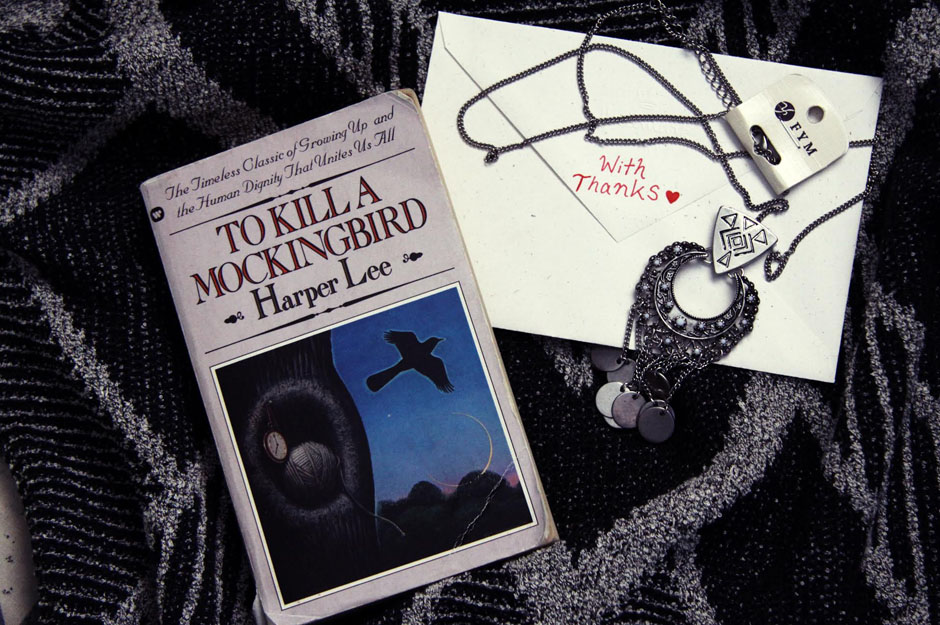
Something Old- A tattered copy of her favorite book (since she’s been wanting one to travel with)
Something New- A silver necklace
Something to Say Thank You- A handwritten note of gratitude chock-full of inside jokes

ty 2

2. Teas & Thank You

Clever titles will make any gift better. I re-used an empty jewelry box as a peek-a-boo type package and some string to keep the tea packets together. Add a nice mug and a thank you letter and your recipient is ready to steep in gratitude! This is a great option for professional settings at work or school.

ty 3

3. Jars of Light

Show appreciation for those guardians in your life. Wrap yarn around a clean jar and tie the ends snugly. Hot glue can also help keep the ends of the yarn attached to the glass. Red, orange, and yellow yarn created this gradient look. Place a small candle inside and attach a note to your homemade lantern.

Here are a few suggestions for those warm words:

“You have been a light for me lately. Thank you.”
“Set your life on fire. Seek those who fan your flames. –Rumi”

ty 4

4. Framed Quote Art

Dollar stores and thrift stores have very affordable and eclectic frames. Grab two complementary frames and insert a quote and a picture. Song lyrics are another great option for quotes paired with a mix CD (remember those?). These decorative gifts are semi-homemade but 100% thoughtful.

Let’s consistently remember and recognize those around us who make our day-to-day easier. Simple acts of kindness can speak volumes, so let your appreciation be heard by those who matter most.

How do you say thank you?

Images: Marian Rose Bagamaspad

novel
Culture

October is drawing to close. Leaves are falling, the air is crisper, even the famous Pumpkin Spice Latte has made its triumphant return. For students, this final transition from summer to fall, and into winter, marks the time to buckle down and surrender to the tsunami of work that is imminent on the horizon. Such are the changes implied by the coming of November. For book fans and writers alike, the month of November marks the end of Booktober (a celebration for book lovers to read as many books as possible) and the beginning of Novel November.

Unbeknownst to most people, November is actually National Novel Writing Month, and last year there were over 300,000 participants. Of course, for most students, another assignment is the last thing needed, especially when the school year is just hitting its stride. However, the point of Novel November isn’t to layer more work on top of everything else. It’s to find something that inspires you, and to run with it as far as you can. It also helps build self-discipline by writing a little bit every day. And the end result is the best of all – at the end of the month, if all goes well, you’ll have your very own novel. It never hurts to try, especially if writing is a passion you’re attached to, but you just can’t seem to find time. At the very least, you’ll have a start-up that will continue to grow into something spectacular.

There are a few simple things you can do to keep yourself on track during Novel November:

1. Schedule a specific time each day to write.

It’s just like working out or practicing an instrument; as long as you dedicate a small chunk of time to it each day, your work will grow exponentially. Sure, that might mean dropping an hour that normally would’ve been dedicated to Netflix or scrolling through the Internet, but consider it time well spent.

2. Never leave your story on a cliffhanger.

I know from experience that if you leave your writing on a cliffhanger without a solid idea of where the plot is going to go next, it will be a struggle to try and figure out how to resolve the conflict in question, however brilliant it may be. Always know where you’re going, and putting in that extra hour will be easy, just a continuation of an idea you had yesterday.

3. Stick with it!

Rome wasn’t built in a day, as the saying goes. A book won’t just spring up out of nowhere; it’s a project that has to be pieced together chapter by chapter, day by day, and as long as you stay committed to it and manage your time wisely, by the end of the month, you’ll be a novelist.

Will you be participating in Novel November?

Image: Tim Geers

Abbey Bookstore
Culture

Everything’s quiet. No outside noise, no blabbing people. The only sound is the quiet whisper of pages turning, and the occasional low voice. Ahh, bookstores… a place for every self-proclaimed literary nerd to find sanctuary. Books will always be a source of comfort, and with most people still avidly reading books, there is no threat to the literary society going extinct. So what’s happening to the bookstores?

Over the past few years, popular chains such as Borders (now bankrupt) and Barnes and Noble have been suffering heavy losses. What’s causing this alarming downward trend? Simple: the Internet. The Internet, in all its wonderfully convenient glory, is a staple in the lives of almost every person on the planet. However, with the ability to have nearly all the information, shopping, and entertainment one could ever want at the click of the button, people have begun to overlook the physical world for the digital world, and nowhere is that more apparent than bookstores.

With plenty of shopping sites (Amazon being the most notable) available for people to purchase their books on, as well as eReaders and Kindles for people to read said books on, the need for an actual bookstore with actual print books is slowly decreasing, and while some may consider this a good thing, it also has a pretty severe downside.

The first reason, which is also very practical, is that a bookstore provides income for many people. Places like Barnes and Noble, or even the local neighborhood store, provide jobs for people in the community.

Secondly, bookstores allow book nerds (myself included) to meet other like minded literary junkies. Additionally, bookstores broaden the number of books that can quickly be obtained (let’s be honest – books aren’t cheap, and having to pay shipping, or even worse, wait several weeks for new books to arrive, is much worse than just traipsing down to the store).

Lastly, bookstores create a haven for people to simply enjoy being around literature. For myself and others, just being around books provides a calming influence, and being surrounded by as many as a bookstore provides is one of the best feelings in the world. The simple presence of all that literary magic is enough to warrant a trip to the bookstore. It’s a feeling unavailable on the Internet, and one that should be preserved forever. Booklovers, literary geeks, and anyone who loves a good read, unite. Bring back the bookstores!

tiger confidence
Health

Sometimes we all need a few words of wisdom. Whether they come from someone famous or anonymous, these quotes are sure to inspire you to seize the day and Seize Your Youth!

“The higher your mountains are, the deeper your valleys will seem.”

Unknown

Sometimes we have a pitfall or two in life and we feel like it’s the end of the world. I love this quote because it reminds me that when I feel as though I’m at my lowest point, it only seems so low because I have so many high points in my life. It reminds me that the good comes with the bad, and that if the bad seems horrible it;s because I have a really great life.

“There are two days in every week which we have no control over: yesterday and tomorrow. Today is the only day we can change.”

Unknown

Sometimes we all need a daily reminder to live in the present. Stressing over the past and future keeps us from living right now. It’s helpful to be reminded that it’s never too late to seize the day!

“Don’t allow your wounds to transform you into someone you’re not.”

Paulo Coelho

Our past is just that: our past. Sometimes it’s hard to put it behind us, but in order to stay positive and take every opportunity that comes our way, it’s important to remember that the past doesn’t define who you are today.

“The mind is everything. What you think, you become.”

Buddha

I’ve read few words wiser than these. Sometimes we need to be reminded to stop thinking so much and just live and remain positive.

“The time you enjoy wasting is not wasted time.”

Bertrand Russell

In such a busy world, we tend to always be going and going and going. When we take the time to do the things we enjoy and pursue our hobbies and passions, we often feel guilty for “wasting” time. Never feel guilty for doing the things that make you, you.

You don’t have a soul. You are a soul. You have a body.”

C.S. Lewis

In simpler terms: what’s on the inside is what matters most. Don’t forget to let who you are shine through!

“Difficult roads often lead to beautiful destinations.”

Melchor Lim

The best is yet to come. All of your hard work will pay off in the end!

“If your ship doesn’t come in, swim out to meet it.”

Jonathan Winters

This quote reminds me that you can’t just follow your dreams, you have to chase them.

“Luck is what happens when preparation meets opportunity.”

– Seneca

When good things happen in life, remember that it’s in large part due to your own hard work and efforts.

“It’s okay to be a glow-stick: sometimes we need to break before we shine.”

Unknown

Our struggles and mistakes have value shape us into who we are.

“Don’t let anyone dull your sparkle.”

–Imgur

Never allow your potential to be trumped by other people’s jealousy. Shine as bright as you want to!

“If we wait until we’re ready, we’ll be waiting for the rest of our lives.”

Lemony Snicket

Most importantly, never forget to seize the day and seize your youth! There’s no better time to start than now.

Image: Picography

failure
Education

As the saying goes, “If at first you don’t succeed, try, try again.” Building up courage after failure can be difficult. Overcoming the disappointment of failure seems impossible. Learning to try again after failure is hard because your attempts are weighed down with doubt and hurt. Trying again requires facing your mistakes so you do not repeat them. It can be daunting, but it can be done.

I experienced failure during my sophomore year of high school, when I fell very ill on the last day of finals. By my last final of the day, I had just managed to sign my name at the top of my math test when I ran to the bathroom. I stayed there until school was out because I was too sick to go back to class. Because I couldn’t go back to class, I failed the class and would have to take it over. It was crushing. I felt sure that I would have passed the test and the class had I not been sick. Yet, this is the way things happened.

Though my failure felt out of my hands, what happened next was all up to me. At our school, we had the option of making up certain classes by taking them over again in the regular school year, summer school or at the local college. You do have to make them up eventually to continue advancing. I put it off for a long time. I felt like it was a waste of my time since I had already taken the class and was about to pass it. It seemed like I would just be learning things I already knew. To be really honest, I was worried about putting in more time and energy and failing again. I was afraid of people learning I was a failure without an “excuse” this time.

I finally opted for a summer course at the college because I could not avoid it anymore. Instead of feeling bad for myself and sitting in class regretting why I had to be there, I mustered up the strength to give the class all my attention and energy, and I focused and followed every rule and instruction. I was never late and never missed a class. I gave it my all because I did not want to have to go through the same thing again. In the end, I had the highest grade in the class. I could finally put the whole thing behind me. It was a relief but more than that, I felt good about myself. I didn’t feel like a failure anymore because I proved I could do what I set out to do.

It wasn’t easy, but along the way and through my own experiences, I learned many lessons from failing:

  • Do one thing everyday that challenges you. There have been times I was afraid of failing so it took me a long time to get stuff done. It’s hard to commit to following through if you are scared. Learn to embrace the hard challenges.
  • If things don’t go right the first time: try again. Even if you have to keep trying, your efforts will eventually pay off.
  • Try to find someone in your life who will be brutally honest with you. It’s great to be self-motivated but I also have people in my life who don’t let me get away with everything.
  • Make peace with the idea that not everything will go your way all the time. It’s okay that it hurts when something bad happens, but you will not fail at life if you get a bad grade on a test. Don’t wallow in what you did wrong. Learn from your mistakes. You have to work hard and give it all you have to make it right the next time.

Through my life, I’ve found the things you put off have a way of coming back. Being afraid of failure has a way of holding you back. It is not just a matter of being held back a grade because you did not pass. Failing has a way of making you feel stuck. If you think that your efforts will get you nowhere, you won’t see the value in trying. An important thing to remember is that you can have failures in your life but no one is really a failure as a person. You can fail but you can always try again. So, face your failures. If there is something still gnawing at you, deal with it. Don’t let your failures hold you back because you have a lifetime of bumps and obstacles that will knock you down more times than you can count. What will set you apart and make all the difference is when you get back up and try again.

Image: Unsplash

hannah cohen CJ pic 2
Culture

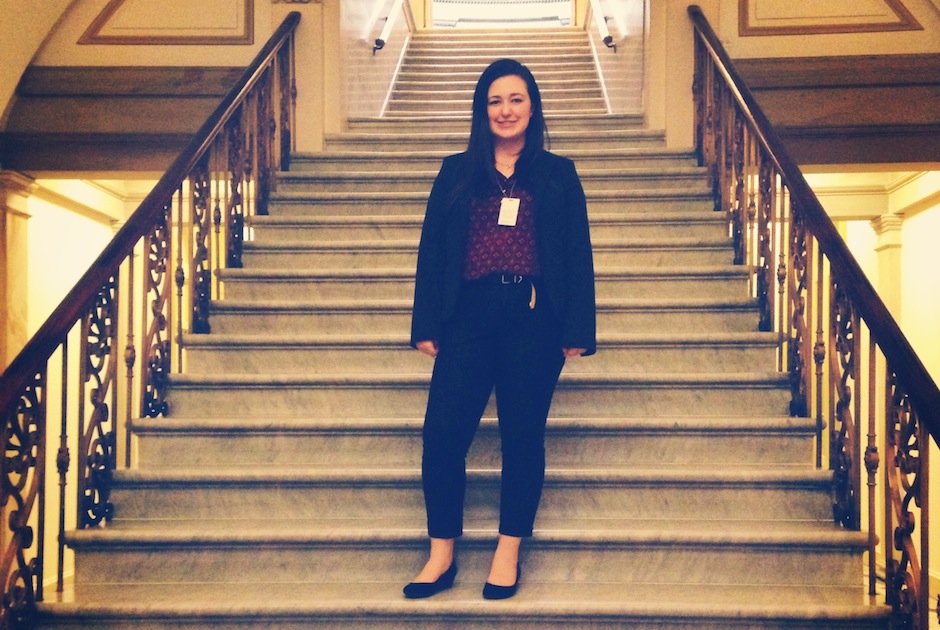
When I moved to Washington, D.C. eight months ago for a Capitol Hill internship in a Senator’s office, my mom told me I should keep my options open and that I could stay for the summer if the opportunity arose. I immediately pushed the idea aside. I had a job as a summer teller at a credit union waiting for me at home in upstate New York. It paid pretty well, wasn’t stressful, and I liked my coworkers. I couldn’t see giving up a sure thing. Plus, I had just finished a semester abroad in Denmark and I figured that by the end of the semester I would be more than ready to just have a relaxing “last summer at home before I graduate from college.”

Less than a month later I had been asked to stay and work in the Senator’s campaign office after my official Hill internship ended in May.

I definitely struggled with this choice, although almost all the outside advice that I got was to go for it. Ultimately, I listened to those voices and felt that I couldn’t turn down an opportunity to continue working on issues that interest me and for a person who I believe in. The opportunity to beef up my resume sweetened the deal.

Ultimately, once this opportunity arose I knew it wouldn’t be smart to turn it down. I can say for sure that I don’t want to be a bank teller “when I grow up.” I don’t know exactly what I what I want to be, but I do know that my time in our nation’s capital inspired me to want more for myself and I felt like I fit. For the first time I was surrounded by other people my age that wanted to talk about politics, or what was going on in the world, or what made us happy or mad or sad. Our elected officials, even in the midst of the “do-nothing congress,” inspired me, and I had the opportunity to see them in person, passionately speaking on important issues in hearings or on the Senate floor. I rode in an elevator with John McCain and I ran into Barbara Boxer struggling with her luggage at Union Station. For a political science nerd like myself, it was heaven.

My experience had low points as well. At the end of the spring semester, most of the amazing friends that I made left for the summer. Some of the new-ness of the experience wore off and reality set in. I decided that I wanted to come back to DC after I graduate in December, but I started to realize how many amazing, smart, talented people have the same plan that I do. It is definitely not going to be easy to move back to a city where I don’t know many people and try to start a life. The blueprint I have in my head for that life is definitely blurrier now than it was in March or April.

Here’s what I know: I’m going to give it a shot. The past eight months have been an experiment in stepping outside of my comfort zone. This is not something I have been historically known to do, but I decided it was time for me to make a little bit of an effort. I have also had to stop and cut myself some slack and remember that I am only twenty years old and I have time to figure things out. There have been moments where I have been so uncomfortable or nervous that I wanted to quit, but I have gotten through those moments and I am proud of myself for that. So that is the headspace I am trying to maintain. A lot of smart people have told me to have a plan, but to be flexible, because life is an unpredictable beast. As I start my last semester as an undergrad and make plans for afterwards, I am keeping that in mind.

culture 1
CollegeCultureCulture & TravelEducationHigh SchoolInspiration

Leaving your cultural comfort zone is a topic that seems to have been left out from the endless self-help articles I come across. The United States is a country of immigrants, and learning to plunge yourself into other cultures is not only an unspoken requirement to succeed in almost all professional fields, but it is also a surprisingly fun thing to do. I want to touch on the importance of diversifying. Be it college, your workplace, or even in your community, one often tends to gravitate toward people of their culture. It’s a fascinating thing to note that although you can be friends with a variety of people, you’re probably wont to relate most with those who come from a similar background. However, waving that white flag will do great things. Here are a few reasons why leaving your cultural comfort zone is important:

  1. “Expanding your horizons” doesn’t mean ordering Chinese takeout

Expanding your horizons, or emerging yourself in things you would not normally do, brings many outcomes. It means more than ordering Americanized Chinese, Mexican, or Italian foods. It means making friends with people of different cultures, it means attending a cultural festival and trying all of the foods, it means attending an LGBTQ poetry event, and it means doing these things with an open and inviting attitude. It allows you to experience the different parts of life and place yourself in the shoes of others. You may have assumptions about many groups of people, but spending time with them may shatter these pre-existing judgments, which is essentially the goal. It is always refreshing to see that there are reasons for ways of expression, that there is history behind art, and that there is love behind musical forms. It can be uncomfortable at first to put yourself in new shoes, but it will open your mind. Also, participating in cultural endeavors will definitely bring some zest in your day.

  1. Discover new favorites

Surrounding yourself with people from a totally contrasting environment does great things for your brain. For example, being surrounded by people who speak another language is great for making brain connections and stimulating your thought process. Hanging out with them and maybe accepting an invite to dine at an authentic Japanese, Portuguese, or Arab restaurant is a great way to try out non-Americanized foods that really hold the heart of the traditional foods. You never know, you may discover a favorite dish! Or maybe even a new favorite song or genre by listening to French dance, Japanese pop, Spanish rap, or Italian classical music. Discover the variety of flavors each culture holds. In addition, these new introductions to a new world may also spark an interest to travel to an unfamiliar country. Meeting people from unacquainted areas ignite captivating and bizarre conversations which bring interest to what you have yet to experience!

  1. Learn about yourself

You can learn a lot from just being around others of different backgrounds. You understand more about where you came from and how different that can be from what others are accustomed to. You also note how open you are to try new things. This may call for a new goal: maybe room for improvement in this area? In this day and age, diversity is a major component in many areas of business and organizations. Trying to improve your adaptation skills is definitely a great thing for you to improve. My goal for this school year was to meet people from other cultures. I wanted to meet other people on my college campus and befriend students who are not solely Hispanic. I realized that all of my friends were, in fact, Hispanic when I was asked this summer how the culture shock was since moving to college. I realized the culture shock was not as drastic as I had thought it to be. I was a bit bothered and disappointed by this epiphany and made the decision to expand my horizons. Two of my suitemates are Chinese and as a marvelous result, I have met Taiwanese, Japanese, Vietnamese, Indonesian, and even Arab and Indian individuals.

Here are a few tips on how to achieve doing this:

  • Attend and/or join a diversity-specific club

There are many organizations that are misjudged to strictly pertain to a particular ethnicity, identification, background, or race but that’s not the case as people of all kinds are invited. For example, check out one of the following clubs that may pertain to a Latin, GSA, Caribbean, Democratic, Christian, Muslim, Republican, Eco-friendly, Vietnamese, or Chinese Student Association club. People of all beliefs and backgrounds are always welcome to these clubs and organizations. Not only do they lead to meeting different types of wonderful people, but it also allows you to be surrounded by something different, which might be a big step away from your comfort zone and a great start to where you want to be.

  • Media switch

Believe it or not, media is a huge influencer. Begin with maybe switching up your music. You can surf the web for songs in different languages and maybe even another genre of music. Music says a lot about a culture. Listen to something different than your usual EDM or Country. Another shift you can make is to rent a foreign movie. Two of my favorite movies are actually foreign, and they are dramatic, original, and exciting. Subtitles may seem like a dreadful effort at first, but after a couple of minutes into the movie, you will hardly notice. Or maybe watch a T.V. series or show in another language. The last big step you can do to remove yourself from your cultural comfort zone is to attend a concert of a foreign band or a music group you would not usually attend. Check out different bands and musicians! Observe how they become in sync with the tunes and maybe open up your eyes to something that may catch your attention!

  • In class, sit next to somebody that seems totally opposite from you

You may be in high school or you may be in college. And of course, we all have those teachers and professors who give assigned seats, but there is always that one class that lets you roam free. Sit next to a person you would usually never sit next to, someone who seems opposite of your interests and even race or background. Talk to them and listen to what they have to say. It is a wonderful feeling to just listen to others.

Leaving your cultural comfort zone is a fascinating thing. It can be a learning experience and even a normal part of life if you let it. Approach these steps with an open, positive mind, and purge your mind from pre-existing judgments. You may be in for a wonderful life-changing surprise!

Image: Catalina Casas

Culture

We are all afraid of making the wrong choice and it doesn’t help that we constantly have our family and friends telling us what we should or shouldn’t do. When we have so many people giving us advice, how do we ultimately decide what to do with our lives? This question is one that has been asked many times and, because of that, there are so many answers. However, the only one that comes to mind is to take the road less traveled.

This advice is not my own, of course. But if you’re familiar with Robert Frost, then you have read his poem ‘The Road Not Taken.’ It’s a short poem that is seemingly about someone who comes across two paths in the woods, but one of the most magical things about poetry is that it can be interpreted in many different ways. With that said, when the narrator in the poem says that he (or she) “took the road less traveled by,” I immediately think of the unknown, and how scary it is to do something that no one else you know has done before or to go somewhere where no one you know has gone.

Some people push through the fear of the unknown and open themselves up to an adventure, only to find out, in the end, that it “has made all the difference” in their lives, in the way that they look at life, etc. Then there are the people who are terrified to take their own path because they don’t have a shiny, crystal ball at their disposal. These are the people who don’t do what they want to do with their lives because they don’t know where their dreams will take them, but they do, for example, know where majoring in the major their parents choose or getting into the family business will lead them. They have these pre-planned maps laying in front of them, telling them which paths to take to get them to a destination and, for most people, that’s less-intimidating than not knowing where their life will end up.

But you have to remember that not all roads are straight; they wind and bend and sometimes things fall on them, blocking you from finishing the journey that you started. In other words, even with a life map, you can get misguided and led astray. You aren’t free from obstacles just because you’re taking the road that everyone else has traveled.

Life doesn’t simply go from point A to point B. There are so many other things in-between that prevent you from getting to B, and if B is not truly your desired destination, what is going to motivate you to get you there? Yes, it’s scary not knowing where you’ll be five, or even ten, years from now, but even with a ‘safe plan,’ things can go wrong and the future you thought you would have might not be the one you get.

No one is sure of what their future holds and that is why the only way to see your future is to get there. Don’t waste your time moving toward a future that you don’t really want because not only will it be harder to arrive at but you won’t be happy in the end. So think about where you want to be years from now and get there. It doesn’t matter where ‘there’ is, as long as you put all of your energy into reaching a desired destination instead of a destination that you know you don’t really want to reach.

If you want to go to medical school or visit every continent at least once, then make sure you take the road that will allow you to follow your heart because your heart is the only thing that matters when it comes to planning out the rest of your life. Your family and friends might say they know what’s best for you, but only YOU know what that is. And the greatest mistake that you could ever make is choosing to travel down a road where you’re not too fond of the destination. If you’re not happy about where your life is going, that is your heart telling you that you are heading in the wrong direction.

I know that following your heart can be just as terrifying as the unknown, but you don’t want to live a life of regrets; you don’t want to look back when you’re older and ask ‘what if.’ It doesn’t matter if people say that the journey to medical school is hard or if everyone around you thinks that experiencing the world is not as important as getting an education. You do what is right for you, not because it’ll make life any easier (because it won’t) but because you’ll be more motivated to reach the end of that road you chose to travel down. With your desired destination or goal in mind, you can achieve anything, be anything, and do anything you want with your life. The sky is not your limit, because there are planets above the sun and the moon and the stars. Yes, you will encounter obstacles. Yes, the road will wind and bend and, at times, it will be too dark to see what lies ahead, but as long as you remember to always follow your heart, it won’t ever lead you astray.

Image: Unsplash

b
Professional SpotlightSpotlight

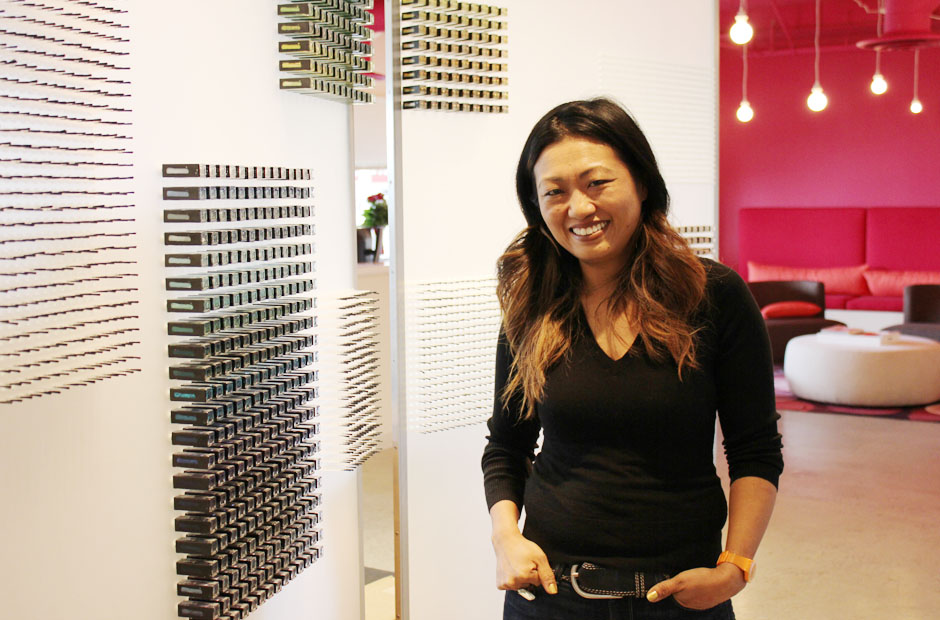
Jane Park - the founder and CEO of one of the fastest growing beauty brands, Julep - is no stranger to seizing her youth. After studying Public Policy and International Affairs at Princeton and then heading off to law school at Yale, Jane has always been a hard worker. After working as a consultant and at Starbucks, she then took a leap of faith to start Julep, a beauty company that tests new products on a community of monthly subscribers before it is mass-produced. Not only is this a smart strategy, but the products are quality. From nail polish to skin care products to makeup tools to hair care, Julep has your beauty necessities covered.

After having worked in both corporate and start-up settings, Jane is a pro when it comes to running her own business and getting things done. We are seriously inspired by her ability to multi-task, her passion for learning, and her advice to not be so hard on ourselves. She’s also generous with her time and advice. Jane is a true business and beauty rockstar, and we’re thrilled to share her story with you!

Name: Jane Park
Age: 43
Education: Public Policy and International Affairs at Princeton University; Doctor of Law (JD) at Yale University
Follow: Twitter / Julep

Carpe Juvenis: How do you define ‘Seizing Your Youth’?

Jane Park: Seizing your youth is about finding the joy in things and having enthusiasm for the daily parts of your life.

CJ: You majored in Public Policy and International Affairs at Princeton. How did you determine what to study?

JP: Public Policy and International Affairs was the major that enabled me to take courses in the broadest number of areas. I could take politics, economics, East Asian studies, and anthropology. It was an awesome non-major in a way.

CJ: After college you went to law school at Yale University. How did you decide to go to law school right after graduating from college and what was your experience like?

JP: I actually didn’t plan to go to law school right away. I applied as a backup idea. I wanted to go to India to work for an organization called Seva Mandir. When I told my parents my plans, they freaked out. I ended up applying to law school and planned on saying that I was going to defer as a way to get around actually having to go. In the end, my parents guilted me into going to law school. I had never seen them cry before!

CJ: What did you learn from law school that helps you as an entrepreneur?

JP: I learned the value of thinking through things and looking at situations from different angles. When you are creating legal documents, you have to think about what the future might hold and look at things from different perspectives. That’s probably the most valuable thing.

CJ: If you could make the decision about whether to go to law school again, would you still go?

JP: If you are thinking about a career like law, you should spend a day with a lawyer and see if you like what he or she is doing with the day. A lot of legal work is actually not with people. It’s just paperwork and it’s not interactive with people, so it is a different kind of environment. Law school was super fun, intellectually rigorous, and we dealt with interesting problems and constitutional issues, but when you graduate, you aren’t on the Supreme Court right away. You are locked away in a room with boxes and boxes of paper.

CJ: After law school, you worked as a consultant and then at Starbucks. Please tell us about your experience working at Starbucks and your major learning experiences.

JP: It was great to learn about how brands are executed at Starbucks. We got to understand how you take a brand and make thousands of people who are trying to bring that to life meaningful to people. Seeing how that operated at scale was really interesting. It was all about people, as well.

One of the best weeks of that job was when I got to work in the stores. I realized how hard it is to be a barista. You think you can mark a cup, but it’s really hard to have a line of people and to remember how to put all of the ingredients in the right order. I finally ended up just cleaning the bathroom because it was something I couldn’t screw up.

CJ: You left your job at Starbucks to start Julep. Were there any skills you wish you had known before starting your own company?

JP: The thing about being an entrepreneur is that every situation is different so the most important thing is to have versatility and flexibility. The best thing to do to prepare is to really work with a lot of different people and figure out how they see the world and how you can influence them. At the end of the day, all an entrepreneur is doing is influencing your investors to believe in your dream and you’re influencing your team to come join you. In order to make that happen, it’s really an intellectual and emotional decision. You have to know how you view the world and understand how others view the world so you can communicate compellingly.

CJ: How do you set goals?

JP: A lot of the times there are a lot of complex big picture dreams. We want to be a multi-billion dollar global beauty company. Life is just a series of days put together. I can do anything for a day and then do that one day at a time.

CJ: Starting and running a company is no easy feat and you are challenged on a daily basis. What do you do when you are unsure of something and experience self-doubt?

JP: I’m pretty transparent with people about things that I am unsure of so they know what I am grappling with and I try to ask for help. In almost every circumstance that I’ve used the words, “I need your help,” I’ve gotten the help. The thing to remember is that you’re not alone. If you start thinking about who you can ask for help, you can come up with a list or find people who will help you with the list. If you’re sitting alone curled up on your bathroom floor, there’s no one who can help you or no one who knows that you need their help.

CJ: You’ve worked in both corporate and startup settings. What advice do you have for a young person to thrive in those two cultures?

JP: Forget about the fact that it’s about you and how you are graded. It was true of me, too. For my first job, I wanted to do a great job. At the consulting firm I worked at, we were graded every three months on our projects so you really wanted to get the good grade. At the end of the day I realized that even in that context, the most important thing to focus on is how we are helping the clients and how you have impact. If you focus on making a real difference, everything else will follow. If you focus on how you are viewed and how your boss thinks of you or your promotion, nothing good comes out of that situation.

Figure out what the company’s goals are, and if you can’t see that far ahead, then figure out what your boss’s goals are. When you’re a junior in a company, you want to make a difference and have a voice, but that’s all “I” “I” “I.” Think about how you can be helpful and most useful. To get a promotion, it’s not about influencing your boss. It’s about influencing your boss’s boss.

CJ: Why did you decide to start Julep in Seattle?

JP: I decided to live in Seattle because of the city itself. I have two kids and Seattle is a great city to live in with kids. What’s great about Seattle is that there is quite an entrepreneurial network and there is also a strong venture capital community. Seattle is the perfect city because you’re close enough to venture capital to get financed but far enough away from the competitive environment every day.

CJ: What is your typical day like at Julep?

JP: There really isn’t a typical day. Today I had a couple of phone calls with prospective investors that were back-to-back. I made my kids chocolate chip pancakes for Valentine’s Day. I saw my kids off to school and made more calls from home. I came into the office and had a team meeting to address inventory questions.

julep nail polishes

CJ: What has been the best moment of your career?

JP: One of them was when we did our pop-up store in New York. Meeting the maven customers face-to-face was amazing. There were women in tears who expressed their love for their monthly boxes. The level of emotional engagement has been amazing.

CJ: What advice would you give teenagers or young adults who are interested in being entrepreneurs?

JP: The number one question you have to ask yourself is “how do you deal with failure?” There are moments of failure every day and month. If you are somebody who always strives for perfection, this is not a good life for you because it’s really hard to achieve and hard to get there. Whether it is sports or doing something you are uncomfortable with, see how you handle those situations and how you progress. Being mentally strong is an important characteristic to have.

CJ: What motivates you in your everyday life?

JP: For me it’s all about learning. I want to always be learning about people and how to do better. If you want to be better tomorrow than you are today, quantify things in your life. Count and write things down. Whether it is exercise or in a business, if you can count it and measure it, you can make a difference. Instead of having a loose goal, measure it in some way. If you want to write a business plan, how many pages a day are you going to write? How many phone calls a day are you going to make? Break it down into something that’s measurable and you can have success.

CJ: What is the best advice you have every received?

JP: In every context you have to find your own voice and find yourself. When I started working, I had never worked in an office before and I thought there was a certain way I had to be. I was playing the role of a lawyer and wasn’t really being me. There’s no way you can be successful if you’re not being yourself in that context.

CJ: What advice would you give your 20-year-old self?

JP: My overall mantra is to be forgiving when you make a mistake. Learn the lesson and move on. There is no benefit of raking yourself over the coals or rethinking again and again about how you could have done things differently. Of course there is always a better way to do things. If you’re frustrated and banging your head against the wall, it’s because you have an unrealistic expectation of what you should have been able to do. There is a lot of wasted energy on being too hard on ourselves.


comfort zone
Skills

I didn’t think cliques existed until I went to a different high school in 12th grade. It was there that I learned that schools like the ones in Mean Girls really did exist. Okay, maybe my high school wasn’t completely identical, but students in the cafeteria did separate themselves. There was a table for the popular kids and a table for the kids who played with Pokemon cards. Not only that, but people also put themselves into groups based on social class, religion, ethnicity, etc. My high school was very diverse, only that diversity wasn’t well-represented at the tables in the cafeteria.

But everyone seemed to be okay with that. No one was uncomfortable sitting at a table filled with people that were ‘just like them.’ I’m not saying that people should be uncomfortable doing that because it’s completely okay to seek out people you have things in common with. However, people who constantly do that become unaware that they’re doing it and it soon becomes their comfort zone. A comfort zone is a place that people tend not to step outside of because of how familiar it is and how relaxed that familiarity makes them feel.

For example, if I’ve only ever been friends with people who played on the girl’s basketball team, then I’m more likely to sit with them at lunch and choose them as partners for group projects if we have classes together. I don’t do this intentionally. I’ve just known these people a lot longer than I’ve known anyone else and I feel comfortable around them, so why change that?

Why is it important to branch out and make connections with people outside of my normal circle?

The answer to that is simple: it’s a part of life.

Not everyone in the world is the same. The sooner we learn to accept that, the sooner we can truly embrace it. For some people, going to college might be a huge step for them because they’re leaving behind their small town for a college town a few hours away in a different city or state. I’m not going to speak for every university, but the chances of you attending a school that is diverse in more ways than you’re used to is very high. Moreso if you’re going to a large university.

Once you are there, you might seek out people you assume you have a lot of things in common with because that’s what will make you feel comfortable. If you end up going to the same school as a couple of your friends, you might choose to only socialize with them.

Starting college (or high school) can be very overwhelming and intimidating so it’s good to have a familiar face or at least someone who you can relate to because you have a lot of similarities. But if you want to make the most out of your collegiate (or high school) experience, don’t clique up; don’t separate yourselves from others because they’re not familiar or because you’re afraid to leave your comfort zone. College is all about learning; not just inside of the classroom but out of it as well. You can learn so much from people that come from other parts of your country and from people who come from around the world. Everyone has a story to tell and everyone you meet in college has the potential to be a lifelong friend.

Oftentimes we might not think that we have much in common with someone whose first language is different than ours or someone who subscribes to a different religion. We get so used to gravitating towards people who share obvious commonalities that we forget that the people we see as ‘different than us’ can also have some (or many) similarities. You just have to find the courage to move outside of your comfort zone and talk to people you think you wouldn’t have anything in common with. Don’t spend your entire time at college with the same people because there are so many people to socialize with; so many opportunities to learn about a different culture or religion or to even just get a different perspective on life.

College is one of the best ways to get people from all over the world to come together under one roof, metaphorically speaking. It is truly a beautiful thing so use this time to your advantage because, thankfully, college is not high school. So, step out of your comfort zone. Better yet, try your best to knock it down. I know it’s not easy to get rid of it all at once, but the world would be a much better place if we worked at breaking down the barriers that exist between each other a little each day.

Image: morguefile

last summer 2
Travel

Summers are underrated. Relaxing under the sun, hanging out with friends, seeing movies whenever you feel like them, and worst of all desperately attempting to avoid work all lead down a high speed road until you’re plopped back into the fall at work or at school and wonder what you’re doing with your life.

For me personally, I am staring the inevitable death of summers right in the face, as I prepare for my senior year of college. But no matter what situation might bring you towards your last summer vacation, what’s important is that you make the most of it.

Here are some ideas for how to make the most out of any summer, and avoid that downhill tumble into September:

1. Make fitness a priority.

The hardest part about exercise is getting it into a part of your daily routine. The dog days of summer are the perfect time to set yourself up for the busier seasons ahead by installing an exercise plan throughout the week. It feels like work, but after awhile the habit will kick in. You’ll want to go for a run rather than need to. Whether it’s to stay in shape or just to keep your mind sharp, exercise is a valuable asset to any go-getter’s arsenal.

2. Mix up your environment.

You’ll have the rest of your life to work in a typical office experience. While getting any professional experience will be incredibly valuable in the future, try to find it in an avenue that’s possibly more of a peripheral interest, or that’ll challenge you in ways your aspiring career might not. I’ll give you a personal example. During my last summer, I have spent my days as a Creative Writing Intern for a small video game company. Though I’ve always enjoyed both writing and video games, I had never fully combined them into one workday until this experience. I feel like its really broadened my preexisting skillset, and opened a door to a potential career field I hadn’t initially thought about.

3. Keep an idea journal.

One of the most powerful things humans have are ideas. Keeping a journal of your day-to-day ideas keeps them under your control and in your hands. Big or small, easy or difficult, all ideas should be saved. You never know when an idea will come, or when the timing is right to seize on it. Write it down.

4. Take advantage of a flexible schedule.

The last summer also presents the ominous prospect of potentially leaving your home or your hometown. Take some time to revisit landmarks from the past,and to discover new places and possibilities too! The flexible schedule of the summer will leave you with some space to get out of your house and your comfort zone. Sleeping in is always an incredible option, but when you’re young and the world is this old, you gotta take advantage of all it has to offer.

5. Set away time for fun.

At the end of the day, this is still summer vacation. I know it’s hard to remember that second part. But it’s still there! When the waning summer days start to get hectic, give yourself the space to recharge in whatever outlet you find best. Binge a television show you’ve always wanted to binge. Read. Sometimes the best thing you can do to further your professional goals is to achieve your recreational ones. You should love the work you do, but don’t forget to love your life, too.

How have you been making the most of your summer?

Image: Jay Mantri