mushrooms
Health

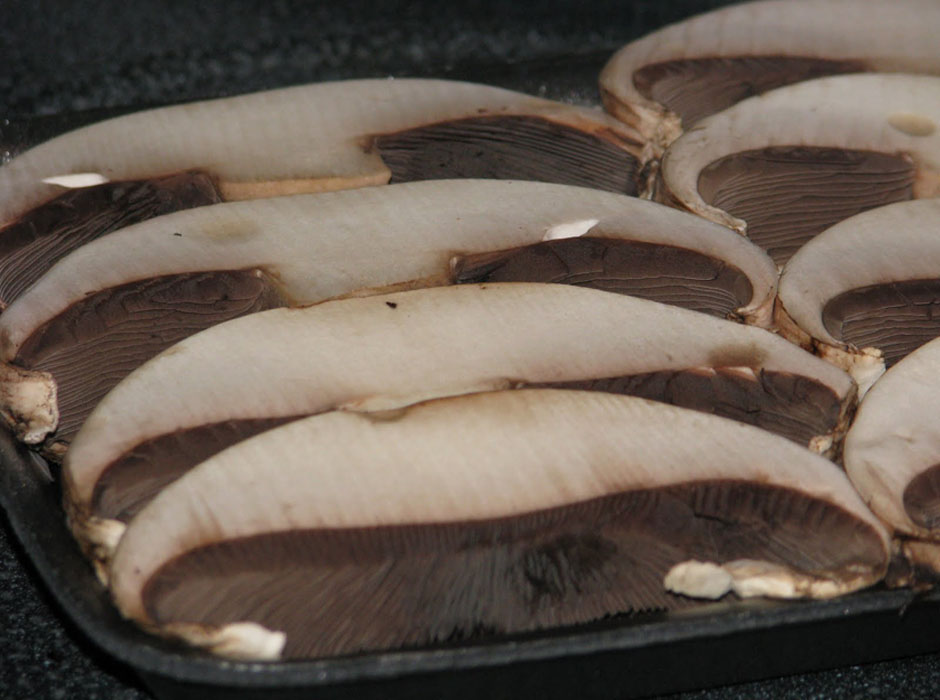
This is one of my favorite quick and easy snacks to prepare. Portabellas are often called the meat of the vegetable world, so these little guys are super filling, and can double as an appetizer, wrap filler or salad topper.

Here’s what you’ll need to make about 30 garlicky portabella bites:

  • 5 large portabella mushrooms
  • 3 large eggs
  • 4 cups garlic and herb breadcrumbs
  • 1 tbsp garlic powder
  • Olive oil
  • Salt and pepper

Step-by-step instructions:

  1. Remove the gills from the portabellas and rinse them.
  2. Slice them into strips. You can cut the strips in half if you want to make the bites smaller.
  3. Beat the three eggs together, mixing in the garlic powder and as much salt and pepper as you prefer.
  4. Dip the portabella strips in the egg mixture.
  5. Dip them into the bread crumbs, coating all sides of the portabella.
  6. Place a tbsp. olive oil in a pan and swirl to coat the pan.
  7. Place the pan over medium heat and place the portabella strips on the pan, cooking for around 3 minutes on each side. Depending on the size of your strips, you may need to cook for longer. When the crust is golden brown, flip them.
  8. Tip: to save for later, coat the mushrooms in the batter and put in the fridge for later – you can cook all of them up later in under 15 minutes!

These taste great with ranch dressing or aioli!

What smart snacks are you enjoying? Share below!

Image: Big Bear’s Wife

thanksgiving
Culture

These days, Thanksgiving is known for its big meal and is otherwise swallowed up by the rest of the holiday season. However, when we think of it like that, we miss a lot of joy that comes from the holiday itself. It is a day that brings family and friends together and makes them take stock of the goodness in their lives. Everyone has their own role to play in this. Even if Thanksgiving is not your favorite holiday, it has values you can celebrate all year long.

1. The holiday motivates us to keep in touch.

With social media, it’s easy to see what your loved ones are up to throughout the year, but it’s hard to make plans to see each other. People really make the effort to be together on holidays but you don’t need a holiday as an excuse to get together. When you miss someone you love, make a plan to see them. I know work and school can be hectic. However, in the last year, I’ve made the effort to spend more time with my extended family and I’m grateful for it. We know each other in a new way now and I wouldn’t trade that for anything.

2. Thanksgiving allows you to forge a bond through food.

We all know everyone has to eat. Thanksgiving is a food holiday, but also one steeped in tradition. People work together in their kitchens to keep old traditions alive or create some new concoction. I love to eat and to cook. Throughout my childhood, I was a last minute helper. I had to contribute in my own small way. Now that I am adult, I do most of the cooking myself. On Thanksgiving, preparing food is not just cooking, it is carrying on tradition. Everyone contributes to the meal. We are brought up on recipes that we learn to make ourselves. It’s a group bonding activity that does not have to be one day of the year. I frequently help my family cook. It takes away some of the work after a long day. Take some time throughout the year to share recipes with others or to cook together. It is a fun way to pass the time with people you care about.

3. Thanksgiving is one of the biggest volunteering days of the year.

Remembering what we have now reminds us to help others less fortunate. A lot of charities put out food for families and the ill on this holiday but people need to eat all year round. Why wait to volunteer one day of the year? There are many worthy causes looking for help during the year. Try one.

4. Think about what you are thankful for.

We are in the ‘now generation.’ We tweet, Instagram, and Facebook to talk about what we are doing in the moment. Most of the time, it’s important to keep moving forward and be present. That said, it does not hurt to realize all that you have going for you. It also never hurts to remember all the people in your life who make your life better. Let them know what they do for you. Again, this doesn’t have to happen one day of the year. When you appreciate someone in your life, tell him or her.

Holidays are a time to celebrate events that happen year after year. However, we don’t have to only bring out these values one day of the year. We can get closer to our loved ones, work together, give back, and appreciate all that life has to offer. All you have to do is remember to try. I told you some ways that I celebrate. Think of how you want to contribute this year.

What Thanksgiving lessons do you implement throughout the year? Share in the comments below or tweet to us!

Image: Lee

laura 2
Professional SpotlightSpotlight

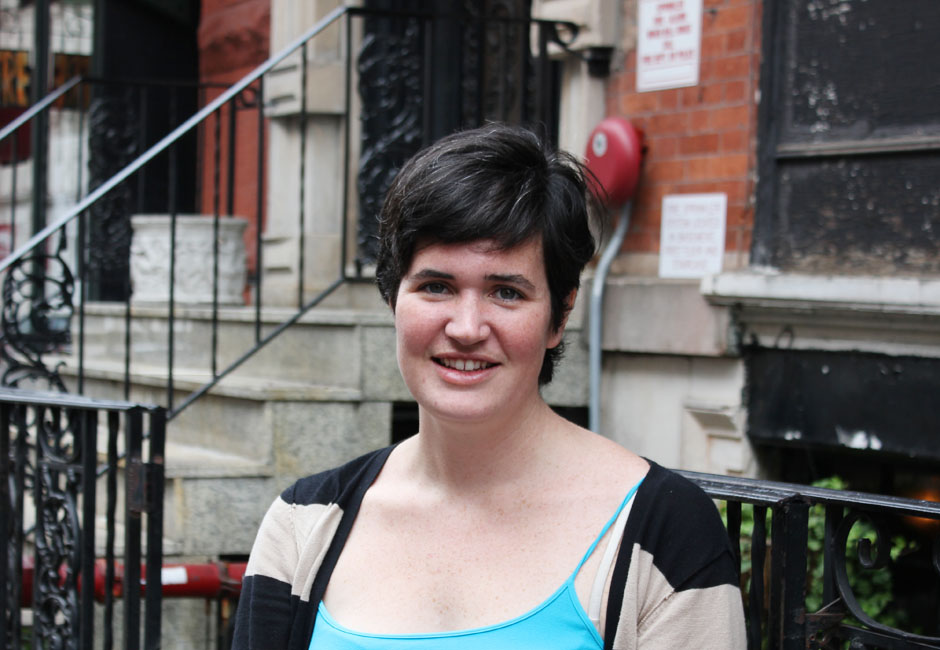
When we met food editor Laura Shunk for her Professional Spotlight, it was over breakfast (naturally). While enjoying eggs and toast, we discussed studying abroad, being a food writer, and being on the board of New York City Coalition Against Hunger. Having studied International Relations at Claremont McKenna College, Laura is smart, thoughtful, and passionate about her career and involvements. We love Laura’s outlook about post-college years being a skill gathering time, and if you’re a student, take notes on the top three traits she looks for in interns. For a more in-depth look at Laura’s life, great advice, and to learn how she got to where she is today, read on!

Name: Laura Shunk
Age: 28
Education: International Relations major at Claremont McKenna College
Follow: Fork in the Road - Village Voice / Twitter / New York City Coalition Against Hunger

Carpe Juvenis: How do you define ‘Seizing Your Youth’?

Laura Shunk: I don’t know if there’s one good way to describe it or way to answer that. I think about how to seize any time in your life and it’s engaging in things that you care about and you feel invested in for whatever reason, whether that’s because you’re helping a cause you’re interested in or enriching your own life and knowledge and setting yourself up for future success.

CJ: What did you major in at Claremont McKenna College and how did you determine what to study?

LS: I was an International Relations major. Before I was an International Relations major, I was an Economics major, a Government major, a Literature major, a Biology major – I probably changed my major about 10 times. I ultimately settled on International Relations because it was the only major that required you to study abroad and I really wanted to have the opportunity to do that. It ended up being a great major.

CJ: Where did you study abroad and what was your big takeaway?

LS: I studied abroad in Buenos Aires, Argentina. I learned Spanish, so that was a very tangible takeaway. I spoke it fluently after that. Study abroad isn’t necessarily about the classes you take or what you study, it’s more about seeing a different culture. I studied development theory in college and I had never seen it applied in real life, and I spent the summers in parts of Latin America in poor communities, but I had never understood what it meant to be in a developing country and Argentina put such a vivid experience to that. A broader understanding of the world and understanding that other places in the world aren’t just like here and that people are great everywhere.

CJ: Are you happy you went out-of-state for college?

LS: Yes, I highly recommend it. My parents told me when I was getting ready to go to college, “Go out of state because you can always come back.” That was the best advice anyone ever gave me.

CJ: Where did you intern and how did you go about securing those internships?

LS: My only internship was at Chipotle, which I had throughout college, in their corporation headquarters. I was part of the culture and language program, so we were writing and managing programs that helped employees learn English, which helps them advance in restaurants. It was an amazing internship, it ended up being so hands-on and I secured it by working my network. I knew I wanted to do something that used my Spanish and do something in the business world and I was interested in food, but I wasn’t quite sure how to put the two together. I knew people at Chipotle and asked about internships and they pointed me to the right place.

CJ: You are a Food Editor at Village Voice Media. What does being a Food Editor mean?

LS: On a job responsibility level, I manage the division of a section, I assign stories, I edit stories, and I keep the online part of the food coverage of the Voice and the paper moving in the direction I think it should be moving.

CJ: What makes a good food writer? Is it traveling and eating, or is it eating a lot?

LS: It can be a lot of things. There are a lot of different kinds of food writers. The best food writers have a unique angle of some sort. They could have traveled and bring a cultural awareness to the food that they’re eating or writing about. They could really love the human story behind foods. They could love the environmental factors or the experience. There are a lot of ways to be a food writer.
laura 1

CJ: What does a day in your life look like?

LS: I wake up, drink a lot of coffee, spend the first four hours of my day editing and writing and getting our blog set for the day, and then I spend the second half of my day interviewing, talking to people, strategizing, and transcribing. There is also a lot of eating involved. I am out to dinner every night and out to lunch a lot. Sometimes I’ll have two dinners.

CJ: What should a teenager or young adult who wants to be a Food Editor do now to set themselves up for success?

LS: Write. That would be the first thing. Writing is a skill that no matter how naturally good at it you are, you get better as you do it more. And find a good editor because that helps a ton. Start a blog. With the direction media is going, get good at social media, photography, and film. In that same vein, a good food writer has a unique angle – learn something in the food world better than anyone else knows it and you’ll be the go-to person for that topic.

CJ: In addition to being a Food Editor, you are active with the New York City Coalition Against Hunger. How are you involved and why do you believe in their mission?

LS: I sit on the board, which means we meet and hear about the day-to-day of the organization, we help with fundraising, and we help with higher level strategy decisions. The board provides overall strategic direction and fundraising help.

The New York City Coalition Against Hunger works with and on behalf of food pantries around New York. Instead of just helping soup kitchens fulfill their duty, we work on changing the rules of the system. We are focused on fixing the problem as opposed to just putting a Band-Aid on it. Being in the food industry, fixing the problem is important to me.

CJ: If you were hiring an intern, what are the top three traits that you would look for?

LS: Eagerness. The best intern I had was eager and never said no. That’s a big one. A certain level of maturity and self-awareness. Be able to take direction and accept that somebody might have something to teach you. Communication is also important, especially today, you’ve got to be a good communicator.

CJ: You’ve been out of school for seven years. How did you transition from college life to “the real world?”

LS: I approached post-college as a skill gathering time. I looked at it as a time to do a lot of different things, and I ignored people around me telling me I had to have a career where I was moving up. I didn’t buy it. Whether that’s true or not, I don’t know, but it worked out on my end. Being flexible is important. I moved from L.A. to Denver, went to New York, back to Denver, and then back to New York. Some years were harder than others. The year I quit my consulting job and was working for a quarter of the salary waiting tables I would think, what did I do? That’s when I would think that I wasn’t transitioning well post-college. But it’s all temporary and things work out. If I hadn’t done that I wouldn’t be doing what I’m doing now.

CJ: What activities were you involved in throughout high school and college? Were there any experiences that were most memorable or life changing?

LS: In high school, I was the editor-in-chief of the yearbook, I was on the mock trial team, I was on the golf team – but I’m pretty sure I only did that to get out of gym – and I was a girl scout. That was meaningful not so much from the organizational perspective, but because I did a lot of community service, which was very rewarding and momentous.

In college, I did different things such as Model EU and a foreign affairs club because I got to travel. At Claremont McKenna, I helped design a curriculum that helped staff, such as janitors, to learn English. We would tutor them one-on-one, and that was rewarding.

CJ: What motivates you in your everyday life – at the office and/or during your down/personal time?

LS: I think a lot about making an impact. Going back to what I said about seizing your youth, feeling engaged is huge. I worked a lot of jobs where I didn’t feel engaged. I feel engaged now and I feel compelled to continue to dig in and I want to feel that way forever about what I’m doing. I’d like to do something that impacts my community in a positive way.

CJ: What is your favorite book?

LS: Recently: Americanah by Chimamanda Ngozi Adichie.

CJ: Who is your role model?

LS: I’m pretty lucky to have a lot of role models. I had an editor in Denver who I would consider a role model. Still one of the greatest editors I’ve ever worked with. She taught me a lot about the business, and she is one of those people whose impact on me is something I hope to have on others.

CJ: What advice would you give your 20-year-old self?

LS: Don’t worry about it when you feel uncomfortable. You’re going to have times where you are unsure if you can pay a bill or if you’re going to be fired. These things will happen and it is part of it and it is fine and it usually works out. Try to enjoy it and try not to get caught up in others telling you what to do or how to feel.

recipe 1
HealthRecipesWellness

As a vegetarian who hates eggs, I have to get my protein somewhere, which means I use a lot of legumes in my cooking. And, most of the time I’m too busy (read: unwilling) to cook an elaborate meal. Thus, I rely a lot on no-cook recipes to get me through my days.

Below are two of my newfound favorite bean dips that make perfect spreads and sandwich/taco fillers, veggie dips, or just meals on their own. They’re filling and delicious, and best of all, they each take under 20 minutes to make!

recipe 1

Spicy Mango Black Bean Salsa

Summer is technically over, but I live in Texas, which means it still feels pretty dang summery. So, I’ve used it as an excuse to continue making my refreshing mango salsa. This is one of my absolute favorites; I put it on tortillas to make vegetarian tacos, use it for nachos, put it on salads or just eat it plain.

1 Keitt mango (very large) or 2 medium sized mangos cut into small chunks
1 tomato, diced
1 small red onion, diced
1 orange bell pepper, diced
1 avocado, chopped
1 can black beans
Jalapenos (either 1 fresh, chopped, or as many pickled jalapeno slices as you please)
Juice from 1 lime
Salt and cracked black pepper (to taste)
Hot sauce (as MUCH as you want! Cholula is my favorite)
Red wine vinegar (just a dash)
Cilantro (a pinch)

This is so easy.

First, rinse and drain the black beans. I like to keep as much liquid out of the salsa as possible. Next, pour the beans into a large bowl with everything else, and mix it together. This recipe makes a good amount of salsa; at least three meals’ worth.

I like to play around with the amount of hot sauce/jalapenos/red wine vinegar/salt and pepper/other ingredients. Sometimes I add random spices, like paprika, and sometimes I add in corn. The point is to make it your own! Taste it as you mix, adding ingredients as you see fit.

There are a lot of different flavors involved in this one, so it makes for an awesome meal.

recipe 3

Kale & White Bean Hummus

I love this dip. I put it on sandwiches with cucumbers, shredded carrots, sliced bell peppers and chopped red onion (you could add feta and other veggies, too) and it’s so delicious. It also makes a perfect veggie dip and goes great on pita bread. This morning I ate it straight with a spoon.

2 cans white or cannellini beans
½ cup pesto
Balsamic vinaigrette
1 tbsp fresh lemon juice

Literally, pour all the ingredients into a food processor. Mix them. Done. Add balsamic, salt and lemon juice as needed once mixed. Like I said, this goes perfectly on a veggie (or meat if you’re into that) sandwich.

What smart snacks are you enjoying?

Images: Maggie Hoffman, Nora Kuby

eat
Health

Life gets in the way of a million things: plans, expectations, and more importantly, meals. Maybe you were already seven minutes late for that meeting and the idea of breakfast was pushed aside onto your mental list of irrelevant things you should do but don’t, such as wearing your retainer six months before your next dental appointment. But what if I tell you that skipping a meal translates to skipping out on a million ideas, brain connections, and memory collections. If you’re getting a clue at where I’m going with this, meals are not meant to be a burden, but more so, a fundamental supporter. They provide for the building blocks of your body. If you are having trouble keeping up with your meals, try out different things and explore a little change. And by this, I mean take more control of your days. Meals should be consistent and here are a few reasons why:

  1. Sugar roller coasters are not theme park-fun

In other words, eating lunch at 12pm and then at 4pm interchangeably between days calls for chaos in your system. When you have not eaten for a while, your blood sugar drops drastically and the next time you do eat, it sky rockets. In turn, you are setting yourself up for a diabetic lifestyle due to the constant insulin blasts. Doctors say that eating as many as five to seven small meals a day is a healthy way to keep your blood levels at a more-or-less steady level for most people. Take control of your schedule. If you are in the middle of work or class when you should be taking a lunch break, take the time to pack a meal in some tupperware or bag up a sandwich to squeeze in a chance to refuel your body during that busy time of day. It is essential that your body collects the appropriate vitamins and minerals in order for it to function properly. This also brings into consideration the content of your meals and snacks. Refined sugar will drastically spike blood levels unlike whole natural foods which, in turn, slowly and steadily raise your sugar levels. Sugar rushes not only cause disorder in the body but they also cause blood sugar to suddenly drop and this causes hunger shortly after. We all know that this isn’t exactly the most convenient of cravings when keeping an eye on health and weight.

  1. Your metabolism is like a muscle

People skip meals because a) they are incredibly busy or b) they are trying to lose weight. Either way, your muscles will weaken if they are not worked and likewise, your metabolism will get slower when it is not put to use. Each time you eat and digest food, your metabolism is making use of itself, as it should. A great portion is transformed into energy for daily necessities and a small portion, depending on the food of course, is turned into lipids. Skipping meals, on the other hand, halts this ongoing process and essentially affects your metabolic process. The next time you do eat, much of what you put into your system will not be as quickly broken down as it once was. Another way to view your metabolism is by thinking of it as a computer. If you turn it off, you must wait a while for it to start up again. Promoting its regularity is vital.

  1. Untimely meals translates into formless days

When a person lacks the discipline of eating on time, it only leads to a sense of disorientation. Putting off meals creates an entire shift when it comes to eating regularly. If breakfast is belated, your lunch will be too. If lunch is skipped, dinner will become your lunch and a late night snack will undoubtedly creep into your nocturnal endeavors. The cycle is eternal and one way of avoiding this is by making sure that you get something in your body shortly after you wake. Be it some yogurt and chia, toast with hummus, or even a vine of grapes, breakfast is the turning key to your engine. When outlining or scheduling your day, make it so your meals become your bullet points and your daily activities become your sub-points.

Eating on time is fundamentally important. It allows for a poised body ready to be productive. Living by a healthy meal routine will only help you conquer each day through a balanced system, a clear mind, and better access to the well of information your brain houses.

AB china 1
EducationTravel

When I was seventeen and deciding where I wanted to go to college I had no idea what I wanted. I did not care if I went to a city school or a school in the middle or nowhere. I had no preference if the school was big or small. The only qualification I was sure of was that I wanted to go to a school that offered study abroad. I am currently a senior at the George Washington University in Washington, D.C. where over 50% of the student body chooses to study abroad. I am a Psychology major and Creative Writing minor and though I’m not sure exactly what I want to do after I graduate, my main goal in life has always been to help others. I am currently interning at a non-profit called Split This Rock, which is an organization that brings together poetry and social injustice in the U.S. Capitol. I am a strong believer in astrology and as a Libra I am always striving to find balance in my life. My interests include OPI nail polish, French onion soup, American Horror Story, instagramming my food, journaling, and of course…travel.

This past spring I made the decision to study abroad in Beijing, China. Studying abroad is an unforgettable experience no matter which country you choose to go to, but it’s still very important to decide on the best program for you. Many factors led to me to study abroad in Beijing through The Alliance for Global Education (Alliance). Most importantly I knew I wanted to study in China so I could practice my Chinese language skills, but I was unsure about the exact city: Beijing or Shanghai? I ended up picking Beijing because it has much more traditional culture and history than Shanghai, which has become very Western and modernized.

Another factor that led me to choose Alliance over other study abroad programs was its size. My abroad program only hosted 11 students, while many other programs had nearly 100. I thought that a small program would be more manageable (though at times I did wish it was bigger). I think 30 people would have been perfect. I also decided to pick Alliance because it offered two weeks off for travel, and I knew that seeing other parts of China was another top priority.

I also wanted to consider the intensity of language learning; I picked a program that required attending Chinese language class every day, but my other classes were taught in English and were less rigorous. I did not want to take a hugely intensive class load because I also wanted to have time to go out and explore, rather than being stuck inside studying all the time.

I spent four months studying abroad and while I really enjoyed it there were also a lot of things I learned. If I could redo my experience, here are the main tips I would follow:

1. Make friends with locals.

This is something I definitely wish I had done more of. Join clubs at your study abroad university, approach people in the cafeteria, and go to bars with more locals than Americans. You may feel out of your comfort zone, but that’s the point!

2. Eat everything.

Try new foods; eat things even when you don’t know what they are (as long as they as deemed safe for you to ingest). On my third day in Beijing, I tried fried silk worms… and then spit them out on the street. But hey, at least I tried!

3. Travel alone and travel as much as possible.

Don’t be scared! Take a weekend trip out of the city by yourself and you won’t regret it. Traveling alone is a great way to meet new people and find yourself. That being said, when you’re traveling alone you must be aware and be cautious. When I took a weekend trip alone to Qingdao I ended up in a questionable and unsafe situation (thankfully it all ended up alright and I’m here to tell you about it, but that’s not always the case). In short, I ended up spending the entire day with, and dependent on, strangers for transportation because of a language miscommunication that occurred in the morning. Luckily these strangers ended up being very nice people and I returned to my hostel safely at the end of the day. From this situation I learned that it is key to be aware so that you don’t put yourself in a dangerous position. However, this experience also taught me that following your instinct while also taking those precautions can allow for unique experiences.

4. Be open to the new culture.

One big problem many people talk about when they are preparing to go abroad is “culture shock”. I think that this is a problem that is very easy to avoid as long as you come into your study abroad experience with an open mind. You should know that things aren’t going to be like they are in America, so don’t compare everything back to that! You aren’t in America so of course things will be different, but you should embrace them before your time in this country comes to an end.

5. Embrace all the unique things your abroad city has to offer.

Explore more than just the tourist attractions. Find websites that post events happening in your city each weekend (it took me way too long to start doing this). Plus once you make friends with locals, go out with them! They will know better than any website.

6. Put down your cell phone!

Stop searching for wi-fi. Shut the phone down. Your friends from back home will still be there when you get back, but you will never be back in this city, at this age, with these people EVER AGAIN! Disconnect and you will become a more relaxed person and be more immersed in your abroad experience.

7. Befriend people you wouldn’t necessarily approach back home.

Accept your new friends for who they are and learn to love people for their differences.

8. Speak the language, no matter what.

If you are in a city with a non-native language, speak the new language as much as possible. Don’t be nervous or embarrassed—I wasted so much time letting other people speak Chinese for me because I was embarrassed of my language skills. This is the only way you will improve! You might get laughed at, but most of the time people are really nice when they see that you’re trying.

Don’t set your expectations of abroad too high or get stressed about trying to accomplish everything you want to do in a short period of time. Although you should try to travel and make the most of your time abroad, if you are spreading yourself too thin you will end up stressed and not able to enjoy your time.

9. Keep a journal!

Write down everything that you experience so you’ll never forget this once in a lifetime experience.

Happy travels!

Image: Courtesy of Alex Borden

fruit and granola
Health

We all know the basics of healthy eating and the benefits that come with it. Unfortunately it may not be the most fun - or easiest - thing in the world to actually do. Here are five yummy recipes to try out to satisfy your taste buds and your inner health-fanatic!

Twizzler Dupe

If you cut strawberries and put them in the oven until they’re mostly dried out, they’ll become a delicious treat more yummy and healthier than Twizzlers! Throw these in a bag and bring them to the movies for the perfect snack.

Bananas and Peanut Butter

You can’t go wrong with this classic and mouthwatering combination! Try peanut butter and banana slices on toast for a yummy snack that will fill you up and satisfy your craving for something both sweet and salty!

Strawberry Yogurt Treat

If you’re looking for a refreshing snack, try cutting strawberries in half and dipping them in yogurt. Put them in the freezer until the yogurt is frozen and a savory treat is made with two completely healthy ingredients!

Yogurt Parfait

Try vanilla yogurt with your choice of fruit and some granola. This is the perfect healthy treat that can be eaten as breakfast, an everyday snack, or a refreshing dessert!

Banana Ice Cream

Banana and a little bit of vanilla extract in a blender make a delicious and guilt-free ice cream when put in the freezer! It’s the perfect summer treat when you’re craving something sweet.

What are your favorite healthy snacks? Let us know on Twitter with the hashtags #snacktime and #seizeyouryouth!

Image: Foodie’s Feed

world
CultureEducationTravel

Studying abroad is a big, fantastic, life-changing decision. Kudos to you for making the choice to do it, but now you’ve got a question to answer for yourself: where will I go?

During my junior year of college, I left my little North Carolina university for a semester as an exchange student at a university in Singapore, where I knew no one, about as far across the globe as I could possibly go. Choosing such an unfamiliar location was one of the best decisions I’ve ever made, but it wasn’t the easiest.

Some people, like me, are all over the map with potential locations and take a little time to choose the right place. I’ve compiled a list of 10 questions that I consider important to ask about each potential location when making the decision on where you’ll spend the next mini chapter of your life:

1. What is my goal? What do I want to get out of this experience?

Do you want to learn a language or discover new cultures? Escape your comfort zone? Explore incredible nightlife? Meet new people, or remain with current classmates/close friends? Volunteer? Travel easily? While the questions below will guide you in determining the program that meets your academic, social, travel and financial needs, answering them is no use without first having an idea of what you truly want to gain from your experience, and how far out of your comfort zone you’d like to go.

2. What are the potential host countries’ official language(s)?

Do you speak it/them? Do the universities or programs you’re considering offer classes in English, or only the host language? Can you enroll in language lessons?

3. How are the potential host countries’ political climate?

Is the country and its region fairly stable and safe, particularly for people of your nationality? People are people no matter where you go, and no matter the situation. Danger is not alwaysas imminent as the media likes us to believe (don’t tell your parents I said that). However, safety is vital, political climates can change quickly, and even if they don’t necessarily affect safety, they can affect your ability to do things such as travel, stay out late, etc. The UN and your country’s embassy sites are informative in these situations.

4. How are the social dynamics?

Is the country LGBTQIA friendly? Are gender roles significantly different there than in your home country? Is it safe and respectful to openly practice your religion there? How are people from your country generally treated? Is partying and/or drinking normal or frowned upon?

5. What about cost of living?

Are you funding the experience yourself or with help? How much can you spend on it? Are scholarships available? Check out factors like public transportation, food and drink, leisure and cultural, and rent costs. It may actually be very possible to live significantly more cheaply as a student than you’d expect. (While Singapore’s cost of living is very high, research showed me it was fairly simple to keep my costs low using student housing, public transit, groceries, duty-free stores and on-campus food canteens.)

6. What amenities are available?

Will you be using toilets or holes in the ground? Is running water available for showers, laundry etc.? WiFi? What, if any, western-style amenities are you willing to forego?

7. What about food and drinks?

What is the local diet? (Noodles, glutinous sticky rice or Indian and Malaysian breads were in almost every meal I ate in Singapore – it would have been difficult were I gluten free.) Know how well your allergies will be accommodated and whether you’re willing to try unfamiliar meats, veggies and more. How available is clean water? You’ll almost always be able to find bottled and clean options, particularly if studying through a university or established program, but it’s good to at least have an idea how easily you can do that.

8. How’s the weather?

Know your potential locations’ climates, and how important weather is to you. (A friend of mine considered study only in Scandinavian nations because he absolutely loves the cold.)

9. How easily can I travel?

Seeing the world is a big reason many of us study abroad. Can you take buses and trains inexpensively for weekend trips? What is your proximity to other destinations? What budget airlines travel through your location and region?

10. CULTURE?!

Were you wondering if I was ever going to list this one? It felt like a no-brainer, so I almost didn’t. If you don’t have one standout culture that interests you, ask yourself other questions. Do you love the study of religion? Interested in architecture? History? Art? Fashion? Choose a location rich in the things that pique your curiosity and interest.

Tips:

  • Reach out to people who studied in your program: your university will often be able to connect you – just ask. I did this and it gave me lots of insider tips. Most of us love talking about our study abroad experiences, plus, we can tell you things the websites and advisors won’t.
  • Pro-Con it: a list of potential goods and bads can help you organize your thoughts if you’re really struggling to figure out where you want to be.
  • Don’t freak out: you will have a life-changing experience if you let yourself. The location will affect how your life is changed, and in what ways, but it’s very hard to go wrong in that department.

Study abroad is fun, mind-opening and challenging, and your decision to do it is the most important one! So enjoy the decision making process; put thought into it, but don’t over-analyze. Listen to your heart, and you’ll end up in the right place for you.

Next week, I’ll cover the important topic of financing a study abroad trip.

What suggestions do you have for choosing a study abroad location? Comment below!

Image: Dominik S., Flickr

organic
Health

Many of us have started eating organic food because of the pesticides and herbicides used on fruits and vegetables. From Rachel Carson’s “Silent Spring,” to the first U.S. organic standard, to the establishment of the first Whole Foods Market, the organic food industry has become an increasingly integral part of our lives – and our wallets.

Be it a difference of 10% or 200%, the price of an organic product compared to its conventional equivalent reveals its superior quality. Do price-makers take advantage of this? That’s your call, but that total number at the very bottom of your receipt speaks for itself. Many say that having a complete set of organic groceries is worth the purchase, but others can’t keep up because of the lack of access to organic products or the financial strain when living on a budget. It turns out that there are ways around this! There are some products that are worth buying organic, and others that just don’t make any difference.

“The Dirty Dozen” is a list that the Environmental Working Group (EWG) came up with that indicates exactly which fruits and vegetables are most pesticide-rich – in the order from most to least. The following 12 fruits and vegetables contain the highest percentage of pesticide residue in comparison to other produce.

  1. Apples
  2. Strawberries
  3. Grapes (and raisins)
  4. Celery
  5. Peaches
  6. Spinach
  7. Sweet bell peppers
  8. Nectarines (imported)
  9. Cucumbers
  10. Cherry Tomatoes
  11. Snap Peas (especially imported)
  12. Potatoes

On the other hand, EWG also created a list that makes picking conventional produce much more relieving. It’s called the “Clean Fifteen,” and this list provides the produce that is, in fact, a safe conventional pick in the order of least harmful to cautious. This is either because they did not require the application of as many synthetic chemicals or the skin is thick enough to block off most of the harmful substances and can be removed before eaten.

  1. Avocados
  2. Sweet corn
  3. Pineapples
  4. Cabbage
  5. Sweet peas (frozen)
  6. Onions
  7. Asparagus
  8. Mangoes
  9. Papayas
  10. Kiwi
  11. Eggplant
  12. Grapefruit
  13. Cantaloupe
  14. Cauliflower
  15. Sweet potatoes

Be aware that this is a fairly specific suggestive list of what produce to buy organic and non-organic. You can always remember a simple rule of thumb: if the fruit or vegetable has a thick skin, buy it conventional, and if it has a thin skin, go for organic. If the product has a thick skin, or even better, if you remove it before you consume it (like a banana or an onion), the pesticides are trashed with it. However, thin or bare-skinned fruits and vegetables (like blueberries or broccoli) scream “organic!” as they do not provide sufficient protection from the pesticides. Passionate scrubbing can always help, but the truth is that when these chemicals are applied directly on the surface you will later eat, they seep into the fruit and become a part of it. In turn, your best bet would be to buy them organic.

Conscious buying is undeniably important, but so is being a knowledgeable consumer. Buying organic doesn’t need to be an all-or-nothing deal. When regarding produce, fruits and vegetables vary in their amount of pesticide residue. The premise of buying organic is to avoid these synthetic chemicals at all costs. Keep this information in mind the next time you are at a grocery store – it will be beneficial for not only your health, but for your wallet!

food 2 - b
CultureTravel

For the past week, I’ve been recovering from my jet lag from traveling on a couple of connecting international flights. While my body is coping with the time zone changes, my palate has been quite accustomed to zesty flavors I savored back in my motherland: India. I spent six weeks in the city of Bangalore and put my gustation skills to the test. I ventured through the city and found obscure, arcane locations of some of the best food I have ever had. Let’s take a look, shall we?

Perhaps the most basic of all places to start is on the street. No matter what road you decide to take a stroll on, there will be plenty of fruit vendors to satisfy your appetite. There was a guava vendor quite close to my residence in India. I was completely addicted and besotted by his fresh and verdant supply of tropical fruits. Here’s a picture of some of the guava I cut up:

Quite delicious, am I right? These are full of vitamins and goodness. The pink on green color blocking also adds to the fruit being irresistible. Just make sure you wash your fruit, though. Roadside fruit have had flies sit on top of them all day. Hygiene always comes first!

Let’s move on to another type of roadside fruit: coconut. You do not necessary eat the coconut, but you can get fresh coconut water from a street vendor. Your papillae will literally bathe in sweet ambrosia, if you will. The best part about this is that the vendor will cut open the coconut for you and give you a free straw. What better way is there to cool off on a humid day?

Well, now I’m going to wean off the healthy part of this article and get straight into some chocolaty goodness. Agarwal Bhavan in Mathikere (a district in Bangalore) offers some of the best cake in the world. Just take a look at this one:

There’s something different about Indian cakes…they do not taste like the cake I have had in America. I cannot pinpoint what that difference is, though. It may be the eggless batter used for the large vegetarian population in India or it could be a sensation from tasting food in my country. Either way, a discrepancy surely exists.

Let me tell you about a few other dishes I relished at the Agarwal Bhavan. They are called chaats, and they are spicy little snacks with vegetables and various toppings. Two of my favorite chaats are pani puri (pani meaning water in Hindi) and masala puri. You basically encounter puffed or hardened fried dough drenched in spicy mixture of ginger, garlic, chili powder, and mango powder. Frankly, I think these little side trips to heaven were my favorite part of Bangalore!

Now that we’ve gone over fruits, snacks, and desserts, I think it’s time to get into the main course of the meal. For the best vegetarian food at a reasonable price, head to the Priyadarshini Vegetarian Restaurant in Yeshwantpur (another district in Bangalore). I recommend to you the naan, a flatbread drizzled with light butter and cilantro, and the butter paneer. Truly, this was a match made in heaven…I mean, just look at the photo!

With all this food waiting for you in Bangalore, you really cannot go wrong visiting. Your taste buds will be titillated beyond belief. You’ll always have company, as these places tend to be crowded, but that’s only because they’re amazing eateries.

Do you have any favorite foods from places you’ve visited? Remember, tasting different cuisines is also a great way to get to know another culture. You can learn how different people live just by seeing and experiencing what their diet consists of. I encourage you, like I do in every article, to learn about different cultures. Food is just one way to get started!

car with luggage
Travel

There are a few more weeks in summer to go on a trip! If you opt for a road trip, you will have a lot of fun. Before you go, though, there are a few must-have items to bring so that you can cruise peacefully. Here are eight important items you won’t want to forget:

1. Gas/ Food/ Emergency Money

I know this is an obvious one, but it is still worth mentioning. You don’t want to get stranded before you get anywhere.

2. Food

When you’re on a long stretch of road, who knows when you’ll see food again. It’s always good to have some snacks on hand so you don’t get too hungry. Or worse: grumpy in a car full of people because you’re hungry. Bringing a cooler can be helpful for snacks when you absolutely need them.

3. Games and Toys

If you are traveling with kids, games and toys are a must. However, they’re also great for adults. Playing a trivia game or a guessing game can help pass the time and keep others engaged.

4. Good Music

Be it an awesome playlist, CDs, or the radio, music can keep a long road trip feel a lot shorter. You can share your favorite music with those closest to you. You might just love hearing something new.

5. Something To Sleep With

Road trips are long. If you are not driving, you are welcome to rest. Comfortable clothes are good since you will be sitting for hours, so you may as well wear pajamas or sweatpants. Add a pillow, a blanket, and a sleep mask to block out the light so you can get some much needed rest.

6. A Cellphone

I know this is a necessity for a lot of people. Cellphones have many great uses. You can use it as a GPS, for games, music, a camera and most importantly, to contact people! Remember to keep it charged in case you get stranded and really need it. Having a car cellphone charger on hand is never a bad idea.

7. Maps

If you lose signal or run out of battery and have no electronic GPS, you could end up really lost. Maps still exist for a reason. Use them.

8. First Aid Kit

Many first aid kits come travel-sized these days. They are cheap and useful if the situation arises.

I hope these tips make the ride enjoyable for everyone! Have fun!

Image: weheartit

EducationHealth

We’ve all heard of the horrifying myth of the Freshman 15 and unfortunately—it’s real. Juggling classes, internships, and a social life can make it hard to find the motivation (and time) to hit the gym, so here are some tips to avoid the Freshman 15 even with that busy schedule!

1. Monitor What You Eat
You can’t always be eating healthy, especially with the sometimes limited options given to you on campus, but you can keep track of what you’re putting in your body and how much of that contributes to a healthy diet. Apps like MyFitnessPal really allow you to monitor what you’re eating based on your individual height and weight. It gives you a daily calorie intake based on this information and lets you keep track of the foods you eat and how many calories they contain. It also gives you other helpful information such as showing a pie chart of the carbohydrates, fat, and protein percentages you have consumed throughout the day. It also allows you to put in any exercise you do and the amount of calories it should make up for!

2. Have Healthy Snacks in Your Dorm
Having healthy foods in your dorm for midnight snacking is vital. When you’re craving something sweet, reach for fruit snacks instead of chocolate. Foods such as Goldfish, Cheerios, granola bars, and trail mix are snacks you’ll be able to eat at your heart’s desire without worrying about their nutritional value, or lack thereof.

3. Treat Yourself Once in a While
It’s okay to have that chocolate ice cream you’ve been craving—just don’t make it an everyday habit! Try making junk food a reward for doing well on a really hard exam or finishing a great workout. Also, an emergency stash of chocolate for times of need never hurt anyone!

4. Drink Plenty of Water
Water is the life saver of staying healthy and in shape. Make sure to drink a surplus of it and to drink water in place of soda and other beverages as often as possible. Drinking a lot of water will help curb the munchies for unhealthy food!

5. Find a Gym Buddy
Having a friend to go to the gym with will make working out and staying healthy way easier! A friend will help give you the motivation to stick with it, as well as make you feel more comfortable going to the gym rather than walking there alone. Take advantage of your schools facilities!

At the end of the day, don’t stress over the weight you may or may not gain in college. Do what you can to stay healthy and try to make more good decisions than bad ones. Enjoy the experience and the yummy food that comes with it!

b
Professional SpotlightSpotlight

When you walk into one of Molly Moon’s Homemade Ice Cream shops, the smell of waffle cone overwhelms you in the best kind of way. The stores are a light turquoise color with the cutest logo of Molly’s pup Parker Posey licking an ice cream cone. People of all ages, from young children to their grandparents, gather at Molly Moon’s and wait in the long lines that form down the block. Molly Moon’s is more than just an ice cream shop; it is a community gathering spot where locals and visitors from afar travel to get a taste of Molly’s delicious ice cream. With flavors such as Honey Lavender, Earl Grey, Salted Caramel, Maple Walnut, and Melted Chocolate, to name a few, it’s no wonder why Molly Moon’s is so beloved.

As big fans of Molly Moon’s ice cream, we were thrilled to talk to the woman behind the cone, Molly Moon Neitzel. In six years, Molly Moon’s has grown to six shops around the Seattle area. You can even get her ice cream at Hello Robin Cookies for some seriously good ice cream cookie sandwiches. Not only is Molly a savvy businesswoman, but having worked at an ice cream shop all through college in Montana, she is also a skilled ice cream maker. While she originally wanted to be a political reporter and journalist, Molly’s career path changed when she moved to Seattle and noticed a lack of ice cream shops and community gathering spots. She is proof that you never know where life will take you.

If you want to run your own ice cream shop, business, or just love ice cream, Molly has great advice and tips that she has learned over the years. We’re definitely inspired by her and all that she has accomplished.

Name: Molly Moon Neitzel
Age: 35
Education: B.S. in Journalism from the University of Montana - Missoula
Follow: Twitter / Website

How do you define ‘seizing your youth’?

A unique quality about youth is that you have far less to lose. That was a really big driving factor for me to start a business young and just go for it. I wasn’t married, I didn’t have kids, I didn’t own a house, I had nothing to lose. I had an $800 dollar a month apartment and a puppy, and I wasn’t going to lose her if I lose a business. That has been pretty defining for me.

You majored in Journalism at the University of Montana – Missoula. How did you determine what to study?

Since I was in 3rd grade, I thought I wanted to be a journalist. I wanted to be a political reporter for television or radio, so that’s what I went to school for. I wanted to be Gwen Ifill.

What was your first job out of college?

Out of college, I was a fundraising event coordinator at University of Washington Medicine. We raised money for all the medical research and the Medical School, and UW Neighborhood Clinic, Harborview Medical Center, and the Fred Hutchinson Cancer Research Center. I planned fundraising events for Harborview’s uncompensated care program, breast cancer research, and some Alzheimer’s research.

You spent time as a Founding Executive Director at Music for America. What did your role there entail?

I helped to start the organization with a bunch of other people in their early- to mid- twenties. I managed the people in the programs, partnered with bands to register their fans to vote, and then educated those people on political issues that might mobilize them to vote, and then we did a lot of voter turnout work. We brainstormed ideas about how to execute the mission and accomplish the programs and manage the people. 50% of my job was fundraising to pay to keep the organization going.

You went from music and politics to ice cream. In 2008, you opened Molly Moon’s Homemade Ice Cream. What inspired you to start an artisan ice cream company?

I really went from ice cream to music and politics back to ice cream. My job all through college was at an ice cream shop. I worked at the Big Dipper in Missoula. I worked there for three and a half years. I was a scooper at first, then I was an ice cream maker, and I helped manage the shop a bit. I had seen all of the ways to run an ice cream shop, and I knew how to make ice cream.

When I wanted to leave Music for America because fundraising is hard and I was burnt out, I decided to come back to Seattle. I was talking to my mom on the phone wondering what to do with my life, and she said, “Why don’t you just open an ice cream shop? Then you can be your own boss and do it the way you want to do it.” That sounded good to me and I ran with that idea. I wrote my business plan, found investors, and took those steps.

What have been the greatest challenges in running your company?

Well - knock on wood! – I don’t feel like I’ve had a lot of crazy challenges. We’ve had the normal challenges that a lot of small business have. You grow a lot and then you have to work with having more employees and make them feel taken care of. The people part can be tough. The biggest challenge for me personally has been juggling the business when it competes with personal life. That has been challenging for me as a business owner, and it’s something that people who want to own their own business should really think about. A business is like a child and it’s going to suck all of your energy and compete with everything else in your life.

Your experience at Big Dipper Ice Cream gave you experience running an ice cream shop, but what have you learned from Molly Moon’s about how to run an ice cream company?

I have a lot of small business owners in my family. My dad is a General Contractor and I watched him run his small business. My grandparents owned a saloon that was the central gathering place for politicians, lawyers, and professionals in our small town in Idaho.

One thing that I’ve learned from Molly Moon’s is that instead of cutting costs, it’s wiser to increase sales. Figure out how to make more money rather than skimping on things. That feels better for your customer, feels way better for your employees, and it keeps you in a positive and optimistic mentality. When you get focused on cutting costs, you can get really negative.

What is the greatest lesson you have learned from being an entrepreneur?

I think that risk is really good. I’ve followed my gut and have taken risks. Know that you can fix mistakes and everything works out, but not taking risks is boring and stagnant and as likely to make you fail.

What does a day in your life look like?

I wake up with my one-year-old sometime between 5:30am and 7:30am. We hang out as a family for 30 minutes, then we get ready and start our days. Many days I’ll stop by our new shop on 19th and Mercer, which is inside a cookie shop called Hello Robin that is owned by a dear girlfriend of mine. I’ll check in on Robin, get a coffee or a scone, chat with her about the day, and get to work around 10:00am. Most days I have about six or seven meetings, and I am here until 5:00pm. My days are packed with talking and thinking, and I hardly have time to get to email. I’m often in bed at 8:30pm.

What should a teenager or young adult who wants to have their own ice cream shop and run their own business do now to set themselves up for success?

Work in an ice cream shop. Get practical experience and ask to do different jobs within the same company to get perspective. I was a scooper, but I also made ice cream and learned how to write the schedule for the employee shifts. If you’ve only been a scooper or in the kitchen or in the IT department, you won’t know the full picture. Learn how to look at things from different angles.

What motivates you?

Now what motivates me is being the breadwinner for my family. When I started, what motivated me was not having a boss, being able to do something where I could have my own politics. I paid for health insurance right away for people who worked for me and everything is compostable. That was very motivating for me, to be in charge of our role in the community at large.

Another big motivation for starting Molly Moon’s was what I experienced when I moved to Seattle in 2001. There were no ice cream shops and I never saw people under 21 or over 40 years old. I went months without seeing people from another generation. It was shocking to me. I thought, if Seattle had a cool ice cream shop, maybe there would be a place where multiple generations would gather at once. That was a big thing for me, and I think that we’ve accomplished that. I think all of our six shops are multi-generational.

What are your ice cream making tips?

Don’t let anything thaw and then refreeze – that makes it icy. Pair flavors together that you think are good in savory dishes. If you’re using an ice cream machine that has a frozen bowl, make sure to freeze it more than eight hours. Make sure it’s super cold. The best texture you’re going to get is from that freezing element being the coldest is can possibly be.

If you could enjoy an afternoon eating ice cream with anyone in the world, dead or alive, who would it be and what kind of ice cream would you make?

Madeleine Albright and I feel like she would like Maple Walnut because people from her generation usually like Maple Walnut, but maybe she would be a Salted Caramel and Hot Fudge girl.

What advice would you give your 15-year-old self?

My 15-year-old self was pretty cool. I was such a hippie, but I don’t regret that. It was good to express myself that way. I am still pretty true to who I was at that age. I would say keep being true to yourself and your ideas. Keep being willing to speak your mind. As a kid you can feel tampered down or that you should fit in and be quiet, and I didn’t really feel that way as a teenager. I was okay with standing out and speaking my mind. I’m still that way, and I’m proud of that.

Fly
SkillsTravel

The jet lag struggle is real. Jet lag is a temporary sleep disorder that occurs when you cross two or more time zones. When we travel quickly and go from one time zone to another in a short time frame, the rhythm of our biological clock is thrown off. Jet lag can be overwhelming, exhausting, and frustrating, especially when all you want to do is get out and explore new cities and sights. Instead of sitting around in a hazy state of mind, use these tips to prevent and get over jet lag during your travels. This is the time to seize your youth and explore new cultures, landmarks, languages, and to meet new people. You’ve come this far and traveled great distances; you want to make the most of your time traveling. Don’t let your valuable time be monopolized by jet lag.

Pre-Trip Prep

Make Small Adjustments

Figure out what time it is in the country you will be traveling to. A week before you leave for your trip, start slowly adjusting to that time zone. Go to sleep earlier or wake up earlier and schedule your meals for later or earlier in the evening. Small adjustments like this will get your body used to doing things a bit differently, so when you are all of a sudden functioning to a new clock you won’t experience as much shock. When you advance or delay your body clock ahead of time, studies show that you will adjust faster and can reduce the effect of jet lag.

Hydrate

This is just good advice for every day of your life. Hydrate, hydrate, hydrate. While you can’t bring liquids through security, as soon as you make it to the other side, purchase a big bottle of water or fill your water bottle up. Planes can be very dehydrating, and you don’t want to have to wait for the drink cart to roll past to get your fill of H20.

Use Plane Time Wisely

If you are traveling somewhere far away, use this long plane ride to catch up with the time zone you are flying into. As soon as you sit down in your seat, set your watch. If where you’re going is midnight, sleep on the plane so when you arrive in the morning you feel fresh and awake. Use a sleep mask and earplugs if the light and noise bothers you.

If you need to sleep on the plane, avoid caffeine and sugar as best you can. If it’s the daytime, even if you are tired, try your best to stay awake and keep yourself busy. Get up and walk up and down the aisles and stretch. You can sleep when you arrive, since it will then be nighttime.

During the Trip

Make Wise Food Choices

During the first couple of days of your trip, make wise food choices. Your body will already be trying to catch up with a different time zone and won’t be metabolizing as efficiently, so go easy on spicy foods and large meals in the evening.

Prepare Your Room

Before you drift off to sleep, prepare your hotel, hostel, guest room in a way that will be conducive to a great night’s rest. Shut down your electronics and television an hour before bedtime, close the curtains or blinds, dim the lights, turn the temperature down if you can, wash up and get ready for sleep, and get cozy in bed with a book, magazine, or your gratitude journal.

Schedule Activities

When you are exhausted and feeling jet lagged on a trip, it is unbelievably tempting to just sleep until you feel awake and ready to explore. However, this temptation might get the best of you, one hour turns into five, and then all of a sudden your day of exploring is gone. If you purposely schedule activities at times you want to try to stay awake, you can mentally adjust faster than if you know you have the entire day free. Scheduled activities are a great way to keep you going because you are held accountable for paying and showing up.

Get Moving

Try to exercise as much as you can when you travel. By keeping your body active, you’ll feel much more alert and ready for the day. Exercise first thing in the morning or when you feel sluggishness coming on midday. It can be as simple as walking the block a few extra times, slipping a jump rope into your suitcase, or doing some push-ups and crunches on the floor. Anything to get your heart rate up will be sufficient.

Enjoy a Breakfast of Champions

Start your day with a breakfast of champions. Water, protein, and fruit are great breakfast staples. Don’t forget to try some of the local food if you’re abroad. Just because you’re not hungry now (maybe back home it’s the middle of the night), try to get something in your system so you can start the day on an energetic note. Live by the rules of the time zone you are in.

How do you prevent and overcome jet lag?

Image: Picjumbo

SF 4 -1
CultureTravel

Pride parades happen all over the world these days. However, same sex marriage is not legal in all states which is why these parades are so important. It is not just the LGBT community who go to these things. There are families there. Elderly people and babies are all in attendance with admittedly some of the most flamboyant and fabulous people you ever did meet. It’s a gathering for a lot of people to come together and it has a lot to offer.
Here is a look at my San Francisco Pride Parade travel diary:
8:30: I had to leave early. The parade started at 10:30 a.m. We decided to get off the road and take the BART because the city is hard to drive through in the best of times, let alone during a big event like Pride.
SF 2
11:30: At this time we finally made it to San Francisco. The parade watchers were five people deep. We could see a little from over their heads.
12:00: By noon, with the parade forgotten from our vantage point, we went looking around. There is a lot of shopping to do. There aren’t just novelty items but clothes, jewelry, and more substantial things like insurance or cable.
12:24: The Shake It! Booty Band played. They were one of many bands who performed that day to the crowds walking around or eating lunch in front of the Civic Center building.
1:00: Eventually we had to eat. There was food from all over the world served.One of the last little known facts about parades is the free giveaways. There are always some every year. Some of what I came away with include this Orange Is The New Black poster, a Burger King crown, and sunblock.
SF 1
Along with the glitz, I think it is about the people. Companies have booths promoting their wears to all kinds. Politics and funding for charity causes are available alongside them. There are several areas where people just dance. With all the gimmicks and all the craziness, people from all demographics gather to this event that is all inclusive to everyone. In a way, it is not the pride parade but a parade and fun for the whole family. Everyone belongs somewhere.


Professional SpotlightSpotlight

On a boutique-lined street in Seattle’s Capitol Hill is a cookie shop that has captured the hearts and taste buds of those near and far. This cookie shop, Hello Robin Cookies, is run by the seriously talented Robin Wehl Martin, who can whip up a batch of delicious cookies in just eight minutes. Growing up, Robin spent time learning how to bake with her grandma, and she now spends her days making the most amazing cookies you’ll ever taste. With cookies such as classic chocolate chip, Habanero orange, and Mackles’more, Robin has created treats that are addicting after just one bite. Continue reading to learn how Robin got to where is today, to hear her thoughts on culinary school, and to find out her best cookie baking tips.

Name: Robin Wehl Martin
Age: 43
Education: B.A. from Central Washington University; Master’s Degree from Seattle University
Follow: Twitter / Hello Robin Cookies

Carpe Juvenis: How do you define ‘Seizing Your Youth’?

Robin Wehl Martin: I think of it in a weird way where you’re not necessarily seizing it, but you’re maintaining it. By certain choices and things that you do, you’re always staying youthful. There are people who are so much younger than me but they are like a 65-year-old man in the way they act and think. They’re not playful or curious. Keeping all of those traits active help.

CJ: What did you major in at college and graduate school, and how did you determine what to study?

RWM: I have an undergraduate degree in Community Health Education from Central Washington University, and that’s the one I wish I had pursued more. At Seattle University, I received my graduate degree in Student Development Administration, and I had dreams of working with students.

The Community Health Education was random, and I took a health class that I loved. The professor was so dynamic. I went to school thinking I was going to do something with broadcast journalism, but then the health stuff really got me.

CJ: What was your first job out of college?

RWM: I graduated from Central, took a year off and worked for the university, and then went to graduate school. I worked during undergrad, worked all during graduate school, and then went I got out of graduate school, I worked for a small non-profit in Seattle for four years. Most of my work has been in non-profits.

CJ: What sparked your interested in baking?

RWM: My grandmother was a baker. She was born in Germany, and when the war broke out, she and her family moved to Shanghai and lived in the ghettos of Shanghai for 10 years. When her family was able to move to the United States, her trades and skills were in baking and cooking. She worked at some great bakeries in Seattle, and I always loved baking with her. That was my training.

CJ: Did you go to culinary school? What are your thoughts on culinary school?

RWM: I wanted to go to culinary school, and I thought for a while that I would go. But then I realized it wasn’t totally necessary for what I wanted to do. I have three kids, and I didn’t think it was going to be the best use of time for my family and for what I was going to get out of it.

All of our friends had restaurants and people always asked when we would do something because were always cooking and hosting at our house.


CJ: How did you know when you wanted to turn your passion for baking into a profession?

RWM: I had slowly done it in my house. It happened naturally, and then when Molly Moon and her husband came to me and asked if I was interested in opening a bakery, that’s when everything started.

CJ: You opened your cookie shop, Hello Robin, in December 2013. What inspired you to open a bakery that primarily sells cookies (and Molly Moon ice cream)?

RWM: I just really truly love cookies, and if you do one thing and you do it well, then that’s a good thing.

CJ: What have been the greatest challenges in running your bakery?

RWM: Balancing family with work. That’s hard, especially because my kids are still little. But it’s fun because my husband and I both want to be here. We both really like being here still, and my kids really like being here also.

CJ: What is your favorite part about your job?

RWM: I really love all the customers. I love the creative process, I love the good feedback. It’s all so good and better than I ever could have imagined. I love that we took a risk and it worked out. I love that Molly believed in us.

We’ll always say yes to the customers, because I really want everyone to have a great experience. The experience, the aesthetic, and the product are really important things.

CJ: What do you wish you had known before opening your shop?

RWM: Surprisingly, we go through a lot of ice cream sandwiches. I had no idea, I just thought it was going to be cookies. It’s exciting to be one of the first places in Seattle to be making ice cream sandwiches with great ingredients.

CJ: What are your cookie baking tips?

RWM: Use really good ingredients, don’t over mix, don’t over bake, and practice a lot. Also, freeze the dough, which helps maintain the shape and texture.

CJ: What should a teenager or young adult who wants to have their own bakery do now to set themselves up for success?

RWM: Get a job at a bakery and practice. Make tons of stuff and give it away. And don’t get cocky because you have to be open to learning. Maybe consider culinary school. Culinary school is right for a lot of people and you’ll learn different things. Go to the bookstore and read through cook books and try new recipes. The most important thing is really just practice.

CJ: What do you like to do when you’re not baking cookies or running the business side of things?

RWM: Sometimes I’ll just go home and make cookies. Going from a large scale to a tiny batch of cookies was hard! I still relax by baking cookies. I do a lot of cooking.

CJ: Have you ever worried about turning a hobby into a career and then not liking it anymore?

RWM: I have worried about that but I don’t think it’s going to happen because I love it too much, and I have been doing it for so long. Before this I was making cookies for my friend who has a restaurant in University Village. I find it relaxing and it’s a great way to zone out. Everything about this job is fun.

CJ: How long does it take to make a batch of cookies?

RWM: I can do it fast, probably around eight minutes to mix the dough, and then ten minutes to bake.

CJ: If you could open another cookie shop anywhere in the world, where would it be and why?

RWM: Amsterdam, because it is so beautiful. If you walk around the good parts of Amsterdam, there are beautiful boutique stores. It’s visually stunning, and I think it would be fun to be there with all that. I don’t think I want to open another store, though. I want to be here and know my customers and see the cookies going out. It’s not a control thing, but more of just being present here.

CJ: What motivates you?

RWM: I am motivated by doing my job well. I don’t want any products going out that I wouldn’t eat. I have to feel really good about everything that goes out. I am motivated by the quality of the product and the happiness of the customers.

CJ: What advice would you give your 20-year-old self?

RWM: I would not have gone to graduate school right after college because I think you need time to figure out what you want to do. I would have waited and then I probably would have gone to culinary school. That’s the big one.

I also would say to be more relaxed. When you’re 20 you feel so old and like you need to be accomplished, but you’re still so young. Try a bunch of things out and do what is fun. You have to do what you enjoy.