Maurissacover
SpotlightYouth Spotlight

It’s perfectly fitting that Maurissa Walls, a senior at The George Washington University, is also the Director of Marketing and Public Relations for Smart Girls Group (SGG). She’s definitely one of the smartest people we’ve met and undoubtedly has an extremely bright future ahead of her. We found out about this inspiring woman by word of mouth - her name kept popping up in conversation around campus and it was no secret that she was a leader at GWU, making her mark one student at a time through freshman orientations and volunteerism.

As both a student and aspiring market strategist, Maurissa has never shied away from a challenge. For over two years she has strategized all of the marketing and advertising campaigns for SGG, manages a full team of Smart Girls, and even contributes to the digital magazine - The Smart Girl’s Guide. We are elated to introduce to you Maurissa Walls!

Name: Maurissa Walls
Age: 22
Education: George Washington University, Bachelor of Business Administration concentration in Marketing
Follow Personal: Twitter | Instagram | Facebook

Carpe Juvenis: How do you define ‘Seizing Your Youth’?

Maurissa Walls: Finding the balance between preparing yourself for adulthood and all of the responsibilities and pressures that come with it and being completely spontaneous enough to try as many things out of your comfort zone as you can. I think seizing your youth in this way allows you to make a life out of prioritizing having new, fun, adventurous experiences without compromising being a responsible adult because you’ve already made a habit out of finding the balance between the two.

CJ: What made you decide to attend college in Washington, DC, and how has the experience influenced you as an individual?

MW: I honestly ended up in DC because I was too scared at the time of moving to and living New York. I thought it would be a bit too overwhelming and hard for me to adjust. There’s nothing wrong with pacing yourself, if you know what would be best for you, and I truly believe DC is what was best for me at the time. I really wanted to be in an exciting city , and going to college in DC has impacted who I am today tremendously. Going to GW and living in DC has taught me not only to have an appreciation for culture and people but to also celebrate them. Being here has been an incredibly freeing experience. As I’ve developed and changed here I’ve allowed myself to celebrate my own complexities. I’ve learned from other people here that they can be a professional, and artists, and a mentor, and an activist, and so many things at once. I’ve learned not to limit other people or myself to just one box.

CJ: You are currently the Director of Marketing & Public Relations at Smart Girls Group. What does your role entail?

MW: My role at Smart Girls Group includes overseeing the strategic marketing and public relations vision of the company. I work with a really talented group of social media managers, PR managers, graphic designers, and writers to help drive our branding online and promote all of Smart Girls’ amazing offerings, services, and products.

CJ: What has been the most rewarding aspect of your work with SGG so far?

MW: Working with my team and our wonderful staff has been my favorite part of Smart Girls Group. I love seeing people grow in their positions. Going back to see work of girls on my team from a year or two years ago looks completely different from what they are able to do now. It’s so rewarding to watch people on my team develop their skills, talents, and professionalism and gain confidence in their own capabilities.

Maurissa 3 crop HZCJ: What has been the most unexpectedly exciting part of being involved with a young and growing company?

MW: I didn’t think it would be possible to grow such strong bonds with people online through emails and video conferencing. Those of us on staff are at several different colleges around the US and had never meet in the same room before. When we met for the first time all together at our first conference last summer, it was hard for us to convince people we were physically meeting for the first time. We get along and work so well together. We’ve created such strong bonds and I didn’t expect that to happen. Seeing this come to life at our conference for so many other girls that work together was so rewarding. It definitely proved to me that big results and big impact can come out of small packages.

CJ: How do you deal with difficult days and move forward?

MW: Remembering that I’ll still be alive in the end. There’s nothing more humbling and no easier way to calm yourself down than using a birds-eye view on a tough situation situation. My tough situations don’t even seem valid, considering what is going on in the world. Nowadays I’m usually laughing at my problems. There are some tough times that are harder to laugh through and I will just let myself feel what I am feeling for a moment. Crying, yelling, or whatever I need to do to get it out. But ultimately I realize I can either let myself just exist being upset or I can take action by doing the best that I can. The next day is probably coming, difficult or not, whether I like it or not, so I can at least try to make the best adjustments that I can to make it better.

CJ: What two main pieces of advice would you give to an incoming freshman college student?

MW: I told all of my new students the same advice all summer: use your resources and just take as much stuff as you can. You don’t realize how many “free” things that you are paying for in college until you start budgeting for life after. Then you realize how much free stuff and helpful resources that you left behind. There are so many departments at offices and schools that are begging for students to use their services and as a freshman I thought that I needed to work my way up in order to take advantage. Obviously that’s not true, you can jump in and start taking advantage. That’s not limit to school resources. I encourage freshman to apply for that internships they don’t think they can have or visit that place that they don’t think they can go to. The world is very forgiving of college students - especially freshman.

CJ: You are an aspiring marketing strategist. What originally drew you to this career choice and why?

MW: I’ve wanted to be in marketing since the 6th grade. I liked a writing project that we did where we had to design an ad and create the copy for a cereal commercial. I learned through that project that I like to influence people and I’ve kept with it because I realize there are multiple ways to do it. I’ll be going into buying in the retail industry, and that still feels like marketing to me, because I am in a position to influence and shape people’s experiences when they walk into a store. I like that marketing challenges you find new ways to influence because people are changing all the time.

CJ: What is the best piece of advice you’ve been given?

MW: My dad always told me growing up to stay connected with people. It’s becoming harder to do as you get older and busier, but I think it is extremely important. When people that I meet abroad, at school, or in programs have a real impact on me I try to stay connected to them. I think it helps to keep you aware of what you learned and how you’ve grown by be surrounded by the people that have helped to get you to that place.

CJ: What is your favorite book?

MW: Things Fall Apart by Chinua Achebe.

Maurissa Group HZCJ: How do you stay organized and juggle all of your responsibilities? Are there specific tools you use?

MW: I’m not a master yet, but I have system that seems to works for me. I use a combination of iCal, a plan book, and a clipboard of to-do lists. I’ve found that it helps me to have multiple touch points. If I have something on my iCal for the day with a notification before, see it in my planner, and have it on my to do list it usually will get done.

Color-coding is also really important and I make sure that I use the same color codes across my three planners. I like being able to look at my schedule at the beginning of the week and visually see that there are a lot of orange student org activities and know that it will be a fun week or to see a lot of blue academic slots to know that I have to crack down early in the week.

CJ: You will be graduating from the George Washington University in 2015. What are your next steps?

MW: I’ll be working in the Merchant (buying/planning) executive program at Macy’s HQ in New York. I am really excited about my job, I think it is well suited for my skills and it will challenge me in new ways. I think it will be a more creative and challenging way for me to use marketing to influence people.

CJ: What advice would you give to your 15-year-old self?

MW: I would tell myself that I am exactly who I am supposed to be. I’ve mostly had the same personality, spirit, and energy my entire life and I’ve always known that. I would tell myself to keep listening to myself. I’d promise myself that I would be really grateful for being exactly who I am later down the road and that it is for a good purpose.

Maurissa Walls Qs

Photos courtesy of Hannah Ziegler, Emily Raleigh, and Veronica Graves

Debbie Oberbillig
Professional SpotlightSpotlight

It was a pleasure meeting Debbie Oberbillig on a gusty and grey Seattle afternoon. As Founder and President of Allen Partners, a business coach, and board member, Debbie is extremely busy. She was kind enough to sit down with us for an exclusive interview about her career path, what she would advise her 20-year-old self, and the lessons she’s learned along the way. Debbie is intelligent, insightful, and an inspiring leader, and we were very impressed, to say the least.

As further proof of her success as an entrepreneur, Debbie was a 2015 Enterprising Women of the Year Awards winner. We are not at all surprised by this, as Debbie has grown her company, which provides finance and accounting talent optimization services for companies of all sizes and industries in the Pacific Northwest, from the ground up. We admire the fact that Debbie is a hard worker, but that she is also curious about the world and gives back to her community. No matter how busy her schedule is, Debbie will make time to help others. We’ve been inspired by her, and now it’s your turn.

Name: Debbie Oberbillig
Follow: @AllenPartners

Carpe Juvenis: How do you define ‘Seizing Your Youth’?

Debbie Oberbillig: “Seizing Your Youth” is appreciating who you are in this moment, being open to opportunities and exploring the world around you. I have observed that people are really getting serious early and kids aren’t allowed to be kids anymore. I think that your twenties should be spent figuring out who you are. Don’t be afraid to try new things - be bold and be brave. See the world, join the Peace Corps, or move to a new city. Discover who you are in order to determine what you want. That might be counter-intuitive to what you think you need to do – there’s a lot of pressure to start your career right away - but now is the time to learn who you truly are, which will help you pursue a career that you can truly be passionate about.

CJ: What school did you attend for undergrad and how did you determine what to study?

DO: I never graduated from university. I started working at 15-years-old and didn’t go to college until my thirties. My parents were children of the Depression so work was highly valued in my family. I also loved working and having money and the freedom that money gave me so I did not go to school right away. In my thirties I thought about getting a degree, so I started attending classes at a community college. I also took some classes at the University of Washington, but I got recruited by a great company and never finished. I originally was going to get a degree in business, but if I were to go back now I’d do something more fun like philosophy or psychology

CJ: You are the Founder and President of Allen Partners, a company you started in 2003 that provides finance and accounting talent optimization services for companies of all sizes and industries in the Pacific Northwest. What motivated you to start Allen Partners?

DO: My mom owned a successful agency similar to Allen Partners and I worked for her, which was where I learned the business. About the time my mom was getting ready to retire, I was recruited to work at Hall Kinion, another staffing firm, by a really smart woman who quickly became one of my professional mentors. With her guidance my specialty became organic growth, opening up new offices around the country. We grew the company from $3 million to $300 million while I was there. That experience and training is what led me to take the next step in my career, which for me was to start my own business.

CJ: What does your role as President entail?

DO: In the beginning I used to do everything. I’ve been a recruiter, a salesperson, the accountant - virtually everything. As we grew over the years I brought in two partners who also worked for the company and were passionate about its success. One of them is Director of Sales and Recruiting, running the sales division on a day-to-day basis, and one is the Director of Operations and Finance. As President, I focus on promoting the company by networking and continuing to grow our business with new clients.

CJ: Allen Partners focuses on employment intelligence and hiring smart. How do you go about recognizing and developing top talent? What are the most important skills to have in order to be considered “top talent”?

DO: Recognizing top talent is hard. It’s what all of our clients struggle with. It’s really a combination of practical and soft skills. A lot of people go to school and get their degrees and have practical work experience, but the determination of their success is equally based on soft skills. It’s just as important to be able to get along with people, communicate what you need, articulate what you’re looking for, and know what your values are. These are things that are not regularly taught or easy to teach and rarely thought about when attending college, but they are just as important.

Recognizing talent requires more than just looking at a resume, it takes a good conversation and asking the right questions to determine if candidates have the interpersonal skills, critical awareness and thinking abilities to not only do the job, but be an integral part of the team. It’s finding the right combination of hard and soft skills. It’s a secret sauce. Some people have it intrinsically and some people have to learn it.

CJ: What are the greatest lessons you have learned from running your own company?

DO: I’ve learned a lot of lessons. When you have a business, it’s imperative to remember that culture and profit are equally important. If there’s no profit, there’s no company. Profit is not a dirty word. You can have fun and have a great culture, but in the end, if the company’s not making money it doesn’t succeed. There were times when I didn’t think enough about the bottom line, and other times when I thought about the bottom line too much. A successful company learns to balance people and profit. You have to really care about both.

CJ: In your role as President, leadership is important. How have you learned to lead and what does it meant to be a leader?

DO: I’ve learned a lot over the years through trial and error that has made me a better leader. You have to care about your people and be empathetic. You have to also hold people accountable and recognize that people won’t always like you or the decisions you have to make as a leader. You want to take care of people, and you also have to do the right thing for the company.

CJ: As a recruiter and leadership advisor, you have observed many different types of leadership. What are some ways young people can become better leaders?

DO: You can be a natural leader but also have leadership challenges. One of the biggest things that I’ve observed is that young leaders struggle with holding people accountable because they want to be liked. New leaders many times avoid the tough issues, but to be a great leader you have to address issues right away. If something comes up and it’s a problem, it’s up to you to tackle it. Giving people feedback isn’t necessarily bad, although you have to learn how to do it effectively.

The other thing is that sometimes people feel like they have arrived when they’ve been promoted, and they stop doing the work needed to be a great leader. Great leaders lead by example, which is an old-fashioned saying, but it’s really true.

CJ: Bellevue LifeSpring is an incredible organization that fosters stability and self-sufficiency for Bellevue’s children and their families through programs that feed, clothe, and educate. What do your duties as a Board Member involve?

DO: When I first joined the board, Bellevue LifeSpring was building up their staff, so I was able to put my recruiting skills to work right away, as well as offering human resources assistance until we hired someone who could handle it. I really believe in the organization so I am always involved in our events, either by sponsoring, volunteering or both.

CJ: What does a day in your life look like?

DO: Lately I’ve been spending a good part of the day working on something I’m really passionate about - growing my professional coaching business. Coaching helps people see things in a new way by asking specific questions that transform how they observe the world. By simply looking through a different lens, you can change the choices you make and consequently, the results in your life. I love helping others to change their lens.

I’ve also recently become a Daring Way™ Facilitator candidate, which is a bit of a different coaching style based on the philosophy and findings of Brené Brown; a research professor, bestselling author and a top TED Talk contributor.

Of course, I’m still very involved in Allen Partners, although I’ve been able to step back a bit, as I’ve mentioned, to allow myself time to grow these other areas of my life.

CJ: How do you stay organized and efficient?

DO: I’m naturally very detail-oriented, which helps me stay organized. I use Outlook for scheduling, and I’ve just started color-coding to track how much time I spend on my projects. There is no secret to balancing, whether you’re going to school full-time or working full-time. It takes practice and dedication.

I’ve started a new thing: in the morning I write in my gratitude journal while I have my first cup of coffee. I just sit by myself and I think for about 30 minutes each day. I’ve noticed that we just don’t spend enough time reflecting. After that time, I prioritize my day by writing down the top five things I need to do. I do those five things first, and then after that anything goes. When you limit it to the top five, you’re usually able to get it all done.

CJ: What is the best moment of your career so far?

DO: Right now! I’ve had a great career and I’ve been really lucky. I love everything that I do and it keeps getting better. My first jobs were office jobs where I worked 8am-5pm, and I just think right now is really fun because I have so much flexibility.

CJ: What advice would you give your 20-year-old self?

DO: In my twenties, I didn’t have much of a life besides working and socializing. I would tell myself to travel more – try new things, meet new people. I got very serious about work too soon, which is why I now really encourage young people to “seize their youth!”

Debbie O Qs

read
CultureLearn

read

These are the articles #TeamCarpe read and loved this week. What did you enjoy reading?

Travel

10 tricks that travel writers swear by. You, too, can learn their secrets.

Creative

Graphic designer Annie Atkins created an entire world with props in Wes Anderson’s Oscar-nominated film, The Grand Budapest Hotel. How cool does her job sound?

Be Amazed

Vietnam-based artist Adam Tran created stunning origami models of prehistoric creatures. Very impressive.

Watch

PBS created a documentary on Dr. Atul Gawande’s book, Being Mortal. Gawande explores how doctors talk to patients about death and dying and the struggle it entails.

Write

There are so many great health benefits to writing. Try writing daily!

Apply

Thinking about your summer internship already? Maybe one of these 25 highest rated companies for internships might be of interest.

Rethink

Get ready, because in spring 2016 there’s a new redesigned SAT in town.

Image: Carpe Juvenis

grace main 2
Professional SpotlightSpotlight

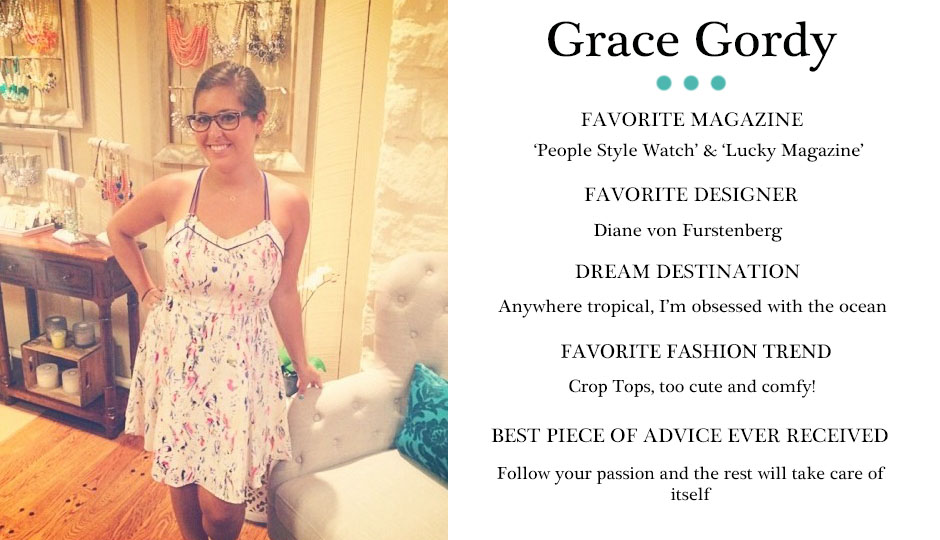
We met Grace Gordy at a Seventeen Magazine internship in college. We worked together in the fashion closet, and it was clear that this girl had an eye for style. Flash forward years later, and Grace is running her own clothing store, Honey and Hazel Boutique, in Georgia. A surprise? Hardly. Grace has serious determination and a passion for creative endeavors. It’s not every day you hear about a young twenty-something opening up shop with trendy (and affordable!) contemporary clothing.

Grace opened Honey and Hazel Boutique with her mother, and this power duo is impressing us with their positivity and desire to learn more through their experiences. From an early age Grace knew that she wanted to be involved with fashion, and daily she makes her dreams come true. After spending time interning in the fashion industry and working for other clothing stores, Grace learned many skills along her journey and implements them on a daily basis. We’re excited to introduce you to our friend, style inspiration, and total #girlboss, Grace Gordy.

Name: Grace Gordy
Education: BFA in Fashion Marketing and Management from Savannah College of Art & Design
Follow: Facebook / Instagram

Carpe Juvenis: How do you define ‘Seizing Your Youth’?

Grace Gordy: To me, seizing your youth is all about creating your own path in life (or “march to the beat of your own drum”) and not worrying about what others are doing. I used to get so caught up in what I thought I should be doing at a particular age and always felt behind in my “career path,” but now I realize how thankful I am for all of my experiences because it led me to my ultimate dream come true.

Also I think seizing your youth means taking advantage of all of the opportunities that come your way. Your youth really is the best time to explore, be creative, meet people, make memories and experience as much as you can. Just live life with no regrets.

Grace 3

CJ: You majored in Fashion Marketing and Management from Savannah College of Art and Design. How did you determine what to study?

GG: From a very young age I knew I wanted to be involved in fashion. I used to study fashion magazines from front to back and was determined to work for one so choosing a major was never any question; it was going to be fashion! I grew up in a small town where no one understood how you could make a career in the fashion industry and was actually told by teachers to go into a more “realistic” field, but I never let them sway me. My parents have always been so supportive of my choices and me and have always told me to follow my passion no matter what. I couldn’t be more thankful for them! For anyone interested in majoring in fashion I would certainly recommend that you look into SCAD (Savannah College of Art & Design). It was the most challenging four years of my life, but it paid off in a huge way. They have wonderful professors and a very well-rounded curriculum!

CJ: That’s incredible. You definitely put that education and the skills you learned to good use. Together you and your mother opened Honey & Hazel Boutique, a trendy contemporary clothing shop. We love that! What does your role entail and how do you and your mother divide up responsibilities?

GG: We are both co-owners so our roles basically entail everything! We both have total input into everything we do and are both always in the shop whether that means being on the floor helping our customers or in the office doing paperwork. She’s better at keeping up with the books and I handle most of the social media and marketing. We are very fortunate to have the kind of relationship we do; we are best friends, business partners, and mother/daughter. Opening this boutique together is such a great way for us to spend quality time together and do what we do best, which is being creative!

Grace 5

Grace 4

CJ: You’ve done many interesting things throughout your career such as interning at Seventeen Magazine, working as a stylist, working in marketing, and being a logistics and operations coordinator. What have you learned from these experiences and how have they influenced you with opening your own shop?

GG: Having numerous jobs and internships since college really helped me to determine exactly what I wanted to do. It has always been a dream of mine to open a boutique. However, I thought it would happen MUCH further down the road. There have always been so many facets in the fashion industry that I was interested in and thankfully I was able to work and dabble in different areas to know what I did and didn’t like. Earlier I said that working for a fashion magazine was my goal and I was so blessed to get an internship in New York City at Seventeen Magazine. It was the most amazing experience of my life thus far, but it definitely taught me that that is NOT the place for me.

As much as I loved New York and loved the idea of having a fashion job in “the big city,” I knew I wasn’t cut out for it. I like the south too much, what can I say? After graduating I ended up moving to Charleston, South Carolina where I absolutely fell in love with the town and its charm. I had a few different jobs there, but my favorite and the one that ultimately led me to where I am now was being an Assistant Manager at a little boutique there. I loved the team of girls I had the pleasure to work with and loved the smaller feel of a boutique atmosphere. I’m definitely a people person and it gave me the opportunity to get to know our customers, as well as do the fun stuff, such as merchandising and being creative. That job definitely made me realize I was ready to have my own store!

CJ: That’s really inspiring. As great it is to figure out what you do love to do, realizing what you don’t want to do is just as important. What are the greatest lessons you have learned from running your boutique?

GG: Always work hard, be kind, and have patience! Also I’ve learned when you’re feeling overwhelmed, just stop and take a breath. Everything will be okay! Running your own business is a TON of work, but it’s extremely rewarding!

Honey 3

CJ: What do you wish you had known before opening Honey & Hazel Boutique?

GG: Oh gosh, I wish I knew more about the accounting side and obviously that’s a HUGE part of having a business. Numbers and analytics have never been my thing. I’m a visual, creative person, but I’m certainly learning more every day.

CJ: What can a young person who is interested in owning a boutique do now to set themselves up for success?

GG: Get as much experience as possible! I interned at many different places to figure out what was best for me and what I wanted to do.

CJ: What would you say to people who are uncertain about starting a business? What motivated you to take the leap?

GG: Starting a business is scary and I honestly have learned so much over the last year that I never knew about before. My mom and I took the leap based heavily on faith. We were and are extremely passionate about what we wanted to do and believed in our idea. We just figured there’s no time like the present so let’s just work our hardest and see what happens! So far it’s going extremely well and I couldn’t be happier!

Honey 4

honey 9

CJ: Every day in your life must be different depending on what’s happening in the shop and the time of year, but what does a Monday look like for you?

GG: Typically Monday isn’t a super busy shopping day so it’s a good time to re-merchandise the store, order inventory, clean, and meet with my Mom about what’s going on that week or what we need to get accomplished. We normally have a gazillion emails to respond to and plenty of bills to pay! I’m always Instagramming our new merchandise and coming up with new ways to showcase our products. Trust me, there’s ALWAYS something to do!

CJ: What are your time management tips? How do you stay organized and efficient?

GG: I’m a big proponent of making lists, writing things down, and having a planner with me everywhere I go. I have the worst memory in the world so if I don’t set reminders on my phone and or write it down I will be sure to forget! Plus, it’s a good excuse to get cute organization supplies!

Honey 6

Honey 1

CJ: We agree! What is an area, either personal or professional, that you are working to improve in and how?

GG: I definitely struggle with trying to do everything myself and it can be really stressful and overwhelming. I am trying to work on how to better delegate tasks and jobs to different people. Especially as our business grows and we build a bigger team through employees, I need to learn how to not try to take on everything and let others help me. That is something I’ve always struggled with. It’s even harder now because my boutique is like my baby!

CJ: What advice would you give your 15-year-old self?

GG: I would tell my 15-year-old self to not stress and worry so much. Everything works out the way it’s supposed to and you just have to have faith and follow your dreams!

Grace Gordy Qs

Honey 2

Image: Grace Gordy

Katie b
Professional SpotlightSpotlight

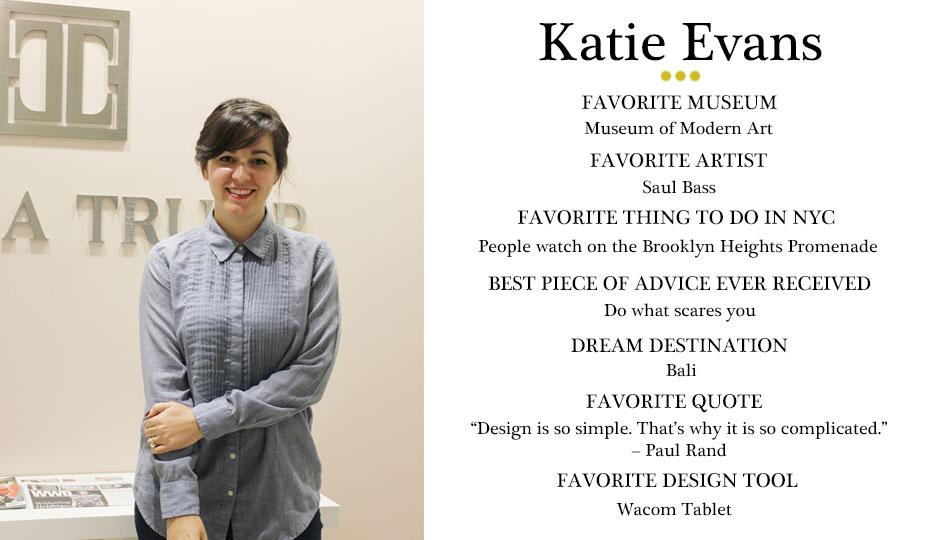
We fell in love with Katie Evans’ designs when we first laid eyes on them. It’s not hard to adore her bright and colorful designs. Having freelanced, worked at kate spade, West Elm, and Gap, Katie is no stranger to hard work and late nights. Now working as the Art Director at Ivanka Trump, Katie is involved with social media, editorial stories, and marketing. We were very excited to meet with Katie at the Ivanka Trump office in New York City, which is powdery pink and filled with inspirational images and quotes. We are motivated by Katie’s creativity and hard work, and we know you’ll be just as inspired.

Name: Katie Evans
Education: B.F.A. in Graphic Design from the Maryland Institute College of Art
Follow: @heykatieevans / katie-evans.com / ivankatrump.com

Carpe Juvenis: How do you define ‘Seizing Your Youth’?

Katie Evans: Taking chances and not being afraid to make mistakes. You’re young and now is the time to experiment with what makes you happy and what doesn’t.

CJ: You received your BFA in Graphic Design from the Maryland Institute College of Art. What sparked your love of design?

KE: I attended an arts magnet middle school and high school where I was a visual arts major concentrating in drawing, painting, and sculpture. In high school I continued those studies and did a crossover into the Communications department to take a graphic design class. CD album covers and booklets were what originally sparked my interest in design. I remember pinning them on my bedroom walls. I also designed a couple of covers for my friends’ bands.

When I was a junior in college, I still didn’t know exactly where I wanted to take my career. A professor gave me an assignment to spend a weekend collecting anything that I was attracted to. The next week I brought back a bunch of Martha Stewart’s Blueprint Magazines, editorial shoots from Lucky Magazine, and a bunch of fashion ad campaigns. My professor was like, “Duh, you should be in fashion.” I questioned her about how I could play a role in fashion as a graphic designer. She told me that fashion companies need graphic designers – they do the windows, the packaging, and the hangtags, etc.

Katie c

CJ: You are the Art Director at Ivanka Trump. What does your role entail?

KE: Ivanka started her licensee businesses a while ago, and she recently hired a small team to revamp and bring new life to the brand. We recently launched our new site, ivankatrump.com, that includes articles on work, style, travel, home and play.

I concept all of our editorial content on the site and our social media channels. Everyone does a bit of everything here because we are so small, which is great because you can be involved with different aspects of the brand. Our team makes all of our ideas come to life. I still do graphic design which I think a lot of Art Directors don’t do anymore. It keeps me on my toes.

CJ: You freelanced as an Art Director, Graphic Designer, Illustrator, and Consultant for years while also maintaining jobs. How did you go about securing freelance work, and what advice do you have for those interested in freelancing?

KE: I originally started freelancing because I needed the extra money. I always had a steady job and paycheck to fall back on, and freelancing let me experiment and find out what worked and what didn’t. For my first freelance job, I was paid $500 to design 10 different stationery cards for a new company. Looking back on that now is crazy to me. I want to smack my 22-year-old self and ask what I was thinking! I spent so much time on those cards. It should’ve been $500/per design. When I figured out what I wanted my freelance projects to be, I was able to pick the ones I liked the most. Most of my jobs came from word of mouth with a mix of referrals from social media and LinkedIn. I did freelance as a career for a little bit, and then Ivanka Trump lured me back into the corporate world.

If you’re thinking about going strictly freelance, you have to be passionate about what you’re doing. You have to be a go getter or you will go nowhere. You also have to be organized because now you are a bookkeeper, assistant, answering emails all day, and you still have to pump out the creative. It took time, but I was able to figure out how long projects would take me and account for client feedback to get it all done in time to start my next project. It was tricky to find that right calculation, so being flexible was important.

When I first went full-time freelance, I had nine clients. It was a disaster on my side, but I put on a good face for my clients. I had no social life, I was overworked, and I will never make that mistake again. I think the happy medium was 3-4 clients, with 2 recurring clients and 2 rotating projects. I had to be very strict with my clients about deadlines so that it didn’t interfere with other jobs.

women who work

CJ: How did you stay organized and efficient while balancing freelancing with your corporate jobs as a Graphic Designer?

KE: Google. Google has helped me do everything. I used spreadsheets for my bookkeeping and the calendar for meetings and deadlines. I would have each client assigned a different color so I could visually see the different projects I had. It worked because I could access those files from wherever I was – whether it was on my computer or phone.

CJ: You’ve worked as a graphic and web designer at some amazing places such as kate spade, West Elm, and Gap. What are your biggest takeaways from these experiences?

KE: The biggest thing I learned was that if I’m not passionate about the brand and what I’m marketing, I can’t do my job 100%. At kate spade, I lived and breathed that brand. The projects were so much fun. The kate spade team was very small so I was able to get my hands on everything, from window installations to stationery collections to working on photo shoots. I loved that so, so much. Every day was different and I was building a great portfolio.

The other companies I’ve worked for were much larger and at those jobs I was hired to do one thing and that thing only. They had huge teams to do everything and I realized through those experiences that I thrive better in smaller environments where I can play a part in all aspects of a project. I like to see things from start to finish.

CJ: What is the best part about being a designer? The most challenging part?

KE: The best part is telling stories. Just being able to tell a story about what a girl is doing and what she’s wearing and what she’s thinking and feeling. Finding a way to bring that story to life is the best part.

The most challenging part is finding the balance between making something beautiful but also selling that product. It’s tough to be conscious of both.

Katie a


CJ: Every day in your life must be different depending on your projects and the time of year, but what does a Monday look like for you?

KE: 7am: Rise and shine! Go for a run! #TeamIvanka is training for a half-marathon in April. Most of us are new runners and can’t imagine running 13 miles. So far 4.5 has been my most.

9am: Take the F train uptown. Read theSkimm on my ride up.

10am: Write out my to-do’s for the day. Respond to emails.

10:30am – 2pm: Plan our next editorial shoot, pull inspiration, select models, snap a photo of Ivanka for Instagram, and edit videos.

2:00pm: Lunch! If I eat too early the day goes by much slower.

2:30 – 5:30pm: Work with our Editorial Director to plan the next month of stories. Call people and brands that we want to collaborate with, design creative for our social media channels, a little bit of pinning to Pinterest.

5:30 – 6:00pm: Regroup with my creative team to make sure we’re meeting deadlines.

6:00pm: Out the door!

Trump Tower

CJ: What should a teenager or young adult who wants to be an Art Director or Graphic Designer do now to set themselves up for success?

KE: Be multifaceted in your line of work. If you’re a graphic designer, take a variety of art classes and learn as much as you can. You’ll be more valuable to your employer. As a designer, explore print, packaging, publication, digital, and visual. It will set you up later in your career to think about a project holistically.

Also, be nice. It still blows my mind how small this world is.

CJ: What is your favorite book?

KE: I just finished reading You Before Me by JoJo Moyes. I laughed and cried.

CJ: Having a loaded schedule can sometimes be overwhelming. What do you do when you’re having a bad day and need to unwind or reset?

KE: I like to take deep breaths, go to the gym, and shop.

CJ: What advice would you give your 15-year-old self?

KE: Your career path is going to be hard work, but it’s going to be worth it. And pay attention in your foundation art classes! Find a way to enjoy it and embrace your art style. You may think they’re boring, but they’re teaching you the basics of art that will come up in every aspect of your job.

Katie Evans Qs

Image: Carpe Juvenis

Marla Beck 3
Professional SpotlightSpotlight

We met Marla Beck on a rainy day in downtown Seattle. As Founder and President of Andelcare, one of the Seattle region’s most recognized and award-winning home care agencies, Marla is one busy woman. However, when we sat down to chat with her about why she started Andelcare, how she learned the ins and outs of business, and advice she has for youth, she was generous with her time and wisdom. Marla is passionate about helping others, caring for loved ones, and traveling the world. Read on to learn about how Marla seizes her youth, the greatest lessons she’s learned from running her own business, and the greatest moment of her career so far…

Name: Marla Beck
Age: 56
Education: Business and Accounting degree from the University of Washington
Follow: Andelcare / Twitter

Carpe Juvenis: How do you define ‘Seizing Your Youth’?

Marla Beck: Doing things that bring me passion and that I enjoy. I’m pretty spontaneous. Even if it’s just watching a bug crawl across the patio – just because you’re an adult doesn’t mean you can’t do things you enjoyed doing as a kid. I try to enjoy the moment.

CJ: What school did you attend for undergrad and how did you determine what to study?

MB: I went to the University of Washington (UW) because I almost go into the Naval Academy and wanted to major in International Relations, but the economy was really bad. I didn’t get an eyesight waiver, so I couldn’t go. I went to the UW because it was close. I didn’t know what I wanted to do but I was highly motivated not to live at home. I noticed that people getting jobs were the business and accounting majors, so I became an accounting major. Accounting is a great skill to have and it’s very practical.

Marla Beck 5

CJ: You started your career as a Certified Public Accountant (CPA). What was your first job out of undergrad?

MB: Auditing for Arthur Anderson. At the time it was a big accounting firm. It was not very exciting and you look at spreadsheets all day. I made sure that things added up on the spreadsheets. I only did that for a year, and then I moved onto tax.

CJ: You are the Founder and President of Andelcare, a premium home care agency providing companionship, homemaking, personal care, nursing services, hospice care, nurse advocacy, and care management. What motivated you to start Andelcare?

MB: I started Andelcare because I was at a point in my life where I wanted to try something different. My business acquaintance also wanted to start a company so we looked into senior care, which was just starting out. I think I got to where I’m at now because I learned to delegate things that I’m not good at. I couldn’t have grown without my team. Starting my company was a gamble and a little out of character, but I just needed to do something different.

CJ: How did you learn the business skills you needed to run your company?

MB: I went to classes. I joined an organization where you pay to get trained. I learned more about business framework, business plans, and procedures manuals, and I went to every seminar and webinar. I basically learned as I went. I had the business side down with the accounting background, but there was still a lot to learn.

I also belong to the Women’s President’s Organization, and I asked a lot of questions. I was working seven days a week with no time off. The main thing was that if I provided the best possible care for senior citizens, that’s the goal. Remember that and work backwards.

Marla Beck 2

CJ: What does your role as President entail?

MB: I delegate as much as possible because I don’t want it to be all about me. In case something happens to me the company can keep going. I still deal with the high level finances, and other smaller tasks, such as renewing the liability insurance. A job for a leader is to be more of the visionary and the cheerleader. I make sure my staff knows that I appreciate them, and I also want them to grow in their jobs. I do marketing and finance, but a lot of it is making sure the ship is on a path.

CJ: What are the greatest lessons you have learned from running your own company?

MB: Ask a lot of questions and don’t be afraid to admit when you don’t know something. When you run your own company, you have to do some soul searching and realize your strengths and weaknesses. I have more perspective about things and try not to take things so personally.

It was also really important for me to find a support group. Find your posse that you can exchange ideas with. I found that with the Women’s President’s Organization.

I’ve also learned to be grateful for what I have. If I’m having a bad day, then I try to remember that in an hour it’ll be better. Focus on the positive.

CJ: What are some ways young people can become better leaders?

MB: Watching who the leaders are in your life and deciding what’s working and what makes you feel good and bad about them being the leader – those are important things to note. Read leadership books and attend seminars. Leadership is also human nature. People like to work for people that they like and trust.

As a leader, you still have to get your job done, but if you let your people know that you trust them and are letting them make their own decisions, that’s great. Set clear goals and provide the freedom for people to find the best way to do their job. Let people know that if they need help, they will have support.

Marla Beck 1

CJ: How do you stay organized?

MB: I multitask a lot. I wish I could say I wrote everything down, but a lot of it is in my mind. I’m better organized because I delegate everything. To guard your time, you have to be laser focused and determine what’s important and what isn’t. My Outlook calendar keeps me the most organized, and it syncs to my phone which is convenient.

CJ: You are also the former President of the Fred Hutch Magnolia Guild, which benefits Fred Hutch’s mission to eliminate cancer and related diseases as causes of human suffering and death. Can you tell us more about that?

MB: We help raise money for Fred Hutch cancer research. We bring treats to the cancer patients and help with the Chef’s Dinner event that is put on every year. We’ve raised almost a million dollars for research.

CJ: What should a teenager or young adult who wants to run their own company do now to set themselves up for success?

MB: Work for as many companies as you can. You’ll learn a lot working for someone else. Try to do everything in the company and ask a lot of questions. Work in the industry that you’re interested in.

CJ: What does a day in your life look like?

MB: The first thing I start my day with is coffee. Some days I’ll workout in the morning. Then I’m in front of my computer checking my emails and calendar. Sometimes I’ll have speaking engagements, meetings, or office work. It really varies and my days are a lot freer than they used to be.

Marla Beck Quick Qs

CJ: What is the best moment of your career so far?

MB: Getting recognized for being a woman business owner and having my mom there. I was named the U.S. Small Business Administration’s Washington State Business Person of the Year in 2012. My mom is supportive and the hard work paid off. As a woman business owner, I can still do it my way and still be successful and be recognized for it. Having my mom, friends, and staff there was so exciting.

CJ: What advice would you give your 20-year-old self?

MB: Try to enjoy the ride a little more and don’t be so self-critical. A lot of stuff that seems important in your twenties really isn’t. I also would’ve started asking more questions at a younger age. It would’ve been nice to have an older person or mentor to show me the ropes.

Image: Carpe Juvenis

J. Gamboa
SpotlightYouth Spotlight

We are always so inspired by students who take the leap of faith into entrepreneurship while still taking classes and juggling a handful of other responsibilities. One of these inspiring students is Michelle Schechter, a current senior at Northwestern University who started the company For Real Dough. FRD takes a spin on a classic - chocolate chip cookies - and offers its customers an assortment of delicious edible cookie dough (that’s totally safe to eat!). In between classes and friends Michelle answers emails, dreams up new flavors, develops branding and packaging, and so much more. We are in awe of what she has accomplished so far, and can’t wait to see where she takes FRD next. Pass the cookie dough, please!

Name: Michelle Schechter
Age: 22
Education: Northwestern University
Follow: For Real Dough | Facebook | Instagram

Carpe Juvenis: How do you define “Seizing Your Youth”?

Michelle Schechter: I believe taking advantage of any point in my life is about being present. As we get older, we’re surrounded by more and more external (and largely technological) stimuli while becoming increasingly invested and obsessed with the next step, the next job, the next assignment, the next party, the next environment. I think by concentrating on being fully wherever I am and grateful for whatever that is, I have the best chance of stopping time from moving by so fast.

CJ: Why did you decide to attend Northwestern University for your undergraduate experience?

MS: At age 8, I fell madly in love with my next-door neighbor. He had his heart set on Northwestern and I decided right then and there that I did, too.

CJ: What are you studying? Do your passions for arts and cooking intersect at all?

MS: I’m pursuing a theater major, business minor, and music theatre certificate. I think I’ve realized my passions intersect more than I ever anticipated. Baking is creative and so is branding. They’re both very hands-on and experiential. And every business pitch or presentation is kind of like a mini performance.

Rafi Letzler. (Northwestern Magazine Cover)jpg

CJ: What originally drew you to cooking and experimenting in the kitchen?

MS: When I was about 6 or 7, I would present my own “Food Network Show” to anyone home who would listen. I would usually teach the viewers (my mom and dad) how to make cereal or a peanut butter sandwich. It was my absolute favorite game of make-believe. Maybe one day it won’t be make-believe.

CJ: As the CEO of For Real Dough, what do your day-to-day responsibilities entail?

MS: I oversee everything from production to branding. I’m in the kitchens once a week mixing up cookie dough. I’m also busy taking meetings, working on the website and brand design, conceptualizing flavors, and lots more. I have the help of some amazing friends and teammates who greatly contribute to the design and growth of the company.

CJ: Can you please tell us more about how FRD came to life?

MS: Yeah! I had the recipe for a few years and always loved cookie dough. But last Spring, I was enrolled in an Entrepreneurship class at Northwestern where I was able to explore the product in a more tangible way. At the end of the class, my team won a pitch competition and outside interest in the idea started growing. I decided to meet with the President of Northwestern on a whim to see if I could sell For Real Dough at the Northwestern Convenience Stores (“C-Stores”) and, after sharing samples and memories of cookie dough with everyone in the office, he agreed.

Jennifer Gamboa

CJ: How do you juggle finishing your senior year of college with friends, family, and business?

MS: It’s tough. And very busy. But I really try to spend my time and exert my energy towards things that bring me happiness and positivity. So at the end of the day, excitement and passion can overcome stress. It also helps to be surrounded by supportive and loving friends and family.

CJ: In your experience, what has been the most surprising part about entrepreneurship so far?

MS: The generosity of others. I never could have imagined that so many people would support and help turn a dream of mine into a reality. It’s been an incredibly humbling and eye-opening experience.

CJ: As a self-starter, how do you keep yourself on-track with goals and deadlines?

MS: I try to determine what success means for me and keep that goal in mind with every decision I make. From there, it’s passion for the project itself. It feels good to harness productivity and love and put it towards something that I know will make me feel artistically and intellectually fulfilled.

Michelle S Qs

CJ: What does a day in your life look like?

MS: Wake up, have a little dance party, work hard towards my dreams, hug the people I love, take a nap, eat a snack, sleep.

CJ: What has been the best piece of personal advice you’ve been given?

MS: Your will to live must be stronger than your fear of death. (JK Rowling taught me that)

CJ: What has been the best piece of professional advice you’ve been given?

MS: You must believe that what you have to say and give to the world is important.

CJ: What advice would you give your 17-year-old self?

MS: Nothing is permanent. Laugh more. Believe in yourself; don’t wait for someone else to.

Justin Barbin3

Image (top to bottom): Jennifer Gamboa, Rafi Letzler, Justin Barbin

SM 1
Professional SpotlightSpotlight

We met up with Shavanna Miller, the Co-Founder and CEO of Bloompop, earlier this fall in a coffee shop in the middle of bustling downtown Washington, D.C. Having grown up in the area, Shavanna knew the in’s and out’s of the metropolitan streets and kindly helped point lost passerbys in the right direction. It’s no wonder that she now runs an online marketplace that connects consumers with the best local florists across the country (think ‘Etsy for flowers’) - she is a natural community builder. Apart from providing beautiful flowers and an incredibly easy and enjoyable browsing and purchasing experience, Bloompop’s true success is in helping small businesses and consumers build a stronger community network.

Shavanna graciously shares her career trajectory, how she stays organized, and why she ultimately decided to come back to D.C. after having lived in so many great cities. This entrepreneur is making the world a better place one bouquet at a time, and we’re so excited to share her interview and introduce the face behind the flowers.

Name: Shavanna Miller
Occupation: Co-Founder/CEO, Bloompop
Age: 29
Education: The German School of Washington D.C.,B.S. in Environmental Science and Film Studies from Columbia University, London School of Economics and Political Science
Follow Shavanna: Facebook | Twitter |LinkedIn
Follow Bloompop: Bloompop | Instagram | Facebook | Twitter

Carpe Juvenis: How do you define ‘Seizing Your Youth’?

Shavanna Miller: One thing I’ve tried to do is always say yes to opportunities. Whenever I’ve had to make a decision on something that could be important – whether its deciding to take a new job, making a leap into entrepreneurship, taking on additional work for a committee, or even helping someone else out – I’ve never regretted taking those opportunities - even if not everything pans out. There are a few times I’ve regretted not taking them for some reason or another, and that kind of regret is much worse. So my definition of Seizing Your Youth would be to act rationally about the opportunities you might take, but to ultimately take those opportunities, especially early on.

CJ: You studied film and environmental science at Columbia University – How did you decide what to study?

SM: Those were two topics I really loved on a personal level. For a while I thought that I was going to be working in film so a lot of my internships in school were related to that. I worked at a production company and an agency for actors. Those experiences were very fun and I still have many friends working in that industry. But somewhere along the lines I realized it wasn’t exactly what I wanted to do. The environmental side of things was a personal interest that I’ve always had. When I was growing up I raised and bred aquarium fish. My parent’s basement was filled with aquariums; I think I had 30 aquariums or so when I left for college. That was a lot of fun and it was how I learned about basic genetics, water quality, etc. I probably started that in the fifth grade and it’s something I hope to get back to when I have the space again.

bloompop

CJ: What did you do after you finished studying at the London School of Economics and Political science?

SM: When I finished graduate school I went back to New York. I started my career at Meetup, which was a great introduction to both the startup and tech worlds. It was smaller then than it is now, so I really had a chance to interact with every department. Eventually I left Meetup to go to Rosetta Stone in Washington, D.C., which was a fantastic experience as well and is also a great company. I was promoted there to ultimately be the head of web sales for the US consumer side of the business. I was responsible for a huge part of the company’s global annual sales – definitely a big, exciting thing to have on your shoulders. I had an amazing team there and we did everything from social marketing, to managing email and paid search platforms, to working with affiliates, you name it – basically anything related to digital sales. I managed a team of seven people who each had their own specializations. We were a very young, fun team and I loved the company.

CJ: What tools do you use daily to keep yourself organized?

SM: My sister is also an entrepreneur - she’s the CEO and co-founder of Kabinet based in New York – and the two of us have an ongoing debate about how we manage our time, and what tools we use. There are so many tools out there you can use, and I feel like you can have as many apps as there are people since everyone manages things differently. I’ve tried a million of them, but honestly I always end up coming back to a notepad and pen. I keep trying to figure out how to modernize this classic method with technology. I heard about a partnership between Moleskin and Livescribe recently which sounds like it could be exactly right for me. And of course I also use google calendar for meetings so it can sync to my phone, but for actual tasks I always come back to paper and pen To-Do lists. Old school.

CJ: What made you decide to come back to D.C. where you grew up after living in a couple of different cities?

SM: I actually came back to D.C. because of the Rosetta Stone opportunity. I wasn’t necessarily looking for a job here, but it came up and it was an exciting opportunity. So it was almost a coincidence that I grew up here, but it’s great being around my parents again and being back in this city.

bloompop2

CJ: Where did you get the inspiration for Bloompop?

SM: I’m someone who has always personally loved flowers, and what I discovered as I looked into this space was that it’s a really outdated industry in more aspects than I’d initially realized. I knew that the experience for consumers was really terrible, but it was shocking to discover how detrimental it is to the florists themselves. Local florists will often work with a mega-network like 1800flowers etc, but they don’t get to create any of their own designs, have no creativity in the process, and to add insult to injury often barely make money off of those orders. I’ve actually spoken with many who literally lose money on filling orders for the big flower behemoths. It was an industry ripe for disruption. I decided to take my experience in digital sales and tech, combine it with my love for flowers, and tackle this outdated industry with better quality products, better tools for both florists and consumers, and modern tech and marketing experiences.

CJ: What has been the greatest success since having started Bloompop?

SM: Definitely putting my team together. Matt, my co-founder and CTO, for example, is brilliant and also somebody who is such a perfect cultural fit with the company. The two of us get along amazingly and I’m finding that that’s incredibly important. We all spend so much time together, so being able to find the right people – on both a personal and professional level – has been one of my biggest successes. It was a very deliberate thing in finding them and building our team; it wasn’t something I took lightly.

CJ: Can you please tell me a bit about your past experience with The Craft Factory?

SM: I’ve always been into DIY projects. Craft factory was something I started when I was back at Meetup. It was a group that came together every month and worked on a project together. I think that DIY is a stress reliever for me because at Bloompop so much of my day-to-day is digital – from web sales and marketing to product work – it’s very much sitting front of a laptop. DIY is a nice way to do something with your hands.

CJ: You also have an Etsy shop called HudsonScout – can you please tell us more about that?

SM: I’ve been an Etsy seller for several years now – it’s great because it has really helped in my understanding of the supply side of an online marketplace. Which obviously comes in handy now with Bloompop. My shop on etsy sells first birthday candles. I actually started HudsonScout by selling candles in every number, but what I eventually saw was that nearly 95% of orders were for First Birthday candles. So now that’s really what the whole focus is.

CJ: Although you’re a young company, has Bloompop hired interns before?

SM: We had two interns last summer but none currently. I feel like hiring interns at such a small company can have a huge impact - it’s a combination of figuring out what they can be doing that really has an impact and also providing them with a valuable experience. We want interns who will be excited about Bloompop and become serious contributing members of the team.

CJ: What advice would you give to your 20-year-old self?

SM: Become friends with professors at CU’s business school.

Image: Courtesy of Bloompop

Matt a
Professional SpotlightSpotlight

We love discovering people who are just as passionate about reading as we are, and Matthew Richardson is one of these people. We learned about Matthew Richardson through his company, Gramr Gratidue Co., which helps people make gratitude a habit through the form of thank you notes. Amazing, right? Matthew’s campaign to start a cultural movement for gratitude involves encouraging others to send thank-you notes, articles on The Huffington Post educating people on how to incorporate gratitude into their lives, and by sending thank-you notes himself. This is exactly the type of campaign we can get behind 100%.

Matthew is passionate about his pursuits, and when he finds something that moves him, he explores it further. Case in point: Matthew took a year off during his studies at Claremont McKenna College to hitchhike across 14 countries after reading the works of Henry David Thoreau. Inspired yet? Even now as a busy entrepreneur, Matthew makes time to read, write, remain curious about the world around him, and express gratitude daily. And we couldn’t agree more with the advice Matthew would tell his 15-year-old self: “Read.”

Name: Matthew Richardson
Age: 25
Education: B.A. in Literature from Claremont McKenna College
Follow: Gramr Gratitude Co. / Twitter / MattRyanRich.com

Carpe Juvenis: How do you define ‘Seizing Your Youth’?

Matthew Richardson: I think that it means very nearly the same thing as “Seize the Day” — that is, for as long as you’re able to see the importance of taking ownership of your own life and circumstances, then you have that spark of youth in you… you have as much energy and passion as it takes to create something of value for the world.

Also, I may be biased but as an entrepreneur with an academic background in Literature, I can’t help but equate siezing one’s youth or life or day, with creating something artistic, something that wouldn’t otherwise exist if you didn’t step up and pull resources together to make it happen.

CJ: You majored in Literature at Claremont McKenna College. How did you determine what to study?

MR: Like most every undergraduate I changed my major a few times before hitting my stride. I started out as an economics major with a focus on finance… but really couldn’t get passionate about anything that I was learning. It seemed both overly practical and totally impractical. I saw the value of economics in everyday decisions, but that very fact seemed soul-less to me.

I took a course in Russian Literature, read Tolstoy; which allowed me to see the infinitely reaching application of classic literature and philosophy. This led to Thoreau, which caused me to leave CMC for a year and hitchhike/camp across 14 countries, and read everything I could get my hands on. I returned to school with a passion for literature, and I felt as if I had made up for some lost time by reading dozens and dozens of classic works during that year off. Without going into it deeply here, I feel as though Literature is the best liberal arts discipline if your interest is ultimately in becoming an entrepreneur.

Gramr 1

CJ: You are the Co-Founder of Gramr Gratitude Co., a company that helps people make gratitude a habit through the form of thank you notes. What inspired the idea for Gramr Gratitude Co.?

MR: In the beginning we wanted to shake up the greeting card game and create an alternative to Hallmark that was so cool and trendy that they wouldn’t be able to help but acquire it. Very quickly, Brett (my co-founder) and I found that we were trying to run before we could walk and that we also didn’t care much about greeting cards in general. One niche that was particularly compelling, however, was the thank-you note. It didn’t depend on a holiday or an obligation — it had the potential to suggest a lifestyle. Gratitude seemed very important to us, and often overlooked as a virtue because it had no tangible commodity to represent it.

Meanwhile every business under the sun was developing programs for social benefit — following the lead of TOMS shoes which gives one pair of shoes to underprivileged children for every pair of shoes they sell. Generosity, then, was booming, because you could wear it on your feet, or chest, or wrist. But gratitude didn’t have anything like that, and we decided to make a concerted effort at becoming the face of the virtue. It was a word and a concept that was up for grabs, and we were the first to market — now we are continuing to try to think of ways to cement our concept into the contemporary context that is consumed by technology and efficiency. It is challenging but infinitely rewarding.

CJ: What responsibilities do you have as the Co-Founder?

MR: I lead creative projects, design, and partnerships.

CJ: How do you and your Co-Founder balance the workload?

MR: My Co-Founder is in charge of operations and business processes. But there is huge overlap — we are both frequently consulting each other and helping carry different loads that fall outside of the bounds of our broad responsibilities.

CJ: What are the greatest lessons you have learned from running your own company?

MR: It’s very hard and there are many hundreds of things you don’t think about or plan on when idealizing a company from the outside looking in.

CJ: What do you wish you had known before starting Gramr Gratitude Co.?

MR: That your website should be a minimum viable product because building something before you know how people will interact with it is a guessing game. We guessed wrong on several things, including our web host, and e-commerce platform. Both mistakes that are costly and time consuming to redevelop.

Gramr 3

CJ: What advice do you have on how to finance and budget when running your own business?

MR: In the beginning, ask people you know, who you trust, and who can give you more than just capital. We happen to have a very strong core of advisors, and that is more important than capital. We also raised 63k on Kickstarter. Crowdfunding is a good option for bootstrappers, but it also has scores of drawbacks that you can’t know until you’ve been hosed by them.

CJ: What can a teenager or young adult who wants to start their own company do now to set themselves up for success?

MR: Read.

CJ: What would you say to people who are uncertain about starting a business? What motivated you to take the leap?

MR: Surround yourself with people who fit more into a day than you fit into a week.

CJ: You write articles for The Huffington Post about gratitude. What are your favorite ways to show gratitude?

MR: Writing thank-you notes, or Gramrs. Especially to people who wouldn’t expect it. One of my favorite thank-you notes I ever wrote was to the server at Dr. Grubbs, a year after I last went there, for being such a joyful and wonderful person over the few years that I patronized that incredible restaurant.

CJ: You are an avid reader. How do you fit reading into your day, and which book has had the greatest impact on you?

MR: When I am in a good rhythm I am getting up at 5am and reading for an hour before I start my day. This allows you to get through about a book a week. This is my favorite time of the day.

I recommend East of Eden by John Steinbeck to everyone I meet. Sometimes before I introduce myself. It is enormously valuable.

CJ: Describe a day in your life.

MR: Wake up at 5. Make coffee. Read for an hour. Write for an hour. Sometimes workout for an hour. Start trying to get through the three biggest priorities I’ve set for the day — try and finish this before 12. Meetings, calls, work from 12 to 6-ish. Wind down in a variety of ways. Drink wine and Yerba Mate. Try and read some more. Write down the three things I must get done the following day before noon. Go to sleep ~11pm.

CJ: How do you balance your career roles and goals? How do you stay organized and efficient?

MR: This is something I constantly try and optimize — but OmniFocus is good, and Mailbox App keeps emails organized and out of the way. The best thing I’ve found is that figuring out what the three things you need to get done before noon are is the best way to get stuff done.

CJ: How do you like to enjoy your free time?

MR: I read, eat tacos, spend up to 10 minutes creating cups of single origin coffee, and tinker around with a handful of side projects.

CJ: What advice would you give your 15-year-old self?

MR: Read.

Matt Rich Qs

Katie photo 1
Professional SpotlightSpotlight

We first discovered Katie Leamon’s gorgeous luxury cards and stationery during a trip abroad. When we stumbled across her notebooks, we were immediately smitten. Based in England, Katie runs her own company devoted to making beautiful paper goods. Having studied art and design in school, Katie followed her passion and turned it into a successful brand. We adored learning more about the woman behind the stationery, and Katie is hardworking and very sweet. Katie shares a glimpse into her busy days, how youth interested in running their own business can set themselves up for success, and her favorite things to do in London.

Name: Katie Leamon
Age: 29
Education: Loughborough University Woven Textile BA Degree; First Class Honors
Follow: Katie Leamon | Twitter | Instagram | Facebook

Carpe Juvenis: How do you define ‘Seizing Your Youth’?

Katie Leamon: Be open minded, try new things, challenge yourself every day, believe in yourself, and take the opportunities that life throws at you, and if it doesn’t then go and grab them yourself!

CJ: You majored in Textile Design at Loughborough University. How did you determine what to study?

KL: I loved art and design at school, and I concentrated on textile design throughout my foundation course so it was the next natural step. I then choose to specialize in woven textiles because I wanted to learn a new skill while I was at university which would not be overly accessible following my time in school.

CJ: You are the Director of Katie Leamon, a company devoted to making gorgeous luxury cards and stationery proudly made in England, which you launched in 2010. Where did your love of making beautiful stationery come from?

KL: I am a bit of a perfectionist and pay a huge amount of attention to the detail of a product, so when I set about starting my own thing, it seemed clear to me that it was going to be a high end product. Initially it was just about the design. I didn’t think about starting a stationery business, I was just building my portfolio and getting back into drawing. I have always loved paper products and stationery seemed like an obvious avenue to try and an accessible one for a young designer, so that’s where I started!

CJ: What responsibilities do you have as the Director?

KL: I am directly responsible for the design and finish of a product, but as it’s my company, all major responsibilities come back to me. We have a great little team, but I am a bit of a control freak when it comes to my work and I still take on a lot more of the daily responsibility than I should!

CJ: How did your education and past work experiences prepare you to start Katie Leamon?

KL: I worked in a small fashion design company for two years before starting up on my own and the experience of running a small company was invaluable. I did a lot of the wholesale side of things which helped when I first set out, and the design experience throughout education and work was all influential in my first collection, and continue to be.

CJ: What are the greatest lessons you have learned from running your own company?

KL: Don’t try and run before you can walk. You can kill your company by moving too slowly and equally by moving too fast and making bad, ill-considered decisions. Things have a way of working themselves out so don’t lose too much sleep about things out of your control. Also, don’t hold back on making decisions. As long as you’re making decisions, they won’t be the wrong ones – the worst thing you can do is stay still.

CJ: What is your design process? Where do you find inspiration?

KL: My design process is a little back to front… I tend to visualize a finished product and then work backwards to get it down on paper and make it a reality.

I am constantly being inspired, and normally have too many ideas, often unrealistic, running around my mind! I can be looking at patterns in the pavement to latest fashion trends, and think of something that could transfer to paper. Sometimes I don’t think we are even aware of many of our influences. I take intentional inspiration from vintage typography, I scour secondhand shops, and the images and style are always inspiring.

CJ: How did you go about the process of selling Katie Leamon luxury cards and stationery in high end retailers in the United Kingdom and across the world?

KL: I was very lucky in that my first stockist was Liberty of London; I was a successful candidate in their Open Call day in early 2011, and following that success gave me the confidence and money to try a trade show and I gained another few stockists, including Selfridges so it grew organically from then on. I think you need to know where you want to pitch your brand before you start, there is no point designing a high end product and targeting mass market chain stores.

CJ: What can a teenager or young adult who wants to start their own luxury card and stationery company do now to set themselves up for success?

KL: Work hard. There is no way around it, it takes a lot of hard work and dedication. I think it’s also very important to experiment and know your brand identity and style before you pitch to the market, have a strong unique product, and target the right places.

CJ: What would you say to people who are uncertain about starting a business? What motivated you to take the leap?

KL: I wanted to work for myself and I wanted to make beautiful things. It’s very hard at first, you’re on much less money, if any, than all of your friends, but the hard work is starting to pay off now and I would always recommend doing it if you can. I was working on such low money before I decided to start my own thing that I decided I had nothing to lose, I’d always wanted to do it, I am self-motivated, and I work hard, so I wanted to reap the benefits of working that hard for my own thing! I could get the same money from a part-time job initially, so I did that for the first couple of years while the company grew. I also had the support of my family, I shared my studio with my brother, and he paid the rent for the first couple of months and they were all so supportive. They helped me take that leap so I was very lucky.

CJ: What is the best moment of your career so far?

KL: That’s a hard one, I have a couple. My success at the Open Call day at Liberty was really the start of it all so that was a huge game changer and a huge accomplishment for me. Also, the building and opening of our production studio in Essex. We built the studio as a family, and now my mum and sister run all our production from there. It was a real “Wow, look how far I have come” moment for me.

CJ: Describe a day in your life.

KL: My day varies largely depending on the time of year and on how close we get to a trade show! But generally speaking, I arrive at the studio at about 8-8.30am, and run through my emails while eating my breakfast. When my assistant Georgia arrives, we will run through our current projects and where we are with them. I will then catch up with my mum and sister who run the production studio in Essex and iron out any issues that might have come up and discuss any projects or new accounts that we are working on.

I then try to concentrate on the design side of things. Whether it’s working on new design projects, selecting and sampling colours and paper stock or actually getting my head down and doing some drawing. I always start with doodles in my sketchbook, then edit and try things on the computer. As to be expected with a small company, my day is interrupted with various queries, but I try to structure my day around our current projects and deadlines. Currently I’m trying to finish off our catalogue for Top Drawer, so I’m finalizing samples for a photo-shoot next week, and selecting some new envelope styles for a limited edition run of neon!

CJ: How do you balance your career roles and goals? How do you stay organized and efficient?

KL: Luckily I am naturally organized. But as a company we plan our weeks with what needs to get done and other things we want to achieve with the tasks at hand. I think you need to be flexible, you can’t plan too far in advance or you might miss an opportunity. Up to now I have let the business dictate a little of its own path, stores have approached us which has led to new and exciting things, and we obviously have goals but I think they are constantly changing and evolving. We evaluate things as often as possible and try to identify as quickly as possible if we are going off course.

CJ: How do you like to enjoy your free time?

KL: I am a bit of a foodie so I love eating out with friends and trying the wealth of London’s food markets! I also love being outdoors and keeping active so I love camping, going to the beach, and keeping fit.

CJ: Which book had the greatest impact on you?

KL: Gone Girl, I was thinking about it for ages after I read it!

CJ: What advice would you give your 15-year-old self?

KL: Work hard but worry less. Don’t be afraid to make mistakes.

Kat Tanita 3
Professional SpotlightSpotlight

If you love fashion, beauty, décor, photography, or just amazing blogging in general, don’t miss Kat Tanita’s stunning blog, With Love From Kat. Kat styles beautiful outfits and has a keen eye for what’s trending in the fashion and beauty industries, and she shares her insight through photos and round-ups on her site. Not only is Kat a successful blogger with a polished chic style, but she is also savvy business owner who has learned a lot from her experiences. But now, let’s hear from the blogger herself…

Name: Kat Tanita
Age: 25
Education: B.A. in Design Studies from Arizona State University
Follow: Twitter / Facebook / Instagram / Pinterest / With Love From Kat

Carpe Juvenis: How do you define ‘Seizing Your Youth’?

Kat Tanita: Chasing your dreams and making them a reality.

CJ: What was your favorite class in college?

KT: I loved all of my design classes, but surprisingly my favorite class was Marketing senior year. It was neat to learn about the creative process and how important it is in an effective public relations and marketing campaign.

Kat Tanita 1

CJ: What are the greatest lessons you have learned from being a business owner and blogger?

KT: Ask questions, find mentors, have confidence but be humble, hire smart (get a good lawyer, accountant, intern, etc.) and learn from rejection.

CJ: What are your time management tips?

KT: Write everything down in a to-do list and take one thing at a time. Start the day and end the day with productive things, but give yourself a break in between. I always try to get out, take a walk and have a long lunch. It feels good to end the day with something productive – I can’t sleep if I don’t!

CJ: What does a day in your life look like?

KT: Every day is so different. Sometimes I’m at showroom appointments, press previews, meetings, and events. I’m always answering emails, exploring the city, looking for inspiration, shooting outfit pictures, and brainstorming for upcoming projects. I love to cook dinner and end the day with yoga, a run, or circuit training.

Kat Tanita 2

CJ: What advice do you have for youth who want to start their own blogs?

KT: Remember to be unique and original. Don’t try to copy others because what will set you a part is your individual voice and style. Do your research! I simply Googled “how to start a blog” 4 years ago and read so many articles/watched so many YouTube videos. Don’t be afraid to ask questions and find mentors. You should always be learning.

CJ: Which book has had a great impact on you?

KT: Grace was one of my favorite books this summer. I loved learning about her career path. She started from the bottom and worked her way up. She is incredibly talented.

CJ: What motivates you?

KT: My dad’s work ethic motivates me. He always said whatever you do, do it to the best of your ability even if it’s a small, menial task.

CJ: What advice would you give your 20-year-old self?

KT: Travel more, read more, and embrace your uniqueness!

Kat Tanita 6

Image: All photos by Kat Tanita from WithLoveFromKat.com

b
Professional SpotlightSpotlight

Jane Park - the founder and CEO of one of the fastest growing beauty brands, Julep - is no stranger to seizing her youth. After studying Public Policy and International Affairs at Princeton and then heading off to law school at Yale, Jane has always been a hard worker. After working as a consultant and at Starbucks, she then took a leap of faith to start Julep, a beauty company that tests new products on a community of monthly subscribers before it is mass-produced. Not only is this a smart strategy, but the products are quality. From nail polish to skin care products to makeup tools to hair care, Julep has your beauty necessities covered.

After having worked in both corporate and start-up settings, Jane is a pro when it comes to running her own business and getting things done. We are seriously inspired by her ability to multi-task, her passion for learning, and her advice to not be so hard on ourselves. She’s also generous with her time and advice. Jane is a true business and beauty rockstar, and we’re thrilled to share her story with you!

Name: Jane Park
Age: 43
Education: Public Policy and International Affairs at Princeton University; Doctor of Law (JD) at Yale University
Follow: Twitter / Julep

Carpe Juvenis: How do you define ‘Seizing Your Youth’?

Jane Park: Seizing your youth is about finding the joy in things and having enthusiasm for the daily parts of your life.

CJ: You majored in Public Policy and International Affairs at Princeton. How did you determine what to study?

JP: Public Policy and International Affairs was the major that enabled me to take courses in the broadest number of areas. I could take politics, economics, East Asian studies, and anthropology. It was an awesome non-major in a way.

CJ: After college you went to law school at Yale University. How did you decide to go to law school right after graduating from college and what was your experience like?

JP: I actually didn’t plan to go to law school right away. I applied as a backup idea. I wanted to go to India to work for an organization called Seva Mandir. When I told my parents my plans, they freaked out. I ended up applying to law school and planned on saying that I was going to defer as a way to get around actually having to go. In the end, my parents guilted me into going to law school. I had never seen them cry before!

CJ: What did you learn from law school that helps you as an entrepreneur?

JP: I learned the value of thinking through things and looking at situations from different angles. When you are creating legal documents, you have to think about what the future might hold and look at things from different perspectives. That’s probably the most valuable thing.

CJ: If you could make the decision about whether to go to law school again, would you still go?

JP: If you are thinking about a career like law, you should spend a day with a lawyer and see if you like what he or she is doing with the day. A lot of legal work is actually not with people. It’s just paperwork and it’s not interactive with people, so it is a different kind of environment. Law school was super fun, intellectually rigorous, and we dealt with interesting problems and constitutional issues, but when you graduate, you aren’t on the Supreme Court right away. You are locked away in a room with boxes and boxes of paper.

CJ: After law school, you worked as a consultant and then at Starbucks. Please tell us about your experience working at Starbucks and your major learning experiences.

JP: It was great to learn about how brands are executed at Starbucks. We got to understand how you take a brand and make thousands of people who are trying to bring that to life meaningful to people. Seeing how that operated at scale was really interesting. It was all about people, as well.

One of the best weeks of that job was when I got to work in the stores. I realized how hard it is to be a barista. You think you can mark a cup, but it’s really hard to have a line of people and to remember how to put all of the ingredients in the right order. I finally ended up just cleaning the bathroom because it was something I couldn’t screw up.

CJ: You left your job at Starbucks to start Julep. Were there any skills you wish you had known before starting your own company?

JP: The thing about being an entrepreneur is that every situation is different so the most important thing is to have versatility and flexibility. The best thing to do to prepare is to really work with a lot of different people and figure out how they see the world and how you can influence them. At the end of the day, all an entrepreneur is doing is influencing your investors to believe in your dream and you’re influencing your team to come join you. In order to make that happen, it’s really an intellectual and emotional decision. You have to know how you view the world and understand how others view the world so you can communicate compellingly.

CJ: How do you set goals?

JP: A lot of the times there are a lot of complex big picture dreams. We want to be a multi-billion dollar global beauty company. Life is just a series of days put together. I can do anything for a day and then do that one day at a time.

CJ: Starting and running a company is no easy feat and you are challenged on a daily basis. What do you do when you are unsure of something and experience self-doubt?

JP: I’m pretty transparent with people about things that I am unsure of so they know what I am grappling with and I try to ask for help. In almost every circumstance that I’ve used the words, “I need your help,” I’ve gotten the help. The thing to remember is that you’re not alone. If you start thinking about who you can ask for help, you can come up with a list or find people who will help you with the list. If you’re sitting alone curled up on your bathroom floor, there’s no one who can help you or no one who knows that you need their help.

CJ: You’ve worked in both corporate and startup settings. What advice do you have for a young person to thrive in those two cultures?

JP: Forget about the fact that it’s about you and how you are graded. It was true of me, too. For my first job, I wanted to do a great job. At the consulting firm I worked at, we were graded every three months on our projects so you really wanted to get the good grade. At the end of the day I realized that even in that context, the most important thing to focus on is how we are helping the clients and how you have impact. If you focus on making a real difference, everything else will follow. If you focus on how you are viewed and how your boss thinks of you or your promotion, nothing good comes out of that situation.

Figure out what the company’s goals are, and if you can’t see that far ahead, then figure out what your boss’s goals are. When you’re a junior in a company, you want to make a difference and have a voice, but that’s all “I” “I” “I.” Think about how you can be helpful and most useful. To get a promotion, it’s not about influencing your boss. It’s about influencing your boss’s boss.

CJ: Why did you decide to start Julep in Seattle?

JP: I decided to live in Seattle because of the city itself. I have two kids and Seattle is a great city to live in with kids. What’s great about Seattle is that there is quite an entrepreneurial network and there is also a strong venture capital community. Seattle is the perfect city because you’re close enough to venture capital to get financed but far enough away from the competitive environment every day.

CJ: What is your typical day like at Julep?

JP: There really isn’t a typical day. Today I had a couple of phone calls with prospective investors that were back-to-back. I made my kids chocolate chip pancakes for Valentine’s Day. I saw my kids off to school and made more calls from home. I came into the office and had a team meeting to address inventory questions.

julep nail polishes

CJ: What has been the best moment of your career?

JP: One of them was when we did our pop-up store in New York. Meeting the maven customers face-to-face was amazing. There were women in tears who expressed their love for their monthly boxes. The level of emotional engagement has been amazing.

CJ: What advice would you give teenagers or young adults who are interested in being entrepreneurs?

JP: The number one question you have to ask yourself is “how do you deal with failure?” There are moments of failure every day and month. If you are somebody who always strives for perfection, this is not a good life for you because it’s really hard to achieve and hard to get there. Whether it is sports or doing something you are uncomfortable with, see how you handle those situations and how you progress. Being mentally strong is an important characteristic to have.

CJ: What motivates you in your everyday life?

JP: For me it’s all about learning. I want to always be learning about people and how to do better. If you want to be better tomorrow than you are today, quantify things in your life. Count and write things down. Whether it is exercise or in a business, if you can count it and measure it, you can make a difference. Instead of having a loose goal, measure it in some way. If you want to write a business plan, how many pages a day are you going to write? How many phone calls a day are you going to make? Break it down into something that’s measurable and you can have success.

CJ: What is the best advice you have every received?

JP: In every context you have to find your own voice and find yourself. When I started working, I had never worked in an office before and I thought there was a certain way I had to be. I was playing the role of a lawyer and wasn’t really being me. There’s no way you can be successful if you’re not being yourself in that context.

CJ: What advice would you give your 20-year-old self?

JP: My overall mantra is to be forgiving when you make a mistake. Learn the lesson and move on. There is no benefit of raking yourself over the coals or rethinking again and again about how you could have done things differently. Of course there is always a better way to do things. If you’re frustrated and banging your head against the wall, it’s because you have an unrealistic expectation of what you should have been able to do. There is a lot of wasted energy on being too hard on ourselves.

b
Professional SpotlightSpotlight

When you walk into one of Molly Moon’s Homemade Ice Cream shops, the smell of waffle cone overwhelms you in the best kind of way. The stores are a light turquoise color with the cutest logo of Molly’s pup Parker Posey licking an ice cream cone. People of all ages, from young children to their grandparents, gather at Molly Moon’s and wait in the long lines that form down the block. Molly Moon’s is more than just an ice cream shop; it is a community gathering spot where locals and visitors from afar travel to get a taste of Molly’s delicious ice cream. With flavors such as Honey Lavender, Earl Grey, Salted Caramel, Maple Walnut, and Melted Chocolate, to name a few, it’s no wonder why Molly Moon’s is so beloved.

As big fans of Molly Moon’s ice cream, we were thrilled to talk to the woman behind the cone, Molly Moon Neitzel. In six years, Molly Moon’s has grown to six shops around the Seattle area. You can even get her ice cream at Hello Robin Cookies for some seriously good ice cream cookie sandwiches. Not only is Molly a savvy businesswoman, but having worked at an ice cream shop all through college in Montana, she is also a skilled ice cream maker. While she originally wanted to be a political reporter and journalist, Molly’s career path changed when she moved to Seattle and noticed a lack of ice cream shops and community gathering spots. She is proof that you never know where life will take you.

If you want to run your own ice cream shop, business, or just love ice cream, Molly has great advice and tips that she has learned over the years. We’re definitely inspired by her and all that she has accomplished.

Name: Molly Moon Neitzel
Age: 35
Education: B.S. in Journalism from the University of Montana - Missoula
Follow: Twitter / Website

How do you define ‘seizing your youth’?

A unique quality about youth is that you have far less to lose. That was a really big driving factor for me to start a business young and just go for it. I wasn’t married, I didn’t have kids, I didn’t own a house, I had nothing to lose. I had an $800 dollar a month apartment and a puppy, and I wasn’t going to lose her if I lose a business. That has been pretty defining for me.

You majored in Journalism at the University of Montana – Missoula. How did you determine what to study?

Since I was in 3rd grade, I thought I wanted to be a journalist. I wanted to be a political reporter for television or radio, so that’s what I went to school for. I wanted to be Gwen Ifill.

What was your first job out of college?

Out of college, I was a fundraising event coordinator at University of Washington Medicine. We raised money for all the medical research and the Medical School, and UW Neighborhood Clinic, Harborview Medical Center, and the Fred Hutchinson Cancer Research Center. I planned fundraising events for Harborview’s uncompensated care program, breast cancer research, and some Alzheimer’s research.

You spent time as a Founding Executive Director at Music for America. What did your role there entail?

I helped to start the organization with a bunch of other people in their early- to mid- twenties. I managed the people in the programs, partnered with bands to register their fans to vote, and then educated those people on political issues that might mobilize them to vote, and then we did a lot of voter turnout work. We brainstormed ideas about how to execute the mission and accomplish the programs and manage the people. 50% of my job was fundraising to pay to keep the organization going.

You went from music and politics to ice cream. In 2008, you opened Molly Moon’s Homemade Ice Cream. What inspired you to start an artisan ice cream company?

I really went from ice cream to music and politics back to ice cream. My job all through college was at an ice cream shop. I worked at the Big Dipper in Missoula. I worked there for three and a half years. I was a scooper at first, then I was an ice cream maker, and I helped manage the shop a bit. I had seen all of the ways to run an ice cream shop, and I knew how to make ice cream.

When I wanted to leave Music for America because fundraising is hard and I was burnt out, I decided to come back to Seattle. I was talking to my mom on the phone wondering what to do with my life, and she said, “Why don’t you just open an ice cream shop? Then you can be your own boss and do it the way you want to do it.” That sounded good to me and I ran with that idea. I wrote my business plan, found investors, and took those steps.

What have been the greatest challenges in running your company?

Well - knock on wood! – I don’t feel like I’ve had a lot of crazy challenges. We’ve had the normal challenges that a lot of small business have. You grow a lot and then you have to work with having more employees and make them feel taken care of. The people part can be tough. The biggest challenge for me personally has been juggling the business when it competes with personal life. That has been challenging for me as a business owner, and it’s something that people who want to own their own business should really think about. A business is like a child and it’s going to suck all of your energy and compete with everything else in your life.

Your experience at Big Dipper Ice Cream gave you experience running an ice cream shop, but what have you learned from Molly Moon’s about how to run an ice cream company?

I have a lot of small business owners in my family. My dad is a General Contractor and I watched him run his small business. My grandparents owned a saloon that was the central gathering place for politicians, lawyers, and professionals in our small town in Idaho.

One thing that I’ve learned from Molly Moon’s is that instead of cutting costs, it’s wiser to increase sales. Figure out how to make more money rather than skimping on things. That feels better for your customer, feels way better for your employees, and it keeps you in a positive and optimistic mentality. When you get focused on cutting costs, you can get really negative.

What is the greatest lesson you have learned from being an entrepreneur?

I think that risk is really good. I’ve followed my gut and have taken risks. Know that you can fix mistakes and everything works out, but not taking risks is boring and stagnant and as likely to make you fail.

What does a day in your life look like?

I wake up with my one-year-old sometime between 5:30am and 7:30am. We hang out as a family for 30 minutes, then we get ready and start our days. Many days I’ll stop by our new shop on 19th and Mercer, which is inside a cookie shop called Hello Robin that is owned by a dear girlfriend of mine. I’ll check in on Robin, get a coffee or a scone, chat with her about the day, and get to work around 10:00am. Most days I have about six or seven meetings, and I am here until 5:00pm. My days are packed with talking and thinking, and I hardly have time to get to email. I’m often in bed at 8:30pm.

What should a teenager or young adult who wants to have their own ice cream shop and run their own business do now to set themselves up for success?

Work in an ice cream shop. Get practical experience and ask to do different jobs within the same company to get perspective. I was a scooper, but I also made ice cream and learned how to write the schedule for the employee shifts. If you’ve only been a scooper or in the kitchen or in the IT department, you won’t know the full picture. Learn how to look at things from different angles.

What motivates you?

Now what motivates me is being the breadwinner for my family. When I started, what motivated me was not having a boss, being able to do something where I could have my own politics. I paid for health insurance right away for people who worked for me and everything is compostable. That was very motivating for me, to be in charge of our role in the community at large.

Another big motivation for starting Molly Moon’s was what I experienced when I moved to Seattle in 2001. There were no ice cream shops and I never saw people under 21 or over 40 years old. I went months without seeing people from another generation. It was shocking to me. I thought, if Seattle had a cool ice cream shop, maybe there would be a place where multiple generations would gather at once. That was a big thing for me, and I think that we’ve accomplished that. I think all of our six shops are multi-generational.

What are your ice cream making tips?

Don’t let anything thaw and then refreeze – that makes it icy. Pair flavors together that you think are good in savory dishes. If you’re using an ice cream machine that has a frozen bowl, make sure to freeze it more than eight hours. Make sure it’s super cold. The best texture you’re going to get is from that freezing element being the coldest is can possibly be.

If you could enjoy an afternoon eating ice cream with anyone in the world, dead or alive, who would it be and what kind of ice cream would you make?

Madeleine Albright and I feel like she would like Maple Walnut because people from her generation usually like Maple Walnut, but maybe she would be a Salted Caramel and Hot Fudge girl.

What advice would you give your 15-year-old self?

My 15-year-old self was pretty cool. I was such a hippie, but I don’t regret that. It was good to express myself that way. I am still pretty true to who I was at that age. I would say keep being true to yourself and your ideas. Keep being willing to speak your mind. As a kid you can feel tampered down or that you should fit in and be quiet, and I didn’t really feel that way as a teenager. I was okay with standing out and speaking my mind. I’m still that way, and I’m proud of that.

c
Professional SpotlightSpotlight

Ever since I found out about Birchbox, a monthly subscription beauty sample box, I have been hooked. When I had the opportunity to interview one of the co-founders, Hayley Barna, I jumped at it. Hayley Barna and her business partner, Katia Beauchamp, are inspiring women who have taken the beauty industry by storm. Ambitious, down-to-Earth, and capable, Hayley is not only a lot of fun to talk to, but she is also generous with her advice and knowledge. After years of consulting and working in the corporate world, Hayley made the leap and started her own company (Birchbox), which continues to see amazing success. Read on to learn about how Hayley got to where she is today, her thoughts about business school, and the advice she has for her 20-year-0ld self. You’re going to love and admire her as much as we do!

Name: Hayley Barna
Age: 30
Education: B.A. in Economics from Harvard University; MBA in Business Administration from Harvard Business School
Follow: Hayley’s Twitter / Birchbox

Carpe Juvenis: How do you define ‘Seizing Your Youth’?

Hayley Barna: I don’t know if I think about it as my youth or just seizing every day and making the most of every hour, every week, every year. Starting Birchbox, for example, there was a lot we didn’t know that actually helped us have the ambition to think “we can do this!” I think a lot of that was about being young and not being jaded.

CJ: You attended Harvard University and majored in Economics. How did you determine what to study?

HB: I went to Harvard thinking I was going to be a science major or an engineer. I did science research in high school and I was very into it. I took computer science and economics my first semester of college. I thought the classes were so cool and I loved it, but computer science was not very applied and it didn’t have a lot to do with people. Economics was the mix between left brain and right brain. I took microeconomics first, which was about people, decisions, and real world practicality. I fell in love with economics and stuck with that. I also started taking psychology classes. It was the behavioral aspect of economics that I really focused on.

CJ: How did you make the decision to go to Harvard Business School and what were your biggest takeaways?

HB: I applied to business school three years after graduating college. One of the reasons I wanted to go to business school was, first of all, everyone I had ever met who went to business school loved it. I heard 100% positive ratings. I also realized that I had a lot more to learn. I love learning, so I was excited about the possibility of going back to school.

I really liked being a consultant, but I did go into business school expecting to change careers because I wanted to get closer to the customer. Being a consultant, you work for people who are working for people. You put together PowerPoint documents but you don’t really get to see the results. I was hoping to make the leap away from professional services and more towards direct impact. I thought that consumer internet or consumer businesses would be a good place for me to land.

CJ: What advice would you give to someone who is considering going to business school?

HB: Business school is amazing. It’s also very expensive and it is two years of your life. If you already know what you want to do and have a clear path towards getting there, then maybe business school isn’t right for you. If you need to learn more about yourself and explore or want to go into a field where an MBA is a requirement, then business school is amazing. Do it.

CJ: What skills did you have that were useful in starting Birchbox, and what do you wish you had known before taking the leap?

HB: I ask a lot of questions and I want to know why. I don’t accept the status quo and that was a big part of Katia and me coming up with the idea for Birchbox and believing that there was a better way to buy beauty online. That was a muscle that I had exercised.

My early career was as a strategy consultant at Bain & Company. In that job I learned a good mix of analytical skill sets, such as structuring a problem and knowing when it was important to have data behind things. I also learned the soft skills that come with business, such as being able to ask the right questions and package an idea to have it be accepted and get people on board with something.

CJ: What advice do you have for teenagers and young adults interested in starting their own business?

HB: Start having business conversations. If there is a business that you are interested in, such as sports, talk to someone in your life who is a business person about the business of sports. How do you make money? What are the costs? Get used to having your brain work like that. It’s most fun to learn about running a business when you’re thinking about a topic that you’re passionate about.

Work exposure is also a very important first step for a young person. Try a lot of things. I interned at so many different places and a lot of my experience was to cross off that experience as an option. I interned at a hedge fund and realized that finance was not for me. Thank goodness I figured that out early.

CJ: How do you balance running the New York and Europe offices?

HB: It’s really different. When we went from having one office to multiple offices, it was a really big change. Part of it was just getting comfortable that we wouldn’t be able to see and know about everything that was happening. We try to travel there as much as possible, usually about every six weeks. We have three offices in Europe so we try to go to two countries at a time with every trip. We also stay in touch through email and regular phone calls. It’s so different but really fun.

1

CJ: How do you keep yourself motivated? What drives you forward?

HB: This is really simple but I am motivated by ideas and impact, and in particular, making people happy. The product of Birchbox is very simple when you think about it – samples in a box that arrives monthly, editorial content, and a place to shop.

The most motivating thing about my job is when I hear customers talk about what they feel when they get a Birchbox and how it makes them smile or connect with their family or friends who live across the country. That is extremely motivating. Getting your Birchbox is a real world experience that creates connections even though we’re an internet company and sell products online.

CJ: Is there anything you did as a young adult that greatly influenced you?

HB: I was a science geek in high school and doing independent science research was a helpful skill. It gave me the confidence to know that I could not only ask questions but I could also test things and find answers and iterate on it. It gave me confidence that I could be 17-years-old and contribute to science.

My family was also an influence. My family has a family business and I was exposed to those types of conversations at the dinner table my whole life. Those business conversations get soaked in somehow.

CJ: What does a day in your life look like?

HB: Every day is different. We started Birchbox three and a half years ago, and my job has fundamentally changed at least six times along the way. I get up early and try to work out before work because you never know what is going to happen later in the day. I try to do 7am workout classes and get to work by 8:30am. We have offices in Europe, so I often have phone calls with our Europe teams earlier in the morning.

Throughout the day a lot of my job is management. I check in with my direct reports to make sure everything is flowing well. I have very little sit-at-my-desk time. As co-founders, Katia and I set the strategy and make sure that the strategy is being communicated. I’ll work on monthly recaps of the business or agendas for off-sites and what is going to happen next.

CJ: How do you set personal and professional goals?

HB: I don’t have a very formal goal-setting process. I just have a lot of self-motivation. For the business we set all kinds of goals. They should be made on many different timeframes. Here we have monthly goals, quarterly goals, and annual goals. It’s also important to set five year goals.

If I had time to do that for my life, I would do it the same way. I would think about where I want to be in five years and move backwards from there. That would be fun because there’s no right answer.

CJ: What advice would you give your 20-year-old self?

HB: I give this advice to every age of my past self. Don’t take things too seriously. Don’t worry too much about your next step. Don’t think that your next step is going to dictate the rest of your life. A lot of people when they are 20-years-old think that the job they get after college is going to be their career for the next 60 years. It’s not. Don’t overthink it. Just make sure that it is something you enjoy and that you’ll learn from and go from there.

CultureEducation

When we come across programs that make us excited about learning, we can’t wait to share and tell people all about it. One program in particular that we adore is General Assembly, a global educational institution that empowers individuals to learn topics such as technology, design, and business. You can take classes, workshops, courses, or immersive programs that last 8-12 weeks. The opportunities are seriously endless.

Last week, I took a class about eCommerce at General Assembly, and just in that hour and a half, I felt like I had a good grip on the basics. The class sizes are small, the instructors are accessible after class or by email for additional questions, and classrooms are clean and spacious. Oh, and there’s free Wifi!

I can’t wait to take more classes at General Assembly. I learned a lot from my first class, and if you plan on taking a course at General Assembly or another program, here’s what you should know!

1. Don’t forget your ticket. If you register for a class online, you will receive an online, printable ticket. Print this out right away and remember to bring it with you to class. This will make checking-in much smoother.

2. Bring a notebook or a laptop. You will be taking a lot of notes. Don’t rely on just your mind to remember everything the instructor says.

3. Do initial research. Even if you are taking a class because you do not know the first thing about the topic, it never hurts to do some initial research before the course. This way, in case the teacher uses terms and doesn’t go over them in class, you will have an idea of what he or she is talking about. Having done some initial reading also allows you to focus on the details that is being presented rather than trying to catch up with the basics.

4. Come prepared with questions. The instructor may encourage questions throughout the class or after he or she has finished the lesson. Either way, have a couple of questions prepared so you get the most out of your course. Remember, there are no stupid questions!

5. Arrive 15 minutes early. You don’t want to be the person stumbling into the class five minutes late and scrambling to find a seat. Plan on arriving 15 minutes early so you can find a good seat, set up your laptop and get out your pens, and review your questions.

6. Sit near the front. Sitting near the front of the class will help you see the presentation slides better, as well as give you a better chance of having your questions answered. You don’t want to be peering over people’s heads just to see what the slide says. Arriving 15 minutes early will help guarantee you the best seat in the house.

7. Introduce yourself. If you are sitting next to someone, say hi. If you enjoyed the class a lot, approach the instructor afterwards to say so. It never hurts to introduce yourself - good things might come out of it.

8. Thank you email. If the instructor offers his or her email address at the end of the presentation, jot it down and make sure to send a thank you email. Thank the instructor for his or her time, what you most enjoyed about the class, and if you have any additional questions, now is the time to ask them.

Have you ever taken a class at General Assembly/a similar program?

KC 1
Professional SpotlightSpotlight

When you think of someone seizing her youth, it’s hard not to think of K.C. Oakley, a U.S. Ski Team athlete, co-founder of the foundation Jill’s Legacy, and an MBA student. K.C.’s ambition in her sport, her determination to raise awareness about lung cancer, and her dedication to earning her MBA make her an inspiring role model. When she’s not busy with business classes and spreading awareness about lung cancer and Jill’s legacy, you can find K.C. tearing up the slopes and dominating in her sport. With November being the official Lung Cancer Awareness Month and the World Cup coming up in December, K.C. may be busier than ever, but she tackles her goals with a smile on her face (just another reason why she rocks!) Read on to find out how K.C. overcomes self-doubt, how she plans on beating lung cancer big time, and how she works incredibly hard to make her Olympic dreams come true.

Name: K.C. Oakley
Age: 25
Education: University of California, Berkeley
Follow: Twitter | Jill’s Legacy | U.S. Ski Team

Carpe Juvenis: How do you define ‘Seizing Your Youth’?

K.C. Oakley: Experimenting and taking every experience that you can. You’re going to find yourself through the more you do, the more risks you take, and the more opportunities you take advantage of. It’s finding what you like and finding what your passion is.

CJ: When did you first get involved with skiing and how did you decide to do it professionally?

K.C.: I first started skiing when I was seven-years-old. My cousin was a ski coach so I joined the Alpine Meadows freestyle team and started competing in regional events. When I was going off to college, I decided that I needed to focus on a single freestyle event and realized that I liked moguls more, so I switched over to the Squaw Valley ski team and started focusing on moguls. I was never fully dedicated until I finished college and within a year’s time I made the U.S. Ski Team.

CJ: What does freestyle skiing mean?

K.C.: Freestyle skiing is five events under the Olympic criteria: moguls, aerials, half-pipe, slope style, and ski cross. I compete in freestyle moguls which is a set of moguls, a jump, another set of moguls, a jump, and another set of moguls. It usually takes around 30 seconds and judges allot scores with a formula of 50% turn technique and how well you’re skiing down; 25% air score, which is the degree of difficulty of the trick and how well you do it; and 25% speed, which is transformed numerically by an equation that takes into account the length of a course, the pace set for a skier, and how fast you actually ski the course.

CJ: What is going through your mind when you are mid-air?

K.C.: In half pipe and slope style, there is a flat landing, but in mogul skiing, the most terrifying part of the course is the landing because you land and the moguls are right there. If you’re not in the perfect landing position or don’t get onto your edge quickly, then you’re usually going to take a hard fall. More emphasis is put into the takeoff on the jump because that will define how good your trick looks in the air and how you will land. In mid-air, you’re preparing for your landing so that you can ski into the moguls successfully. It’s the most intensive thought time in the mogul run.

CJ: You’ve been on the World Cup series for 2 seasons. What was that experience like?

K.C.: It’s different because even though we’re an individual sport, we still travel with a team. The U.S. Ski Team is there to support you, but at the end of the day, they are still your competition. When I made the team, I didn’t know anyone, so I was terrified. I was the same age as some of them, but I felt like a rookie. When you are the underdog, you get this inner fire and think, Oh, there’s nothing to lose. I can beat all these people! I think this is why I had a successful first season on the World Cup. Once you realize you can start winning, it’s almost like you start thinking the opposite way—fear of getting beat. It’s all about finding the mindset that works.

The World Cup has been cool – we travel so many places – some good, some bad. It’s a different experience. I chose to take skiing seriously for the year after college and really put all my effort towards this. The experiences you get out of traveling on the World Cup are so different than anything anyone else our age is doing.

CJ: How do you mentally and physically prepare for the World Cup?

K.C.: We train all summer and fall and get on the snow early, but when it comes down to it, the most important time is when you’re about to push out of the gate in competition. I have this mindset to go all out, to not give up, and I’m known for my consistency. I don’t get as many podiums as some people, but I’ve never missed a finals. It’s an inner fight in me. Mentally, this is what we need to prepare for. I’m lucky I don’t get that nervous, but I think that I must have some unconscious nervous jitters. We have to overcome this, visualize our run, and be confident in what we are about to do.

There is a lot of physical preparation beforehand, including the water ramping and many hours in the gym. It’s like the 10,000 hour rule. It’s hours and hours of work. When I’m not working on it physically, I’m visualizing it. It’s about having a strong mindset and making sure you’re confident in your life inside and outside of skiing. If I didn’t have all this stuff going on with school and Jill’s Legacy, I probably wouldn’t be as confident in skiing. They’re a part of me, and if I didn’t feel strong in one area, I probably would feel like I need to overcompensate in another. It all really works for me. I know some people just need to focus on one thing, but I need to keep myself busy.

CJ: For youth wanting to be a professional athlete, what advice do you have?

K.C.: It’s all about hard work, but what has been most important for me is believing in myself and having a strong mindset. I think a lot of people I’ve beaten out to the U.S. Ski Team might have been more talented on skis than I was, but I had a mindset of courage, confidence, and competitiveness. You really have to work on yourself when you want to become a professional athlete—set expectations for yourself, work towards short and long-term goals, and believe wholeheartedly that you are going to meet and reach them.

CJ: What is the greatest lesson you’ve learned while professionally competing?

K.C.: I hate the word opportunist because it sometimes seems like people take advantage of stuff, but I’ve been given all these opportunities since I’ve reached a certain level in skiing. I’ve learned to take a good opportunity when I get the chance. We’re given the opportunity to travel, and though not always convenient, I try to immerse myself in the culture of different countries and visit important and interesting sites. We’re given the opportunity to go to school, and although it is difficult with our schedule, I am receiving an amazing education and learning how to manage my time. We’re given the opportunity to meet some wonderful and influential people, take risks, and use our athletics as a platform for more important causes. Therefore, the greatest lesson I’ve gotten out of professional skiing is to learn from the opportunities I’ve been given because of it.

CJ: In addition to the World Cup circuit, are you training for the Olympics?

K.C.: Yes. There are 6 skiers who travel on the World Cup circuit, and 3 of us will make the Olympics, maybe 4. We’re training for the World Cup, but ultimately we’re training for the Olympics. That’s the ultimate goal. It’s the goal you hold as a kid. We’re a really strong team and we’re all capable of doing it. The first World Cup is December 14 in Ruka, Finland, and then we have 5 more stops in January before the Olympic team is named.

CJ: You are currently working on getting your MBA at Westminster College in Salt Lake City, Utah. What inspired you to get your MBA and how do you balance that with your busy life?

K.C.: The U.S. Ski Team had a deal with Westminster College for undergraduates where they could go to school for free, but because I had already finished my undergraduate degree at Cal Berkeley, I approached them and asked about a graduate degree. Westminster College agreed to pay for 80% of the tuition and the U.S. Olympic Committee and U.S. Ski Team endowment fund covered the last 20%. It was just one of those things that totally worked out and opportunities that skiing has opened up for me.

I balance skiing and earning my MBA by studying in the summertime when we’re based out of Utah training at the Center of Excellence and the Utah Olympic Park for the water ramps. I typically finish my workout in the morning and then study in the afternoon. The semester lasts from May to the end of July, and I just push through. I’m 2 semesters through and have 3 semesters left.

CJ: You also run a foundation called Jill’s Legacy, which was launched by the Bonnie J. Addario Lung Cancer Foundation and consists of young professional Advisory Board Members who are passionate about increasing the stagnant 15.5.% survival rate of the world’s number one cancer killer – Lung Cancer. What is the inspiration behind the foundation?

K.C.: Jill Costello was my best friend and roommate at Cal Berkeley, and we met the first day of classes and joined the same sorority. She was that inseparable friend and we were both super supportive for each other’s sports. She was a coxswain for the crew team at Cal Berkeley and she became my biggest fan for skiing. At the end of our junior year, she returned from NCAAs, where the team had placed second, with a stomach ache.

When she went to the doctor they found spots on her liver and lung and by 1pm the next day she was diagnosed with Stage 4 lung cancer. She told me and her boyfriend at that time to not look at any of the statistics, and from that day forward, I looked at the situation with a sense of normalcy, and always thought, “You’re going to beat this.” I never thought that one day she would die, but just over a year later she passed away and the last thing she had written in her notebook – she kept a blog and everything – was “Beat lung cancer BIG TIME!” It wasn’t just for her, it was for everyone.

I looked at the statistics later and learned that the other major cancer killers are all above 90% survival rate, but lung cancer is the #1 cancer killer with a 15% survival rate that has been stagnant for 40 years! I saw the opportunity and social need for change. It’s wrong. Before Jill passed away, she became attached to the Bonnie J. Addario Lung Cancer Foundation, so we mutually approached each other to start a youth advocacy group for lung cancer.

CJ: What do you hope to achieve with Jill’s Legacy?

K.C.: Beat lung cancer big time. We see the youth as the next doctors, professors, and business men and women. They are the people who have power to influence others and change the stigma that lung cancer is just a smoker’s disease, and bring this into their lives and educate people and spread awareness. We see college campuses as the perfect place to do this because it’s filled with people who are educated and curious in learning. We want to be the next social trend for the youth market. Hopefully, they’ll be the change for lung cancer.

CJ: Besides skiing, were there any other activities that you were involved in during high school and college?

K.C.: I kind of laugh at myself now because I feel like I was lazy. I was never lazy, but I just kind of coasted my way through high school. I got A’s, and luckily that got me into a good college, but I never thought I’d be so philanthropically involved. I got an excuse to get out of 200 hours of philanthropy in high school, mainly because I was so busy with skiing. I was involved in every sport possible in high school. Athletics have always been my thing.

I went to college thinking, I want this to be the best four years of my life. That’s what my parents had always told me, so that’s why college for me was primary over skiing. Most people in skiing dedicate themselves to the sport before college. I went the opposite route because I wanted to physically be there, meet the best friends of my life, and be the cliché college girl that joins a sorority and goes to football games. I loved college. Other than that, I love to travel so I love that part of the skiing when we get the opportunity to do so. Any other break I can get, I try to get home so I can see my family and friends.

CJ: How do you overcome self-doubt?

K.C.: It all relates back to confidence in yourself, but we are also really lucky to have an awesome team out there. I have a really strong relationship with my coach, friends, and family. They are there to support you through the good and the bad. They are there to celebrate with you, but they are going to be there for you when you do have self-doubt. All you have to keep on telling yourself is that you’re there for a reason, you’re there in that moment, and you need to make the most out of that moment.

CJ: Who is your role model?

K.C.: Jill Costello. There’s nothing I’ve ever seen as brave as her story to fight through cancer and still cox your team to the NCAAs and win Pac-10s. But the thing that was craziest to me as her roommate was that I saw her everyday fight through these struggles and every morning wake up at 5:30am for her practice with a smile on her face. It wasn’t like she was fighting cancer, it was just like another day and she was enjoying life as much as she could. To her, enjoying life for the year she was given to survive was about enjoying her family and friends, and to open up our minds to making a difference in this world and sharing her legacy. If it hadn’t been for her, I don’t think I’d be anywhere where I am. I go through every day of skiing and think, things are easy for me. It really puts things in perspective.

CJ: What does an average day look like for you?

K.C.: It depends on the time of year. My month of April is my only month off. May is all gym work. I call the Center of Excellence, where we train, the Black Hole because I go in every day at 8am and all of a sudden it’s the afternoon and there is no time left in the day. We spend many hours in the gym in the summers. Our summer training also includes the water ramping. Water ramps are made of synthetic plastic and you ski off of a ramp to learn new tricks. We’re there early every morning warming up, water ramping, and then heading down to do video and train in the gym. Depending on the day, gym training can be anywhere from 3-5 hours. Luckily, lunch is supplied at the gym so we can eat there and then head out.

Mid-August, we go to Chile to train for a month. In Chile, we live up in the mountains, so it’s very focused on just skiing and working out. Then we go to Zermatt, Switzerland, in September for a month. Now, we’re transitioning into our power endurance circuits, which is our big gym block. It is just brutal. The World Cups will start in the beginning of December to continue through the end of March. We always finish out with U.S. Nationals. There are typically 14 events across the world. Each World Cup typically consists of 2 days of training before competition day, and then we move onto the next place.

CJ: What advice would you give your 20-year old self?

K.C.: As a sophomore in college, I wanted to quit skiing, I hated it. I was having so much fun in college, but now that I look back, I’m so happy with the way I balanced school and skiing. I can’t put enough emphasis on how amazing it’s been to stand out as an individual because I’m doing something so different than most people. Many people will experience college, and I think everybody should go to college if it’s right for them. I loved college, but as a skier, I am now competing at the highest level of competition in sport, and there is so much to learn from that. I am also traveling the world and meeting amazing people. I didn’t see the payoff in that at 20-years old.

I’ve already reached my goals in skiing and everything else is like the icing on the cake. If I’m on the podium at the Olympics, if I’m able to use my platform for Jill’s Legacy, everything is just icing on the cake. It’s something I couldn’t really conceptualize when I was 20. Everything was more about, “I love my friends and I love school,” but there are so many bigger things out there.