paulaGPA
CollegeEducation

Okay, that’s only sort of true. Obviously it matters. Apart from your graduate school applications, some say a GPA’s significance is limited to the three years following graduation, and others argue that it has no fundamental value post-education at all. But before taking sides, I have a slightly different perspective.

While currently working in HR for a global cable & wiring manufacturing company, I find myself on the other end of the scavenger job hunt - I’m now the interviewer. I sift through résumés, interview and screen candidates, and aim to ultimately select the best person with the most appropriate set of skills. During my interviews, I take notes on KSAO’s: knowledge, skills, abilities, and other characteristics that were reflected on their resume. Those “other characteristics” are the real kicker. They can be a variety of details, such as their potential fit to our company culture, for example.

The truth is, whenever I review someone’s résumé, the last thing I look at is their GPA.

I ask myself questions like, “Does this résumé look like they just threw words together and sent them with 50 other applications?,” “Did they make any stupid grammar/spelling mistakes?,” and “What did they do that makes them more valuable than someone else?” It’s never about the number next to their college degree. Sure, putting your 3.0+ is helpful, but quite frankly, unless you can show evidence that you’re capable of getting the job done, it’s only a fun fact. It’s everything else about that application that either gives them the boot or scores an interview.

Granted, your GPA clearly matters when applying to graduate school - but even then, once you’re in, your grade is not nearly as important as the content you truly learn. The phrase “easy A” exists for a reason, and that is exactly what I encourage students to beware of. It looks great on paper, but means nothing. Ultimately, you’ve lost the battle. It sounds like common sense, yet people don’t invest time in their skills that make them employable: critically analyzing situations, strategizing, networking, and communicating, to name a few.

“But I’m still in school and not working! How am I supposed to make myself employable?!” Good question! There’s a plethora of opportunities around you to help build your skills without having to register for a class. The best way? Figure out what you like doing - something that won’t burn you out because it’s a source of joy - and go for it. If you’re a social person, make friends with as many people as you can! Network like crazy. You never know who you’ll meet, who they’ll know, or how and when they may be helpful.

Yes - I’m literally telling you it’s a skill to make a bunch of friends. And if you’re feeling super ballsy, take that class with that professor that everyone avoids because they’re rumored to grade “unfairly.” Challenge yourself to make them like you and help you - prove to him or her that you’re different from everyone else. The ability to understand a really difficult person is much more useful in life than memorizing that one formula that one time in that class a semester ago. You’ll build the confidence to influence people, and the capability to change a person’s mind, attitude, and behavior is priceless.

Needless to say, going out of your comfort zone is uncomfortable and awkward, but I promise you’ll thank me for it!

Don’t stress yourself out over your grades - go do amazing things in real life and have fun doing them!

Image: Flickr

Doris C
Professional SpotlightSpotlight

When it comes to leadership role models, Doris Daif is someone we look up to. As Head of American Express Digital Customer Experience, Doris gets to know the people she works with both personally and professionally. She also believes in flexibility and balance. Having studied marketing in college, Doris interned at Revlon and ended up working there after undergrad. After working at Revlon, Doris decided to continue her education and enrolled in Stern School of Business at New York University to earn her MBA. Now at American Express, Doris leads a team of over 130 people.

Throughout our interview, Doris emphasized the importance of passion, hard work, and finding mentors. We not only found Doris to be motivating and empowering, but what she shared resonated with us deeply. When it comes to her advice about living more in the moment and not being so prescriptive, we couldn’t agree with Doris more. Read on to find out how Doris thinks young people can demonstrate confidence and poise, what her daily duties involve, and how she unwinds from an occasionally overwhelming schedule.

Name: Doris Daif
Education: Bachelor of Science in Marketing from Rutgers University; Master of Business Administration in Marketing and Finance from New York University, Leonard N. Stern School of Business
Follow: @ddsethi

Carpe Juvenis: How do you define “Seizing Your Youth?”

Doris Daif: Seizing your youth means living in the moment and not apologizing or feeling that you should be doing something other than you’re doing at that very moment. At least for me, that’s come as I’ve gotten older. When I was younger there was a lot of “shoulda coulda woulda” mentality around wondering if I was keeping up with what other people were doing or feeling like I was missing out on something. Seizing your youth is about feeling passionate and excited about what you’re doing at that time, knowing that it’s the right thing for you, and feeling comfortable in your own skin.

CJ: You majored in Marketing at Rutgers University. How did you determine what to study?

DD: I didn’t have a great plan when I was in undergrad in terms of what I wanted to do. My parents were both very academic and have master’s degrees, and they both wanted me to be in a stable job that earned money. I was in school in the early 90s and there was a lot of pressure around getting jobs post-graduation. It was a very tough time.

Before I went to Rutgers I thought about going to Carnegie Mellon and studying engineering. I ultimately decided to go to a state school. I may have headed toward marketing because I wanted to study something in business, and I knew I didn’t want something accounting and finance-related. Marketing really wasn’t planned at that point in my life but I knew it would give me the most options.

CJ: What did you do once you graduated from college?

DD: I was interning at Revlon when I was at Rutgers. I helped the chemists in R&D test their products on customers. It was awesome! All these women would come in to test out everything from shampoo to lipstick, and I really started to love the interaction with customers and thinking about what made them tick.

When I graduated from Rutgers, it was a difficult time economically. A lot of jobs available for undergrads with marketing degrees were sales jobs. I ultimately decided to go back to Revlon in a sales role. Going back to what I was saying about seizing your youth, it was not a typical job to start at with an undergraduate degree, so it was a risk but I loved the work and the people. After a few years, I turned the job into a full-blown marketing research opportunity and moved to the headquarters in New York City. I had the opportunity to work under really seasoned market research people where I could take what I learned in the R&D labs and translate it into more qualitative and quantitative market research at Revlon.

It was while I was at Revlon in NYC that I realized that I wanted to go back to graduate school and continue my education. I didn’t want to go back full time, though, so I applied for a part-time MBA program at the Stern School of Business at New York University. Then there was an opportunity that presented itself at Colgate Palmolive, and I got a call from them for a similar role where I would be working on much larger brands and doing more business analytics. That’s really what led me to leave the position at Revlon and go to Colgate.

Doris B

CJ: You are currently the Head of American Express Digital Customer Experience. What does that mean and what does your role entail?

DD: I lead a team of 130 folks located in New York and in the United Kingdom. We have responsibilities for making sure that when customers have a digital experience with us – whether they come onto our website or get an email or a text message – that we’re not only meeting their needs but that we’re delighting them.

We think about features that customers want to see, but we also actually listen to the voice of the customer. We have an internal design team that will sit down with customers and prototype and design with them. When we have a design that we think is really good, we figure out ways to put it into market and test it. It’s a really active place to work and there are no two days that look alike. I work with a really passionate group of people who are excited about what they do. The team ranges from data people to designers to operations people to product developers. There are some people who are in charge of the site or content management or personalization. We all work together to give the customer a great experience.

CJ: In an interview with theglasshammer.com, you noted that “confidence and poise are two of your greatest assets.” How can young people demonstrate confidence and poise?

DD: I’m so passionate about this topic because I didn’t have either of those growing up. I was a very shy, introverted kid. I didn’t fit into a natural clique, so to speak. What’s important to remember is to not put people in a box. People can be in many boxes or not in a box at all, and that is okay. The right kind of reinforcement is important for kids at a young age. Being able to celebrate not just the clear successes but also the effort is very important. You don’t just try once and get something; you have to develop the ability to come back repeatedly. You also have to learn how to step away. Take time to immerse yourself in why something failed, but then get up and try it again the next morning. We’re in a culture of wanting things to happen immediately, but that’s just not reality.

CJ: What advice would you give to a young person who is interested in working in the digital space with customer experience?

DD: During those first five to seven years, you want to work your tail off. You want to create great work that is meaningful and has high integrity. Go into something where you’re going to be happy putting in the extra hours.

Surround yourself with people you want to be like. I didn’t know it at the time, but I had a couple of early leaders and mentors who I observed. I watched them in action and saw their mistakes and what they did right. To a certain extent, they turned into advocates for me.

Also, you can’t fake it. Early on in my career I had a very false idea that I’d get one position and do it for two years, and then I’d get promoted and do that for two years. It’s not all that prescriptive, but the common ingredient is passion. If you’re not passionate about what you’re doing, it’s way too much time and way too forced to amount to anything. Younger people get caught up in what they should be doing, but this comes back to haunt you later. Knowing that you’re passionate about something allows doors to open that you wouldn’t have expected.

CJ: Finding that passion when you’re young can be difficult. In your experience, how do you think young people can find their passion?

DD: There’s not a magic bullet with this one. Passion can ebb and flow for different things throughout your life. Some of it is not being so prescriptive. If you’re overly sensitive to finding your passion and figuring out a plan, it can get really stressful. I’ve been caught up in that! You learn as you go.

Having great mentors and leaders who have been honest about what I do well and what I don’t do well has helped me figure out what I am interested in. Family does this very well – they will put a mirror up and tell you what you do well and what you don’t. Be receptive to this feedback and ask questions. Sometimes we have a very self-centered view of ourselves. I tap my team a lot to tell me what I can improve upon. What would my biggest fan say and what would my worst critic say?

CJ: You mentioned that you didn’t really fit in with any certain “clique” in high school. It can be hard thinking you don’t belong to a certain group. How did you navigate that when you were younger?

DD: Not well. I latched on to academics. I really worked my tail off. If I had to be 98% prepared, that should have been good enough, but at the time I was so insecure about myself that I would do whatever it took to get to 110% preparation. Looking back, that’s not a bad thing. I’ve been told that I am extremely hungry for the next thing, and I think that resilience comes from the feeling of wanting to excel. The flip side is always having that insecurity of having to do 110% which is not always a good thing.

For me, I love American Express because some of my most formidable years have been at this company. I came in at an entry level job and now I’m running a large team. I appreciate that I work for a company that has put a lot of confidence in me, which helped me build my confidence.

We as a company talk about diversity a lot, which is important. Diversity in terms of the products we offer and the kinds of customers we want to attract. Therefore, your employee base needs to be diverse to reflect that. I’m first-generation American, and both of my parents are from Egypt. There weren’t a lot of other Egyptians walking around in the schools I was in. I don’t know how much that contributed, but I definitely always felt like a fish out of water and that I had to try harder to integrate with any given group of people.

CJ: Leadership plays an important role in your job. How have you learned to lead and how do you bring the community together?

DD: I always make an effort to get to know the people who work for me, both on a personal level and professional level. I think that’s really important. I don’t just get to know my direct reports, but I like to dig in and have deep relationships with all of my people. I like to do it in an approachable style, even if it’s not in-person; using instant messaging is great.

The second is giving people flexibility. Everybody has different needs in terms of what’s going on in their personal and professional lives. One thing I’m extremely passionate about is seeing women advance. Women in particular need that flexibility as children come into the equation.

We afford people the ability to have a full life. I feel like people’s best ideas come when they’re out living their lives and they’re outside doing other things. I try to ensure that people are balanced.

CJ: What is an area, either personal or professional, that you are working to improve in and how?

DD: There are two areas. When you rise in an organization, you spend a lot of time removing roadblocks for your team. One thing I’ve become aware of is not losing my technical skills, so I’ve been doing a lot in the area of digital technology.

The second is doing even more to figure out how to collaborate with people across different lines of business in the company – that’s a lot more fruitful. A lot of times, rather than going to people when you’re in crisis mode, it should be about how you can help them. This notion of “giving to get” is an important thing to understand, especially for youth. When you’re a millennial, there can be a focus on yourself and how you can get ahead. It’s amazing how much can get sent back to you when you’re outwardly facing and helping other people. When I get stressed out and so focused on my issue, I figure out how to call someone and help somebody with his or her problem. As an old Revlon mentor would tell me, “you get more bees with honey versus vinegar.”

CJ: Having a loaded schedule can sometimes be overwhelming. What do you do when you’re having a bad day and need to unwind or reset?

DD: I value balance but for me that balance doesn’t mean I cut off work when I leave the building or vice versa. I self-regulate. There are times when I know work will be busier than other times, but there are other times when I end my day on time and go exercise. I make an effort to be more active. Meditation is something I’ve been wanting to try. I try to maintain connections with people who I’ve come across in my professional life. I enjoy going out to eat a lot. I enjoy reading.

CJ: What is your favorite book?

DD: The Cairo Trilogy: Palace Walk, Palace of Desire, Sugar Street by Naguib Mahfouz.

CJ: What is a book you’ve read this year?

DD: The Invention of Wings by Sue Monk Kidd.

CJ: What advice would you give your 20-year-old self?

DD: I would have carried myself with greater poise and confidence. I also would have had more fun and not been so paranoid about what the next thing was going to be. I’d try to live more in the moment and not be so prescriptive. I’d also try not to be as introverted. There are people who are naturally introverts, but I was holding back on a lot of things that were in my head that I thought that no one wanted to hear or weren’t valuable enough to be said or done.

Doris Daif Qs

Images by Carpe Juvenis

Tully Phillips
Professional SpotlightSpotlight

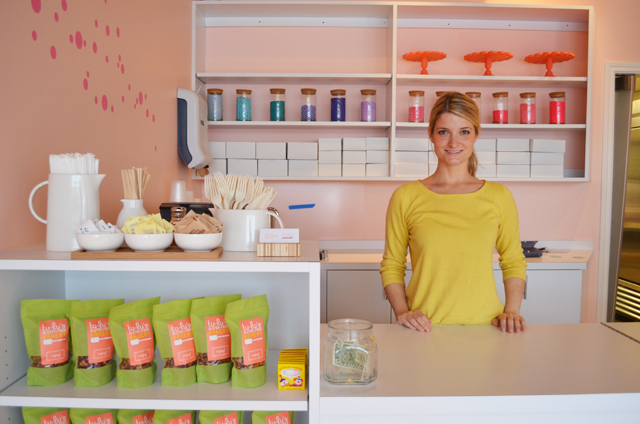
We became (just slightly) obsessed with Tu-Lu’s Gluten-Free Bakery when we stumbled onto the vegan granola at a local health store. Once we enjoyed the sweet, filling, and delicious granola, we had to know who was behind the magic. Baker and founder Tully Phillips shares her story and advice with Carpe Juvenis. From New York City to Texas, this entrepreneur knows what it’s like to open up bakeries across the country and discover a passion that was hidden right under her own nose for years.

For anyone excited about starting their own baking venture, or who just loves to get their hands dirty in the kitchen, we are extremely excited to share this week’s inspiring Spotlight with you!

Name: Tully Phillips
Education: Southern Methodist University and Le Cordon Bleu in Austin, TX
Follow: @tulusbakery / Tu-Lu’s Gluten-Free Bakery

Carpe Juvenis: How do you define ‘Seizing Your Youth’?

Tully Phillips: I think it’s best to seize every opportunity to learn and gain experience when you are young. Try all sorts of things because you never know what might pique your interest!

CJ: What did you study at Southern Methodist University and how did you determine what to major in?

TP: I was a fine art major. It was an easy decision for me because I loved painting and creating art in high school. I have a real need to be creative and that translated into cooking post-college.

Sara Kerens 2012

CJ: You attended culinary school at Le Cordon Bleu in Austin, TX. What inspired you to pursue cooking in an academic way and what was that experience like?

TP: I have always loved cooking. I find it extremely relaxing, an outlet for creativity and of course a delicious profession. Going to school for something that was formerly a hobby was a dream come true. Some people might think culinary school is relaxed but it is actually quite strenuous. You have to be on point every day because each dish you create is graded. Despite that, I still enjoyed every moment.

Sara Kerens 2012

CJ: You signed your first lease for Tu-Lu’s NYC bakery at the young age of 28. How did you decide where to start and which area of the city to rent in?

TP: I wanted to be in a neighborhood that was a “foodie destination.” The East Village is one of those areas of Manhattan with such a variety of restaurants and is quite the hang out area on the weekends. The less expensive rent was also a deciding factor. It was important to me not to overspend on rent since it was a new business and quite frankly a new concept for NYC. We were the first 100% gluten-free bakery in Manhattan so I was not sure how successful we would be.

Tp 1

CP: In your roles as founder and owner, good leadership is critical. How have you learned to lead and what does it mean, in your opinion, to be a strong leader?

TP: I think a leader needs to be experienced in all the roles of their employees. When we first opened I was the dishwasher, weekend baker, register employee, as well as having all the managerial duties. I learned the ins and outs of each position, which was helpful in delegating work and projects to my employees. I think you also have to be willing to learn from your employees and listen to them. Be open to tweaking how things run according to advice they give you.

CJ: How did your education and past work experiences prepare you to start Tu-Lu’s Bakery in both New York and Texas?

TP: I helped manage the kitchen in a catering company NYC. That job really taught me how to be confident in having employees and letting them know your expectations and limits. Of course my culinary education and work experience directly influenced the quality of our baked goods. I have very high standards for what we sell at Tu-Lu’s.

Sara Kerens 2012

CJ: What have been the greatest challenges in running your company, and what do you wish you had known before opening your bakeries?

TP: We are open seven days a week in NYC with very long, late hours so essentially we are never closed! There is always something that comes up that needs to be addressed. Whether it’s someone not showing up for work or a light fixture that no longer works, owning a business is a 24 hour, seven day a week job. That might have been nice to know before opening!

CJ: What is the greatest lesson you have learned from being an entrepreneur?

TP: Being an entrepreneur is risky but extremely rewarding. I was so scared to open a retail store in the middle of New York City but once I signed that lease I didn’t look back.

Tp 2

CJ: What should a teenager or young adult who wants to have their own bakery and run their own business do now to set themselves up for success?

TP: I recommend working at a bakery to really learn the ins and outs of the business. Try to work your way up to assistant manager or manager to get experience on all levels. Knowing how to manage people and money is key. Though I had culinary experience, I had never worked in an actual bakery so I could have learned so many things and avoided quite a few mistakes and bumps in the beginning.

Sara Kerens 2012

CJ: You’ve had such incredible feedback about your gluten-free products, especially the delectable brownies and Carpe Juvenis’ personal favorite, the Agave Cinnamon Granola. Aside from your own experience being gluten intolerant, what inspires you to create delicious treats that anyone can enjoy?

TP: I created the bakery to fill that void of not having delicious GF treats available to me. I was shocked I could not find a wonderful GF cupcake in all of Manhattan. We are always trying to create new products to excite our customers. I especially love when we can recreate a childhood memory in a GF version.

Sara Kerens 2012

CJ: What motivates you on your toughest days?

TP: We have the best customers and we are always striving to make them happy. I can’t tell you how many times people have thanked me for opening the bakery. How many people get thanked on a regular basis at their job? Not many! That completely makes up for the tough days.

CJ: What advice would you give your 19-year-old self?

TP: I would probably tell myself to get a job at a local bakery and learn as much as I can about their systems, customer service, accounting, etc. Try to get some marketing and PR experience as well. You can never learn too much and all knowledge is useful! You never know where it will take you.

Tully Phillips Qs

Images by Tully Phillips

Travel

There are endless ways to explore the world: solo, with family, as a volunteer, or with a program. No doubt each method offers its own unique perks and setbacks. Having the opportunity to travel more independently with family and friends and with larger organizations like People to People Student Ambassadors and Global Visions International (GVI), I’ve experienced a bit of what these various types of travel have to offer. If you’re considering signing-up with a traveling program, hopefully this little list of pros and cons of traveling in large groups will help you make your decision!

Pros

  1. Meeting people from all over the world is ten times easier in an organized setting. When you think about it, everyone is likely there for the same purpose – to gain invaluable experience in a foreign location and build relationships – so you already have something in common! Many times programs have semi-organized free time or group activities that promote casual socializing. Afterwards you will hopefully have great friends to visit (and who will let you crash on their couches) in other countries!
  1. Access to special deals, promotions, and events are common perks as organizations usually have deals with popular tourist sites and great relationships with the local community. I’m talking private tours, discounted tickets, and behind-the-scenes information that you would never have known about had you traveled independently. When I went on a three week South Pacific tour with People to People the summer of 2011, all of us students had a chance to meet the mayor of Rotorua, New Zealand, and enjoyed a night dancing our hearts out on a boat overlooking the Sydney Opera House. Could we have done this on our own? Maybe, but definitely not for free like we did!
  1. You’re going to learn so much. Most large travel organizations have a platform, activity, or issue they are addressing through their program – it could be education, sports, poverty, hunger, health, politics, or cross-cultural understanding, just to name a few. The program I volunteered with through GVI was focused on education. Had I never participated, I would know nothing about injustices that exist in the South African primary school system. The entire experience opens eyes to issues you know little about or, like me, never knew existed.

Cons

  1. Early mornings are part of the packaged deal when traveling with a large group. Depending on the type of program you travel with, schedules vary slightly, but more than likely participants are required to follow a schedule that starts early in the morning. It’s not always terrible, but when jet lag combined with simple travel exhaustion are combined, waking up could be a struggle.
  1. Yes, there will be some people you don’t care for in your program. But the good news is, there are many other people to focus on and you will not be with them forever. You never know, after your travels you may even miss that one annoying personality.

There are so many positives than negatives that come from traveling with a larger group or organization. I dare you to give it a shot!

Image: Flickr

Meagan A
Professional SpotlightSpotlight

When we think of people who have inspired us, Meagan Morrison comes to mind for several reasons: she created her own dream job, she’s incredibly talented, and she’s contagiously optimistic. You can tell right away from seeing her illustrations how much skill Meagan has, and you immediately get drawn into her colorfully brushstroked world.

Though Meagan studied business in undergrad, it wasn’t until she was 24 that she decided to go back to school for a degree in fashion illustration. After doing internships and asking lots of questions, Meagan realized that she was going to have to create the dream job she ultimately wanted. The awesome and inspiring part? She did just that.

As a Traveling Fashion Illustrator, Meagan works with fashion designers and high profile brands and travels the world illustrating what inspires her. During our conversation, Meagan consistently referenced how much hard work it takes to make your dreams come true and that you have to “rewire your brain to think positively.” Very true words, and it’s encouraging to know that the road to your dreams may not be easy, but it’s definitely worth the challenge.

We’re excited to share with you Meagan’s interview with Carpe Juvenis! Read on to learn about her role as an illustrator, the greatest lessons she’s learned from starting her own company, and of course, how she seizes her youth.

Name: Meagan Morrison
Education: Bachelor of Commerce from McGill University; Fashion Illustration AAS from Fashion Institute of Technology
Follow: MeaganMorrison.com / Instagram / Twitter / Facebook

Carpe Juvenis: How do you define ‘Seizing Your Youth’?

Meagan Morrison: Making the most of every opportunity and asking tons of questions. Those who seek will find. Don’t wait for anything to fall into your lap, you have to go after it. Since I was very young I’d always ask a lot of questions to family friends and teachers. I was constantly educating myself and involving myself in things that I found interesting. ‘Seizing Your Youth’ is ultimately defined by each individual and what he or she wants to get out of life.

CJ: You received your Bachelor of Commerce from McGill University. What did you major in and how did you determine what to study?

MM: I went to McGill and studied business. My older sister went to McGill, as well. When I went to visit her, I remember looking at the girls in the commerce program and I loved seeing how they carried themselves. They were well dressed and professional. I really identified with them. They looked confident, empowered, and determined.

At the time I was very much into fine arts, but I wanted to step out of that for a bit to find myself and my purpose. I knew that with a foundation in business I could specialize and go smaller, but it would be harder to go from something narrower to a business degree. It felt like the right building block at the time.

Meagan D

CJ: You also received an Associate’s Degree in Fashion Illustration AAS from the Fashion Institute of Technology. What was that experience like?

MM: By the time I started my AAS in illustration I was 24 and really knew that the program was what I wanted to do. It was a highly specialized degree that offered fashion illustration as a two-year program. I didn’t want to commit to another undergrad degree, but I wanted a foot in the door in New York. I also wanted to be totally immersed in fashion illustration. I read this quote in a book about fashion illustration that advised to launch your career in a city that matters. I figured if I was educated here and given the opportunity to work here, I would be launching myself in the biggest city in the world for my industry. That’s what prompted my decision to go back to school.

Meagan Insta 3

CJ: What sparked your love of illustration and design?

MM: I always loved fashion and art. I didn’t quite know that they could co-exist so intimately until I started working in the fashion industry after McGill. My first internship was at a fashion magazine and I was constantly asking questions between the editorial department and the art department to see how much, if any, traditional art they used. It was predominantly graphic design and photography, so I didn’t see myself in that world. I thought maybe I belonged in the gallery world of fine art. Somewhere between trying out a bunch of different professions in the industry and asking questions, one of my coworkers mentioned the program in fashion illustration at FIT. When I heard the profession and researched it, it felt as though a lightbulb went off. I couldn’t believe that I found something that really combined my true greatest loves: art and fashion. That’s what really sparked the passion for me.

After hearing about the profession and the program at FIT, I went to bookstores and pulled all the sources I could find on fashion illustration. I searched through the glossaries and found names of illustrators, and some were located in Toronto. I reached out to Virginia Johnson, a local Toronto illustrator and textile designer, and brought her my portfolio. I explained to her that I loved illustrating shoes, and she pushed me to follow what I loved and told me that the rest would fall into place. I’ve been obsessed with illustration ever since.

Meagan Insta 2

CJ: You are a traveling fashion illustrator and recently branched out to start your own company. What does it mean to be a traveling fashion illustrator?

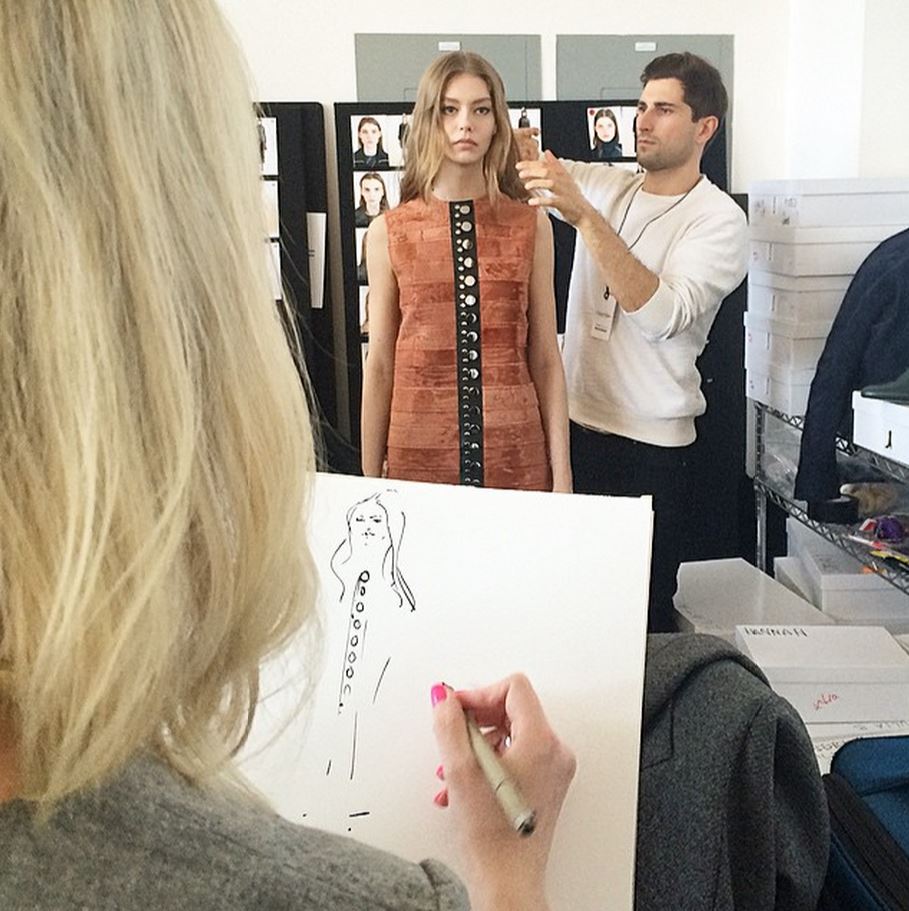
MM: It’s about being mobile and not just sitting at my desk pulling images off of the Internet. It’s about experiencing the culture firsthand and having that inspire my work. I have always been so passionate about travel and how that would inform my illustrations, and I wanted to be known as an illustrator at the intersection of both travel and fashion. There’s nothing like discovering a new destination and seeing how people dress in different cities around the world. I want to capture how the environment they’re surrounded by influences their style and my work. It’s the same thing when I’m at a fashion show and later do illustrations. I’ve seen the clothes, felt the texture of the fabric, heard the playlist, and felt the mood of the environment. I see the vision that the designer intends for the line. It helps bring the illustrations to life.

CJ: What are the greatest lessons you have learned from starting your own company?

MM: That you never stop fighting. Every paycheck is a fight. Every project is a new hurdle. I don’t mean to sound defeated by that, but it is the most obvious and striking contrast between working full-time and working for myself. I knew every two weeks I would get a paycheck at my last job, but now I have to chase and follow-up on everything. All the work of orchestrating that and keeping projects moving can be a challenge.

I’ve also learned that it would be great to have a sounding board. The thing I miss about working with a company is having the team to bounce ideas off of. It’s always a joint decision. I love the fact that I am making choices for myself and I do have the final say, but I think it’s good to discuss the decision with someone first and come to a well-informed decision. It’s a lot of pressure to not make the wrong choice on your own.

You also have to be careful so you don’t get taken advantage of. You’re constantly looking after yourself. The momentum has to keep going and the ball can’t drop. I find that the more I’m working, the more work comes in. It’s the ripple effect. The chain reaction in itself can be exhausting because when can you ever pause and catch up on your sleep?

CJ: You have done illustrations for amazing clients including Lucky Magazine, Rebecca Minkoff, Calvin Klein, and Conde Nast Traveler. When you work with each client, what is your process and your role as an illustrator?

MM: It honestly differs with every client, how big the project is and how much they want to involve the social and illustration aspects of it. When I come into a partnership I always gauge what the client’s expectations are, the breadth of the project, the timeline, their budget, and then we work from there. It’s about finding the middle ground between what you feel comfortable with and what the client feels comfortable with.

I have a clear vision about the brands I want to work with and how they align with the vision I have about being a traveling fashion illustrator. I don’t take on every project. If people want to sponsor things on my Instagram, I don’t take every product. Every partnership is very authentic. I don’t ever take on a job just for the money; I only do it when I believe it’s genuine and it makes sense.

Meagan C

CJ: How long does a piece take to create from start to finish?

MM: It varies per project and per client. For instance, my Calvin Klein job, I was at the show illustrating live. I could feel the fabrics and speak to the creative director, Francisco Costa, about his vision. I had about two days to turn around finals, but it helped to see the actual clothes. The pieces themselves takes me about three to four hours to complete, but that varies depending on how detailed each piece is. Then I scan the paintings, clean them up in Photoshop, and send the JPEGs to the client.

If it’s a customized piece or if I’m designing something from scratch, that requires a lot more preparation. I’ll do pencil sketches and color comps and then take it to the final round. Some are more laborious and expensive and others are just straight to final.
Meagan Insta

CJ: What should a teenager or young adult who wants to be a fashion illustrator do to set themselves up for success?

MM: Start asking questions and get a portfolio together. Also, don’t lose your voice. When people are younger they start to emulate the top people, but that’s not an advantage. People don’t want to hire a second rate version of someone else, they want to hire the first version of you. I’ve seen it on social media where people’s styles are so different, and that’s what’s standing out. It’s a saturated market. Keep true to you and keep your voice and style genuine. Embrace the quirks about your style.

There are tons of free websites out there as well where you can put your work online. Keep it clean and simple so you can showcase your work. When I was younger I was constantly illustrating to keep perfecting my craft and finding my voice. I wasn’t thinking about gaining clients just yet. Build your social awareness and share your journey. Then, when you are ready to work with clients, people will already know about you.

Meagan Insta 4

CJ: How do you stay organized and manage your time?

MM: I have a massive planner that is 8½ x 11 inches. I write lists every single day, and everything that doesn’t get accomplished the day before gets carried over to the next day. It’s blinding because I highlight everything. I also use whiteout so there’s nothing unnecessary on it. I start and end my day with that book.

From the planner I move to emails. The luxury of working for myself is that I can answer them when I’m in still in my pajamas. I get breakfast and then do errands. I want to get all my errands finished before I start painting, because once I start painting I lose track of time. It’s nice to have everything else taken care of so I feel at ease when painting. I don’t want stress to show through in the work. I often work pretty late into the evenings. It depends on how intense the turnaround time is. I like to end the day seeing a friend or unwinding watching Netflix.

One thing I’d like to do more of is exercise. You have to take care of yourself when running your own business. If you run yourself down there is no business. I don’t have weekends. I haven’t taken a proper vacation when I’m not working. For better or worse, travel has become part of my brand so I feel a sense of responsibility to cover what I’m doing and share it on social media even on my downtime.

Meagan Insta 5

CJ: What spring break experience has been memorable for you?

MM: I remember the spring break in my senior year of high school. I traveled with my class to France and Italy. That trip stands out to me because we had a small group of students in my high school, and we were combined with another high school group from the Ontario area. We got to meet new high school students on the trip and it was a prelude to university and meeting new like-minded people. I love how traveling and meeting new people expands your vision.

We started in Paris and hopped over to Florence and Rome. I had the time of my life. It wasn’t about the accommodations or amenities at all. It was about being with people you cared about, having a blast, and laughing a lot.

CJ: Is there a cause or issue that you care greatly about?

MM: Changing the perceptions on mental health, depression, and anxiety is important to me. I don’t think people should be scared to talk about it. Being open and dealing with it as you would your physical health is important. There’s more people suffering from anxiety and depression in the country today than there has ever been. Why is that? It’s a blessing and a curse that we have social media, but it also gives people a sense of inadequacy all the time. You’re constantly faced with what other people are doing and how much more you should be doing.

I’ve had to really practice changing my mindset about that. By nature I’m very anxious and hard on myself. I practice gratitude. My anxiety can be so bad that it could hinder my work flow. When things aren’t totally concrete I’m at my worst. The grey area is the hardest area to live in, but that’s life. Rarely is anything concrete.

CJ: What is your favorite book?

MM: Eat, Pray, Love: One Woman’s Search for Everything Across Italy, India and Indonesia by Elizabeth Gilbert.

CJ: What advice would you give your 20-year-old self?

MM: I’d say not to worry and that everything is going to work out just fine. I feel more confident now than I ever have. Looking back at all the things I didn’t think I could get through, that I have since surpassed, helps me to remember that everything will always work out. I didn’t know then that I’d be able to build a life that I love so much.

I would advise people in their twenties that nothing is handed to you. You have to practice happiness. It can be tough but you have to practice that in the same way you train for a marathon. Rewire your brain to think positively. Also know that happiness isn’t at the other end of success. You can start with happiness and then everything else doesn’t have so much weight on it. If your happiness is contingent upon getting into a certain college or winning a certain award or landing a client, then you’re never going to get there because the benchmark is always raised.

But if you start with being grateful with what you have in the moment, then you’re already working at an advantage. Be grateful for what you have because it can all be gone tomorrow. I feel infinitely happier now than I did way back then, even though I have tons more responsibilities. It’s been a matter of self-awareness and rewiring the way that my mind works.

Meagan M Qs

Images: Illustration Images by Meagan Morrison; photos of Meagan by Carpe Juvenis

HealthSkills

Two steps forward, one step back. Or sometimes, two steps back or even three – and then we’re really lost, asking ourselves how we even got there. The setback comes in all shapes and forms, but always of the same effect. It has a tempting, toxic ability to keep people in a negative state of mind making it more of a stayback than anything else. We feel it when relationships end, whether with a partner or a close friend. We feel stagnant when our career choices don’t reach the expectations we have bred in our minds. We become self-degrading, unconfident, anxious, and fearful versions of ourselves whenever we face circumstances that stunt our flow of life. The sad part about all of this is not the fact that obstacles happen, but rather that our collective response to hardship is to blame ourselves by shutting down. After all, if it’s happening to me then I must be deserving of it, right?

Incorrect. Unfortunate things happen all the time, and a quick reality check can help many of us realize that our problems are not quite as hefty in the big scheme of things. But how do we get out of the mental rewind that keeps replaying the negativity reel? First and foremost, separate your true self from the problem.

STEP 1: You are not the circumstance. The circumstance is happening to you, it is not you. And too often, people feel entirely consumed by the problem almost becoming it.

Tim Storey, world-renowned motivational and inspirational speaker says it best when he describes how people ruminate on their issues. He says that “We nurse it, curse it, and rehearse it.” By doing this, we are conditioning our minds to react to problems by constantly thinking about them and repeating them in our heads. Storey explains in his book Comeback and Beyond that the best way to cope is to “accept the now and take inventory of what is happening.”

STEP 2: Thinking about a problem is different than being aware of what’s happening. When you become aware you are expanding your thought patterns from dwelling on a single issue to seeing the entire picture. Less thinking, and more recognizing. Recognize how you’re feeling and what triggers you to repeat bad thoughts. Knowing how often you nurse, curse, and rehearse will help you work towards stopping those thoughts.

There is great power in what we think. Because of this, we must be very careful with what enters our minds. Setbacks create space in our heads to think negatively, but we can train ourselves to make space in our heads for positivity. It’s about redirecting what we pay attention to. Instead of focusing on what went wrong or what we failed to do, realize that there are unlimited other ways to focus on things that will breed positive thoughts. If you feel like you have nothing, give more. Volunteer, call a friend, help your parents out at home, and experience firsthand what happens when you shift the expected course of action. Your mind is so used to repeating the bad, that when you begin to feed your thoughts with helpfulness and kindness, your emotions begin to change as well.

If you feel lost and confused, be open to getting help from others. It is common for people to think that success is a one person job, and if they can’t do it on their own they don’t know how to be successful. This is twisted thinking. The most successful people understand the importance of mentorship and having a strong team of individuals to support one another in both work and personal life.

STEP 3: Shift your receiver and pick up positive signals. Don’t stay in the setback. Choose to hang out with people that believe in you. Make an appointment to talk to a counselor or therapist. Only read beneficial and substantial articles and follow positive people on social media.

There are so many times in life that we can feel weighed down. A lot of that weight is in what we think and not actually what is happening. Take the time to redirect yourself and don’t forget:

Separate from the problem. Recognize your thought patterns. Shift yourself to get better reception.

“Life is all about course-correcting.” - Arianna Huffington

Image: Raumrot

mariangrad
EducationSkills

The almost-there feeling of getting an interview for graduate school is both an exciting and daunting one. You feel accomplished for sending out those applications and validated that you are headed in the right direction. So pat yourself on the back for making it to the next step and get ready for your interview the right way.

First and foremost, be yourself. Your background and interests were what brought you to the interview and now it’s just a matter of figuring out if the program is the perfect fit for you. Faculty, staff, and current students that are interviewing you are looking for students who are genuinely interested in their program and have unique skills and interests to offer. Believing that you are capable and ready is the best way to start preparing. Once you have that covered, prepare with these four tips:

1. Research and Relate

You’ve researched the school in-depth and you know what it stands for. You know the school’s mission and the goals of your program of interest. Now it’s time to familiarize yourself with more specific information. Look into the course catalog and read about the classes you would be taking. Jotting down notes about the learning outcomes for each course can help give you a framework of the “language” and style of the program. Are there specializations that you are interested in? If so, ask yourself why they interest you.

If you are seeking graduate school, there has been some sort of spark within you that has motivated you to learn more. Asking yourself to examine that spark can help you verbalize how your personal history blends with your curiosity for the program. Other details to look for include what types of internship or fieldwork opportunities they offer, graduate assistantships or fellowships, and faculty-specific research interests that tie in with yours. It’s helpful to have this sort of knowledge bank so you can connect what you have learned and experienced so far with what you will be learning in the future.

2. Know the Interview Format

It’s always good to know if you will be in an individual or group interview. In many cases, a program representative will let you know via phone or email what the interview dynamic will be like. If not, it’s okay to inquire with an admissions counselor. Individual interviews allow you to be the main focus of the panel. One of the best ways to prepare is by writing a list of possible interview questions and having a friend conduct a mock interview with you. Pay attention to the length of your answers. Are you being concise or talking too long? Are you saying “um,” “you know,” and other filler words? What are your hands, arms, and legs doing while you’re talking? Have a colleague take note of fidgeting, awkward pauses, volume, and eye contact.

With group interviews, the attention is divided and things can get a little tricky. Fortunately, there are ways to make group interviews go a lot more smoothly. For starters, non-verbal communication can keep you engaged throughout the interview even when you’re not the one talking. Nodding your head in response to others shows that you are listening and open to what everyone is saying. If the panel asks a question and does not direct anyone to start answering, wait a few moments to gauge the room and be the first to answer if you are ready. If another person begins to answer first, do not worry. The most important thing is what you say, not when you say it. If you’re looking for a way to begin your answer, try short starter statements like “I’ll start this one off,” or “I agree with that and have a similar experience as well,” or “I’ve considered this a lot while applying and…,” or “There are a few things that come to mind including _____ and ______.” Statements like these will help you ease into your answer and help you sound prepared and reflective.

3. Prepare with Questions That Ask More

It is common for faculty and program directors to ask questions that dig deeper than the expected “So why choose our school?” question. Rather than asking a question at surface level, they may ask a question with a different angle to examine how you respond to more difficult subject matter. For example, rather than asking about your opinions or experience with diversity, they may ask what about diversity makes you uncomfortable and how you see yourself overcoming that. Rather than just asking what makes you a good candidate for the program they may ask what you have done to prepare yourself for the rigor of graduate studies. It’s always a good idea to ask yourself the hard questions before the real thing.

4. Absorb and Emit Positivity

Although you may be nervous during your interview, good energy can get you through it. Condition yourself with positive thoughts before and during the interview. Having good thoughts about yourself and those around you can show through the tone of your voice, facial expressions, and body language. It can also calm you down if you begin to feel anxious. Feel excited about the opportunity at hand to meet professionals at each school. Feel proud of your accomplishments and thankful for the chance to share more about yourself. Remind yourself that the outcome of your interview does not define you as a person and that whatever comes your way is for your benefit. You have come a long way to now be in a turning point towards graduate studies. Be confident and be you, and the rest will fall right into place.

Image: Flickr

Linda K 4
Professional SpotlightSpotlight

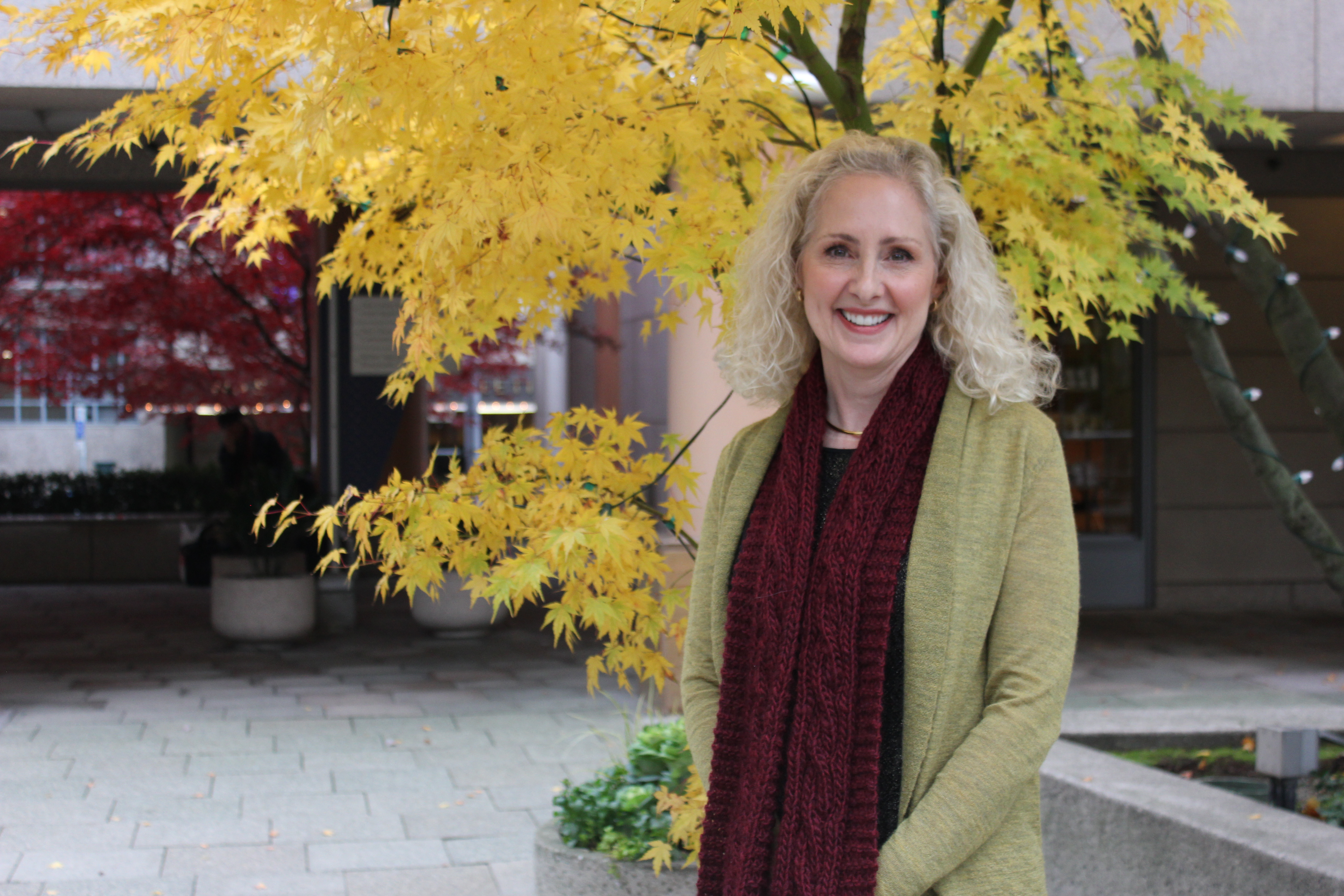
We have followed Linda Kim’s Instagram for quite some time now, and it’s always fun to see her gorgeous photos pop up in our feed. Linda is a food blogger at Delish Thoughts (so many great recipes!) and an E! News Segment Producer living in Los Angeles. She takes stunning photographs (read on for her tips for great photos) and has a keen eye for food styling. It’s clear how creative and talented Linda is through her photography, recipes, and career in entertainment.

Whether you’re into food, blogging, photography, media, entertainment, or pop culture, Linda Kim has all bases covered. Linda gave Carpe Juvenis an exclusive look into what ‘Seizing Your Youth’ means to her, how young people can get involved with a career in media, and how she manages her hectic days.

Name: Linda Kim
Education: B.A. in Drama and Sociology from University of California, Irvine
Follow: Delish Thoughts / Instagram / @lindak68

Carpe Juvenis: How do you define “Seizing Your Youth”?

Linda Kim: Seizing your youth means exploring opportunities and welcoming new adventures. It is important to live each day to the fullest and work hard to pursue your dreams.

CJ: You majored in Drama and Sociology at the University of California, Irvine. How did you determine what to study?

LK: To be honest, I wanted to study communications but it was not offered as a major. I thought drama and sociology would be a good combination to learn about society and be creative.
Linda K 1

CJ: You run the food blog Delish Thoughts. What sparked your passion for food and cooking?

LK: I loved watching my mom in the kitchen as a young girl. I was so fascinated how easily she prepared the most delicious dishes and I wanted to learn how to cook like her. I love hosting and cooking for other people. I think food brings people together and we can share great meals and fun conversations.

CJ: What is the best piece of advice you would give a baking/cooking enthusiast?

LK: I have learned a lot by watching cooking shows. It helps to see how things are done rather than just reading instructions.

Linda K 5

CJ: Great idea. You take gorgeous photos on Delish Thoughts and your Instagram. What are your top photography tips?

LK: It is all about natural lighting for me. Make sure you have great lighting and try taking photos at different angles to see what looks best.

CJ: What is your favorite meal or dessert you’ve ever made?

LK: My eggplant parmesan and blueberry crumble are favorites among my friends so I will make anything my friends enjoy.

Linda K 6

Linda K 10

CJ: You are also an E! News Segment Producer. What drew you to media and what does your job entail?

LK: I always had a love for entertainment and knew that is what I wanted to pursue. I love that there is a variety in media and you can work in different fields. As a segment producer, I cover TV and music stories, set up shoots and interviews with celebrities, and work on red carpets and events.

Linda K 2

CJ: What advice would you give to a young person hoping to set themselves up for success in the world of media?

LK: It is important to be a go-getter and be one step ahead. I always asked for more work and anticipated needs instead of sitting around and waiting for someone to give me work.

CJ: What has been one of the most unexpectedly interesting parts of your career to date?

LK: The most interesting part is the people I get to meet. I love meeting new people and have had the opportunity to meet friendly celebrities and become friends with my co-workers and colleagues.

Linda K 3

CJ: Every day in your life must be different depending on your projects and the time of year, but what does a Monday look like for you?

LK: It really depends on what is going on that day- if there is any breaking news, if I have to get in a lot of content that day, if I have a guest coming in studio, if I have to go off site for shoots. It could be a quiet Monday or a hectic Monday but I love that everyday can be different.

CJ: That’s awesome. When you do have those hectic days, what are your time management tips? How do you stay organized and efficient?

LK: I have learned to multitask pretty well so I can do a few different things at once to utilize my time. I make sure to write a list of things to do on my planner and keep track of projects in a calendar.

Linda K 8

CJ: What is an area, either personal or professional, that you are working to improve in and how?

LK: You may encounter unfriendly people in the industry but I tell myself not to take it personally and still keep a smile on my face.

CJ: Having a loaded schedule can sometimes be overwhelming. What do you do when you’re having a bad day and need to unwind or reset?

LK: Having a meal with friends always cheers me up or I like to have a quiet night, lay on the couch and watch my favorite shows.

CJ: If you could have lunch with anyone – dead or alive – who would it be and what would you eat?

LK: My grandfather. We would have the best chats when I was a little girl and I wish I could have that moment now with him. I would eat steak because that was his favorite.

Linda K 9

CJ: That sounds really nice. What advice would you give your 20-year-old self?

LK: To be bold and adventurous and not have any regrets. One of my biggest regrets was not taking the opportunity to study abroad in Italy.

Linda Kim Qs

Image: Linda Kim

Debbie Oberbillig
Professional SpotlightSpotlight

It was a pleasure meeting Debbie Oberbillig on a gusty and grey Seattle afternoon. As Founder and President of Allen Partners, a business coach, and board member, Debbie is extremely busy. She was kind enough to sit down with us for an exclusive interview about her career path, what she would advise her 20-year-old self, and the lessons she’s learned along the way. Debbie is intelligent, insightful, and an inspiring leader, and we were very impressed, to say the least.

As further proof of her success as an entrepreneur, Debbie was a 2015 Enterprising Women of the Year Awards winner. We are not at all surprised by this, as Debbie has grown her company, which provides finance and accounting talent optimization services for companies of all sizes and industries in the Pacific Northwest, from the ground up. We admire the fact that Debbie is a hard worker, but that she is also curious about the world and gives back to her community. No matter how busy her schedule is, Debbie will make time to help others. We’ve been inspired by her, and now it’s your turn.

Name: Debbie Oberbillig
Follow: @AllenPartners

Carpe Juvenis: How do you define ‘Seizing Your Youth’?

Debbie Oberbillig: “Seizing Your Youth” is appreciating who you are in this moment, being open to opportunities and exploring the world around you. I have observed that people are really getting serious early and kids aren’t allowed to be kids anymore. I think that your twenties should be spent figuring out who you are. Don’t be afraid to try new things - be bold and be brave. See the world, join the Peace Corps, or move to a new city. Discover who you are in order to determine what you want. That might be counter-intuitive to what you think you need to do – there’s a lot of pressure to start your career right away - but now is the time to learn who you truly are, which will help you pursue a career that you can truly be passionate about.

CJ: What school did you attend for undergrad and how did you determine what to study?

DO: I never graduated from university. I started working at 15-years-old and didn’t go to college until my thirties. My parents were children of the Depression so work was highly valued in my family. I also loved working and having money and the freedom that money gave me so I did not go to school right away. In my thirties I thought about getting a degree, so I started attending classes at a community college. I also took some classes at the University of Washington, but I got recruited by a great company and never finished. I originally was going to get a degree in business, but if I were to go back now I’d do something more fun like philosophy or psychology

CJ: You are the Founder and President of Allen Partners, a company you started in 2003 that provides finance and accounting talent optimization services for companies of all sizes and industries in the Pacific Northwest. What motivated you to start Allen Partners?

DO: My mom owned a successful agency similar to Allen Partners and I worked for her, which was where I learned the business. About the time my mom was getting ready to retire, I was recruited to work at Hall Kinion, another staffing firm, by a really smart woman who quickly became one of my professional mentors. With her guidance my specialty became organic growth, opening up new offices around the country. We grew the company from $3 million to $300 million while I was there. That experience and training is what led me to take the next step in my career, which for me was to start my own business.

CJ: What does your role as President entail?

DO: In the beginning I used to do everything. I’ve been a recruiter, a salesperson, the accountant - virtually everything. As we grew over the years I brought in two partners who also worked for the company and were passionate about its success. One of them is Director of Sales and Recruiting, running the sales division on a day-to-day basis, and one is the Director of Operations and Finance. As President, I focus on promoting the company by networking and continuing to grow our business with new clients.

CJ: Allen Partners focuses on employment intelligence and hiring smart. How do you go about recognizing and developing top talent? What are the most important skills to have in order to be considered “top talent”?

DO: Recognizing top talent is hard. It’s what all of our clients struggle with. It’s really a combination of practical and soft skills. A lot of people go to school and get their degrees and have practical work experience, but the determination of their success is equally based on soft skills. It’s just as important to be able to get along with people, communicate what you need, articulate what you’re looking for, and know what your values are. These are things that are not regularly taught or easy to teach and rarely thought about when attending college, but they are just as important.

Recognizing talent requires more than just looking at a resume, it takes a good conversation and asking the right questions to determine if candidates have the interpersonal skills, critical awareness and thinking abilities to not only do the job, but be an integral part of the team. It’s finding the right combination of hard and soft skills. It’s a secret sauce. Some people have it intrinsically and some people have to learn it.

CJ: What are the greatest lessons you have learned from running your own company?

DO: I’ve learned a lot of lessons. When you have a business, it’s imperative to remember that culture and profit are equally important. If there’s no profit, there’s no company. Profit is not a dirty word. You can have fun and have a great culture, but in the end, if the company’s not making money it doesn’t succeed. There were times when I didn’t think enough about the bottom line, and other times when I thought about the bottom line too much. A successful company learns to balance people and profit. You have to really care about both.

CJ: In your role as President, leadership is important. How have you learned to lead and what does it meant to be a leader?

DO: I’ve learned a lot over the years through trial and error that has made me a better leader. You have to care about your people and be empathetic. You have to also hold people accountable and recognize that people won’t always like you or the decisions you have to make as a leader. You want to take care of people, and you also have to do the right thing for the company.

CJ: As a recruiter and leadership advisor, you have observed many different types of leadership. What are some ways young people can become better leaders?

DO: You can be a natural leader but also have leadership challenges. One of the biggest things that I’ve observed is that young leaders struggle with holding people accountable because they want to be liked. New leaders many times avoid the tough issues, but to be a great leader you have to address issues right away. If something comes up and it’s a problem, it’s up to you to tackle it. Giving people feedback isn’t necessarily bad, although you have to learn how to do it effectively.

The other thing is that sometimes people feel like they have arrived when they’ve been promoted, and they stop doing the work needed to be a great leader. Great leaders lead by example, which is an old-fashioned saying, but it’s really true.

CJ: Bellevue LifeSpring is an incredible organization that fosters stability and self-sufficiency for Bellevue’s children and their families through programs that feed, clothe, and educate. What do your duties as a Board Member involve?

DO: When I first joined the board, Bellevue LifeSpring was building up their staff, so I was able to put my recruiting skills to work right away, as well as offering human resources assistance until we hired someone who could handle it. I really believe in the organization so I am always involved in our events, either by sponsoring, volunteering or both.

CJ: What does a day in your life look like?

DO: Lately I’ve been spending a good part of the day working on something I’m really passionate about - growing my professional coaching business. Coaching helps people see things in a new way by asking specific questions that transform how they observe the world. By simply looking through a different lens, you can change the choices you make and consequently, the results in your life. I love helping others to change their lens.

I’ve also recently become a Daring Way™ Facilitator candidate, which is a bit of a different coaching style based on the philosophy and findings of Brené Brown; a research professor, bestselling author and a top TED Talk contributor.

Of course, I’m still very involved in Allen Partners, although I’ve been able to step back a bit, as I’ve mentioned, to allow myself time to grow these other areas of my life.

CJ: How do you stay organized and efficient?

DO: I’m naturally very detail-oriented, which helps me stay organized. I use Outlook for scheduling, and I’ve just started color-coding to track how much time I spend on my projects. There is no secret to balancing, whether you’re going to school full-time or working full-time. It takes practice and dedication.

I’ve started a new thing: in the morning I write in my gratitude journal while I have my first cup of coffee. I just sit by myself and I think for about 30 minutes each day. I’ve noticed that we just don’t spend enough time reflecting. After that time, I prioritize my day by writing down the top five things I need to do. I do those five things first, and then after that anything goes. When you limit it to the top five, you’re usually able to get it all done.

CJ: What is the best moment of your career so far?

DO: Right now! I’ve had a great career and I’ve been really lucky. I love everything that I do and it keeps getting better. My first jobs were office jobs where I worked 8am-5pm, and I just think right now is really fun because I have so much flexibility.

CJ: What advice would you give your 20-year-old self?

DO: In my twenties, I didn’t have much of a life besides working and socializing. I would tell myself to travel more – try new things, meet new people. I got very serious about work too soon, which is why I now really encourage young people to “seize their youth!”

Debbie O Qs

marianadvice
HealthSkills

Wisdom works best when shared. Sometimes all we need are a few words of newfound perspective to navigate through life. Here are 10 pieces of advice that have provided encouragement and much needed clarity:

“Always assume you don’t have all the information.”

I see this as a way to not take anything too personally. When people act or react in ways that are unwarranted we are quick to judge. However, it’s nearly impossible to fill in the blanks without knowing more information. This is particularly valid during fights and disagreements. Instead of pushing your view and knowledge of the situation, question what you don’t know and instead, assume that they are seeing something that you are not seeing.

“Never pass up a chance to learn something for free.”

Our capacities to learn are endless. There are free E-courses online spanning anything from finances to interior design. Maybe a friend invites you to a free yoga session or you’re curious about slam poetry - take the first step in learning more about it and experience it for yourself. The best part about this kind of education is that it can be found everywhere, plus there’s no tuition.

“Create and maintain a morning ritual that you love.”

Starting your day with a ritual can energize you and help you be more productive throughout the day. Whether it’s brewing a cup of coffee or making tea, spending a few minutes meditating before heading out the door, or going on a morning run, take that time to activate your senses and set a happy tone for the rest of your day.

“Sometimes you need a little crisis to get your adrenaline flowing and help you realize your potential.”

One guarantee in life is that it’s unpredictable. Sometimes it seems as though the universe conspires to overlap as many dilemmas and challenges for us to face all at once. When crises happen, it’s helpful to remember these two things: 1) You are not alone. We all have our fair share of catastrophes. 2) Consider it your chance to challenge yourself for the better.

“Never lie in bed at night asking yourself questions you can’t answer.” Charles M. Schulz

What is it about the moment when your head hits the pillow that ignites a flood of worries and second-guessing? Sleep is essential and we all need to allow ourselves to relax when we can. So silence the motor in your mind as you hit the hay, it’s one of the only times that thinking less should be a priority.

“What are you going to do about it?”

Advice in the form of a question, gotta love it. Whenever I hear this it’s a reminder of the fact that although I cannot choose what happens to me, I choose what happens next. We are in control of our own decisions and sometimes what we really need is to ask how we can help ourselves.

“Measure twice, cut once.”

My best friend is an expert in calculated risks. He seems spontaneous and fun-loving but is actually extremely careful and a ferocious planner. Through him I’ve learned the value in being able to safely execute decisions. Approaching important situations with thorough research and credibility will allow for life’s big moments to go a lot more smoothly.

“Never offer advice just to appear concerned.” Jack Gardner

We all need to hear this. Although we always want to say the right things and help people when they’re down, be mindful of what it is you’re saying to them and why. If your advice is mere conversation filler, it’s better left unsaid. People have a tendency to project their own versions of help from their personal histories that often don’t reflect the person in need at all. So be wary of “saving the day,” sometimes the best way to help people is to just listen.

“Being in a relationship doesn’t entitle you to anything. You don’t get what you expect, you get what you create.” Steve Maraboli

Having a relationship is having an on-going learning experience. One of the biggest things to learn is to never mistake having a relationship with possessing a relationship. It is not an opportunity for an individual to control another with their expectations but rather, an invitation to grow with someone and share the same effort towards happiness.

“Go in the direction of where your peace is coming from.” C. Joybell C.

This one is from my all-time favorite poet and kindred spirit. Life’s pushes and pulls lead us to places and decisions that don’t always work out. The only thing we can really try to be consistent with is finding our purpose. Whatever it is that provides you with that feeling of peace and wholeness, follow it and rest assured you’re doing life right.

Image: Picography

grace main 2
Professional SpotlightSpotlight

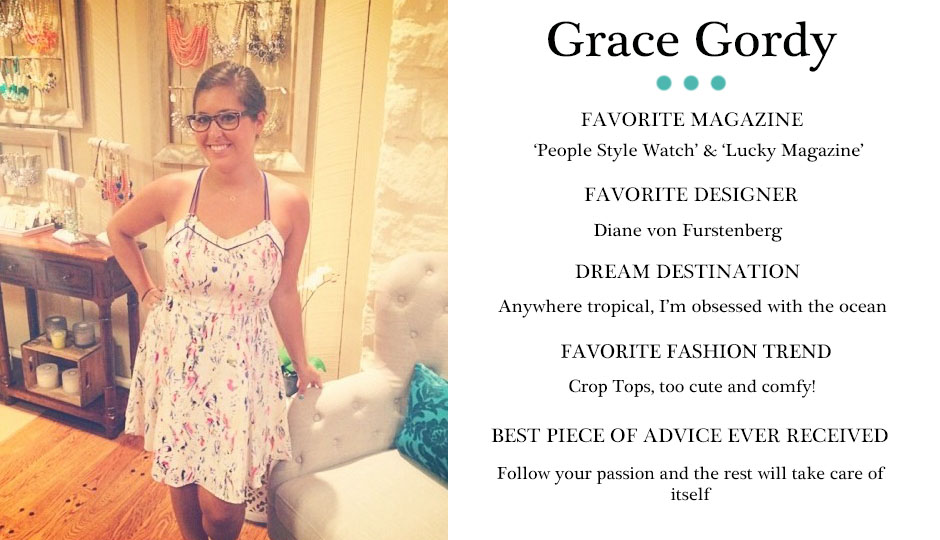
We met Grace Gordy at a Seventeen Magazine internship in college. We worked together in the fashion closet, and it was clear that this girl had an eye for style. Flash forward years later, and Grace is running her own clothing store, Honey and Hazel Boutique, in Georgia. A surprise? Hardly. Grace has serious determination and a passion for creative endeavors. It’s not every day you hear about a young twenty-something opening up shop with trendy (and affordable!) contemporary clothing.

Grace opened Honey and Hazel Boutique with her mother, and this power duo is impressing us with their positivity and desire to learn more through their experiences. From an early age Grace knew that she wanted to be involved with fashion, and daily she makes her dreams come true. After spending time interning in the fashion industry and working for other clothing stores, Grace learned many skills along her journey and implements them on a daily basis. We’re excited to introduce you to our friend, style inspiration, and total #girlboss, Grace Gordy.

Name: Grace Gordy
Education: BFA in Fashion Marketing and Management from Savannah College of Art & Design
Follow: Facebook / Instagram

Carpe Juvenis: How do you define ‘Seizing Your Youth’?

Grace Gordy: To me, seizing your youth is all about creating your own path in life (or “march to the beat of your own drum”) and not worrying about what others are doing. I used to get so caught up in what I thought I should be doing at a particular age and always felt behind in my “career path,” but now I realize how thankful I am for all of my experiences because it led me to my ultimate dream come true.

Also I think seizing your youth means taking advantage of all of the opportunities that come your way. Your youth really is the best time to explore, be creative, meet people, make memories and experience as much as you can. Just live life with no regrets.

Grace 3

CJ: You majored in Fashion Marketing and Management from Savannah College of Art and Design. How did you determine what to study?

GG: From a very young age I knew I wanted to be involved in fashion. I used to study fashion magazines from front to back and was determined to work for one so choosing a major was never any question; it was going to be fashion! I grew up in a small town where no one understood how you could make a career in the fashion industry and was actually told by teachers to go into a more “realistic” field, but I never let them sway me. My parents have always been so supportive of my choices and me and have always told me to follow my passion no matter what. I couldn’t be more thankful for them! For anyone interested in majoring in fashion I would certainly recommend that you look into SCAD (Savannah College of Art & Design). It was the most challenging four years of my life, but it paid off in a huge way. They have wonderful professors and a very well-rounded curriculum!

CJ: That’s incredible. You definitely put that education and the skills you learned to good use. Together you and your mother opened Honey & Hazel Boutique, a trendy contemporary clothing shop. We love that! What does your role entail and how do you and your mother divide up responsibilities?

GG: We are both co-owners so our roles basically entail everything! We both have total input into everything we do and are both always in the shop whether that means being on the floor helping our customers or in the office doing paperwork. She’s better at keeping up with the books and I handle most of the social media and marketing. We are very fortunate to have the kind of relationship we do; we are best friends, business partners, and mother/daughter. Opening this boutique together is such a great way for us to spend quality time together and do what we do best, which is being creative!

Grace 5

Grace 4

CJ: You’ve done many interesting things throughout your career such as interning at Seventeen Magazine, working as a stylist, working in marketing, and being a logistics and operations coordinator. What have you learned from these experiences and how have they influenced you with opening your own shop?

GG: Having numerous jobs and internships since college really helped me to determine exactly what I wanted to do. It has always been a dream of mine to open a boutique. However, I thought it would happen MUCH further down the road. There have always been so many facets in the fashion industry that I was interested in and thankfully I was able to work and dabble in different areas to know what I did and didn’t like. Earlier I said that working for a fashion magazine was my goal and I was so blessed to get an internship in New York City at Seventeen Magazine. It was the most amazing experience of my life thus far, but it definitely taught me that that is NOT the place for me.

As much as I loved New York and loved the idea of having a fashion job in “the big city,” I knew I wasn’t cut out for it. I like the south too much, what can I say? After graduating I ended up moving to Charleston, South Carolina where I absolutely fell in love with the town and its charm. I had a few different jobs there, but my favorite and the one that ultimately led me to where I am now was being an Assistant Manager at a little boutique there. I loved the team of girls I had the pleasure to work with and loved the smaller feel of a boutique atmosphere. I’m definitely a people person and it gave me the opportunity to get to know our customers, as well as do the fun stuff, such as merchandising and being creative. That job definitely made me realize I was ready to have my own store!

CJ: That’s really inspiring. As great it is to figure out what you do love to do, realizing what you don’t want to do is just as important. What are the greatest lessons you have learned from running your boutique?

GG: Always work hard, be kind, and have patience! Also I’ve learned when you’re feeling overwhelmed, just stop and take a breath. Everything will be okay! Running your own business is a TON of work, but it’s extremely rewarding!

Honey 3

CJ: What do you wish you had known before opening Honey & Hazel Boutique?

GG: Oh gosh, I wish I knew more about the accounting side and obviously that’s a HUGE part of having a business. Numbers and analytics have never been my thing. I’m a visual, creative person, but I’m certainly learning more every day.

CJ: What can a young person who is interested in owning a boutique do now to set themselves up for success?

GG: Get as much experience as possible! I interned at many different places to figure out what was best for me and what I wanted to do.

CJ: What would you say to people who are uncertain about starting a business? What motivated you to take the leap?

GG: Starting a business is scary and I honestly have learned so much over the last year that I never knew about before. My mom and I took the leap based heavily on faith. We were and are extremely passionate about what we wanted to do and believed in our idea. We just figured there’s no time like the present so let’s just work our hardest and see what happens! So far it’s going extremely well and I couldn’t be happier!

Honey 4

honey 9

CJ: Every day in your life must be different depending on what’s happening in the shop and the time of year, but what does a Monday look like for you?

GG: Typically Monday isn’t a super busy shopping day so it’s a good time to re-merchandise the store, order inventory, clean, and meet with my Mom about what’s going on that week or what we need to get accomplished. We normally have a gazillion emails to respond to and plenty of bills to pay! I’m always Instagramming our new merchandise and coming up with new ways to showcase our products. Trust me, there’s ALWAYS something to do!

CJ: What are your time management tips? How do you stay organized and efficient?

GG: I’m a big proponent of making lists, writing things down, and having a planner with me everywhere I go. I have the worst memory in the world so if I don’t set reminders on my phone and or write it down I will be sure to forget! Plus, it’s a good excuse to get cute organization supplies!

Honey 6

Honey 1

CJ: We agree! What is an area, either personal or professional, that you are working to improve in and how?

GG: I definitely struggle with trying to do everything myself and it can be really stressful and overwhelming. I am trying to work on how to better delegate tasks and jobs to different people. Especially as our business grows and we build a bigger team through employees, I need to learn how to not try to take on everything and let others help me. That is something I’ve always struggled with. It’s even harder now because my boutique is like my baby!

CJ: What advice would you give your 15-year-old self?

GG: I would tell my 15-year-old self to not stress and worry so much. Everything works out the way it’s supposed to and you just have to have faith and follow your dreams!

Grace Gordy Qs

Honey 2

Image: Grace Gordy

Professional SpotlightSpotlight

Erik Fabian has always enjoyed performing. As an artist working in performance, installation, and conceptual art, Erik is interested in the interaction between people and how “space and circumstances around that interaction shape your experience.” Erik is a graduate of the Master of FIne Arts program at the School of the Art Institute of Chicago and his experience at grad school greatly changed his work.

While working as an artist, Erik is also the Director of Brand & PR at Moleskine America. Erik tells stories about the Moleskine brand’s values while also inspiring people to create more. We’re definitely inspired - as huge fans of putting pen to paper, we are guilty of carrying our Moleskine notebooks around with us everywhere we go to note down ideas and to-dos.

Though busy, Erik has great tips for managing his time. How does he do it exactly? By identifying two or three big goals for the day, as well as smaller tasks to accomplish. Keep reading to learn more about Erik’s successful career, his creative process, and the simple yet effect things he does when he needs to unwind or reset.

Name: Erik Fabian
Age: 38
Education:
The Evergreen State College and the School of the Art Institute of Chicago
Follow: @ErikFabian / Instagram / ErikAndTheAnimals.com

Carpe Juvenis: How do you define “Seizing Your Youth?”

Erik Fabian: Take responsibility for your own happiness, impact, growth, and future. The sooner you take responsibility for yourself the more you can enjoy your youth and make choices that will help you enjoy your adulthood. I would define “responsibility” as being able to explain your choices and being willing to stand behind your actions whatever the outcome.

CJ: You are an artist working in performance, installation, and conceptual art. What sparked your interest in art, and why specifically performance art and installation?

EF: I have always enjoyed performing. I think of it as this very big, philosophical playground and lab. It is a kind of play that gets lost as you get older. During a performance rules of interaction can be rewritten and questions about the world can be explored. I also like that performance can be so physical.

I became particularly interested in how people interact and how the space and circumstances around that interaction shape your experience. That led me to create more installations and events. I currently express this interest mostly through my role at Moleskine in creating events and partnerships with artists/cultural organizations.

Erik F

CJ: You are a graduate of the Master of Fine Arts program at the School of the Art Institute of Chicago (SAIC). What was that experience like and how did you determine where to study?

EF: At the time I wanted to explore performance in a broad sense…that included both the history of theater and the history of visual arts. That choice narrowed my options. You can do more tradition theater work in several places or be the conceptual/performance person in a more visual arts focused program but a mix is rare. When I met the faculty at SAIC I felt it was a pretty good fit and it was a well-regarded school and I was fortunate to get accepted.

I loved being a grad student and having the time and resources to think alongside very talented people. I enjoyed getting a stronger sense of visual art history and how visual artists work. It also gave me a vocabulary to talk about my work and other people’s work. The experience did change my work a great deal. For one thing, I wanting to experience how to make solo work after working collaboratively for a long time and had time to do that. The funny thing is that most visual artists I met had worked solo for so long and were looking for collaboration.

In the end your network is a key professional asset you take from any graduate school experience. I unfortunately didn’t want to live in Chicago permanently and left much of that network behind after the program. If you can, go to school where you want to live.

CJ: Your work explores notions of value and how we value art and the experience of performance. How do you come up with ideas and topics for your work, and what is your creative process?

EF: If I am working alone, I just follow my interests. My interests are usually are obvious based on the kind of reading and media I am consuming. I read a lot. I consume a lot of media. When working with others, it starts with conversations about interests and using formal idea development sessions. I am the kind of person who has way more ideas than time and resources to execute them.

To develop an idea into something for sharing, I set some kind of restraints around a project based on my interests, current resources and go from there. The process helps refine/reduce all my ideas and to fill in the blanks where needed. My process is a combo of doing structured, practical things and just noodling on ideas. For instance on the practical side, I start with making a calendar and working backwards, setting goals that lead to the result I want. On the looser side, I tend to draw lots of simple representation of ideas for aspects of the work.

Often I find I have clear ideas about the space and sequence of events first. I also tend to summarize the project as a kind of poster at some point. Getting on your feet and doing things rather than talking is a powerful way to move things forward when making a performance. When doing other kinds of projects, rapid-prototyping is the same kind of idea with a similar contribution to the process.

Erik F 3

CJ: What advice would you give to a young person who wants to be an artist and creatively branch out on their own?

EF: First on the creative side, don’t ever be shy about pursuing your creative life. Everyone has a creative spark - nurture it, practice daily if you can, find what thrills you, hang out with other creative people, consume art that excites you, and enjoy yourself. With that said, I think your question is asking more how to become an “artist” as in not someone who doesn’t just makes stuff but has an audience and ultimately might be a professional.

I say don’t become an “artist.” There are too many vague “artists” in the world and the opportunities to express yourself isn’t limited to just traditional mediums like painting or poetry. You need to become something much more specific and powerful than an “artist.” “Artists” rarely have a sufficient audience to sustain a professional career. I know a ton of talented people who are doing odd jobs so they can paint or whatever and maybe get a lucky break. I have heard that most MFA graduates stop making work in six or seven years after graduation which I find sad and it should scare you. Find a niche where your interests, talents, refined craft, and the story you tell about yourself makes you very different than everyone else.

Andy Warhol isn’t an artist – he is a clever guy who took the notion of the commodification of visual goods and made his life into a metaphor for the industrial system. In doing so he created a ton of work that was easy to sell and still sells while also hanging out with kooky folks and living a life where he got to express ideas to an audience who cares.

You can write a similar blurb about any successful “artist” as well as people who express via entrepreneurship, social work, politics, or whatever. What is the blurb you want people to write about you? Write it without using the word “artist.”

On your way to living your blurb here are a couple other things I have noticed. Take your creative impulses and refine them into a craft – people with good technical skills in any traditional medium always have it easier. Identify a creative process that helps you consistently produce work – people who create a lot of work have it easier. Learn to talk about your work with non-“artists” – people will constantly ask you what you do and need a concrete response and these folks are your potential audience. Think about your work as a business and learn how the business of your relevant art market works – the people who are good at business and marketing have longer and bigger careers. Get really good, be really interesting, get good advice, handle your personal finances responsibly, and don’t let the pursuit of this professional stuff squash your creative self.

CJ: You are also the Director of Brand & PR at Moleskine America. What drew you to Moleskine and what does your job entail?

EF: I basically tell stories about the values that underlie the Moleskine brand. These values are the bedrock that supports the kinds of objects and experiences Moleskine designs and shares in the world. I also have a mandate to expand and protect the brand both as it is understood both among Moleskine America staff and in the public. If you take the time to look at Moleskine.com for instance you will see that the company has a ton of stuff going on. I help spread the word about these activities to our fans and try to inspire folks to create more.

I was attracted to the values of Moleskine and liked the design of the notebooks. The role they offered fit my experience as someone who has a background in the arts and expertise in creating events.

CJ: What has been one of the most unexpectedly interesting parts of your career to date?

EF: I have sat in a privileged seat as the head of the brand at Moleskine America. Moleskine is one of the most passionately loved brands in the world and I am constantly impressed by the creative outpouring Moleskine fans put into their notebooks. I have certainly learned a great deal about building a successful brand and how the power of arts/culture contributes to building a brand like Moleskine.

CJ: Every day in your life must be different depending on your projects and the time of year, but what does a Monday look like for you?

EF: There are different periods that focus on planning, budgeting, and execution of projects over the year. Most days I start by setting my to-dos and reviewing my calendar. I then jump into emails unless I have a pressing document to write. My days are dotted with meetings both with staff and external folks. Most of the work at an organization of any size is focused on alignment and focusing of everyone’s effort.

CJ: What are your time management tips? How do you stay organized and efficient?

EF: I identify two or three big goals for the day and maybe two to four small tasks I want to get done. This helps me focus. I try to keep my unread email basically at zero. I keep a digital calendar up to date for meetings and create dedicated project calendars for anything important. I take notes in a Moleskine notebook of course and find being able to write/draw ideas and notes helps me be efficient because it roots the information in my brain more powerfully than typing.

CJ: What is an area, either personal or professional, that you are working to improve in and how?

EF: Finding time to be as physically active is always a challenge. I am always experimenting with how to be efficient at getting some movement into my week.

CJ: Having a loaded schedule can sometimes be overwhelming. What do you do when you’re having a bad day and need to unwind or reset?

EF: Walking when the weather is warm is great. I like to get out of the city and camp when I have time. I like to cook and go to restaurants. I also read a lot and consume a lot of media. I have been a long time meditator and have found a rigorous seated practice hard to maintain in NYC, but I takes aspects of that practice that I apply throughout my day.

CJ: What advice would you give your 20-year-old self?

EF: Don’t wait for anyone else to take action. Go forward and people who are interested in your path will show up alongside you.

Erik Fabian Qs

Image: Erik Fabian, Emilie Baltz, Rachel Scroggins

AlvinaHighSchool
Education

There are a lot of things I learned about myself in high school that I’m grateful for. It helped me figure out what to do and what not to do, in college, work, and generally around other people. While high school may seem tough, with all the classes and the extracurriculars and social drama, you’ll hopefully appreciate the things you learned later on.

One of the things I learned was what kind of space I want to work in. Some people love working in busy places with a lot of people. Others like working around books. Others, animals. By volunteering with everything from senior citizen centers to the local zoo, I realized I like quiet places that let me go at my own pace. I realize that I didn’t have to feel pressured to work in an office like what many of my classmates were aiming for. I like keeping to myself, organizing, and working with kids. I knew that I got the mid­semester gloom every March and that was a bad time to study, but a good time to tutor. It helped me figure out what kinds of jobs and internships to aim for when I got into college, and then there was a domino effect: Go with your gut and find what makes you comfortable and productive.

I also learned that people in high school aren’t the only people who will be part of your life. They’re the people you see every day for four years, but there is also the rest of the world. You learn about who you want to be around, and who you don’t. It may feel uncomfortable to be around certain personalities, but you figure out how to tolerate them and even how to get along with them. It is better that you begin to figure these skills out in high school than never. Sometimes you’re friends with the people you’re friends with in high school simply because they’re there, and that’s okay. You learn what to value in a person.

In college, you meet more people, and there are more complexities, but high school already began to teach you that. You figured out that you are good at being in big groups, or maybe you prefer small ones because big groups give you anxiety. You know you like food dates rather than movie dates. Little things like these become so valuable because they allows you to interact and relate with others. They may feel insignificant but they let you find happiness. That’s not insignificant at all, is it?

Work and social life might seem to be the only things that high school cares to prepare you for, but you also learn about yourself along the way. You learn what kind of person you are, but also what kind of person you don’t want to be. High school is this weird period where you haven’t really figured out who or what you like, mostly because the options haven’t presented themselves that clearly. But you get a sense of who you are, regardless. Learning about yourself is the most important thing, and high school can be a great place for that. Take it easy!

Image: Gratisography

marianwisdom
Education

When you’re in high school or college, most of your time is spent around people your age. We become absorbed in the humor, language, and habits of those in our age group. Even when seeking advice, peers are often times the first ones we turn to for a sense of understanding. Our common ground is our shared space in time, and there is something very comforting and familiar about that.

However, there are two untapped pools of wisdom that we are missing out on when we stay age-centric. While we are trekking through the first quarter of our lives, we need to learn as much as we can from the two groups of people that flank the spectrum of life: children and the elderly.

So, what exactly can they teach us? Well for starters, we all need to stop worrying about everything. Karl Pillemer, a Ph.D in gerontology at Cornell University, interviewed over a thousand elderly Americans and asked them for some good old (pun intended) life advice. Over and over again in 30 Lessons for Living, the interviewees talked about how they regret having spent so much time mindlessly worrying about things out of their control. Rather than letting moments pass by in constant anxiety, they talked about the importance to “take time to craft the story of your life” instead. It’s more about investing in your legacy, and less about the things that can get in your way. Even the young ones of the world have similar sentiments.

“Children are happy because they don’t have a file in their minds called “All the Things That Could Go Wrong.”

– Marianne Williamson

For budding adults, that file in our minds just seems to get larger and larger with each decision we make. If we want a bit of childish ease to rub off on us, it’s best to keep observing how they choose to live. In a Ted Talk with internationally renowned speaker and author Caroline McHugh, childhood is discussed as a place in our lives in which people are most authentic. McHugh says that “when you’re a kid, you’re fantastic at being yourself because you don’t know how to disguise your differentness.” Kids are not afraid to show up in the world as themselves. They may be unaware, but they are also unaffected by the judgment of others. There’s a beauty in that sort of freedom of thought, that no matter what kind of millennial dilemma we may be going through, we can choose to hide less of ourselves and be proud of who we are.

Those with just a few years under their belt and those with only a few years left, these are the people that have a lot to share. Lighten up a little, feel self-assured, and enjoy what is right in front of you: today.

Image: Gratisography

caseyroommate
EducationSkills

Whether you are preparing living situations for college next year or searching for a roommate to share rent with post-graduation, you will most likely encounter an array of roommate types. One type you might have is someone who is not used to sharing a room. This person may be an only child, or they may have another sibling who is either significantly older or of the opposite sex so they have never shared anything with that person. My roommate is the latter. Though I am very close with my roommate, I understand that living with me was initially a culture shock for her. We started out with some issues we had to work through, and from personal experience I say you need to tread carefully in these situations.

Roommates can be incredibly friendly and fun to be around, however they might not always understand the concept of compromising. For example, my roommate made a very bad habit of staying up late and coming to bed in the early morning. She was not out doing crazy things, she was just socializing with some friends down the hall - watching Netflix and playing video games for example. Nevertheless, she frequently would come in boisterously and turn on lights as she prepared for bed. This was problematic because it usually woke me up in the middle of my sleeping cycle and made me exhausted the next day. Do not be afraid to confront issues such as these. However, make sure you do so cautiously.

When confronting issues that you experience, be sure to be Socratic. Being Socratic - i.e. utilizing the Socratic method - means that instead of taking an aggressive stance when you confront and debate any problem, you should be willing to suggest resolutions with a calm stature and ask your roommate questions to find a solution together. Instead of demanding a curfew, you could suggest one or even ask your roommate ways they can avoid waking you up late at night.

All in all, people can usually be reasoned with, and when it came to my roommate I learned that sitting and discussing the issue was the best solution to any problem that arose. Do not shy away from making your living conditions more comfortable for yourself, but remember to be respectful of your roommate as well - you both have to live within these four walls.

Image: Gratisography

Marla Beck 3
Professional SpotlightSpotlight

We met Marla Beck on a rainy day in downtown Seattle. As Founder and President of Andelcare, one of the Seattle region’s most recognized and award-winning home care agencies, Marla is one busy woman. However, when we sat down to chat with her about why she started Andelcare, how she learned the ins and outs of business, and advice she has for youth, she was generous with her time and wisdom. Marla is passionate about helping others, caring for loved ones, and traveling the world. Read on to learn about how Marla seizes her youth, the greatest lessons she’s learned from running her own business, and the greatest moment of her career so far…

Name: Marla Beck
Age: 56
Education: Business and Accounting degree from the University of Washington
Follow: Andelcare / Twitter

Carpe Juvenis: How do you define ‘Seizing Your Youth’?

Marla Beck: Doing things that bring me passion and that I enjoy. I’m pretty spontaneous. Even if it’s just watching a bug crawl across the patio – just because you’re an adult doesn’t mean you can’t do things you enjoyed doing as a kid. I try to enjoy the moment.

CJ: What school did you attend for undergrad and how did you determine what to study?

MB: I went to the University of Washington (UW) because I almost go into the Naval Academy and wanted to major in International Relations, but the economy was really bad. I didn’t get an eyesight waiver, so I couldn’t go. I went to the UW because it was close. I didn’t know what I wanted to do but I was highly motivated not to live at home. I noticed that people getting jobs were the business and accounting majors, so I became an accounting major. Accounting is a great skill to have and it’s very practical.

Marla Beck 5

CJ: You started your career as a Certified Public Accountant (CPA). What was your first job out of undergrad?

MB: Auditing for Arthur Anderson. At the time it was a big accounting firm. It was not very exciting and you look at spreadsheets all day. I made sure that things added up on the spreadsheets. I only did that for a year, and then I moved onto tax.

CJ: You are the Founder and President of Andelcare, a premium home care agency providing companionship, homemaking, personal care, nursing services, hospice care, nurse advocacy, and care management. What motivated you to start Andelcare?

MB: I started Andelcare because I was at a point in my life where I wanted to try something different. My business acquaintance also wanted to start a company so we looked into senior care, which was just starting out. I think I got to where I’m at now because I learned to delegate things that I’m not good at. I couldn’t have grown without my team. Starting my company was a gamble and a little out of character, but I just needed to do something different.

CJ: How did you learn the business skills you needed to run your company?

MB: I went to classes. I joined an organization where you pay to get trained. I learned more about business framework, business plans, and procedures manuals, and I went to every seminar and webinar. I basically learned as I went. I had the business side down with the accounting background, but there was still a lot to learn.

I also belong to the Women’s President’s Organization, and I asked a lot of questions. I was working seven days a week with no time off. The main thing was that if I provided the best possible care for senior citizens, that’s the goal. Remember that and work backwards.

Marla Beck 2

CJ: What does your role as President entail?

MB: I delegate as much as possible because I don’t want it to be all about me. In case something happens to me the company can keep going. I still deal with the high level finances, and other smaller tasks, such as renewing the liability insurance. A job for a leader is to be more of the visionary and the cheerleader. I make sure my staff knows that I appreciate them, and I also want them to grow in their jobs. I do marketing and finance, but a lot of it is making sure the ship is on a path.

CJ: What are the greatest lessons you have learned from running your own company?

MB: Ask a lot of questions and don’t be afraid to admit when you don’t know something. When you run your own company, you have to do some soul searching and realize your strengths and weaknesses. I have more perspective about things and try not to take things so personally.

It was also really important for me to find a support group. Find your posse that you can exchange ideas with. I found that with the Women’s President’s Organization.

I’ve also learned to be grateful for what I have. If I’m having a bad day, then I try to remember that in an hour it’ll be better. Focus on the positive.

CJ: What are some ways young people can become better leaders?

MB: Watching who the leaders are in your life and deciding what’s working and what makes you feel good and bad about them being the leader – those are important things to note. Read leadership books and attend seminars. Leadership is also human nature. People like to work for people that they like and trust.

As a leader, you still have to get your job done, but if you let your people know that you trust them and are letting them make their own decisions, that’s great. Set clear goals and provide the freedom for people to find the best way to do their job. Let people know that if they need help, they will have support.

Marla Beck 1

CJ: How do you stay organized?

MB: I multitask a lot. I wish I could say I wrote everything down, but a lot of it is in my mind. I’m better organized because I delegate everything. To guard your time, you have to be laser focused and determine what’s important and what isn’t. My Outlook calendar keeps me the most organized, and it syncs to my phone which is convenient.

CJ: You are also the former President of the Fred Hutch Magnolia Guild, which benefits Fred Hutch’s mission to eliminate cancer and related diseases as causes of human suffering and death. Can you tell us more about that?

MB: We help raise money for Fred Hutch cancer research. We bring treats to the cancer patients and help with the Chef’s Dinner event that is put on every year. We’ve raised almost a million dollars for research.

CJ: What should a teenager or young adult who wants to run their own company do now to set themselves up for success?

MB: Work for as many companies as you can. You’ll learn a lot working for someone else. Try to do everything in the company and ask a lot of questions. Work in the industry that you’re interested in.

CJ: What does a day in your life look like?

MB: The first thing I start my day with is coffee. Some days I’ll workout in the morning. Then I’m in front of my computer checking my emails and calendar. Sometimes I’ll have speaking engagements, meetings, or office work. It really varies and my days are a lot freer than they used to be.

Marla Beck Quick Qs

CJ: What is the best moment of your career so far?

MB: Getting recognized for being a woman business owner and having my mom there. I was named the U.S. Small Business Administration’s Washington State Business Person of the Year in 2012. My mom is supportive and the hard work paid off. As a woman business owner, I can still do it my way and still be successful and be recognized for it. Having my mom, friends, and staff there was so exciting.

CJ: What advice would you give your 20-year-old self?

MB: Try to enjoy the ride a little more and don’t be so self-critical. A lot of stuff that seems important in your twenties really isn’t. I also would’ve started asking more questions at a younger age. It would’ve been nice to have an older person or mentor to show me the ropes.

Image: Carpe Juvenis